
Main Courses
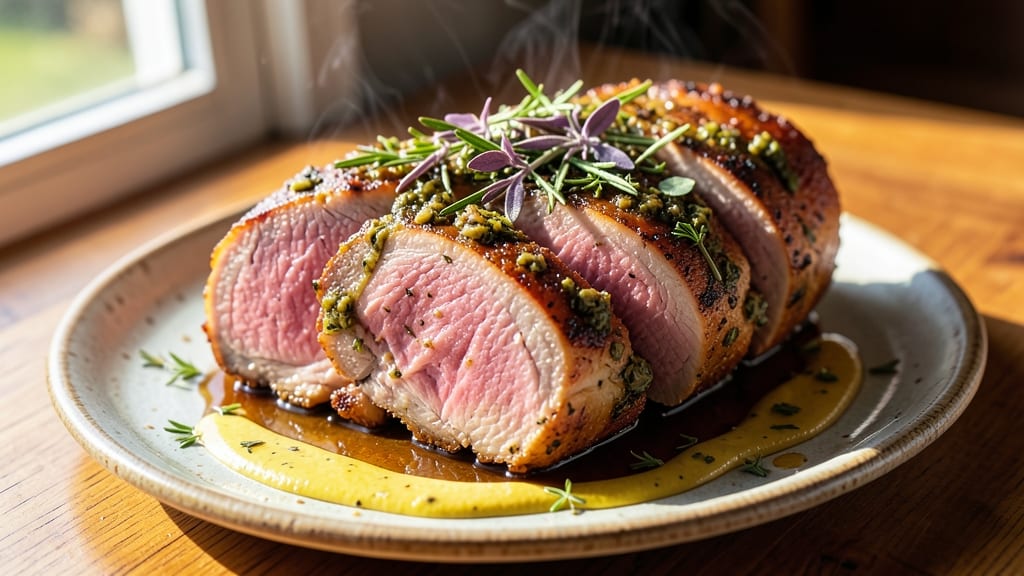
This 4 lb boneless pork loin roast recipe delivers the perfect balance of herb-crusted exterior and juicy pink core—a technique I perfected after years of cooking pork for thousands at The Smoky Pig.
The secret lies in precise temperature control and a simple herb crust that locks in moisture while creating a flavorful bark. My Georgia roots taught me that pork deserves respect, and this method honors that tradition without requiring a smoker or complicated steps.
The beauty of this recipe is its simplicity: just a few fresh herbs, mustard for adhesion, and a foolproof roasting method that ensures tender, even cooking.
We're talking golden-brown crust outside with a pink center that's just shy of medium—exactly how I like it, and how my customers at the pit always request.
The key is using a meat thermometer and letting the roast rest properly, which keeps all that juiciness where it belongs—in the meat, not on your cutting board.
What you'll end up with is a restaurant-quality roast that's impressive enough for company but simple enough for weeknight dinners. The herb crust adds aromatic depth without overpowering the natural sweetness of the pork, while the pink center delivers that satisfying bite.
This is the kind of dish that makes people ask for seconds—and then ask for the recipe.
Serve with roasted root vegetables or a crisp apple compote for a complete meal that feels special without requiring hours in the kitchen. The leftovers reheat beautifully too, making this a practical choice for meal prep. Let's get cooking—your taste buds will thank you.
Ingredients for 4 lb boneless pork loin roast
Fresh herbs, mustard, and a simple crust transform this pork loin into restaurant-worthy perfection.
| Ingredient | Amount | Notes |
|---|---|---|
| Boneless Pork Loin Roast 🥓 | 4 lb | Center-cut for even cooking |
| Fresh Rosemary 🌿 | ¼ cup | Finely chopped, stems removed |
| Fresh Thyme 🌿 | 2 tbsp | Leaves only, finely chopped |
| Fresh Sage 🌿 | ¼ cup | Leaves only, chopped |
| Yellow Mustard 🍯 | 2 tbsp | For herb adhesion |
| Extra-Virgin Olive Oil 🫒 | 2 tbsp | For crust and basting |
| Garlic Cloves 🧄 | 4 cloves | Minced for herb paste |
| Diamond Crystal Kosher Salt 🧂 | 1 ½ tsp | For seasoning and crust |
| Freshly Ground Black Pepper 🌶️ | 1 tsp | Cracked peppercorns preferred |
| Whole Grain Mustard 🍯 | 1 tbsp | Adds texture to crust |
| Unsalted Butter 🧈 | 2 tbsp | Softened for basting |
| Fresh Parsley 🌿 | ⅛ cup | Chopped for garnish |
The pork loin is the star, so center-cut is non-negotiable—it stays tender and doesn't dry out. Whole Foods or your butcher are best for quality, but most grocery stores carry it. Look for even thickness—uneven pieces cook unevenly. The herb crust needs freshness: rosemary and sage should smell vibrant, not woody. If you're buying from a market, grab them last so they stay fresh longest. For the mustard, French's yellow is my go-to—it's consistent and affordable, but any good-quality mustard works.
No fresh rosemary? Dried works at half the amount, but it lacks that bright aroma. Short on thyme? Oregano or marjoram can step in, though the flavor will shift slightly. The whole grain mustard adds texture—skip it if you prefer a smoother crust. For the garlic, roasted garlic adds sweetness, but fresh minced gives that sharp punch. If you're prepping ahead, make the herb paste a day in advance and store it in the fridge—it melds flavors beautifully. The butter should be softened to room temperature for easy basting, but not melted.
This roast reheats like a dream—4-5 days in the fridge or 3 months frozen. Wrap tightly in foil before freezing to prevent freezer burn. For serving, let it rest 10-15 minutes before slicing—this keeps all that juiciness locked in. I always slice it against the grain for tender bites. Leftovers make amazing sandwiches or salads the next day—just warm them gently in a skillet with a splash of broth.
Why You'll Love This Recipe
- Foolproof Prep: I swear by this—just slather the pork with mustard, tuck in those herb sprigs, and pop it in the oven. No fancy searing, no butter basting, just hands-off perfection.
- Herb Magic: That trio of rosemary, thyme, and sage? They infuse the meat like a whisper of a Tuscan hillside. The mustard glaze gives it a tangy finish that makes every bite unforgettable.
- Weeknight Crowdpleaser: This feeds six without stressing me out. Slice it for sandwiches, serve it with roasted potatoes, or toss it in salads—it’s my go-to when I need one dish to do double duty.
- Leftovers That Win: Between us, this roast tastes even better the next day. I’ll make it on Sunday, reheat slices in the air fryer, and suddenly I’ve got lunch and dinner covered for the week. Zero guilt, all flavor.
Step-by-step instructions for herb-crusted pork loin roast
Here's how to transform a simple pork loin into a showstopping centerpiece with a fragrant herb crust and perfectly pink interior.
Create the Herb Paste and Season the Roast
In a food processor, combine the 0.25 cup fresh rosemary, 2 tablespoons fresh thyme, 0.25 cup fresh sage, 4 cloves garlic, 1.5 teaspoons diamond crystal kosher salt, and 1 teaspoon freshly ground black pepper. Pulse until you get a coarse paste with some texture remaining—this ensures the herbs stick to the meat. Transfer to a bowl and mix in the 2 tablespoons yellow mustard and 1 tablespoon whole grain mustard. This combination creates an adhesive that locks in moisture and flavor.
Pat the 4 lb boneless pork loin roast completely dry with paper towels—this is critical for developing that crispy crust. Spread the herb paste evenly over all sides, pressing gently so it adheres. Let the roast sit at room temperature for 30 minutes while you preheat the oven. This step ensures even cooking and maximum flavor penetration.
Sear the Roast for Maximum Flavor
Preheat your oven to 425°F. Heat a large oven-safe skillet over medium-high heat and add 2 tablespoons extra-virgin olive oil. Once shimmering, place the roast in the skillet and sear for 4-5 minutes per side until deeply golden brown. Press down gently on the roast during the first minute—this prevents curling and ensures even contact with the pan. The sear creates a flavorful crust that locks in juices during roasting.
Transfer the skillet to the preheated oven. Roast for 15 minutes uncovered to allow the crust to set. This initial high-heat phase builds flavor while preventing the roast from drying out during the longer cook time. Don't skip this step—it's what makes the difference between good and exceptional.
Baste and Roast to Juicy Perfection
Remove the roast from the oven and brush all sides with melted 2 tablespoons unsalted butter. Return to the oven and reduce heat to 325°F. Roast for 30-35 minutes, basting every 10 minutes with additional butter. The butter basting keeps the meat moist and adds richness to the crust. You'll know it's nearly done when the internal temperature reaches 140°F—this is the perfect point for medium-rare pork.
For accuracy, use a meat thermometer inserted into the thickest part of the roast. The 140°F mark ensures a juicy pink center without overcooking. If your thermometer isn't instant-read, remove it 5 minutes before reaching this temperature—pork continues cooking after removal from heat.
Rest and Garnish for Presentation
Transfer the roast to a cutting board and tent loosely with foil. Let it rest for 15 minutes before slicing—this crucial step allows juices to redistribute throughout the meat. Skipping this will leave you with dry slices. While resting, prepare the 0.125 cup fresh parsley by chopping it finely. This bright green garnish adds freshness and visual appeal to your finished dish.
Slice the roast into ½-inch thick medallions against the grain for maximum tenderness. Arrange on a platter, drizzle with any pan juices, and sprinkle with the chopped parsley. Serve immediately with roasted vegetables or a simple herb sauce. Each slice should be moist, flavorful, and perfectly pink in the center—exactly what you promised your guests.
Pro Tips For Making 4 Lb Boneless Pork Loin Roast
- Trim the Fat Patches: That boneless pork loin might still have little fat caps—score them with a sharp knife and lift them away. I learned this the hard way after one roast turned greasy and uneven; those tiny fat pockets steam instead of crisp, ruining the texture.
- Salt Before Mustard: Season the pork generously with salt and pepper before slathering on the mustard. The salt draws out moisture, helping the mustard stick and form that glossy crust you want—skip this, and you’ll end up with a sticky, uneven glaze.
- Roast at 325°F: No need to blast it at 400°F—325°F is the sweet spot for even cooking without drying out a 4-pound roast. I used to rush it at higher temps, and the center always came out chewy. Patience here means juicy, tender meat.
- Rest Under Foil: After pulling it from the oven, tent the pork with foil and let it rest for 10 minutes. I know, it’s tempting to slice immediately, but this keeps the juices locked in—cutting too soon means a dry, sad roast. (Yes, even if you’re impatient like me.)
Best sauces and condiments for these flavors
Classic Herb Butter Sauce
This simple sauce elevates your roast with minimal effort. Melt 2 tbsp unsalted butter in a small saucepan over low heat, then whisk in 1 tbsp fresh parsley, 1 tsp fresh thyme, ½ tsp minced garlic, and a pinch of kosher salt.
Simmer for 2 minutes until fragrant, then drizzle over sliced pork. The butter keeps it rich while the herbs echo the crust's flavors. 🌿
Creamy Apple-Cider Glaze
For a touch of sweetness, reduce ½ cup apple cider with 1 tbsp brown sugar and 1 tsp Dijon mustard in a saucepan until syrupy (5 minutes).
Brush lightly over slices before serving. The acidity cuts through the pork's richness while adding a festive touch. Perfect for holiday meals or family gatherings.
Spicy Brown Sugar Crust
Swap the herb paste for a mix of 2 tbsp brown sugar, 1 tbsp smoked paprika, 1 tsp cayenne pepper, and 1 tsp black pepper. Apply before roasting for a caramelized, slightly spicy exterior.
This variation works beautifully with a honey-mustard dipping sauce made from ¼ cup honey, 2 tbsp whole grain mustard, and a splash of apple cider vinegar.
Garlic-Herb Compound Butter
Combine ½ cup softened butter with 2 tbsp minced garlic, 1 tbsp chopped rosemary, 1 tsp kosher salt, and ½ tsp black pepper.
Roll into a log, chill for 30 minutes, then slice and place on top of the roast during the last 10 minutes of roasting. The butter melts into a fragrant, flavorful crust that pairs perfectly with roasted root vegetables.
Balsamic Reduction
For a sophisticated finish, reduce ¼ cup balsamic vinegar with 1 tbsp honey until thickened (3-4 minutes). Drizzle over sliced pork and garnish with microgreens for a restaurant-worthy presentation. The tangy-sweet balance enhances the pork's natural sweetness while adding visual contrast. 🍷
Smoky Chipotle Cream Sauce
Blend ½ cup sour cream, 1 tbsp chipotle in adobo, 1 tsp lime juice, and ½ tsp cumin until smooth. Serve as a dipping sauce or spoon over sliced pork.
The smoky heat complements the herb crust while adding a Southwestern twist. This sauce also reheats beautifully, making it ideal for leftovers.
Nutrition facts
Frequently asked questions
Why does the recipe call for a 140°F internal temperature instead of 145°F?
This 140°F target gives you that classic juicy pink center that's perfect for pork loin. At 145°F, the meat becomes more like medium-well, which can be dry. The 10°F difference keeps the texture tender while still being safe to eat. Think of it as the Goldilocks zone for pork—just right!
Can I use this recipe with a bone-in pork loin?
Yes, but you'll need to adjust the cooking time. Bone-in loins take longer to cook through—aim for 150°F internal temperature instead. The herb crust will still work beautifully, but expect about 10-15 extra minutes in the oven. The bone actually helps keep the meat moist longer!
What if my pork loin is thicker or thinner than 4 lbs?
Adjust cooking time by 15 minutes per pound for thinner cuts (under 3 lbs) and 10 minutes per pound for thicker cuts (over 5 lbs). Always use a meat thermometer—the 140°F rule applies regardless of size. For example, a 5 lb roast would cook about 45-50 minutes total.
How can I make this recipe ahead of time?
You can prep the herb paste 1 day ahead and store it in the fridge. For the roast itself, cook it fully, then refrigerate for up to 4 days or freeze for 3 months. Reheat slices in a skillet with a splash of broth or apple cider to restore moisture. The flavors actually improve after resting overnight!
What's the best way to slice the pork loin?
Always slice against the grain for maximum tenderness—look for the muscle fibers running horizontally and cut perpendicular to them. Use a sharp chef's knife and slice into ½-inch thick medallions. For even slices, tie the roast with kitchen twine before roasting, then remove before slicing.