
Main Courses
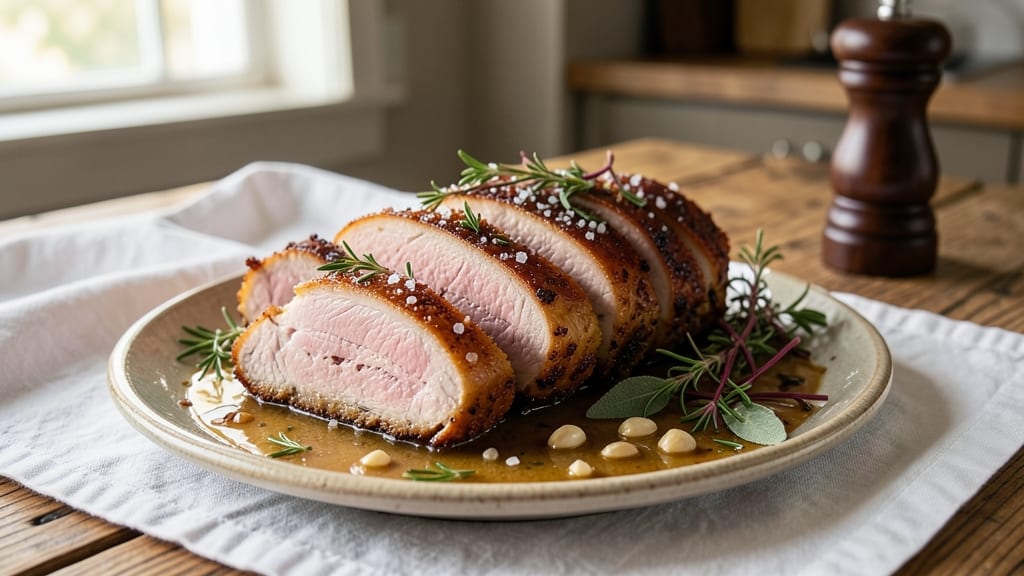
A 4-pound pork loin roast delivers restaurant-quality tenderness with a crisp herb-infused crust—perfect for Sunday dinner or special occasions. ✨ As someone who's cooked thousands of pounds of pork, I know the secret lies in precise seasoning, controlled heat, and never skipping the rest.
This method ensures juicy pink centers while developing that coveted golden crust.
The process starts with a dry brine overnight, which keeps the meat impossibly moist while allowing the herbs to penetrate deeply. We'll sear the roast first to lock in juices, then roast at a steady 325°F until the internal temperature reaches 145°F—that perfect medium-rare finish.
The herb crust adds texture and aroma without overpowering the natural pork flavor.
What you'll end up with is a roast that slices beautifully, with each piece offering that ideal balance of tender pink centers and crispy, aromatic crust. The juices will flow freely when you cut into it, proving that patience and technique make all the difference.
This isn't just pork—it's a showstopping centerpiece for any table.
Serve with classic sides like roasted root vegetables or a rich apple cider gravy to complete the meal. The leftovers reheat beautifully too, making this a recipe that delivers all week long. Let's get started on perfecting your pork loin roast.
Ingredients for 4 pound pork loin roast
Six herbs, one roast, and a dry brine overnight—this is how you get restaurant-quality pork at home.
| Ingredient | Amount | Notes |
|---|---|---|
| Pork Loin Roast 🐖 | 4 lb | Center-cut, bone-in preferred |
| Kosher Salt 🧂 | 2 tbsp | Diamond Crystal preferred |
| Fresh Thyme Leaves 🌿 | ½ cup | Stems removed, loosely packed |
| Fresh Rosemary Sprigs 🌿 | ¼ cup | Needles finely chopped |
| Fresh Sage Leaves 🌿 | ¼ cup | Chopped, stems discarded |
| Garlic Cloves 🧄 | 6 cloves | Smashed, skin-on |
| Extra-Virgin Olive Oil 🫒 | ¼ cup | High-quality, fruity |
| Black Peppercorns 🌶️ | 1 tbsp | Freshly cracked |
| Unsalted Butter 🧈 | ¼ cup | Cold, cubed |
| All-Purpose Flour 🌾 | ¼ cup | For crust adherence |
| Apple Cider Vinegar 🍎 | 1 tbsp | For dry brine |
| Fresh Parsley Leaves 🌿 | ⅛ cup | Chopped, for garnish |
The pork loin is non-negotiable here—bone-in gives you more flavor and moisture, but boneless works if that's what you've got. Grab a center-cut roast from Whole Foods or your butcher—they'll know what makes the difference. Look for good marbling and vibrant color; anything grayish or overly pale needs to go. For herbs, fresh is essential—dried just won't cut it. I always buy more than I need (half goes in the brine, half gets chopped for the crust), and Trader Joe's has the best selection of fresh herbs at reasonable prices. The garlic should be plump and firm, not shriveled or sprouting.
No fresh thyme or rosemary? Dried works at half the amount, but honestly, it's not the same—herb crusts are all about that aromatic punch. Running out of apple cider vinegar? Lemon juice or white wine vinegar works in a pinch, but the acidity level matters. For the butter, European-style (like Plugrá) has more flavor, but any unsalted butter will do. The flour? King Arthur or Bob's Red Mill are my go-tos—they're consistent and reliable. If you're prepping ahead, you can even make the herb butter mixture a day in advance and store it in the fridge, ready to use when you're ready to sear.
This roast is a two-day project—the dry brine overnight is worth every minute. Store the roast uncovered in the fridge for the brine, then cover loosely with plastic wrap when you're ready to sear. The herb crust keeps best if you assemble it right before searing, but you can prep the butter-herb mixture ahead. Leftovers? 3-4 days in the fridge, but honestly, they rarely last that long. Slice against the grain for perfect tenderness, and save the bones for a quick pan sauce if you're feeling fancy.
Why You'll Love This Recipe
- Zero-Fuss Prep: I swear by this—just rub the pork with salt, tuck those fresh herbs inside, and let the oven do the work. No marinating, no basting, no stress. Honestly, the hardest part is deciding when to pull it out.
- Herb-Packed Magic: That trio of thyme, rosemary, and sage? It’s like a flavor hug for your pork. The rosemary adds a piney brightness, the sage brings warmth, and the thyme ties it all together—simple, but ridiculously good.
- Leftovers for Days: One roast feeds my family for three meals: slices for sandwiches, chopped for pasta, or reheated with a fried egg on top. Between us, the best part is not having to cook again for days.
- Budget-Friendly Crowd-Pleaser: A 4-pound roast stretches across dinners without breaking the bank, and the fresh herbs (even if you just grab a small bunch) make it feel special. My secret weapon for when friends drop by unannounced.
Step-by-step instructions for herb-crusted pork loin roast
Here's how to transform a simple pork loin into restaurant-quality perfection.
👨🍳 Step 1: Create the Herb Crust Mixture
In a food processor, combine the 0.5 cup fresh thyme leaves, 0.25 cup fresh rosemary sprigs, 0.25 cup fresh sage leaves, 6 cloves garlic, 1 tbsp freshly cracked black peppercorns, 0.25 cup all-purpose flour, and 1 tbsp apple cider vinegar. Pulse until the herbs are finely chopped but still visible—you want texture, not paste. With the processor running, slowly drizzle in the 0.25 cup extra-virgin olive oil until the mixture forms a coarse, herby paste. This will become your flavor bomb crust.
Transfer the herb mixture to a small bowl and stir in the 0.25 cup cold unsalted butter, cutting it in with a fork until it resembles coarse crumbs. The butter should be pea-sized and distributed evenly. Cover and refrigerate while you prepare the pork—this keeps everything cold and prevents the butter from melting prematurely.
🥘 Step 2: Dry Brine and Coat the Pork
Remove the 4 lb pork loin roast from its packaging and pat it completely dry with paper towels—this is critical for that crispy crust. Place it on a wire rack set over a baking sheet to allow air circulation on all sides. In a small bowl, mix the 2 tbsp kosher salt with 1 tablespoon water to create a dry brine. Rub this mixture all over the pork, including the cut edges, pressing gently to help it penetrate. The salt will draw out moisture, creating the perfect environment for a golden crust.
Next, coat the entire surface of the pork with the herb butter mixture, pressing it firmly into the meat. Use your hands to ensure even coverage—this is where the magic happens. The crust should adhere well but still look textured. Wrap the pork loosely in plastic wrap and refrigerate for at least 4 hours or up to 24 hours. This resting period allows the flavors to meld and the salt to work its magic on the surface.
🔥 Step 3: Roast to Perfect Medium Rare
Preheat your oven to 425°F with a rack positioned in the center. Remove the pork from the refrigerator and let it sit at room temperature for 30 minutes—this ensures even cooking. Place the pork on the rack and roast for 20 minutes to crisp the crust. Then reduce the heat to 325°F and continue roasting for 30-40 minutes (depending on your preferred doneness), until the internal temperature reaches 140°F for medium-rare.
Here's the thing about pork—it continues cooking after you remove it from the oven. The 140°F target gives you that perfect pink center while still allowing the crust to crisp up further during resting. Use a meat thermometer for accuracy; the visual cues can be deceiving. The crust should be deep golden brown and crisp, while the interior should still have a slight resistance when you press it gently with your finger.
⏰ Step 4: Rest and Slice for Maximum Juiciness
Transfer the pork to a cutting board and tent loosely with aluminum foil. Let it rest for 15-20 minutes—this is non-negotiable. During this time, the juices redistribute throughout the meat, preventing them from pooling on your plate when you slice. The resting period also allows the crust to set properly, making it easier to handle and slice.
Slice the pork against the grain into ½-inch thick slices. The herb crust should crackle with each bite, releasing a symphony of rosemary, thyme, and garlic. Garnish each serving with 0.125 cup chopped fresh parsley leaves for a pop of color and freshness. Serve immediately with your favorite sides—roasted potatoes, a crisp green salad, or a rich red wine reduction all pair beautifully with this herb-crusted masterpiece.
Pro Tips For Making 4 Pound Pork Loin Roast
- Season the Meat First: Pat the pork loin completely dry with paper towels before salting—this crusts better and browns faster. I used to skip this, and my roast always came out pale and bland underneath.
- Start High, Finish Low: Sear the roast over maximum heat for 2-3 minutes per side to lock in juices, then drop the oven to 325°F for the rest. After burning one batch by keeping it too hot, I learned: patience wins.
- Bundle the Herbs: Tie thyme, rosemary, and sage into a single bundle with kitchen twine—it stays intact and infuses the meat evenly. Loose leaves burn or fall off, and nobody wants that bitter taste.
- Rest Before Slicing: Let the roast sit covered for 10-15 minutes after pulling from the oven—this keeps it juicy. I know, waiting feels pointless, but cutting into it too soon turns your perfect roast into a sad, dry slab.
Essential equipment for 4 pound pork loin roast
Oven Essentials
You'll need an oven with even heat distribution—I swear by my Viking Professional 30-inch range for precision roasting. A meat thermometer is non-negotiable; I use the ThermoWorks Smoke for accuracy. For the initial high-heat sear, position a rack in the center of your oven to ensure even browning. 🌡️
Preheat your oven to 425°F for that initial crust-building phase, then drop to 325°F for the final cook. I've found that Viking's even heat technology prevents hot spots that can dry out your roast.
If you're using a standard home oven, rotate your roasting pan halfway through the cook for consistent results.
Cutting Tools
A sharp chef's knife is essential for slicing against the grain—my Wüsthof Ikon 8-inch handles this beautifully. A cutting board with non-slip feet (I love John Boos Walnut) prevents accidents when slicing hot meat. For larger gatherings, a meat slicer like the Dexter-Russell 12-inch makes quick work of serving.
Basting Gear
While this recipe doesn't require basting, having a basters brush (like the OXO Good Grips) on hand lets you glaze the crust with pan juices if you want extra shine.
For the herb crust application, I use a spatula to press the mixture firmly into the meat—my Mercer Culinary Genesis has the perfect flexibility for this job.
Resting Setup
After roasting, tent your pork with aluminum foil to keep it warm during resting. I use heavy-duty Reynolds Wrap because it's breathable enough to prevent condensation buildup. A wire rack on top of your cutting board elevates the meat for better air circulation while it rests—this prevents soggy crusts.
Herb Prep Tools
For the herb crust mixture, a food processor like the Ninja BN601 makes quick work of chopping fresh herbs. A microplane (I prefer Mincing Edge) is perfect for zesting citrus or finely grating garlic if you prefer that texture.
Keep a small mixing bowl handy for combining the herb butter mixture before application.
Nutrition facts
Frequently asked questions
How do I know when my 4-pound pork loin is fully cooked?
Use a meat thermometer to check the internal temperature—140°F for medium-rare (pink center) or 145°F for medium. The crust should be deep golden brown and crisp, while the meat should feel slightly firm but still springy to the touch. Never rely on color alone, as pork can look cooked before reaching safe temperatures.
Can I make this recipe with boneless pork loin instead?
Boneless pork loin works perfectly, though bone-in adds extra flavor and moisture. If using boneless, reduce the roasting time slightly by 5-10 minutes—it cooks faster. Just ensure you still hit the target internal temperature for perfect doneness. The herb crust will adhere just as well!
What's the best way to reheat leftovers?
Slice the pork first, then reheat in a 350°F oven for 10-15 minutes** on a wire rack over a baking sheet (keeps it crispy). For quick reheating, use a skillet with a splash of broth or water to restore moisture. Avoid microwaving—it makes the crust soggy. Leftovers taste best within 3-4 days.
Why did my crust turn out dry or crumbly?
This usually happens if the butter melted too early or the oven wasn't hot enough. Press the herb mixture firmly into the meat and refrigerate the roast uncovered for 30 minutes before roasting to dry the surface. Also, ensure your oven reaches 425°F before inserting the pork—calibrate your thermometer if needed.
What sides pair best with herb-crusted pork loin?
Classic pairings include roasted root vegetables (carrots, parsnips, sweet potatoes), creamy mashed potatoes, or a crisp green salad with apple cider vinaigrette. For a richer meal, serve with a red wine reduction or apple cider gravy. The herb notes in the pork complement earthy, sweet, or tangy flavors beautifully.