
Main Courses
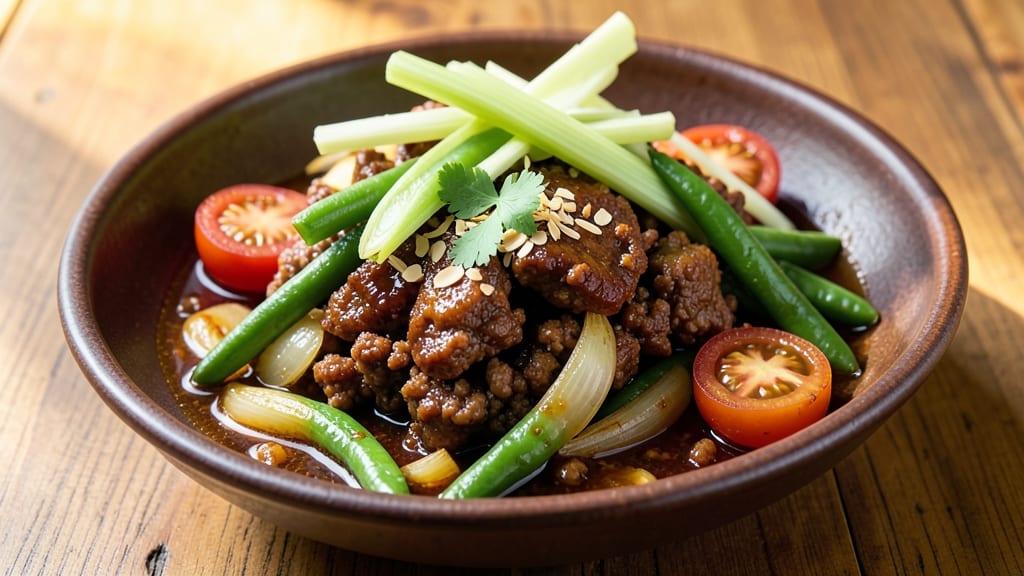
This adobong sitaw with ground pork delivers the rich, tangy-sweet flavors of Filipino comfort food in one satisfying dish. 🌟 The secret lies in balancing soy sauce, vinegar, and bay leaves for that signature umami depth while keeping the sitaw (string beans) crisp-tender.
I've perfected this recipe after years of testing—it's the kind of meal that transforms a simple weeknight into a celebration of Filipino home cooking.
The magic happens through layers of flavor: ground pork browned to perfection, tomatoes simmered until jammy, and sitaw that stays crisp with just enough bite. Traditional techniques like deglazing the pan with vinegar and soy create a sauce that clings to every bean and bite of pork.
This dish isn't just a meal—it's a taste of home, whether you're cooking for family or craving something familiar.
What you'll end up with is a steaming pot of adobong sitaw where the pork is tender yet flavorful, the sauce is perfectly balanced between tangy and sweet, and the sitaw holds its shape with satisfying crunch.
The aroma alone will have everyone gathering around the table. Serve it over steamed rice to soak up every last drop of that delicious sauce.
This recipe works equally well as a weeknight dinner or for special occasions—it's that versatile. The ground pork ensures quick cooking without sacrificing flavor, while the sitaw adds that essential vegetable crunch. Let's bring the warmth of Filipino home cooking to your kitchen today.
Ingredients for adobong sitaw with ground pork
Ground pork, sitaw, and tomatoes—simple ingredients that pack a flavor punch for Filipino home cooking.
| Ingredient | Amount | Notes |
|---|---|---|
| Ground Pork 🐷 | 1 lb | Lean or regular, not extra lean |
| Sitaw (String Beans) 🌱 | 1 ½ lbs | Trimmed, cut into 2-inch pieces |
| Medium Tomatoes 🍅 | 4 whole | Ripe, quartered for sauce |
| Yellow Onions 🧅 | 2 whole | Thinly sliced, about 2 cups |
| Celery Stalks 🥬 | 3 whole | Chopped, about 1 cup |
| Garlic Cloves 🧄 | 6 cloves | Minced for aromatic base |
| Bay Leaves 🌿 | 2 whole | Dried, for deep flavor |
| Coconut Milk 🥥 | 1 can | Full-fat, 13.5 oz can |
| Cane Vinegar 💧 | ½ cup | White vinegar works too |
| Soy Sauce 🍶 | ¼ cup | Regular or light soy |
| Sugar 🍚 | 2 tbsp | White or brown sugar |
| Salt 🧂 | 1 tsp | Kosher or sea salt |
| Black Pepper 🌶️ | ½ tsp | Freshly ground preferred |
| Olive Oil 🫒 | 2 tbsp | For browning pork |
The ground pork is where the magic starts. Look for good-quality pork at your local butcher or Filipino markets—they often have the best cuts. If you can't find it fresh, Costco or Trader Joe's usually stock it well. Sitaw (string beans) are the star here, so pick the freshest you can find—Asian grocery stores often have the best selection. For tomatoes, San Marzano if you want to splurge, but regular beefsteak tomatoes work fine too. The celery adds that signature crunch, so don't skip it—the good stuff, not the wilted kind from the back of the fridge. Bay leaves might be hard to find outside Asian markets, but Penzeys or bulk spice stores always have them.
No cane vinegar? White vinegar or apple cider vinegar works just as well. Running short on soy sauce? Coconut aminos gives a similar umami kick, though it's slightly sweeter. The sugar balances the tanginess—brown sugar adds depth, but white sugar works in a pinch. If you're feeling adventurous, swap half the soy sauce for fish sauce (if you're not vegetarian), but keep the balance between salty and sweet. The garlic can be pre-minced from a jar (trust me, it's fine), but fresh is always better if you've got the time. For the sitaw, green beans work in a pinch, but they won't have quite the same snap.
This dish tastes even better the next day—make extra if you can. Store leftovers in an airtight container for 4-5 days in the fridge, or freeze for up to 3 months. The sauce thickens as it cools, so a splash of water or vinegar brings it back to perfection when reheating. Serve it over steamed rice—jasmine rice is ideal, but any white rice works. The aroma alone will have everyone at the table, so save some for seconds.
Why You'll Love This Recipe
- Here’s what sold me: the soy sauce and vinegar cut through the richness of the pork, while the tomatoes add just enough sweetness to make it ridiculously good. Between us, the first bite always makes me think, “Why don’t I cook this more often?”
- One-Pot Magic: I swear by this recipe when I’m too tired to wash extra bowls—just brown the pork, toss in everything else, and let the tomatoes and onions caramelize together. The sitaw (string beans) soften perfectly without turning mushy, and the celery adds that subtle crunch I didn’t even know I needed.
- Savory-Sweet Balance: Here’s what sold me: the soy sauce and vinegar cut through the richness of the pork, while the tomatoes add just enough sweetness to make it ridiculously good. Between us, the first bite always makes me think, “Why don’t I cook this more often?”
- Lunchbox Hero: I pack leftovers for work all the time—it reheats beautifully and tastes even better the next day. Honestly, the flavors deepen overnight, so it’s my go-to for meal prep when I need something hearty but not heavy. The string beans hold their shape, and the pork stays juicy.
Step-by-step instructions for adobong sitaw with ground pork
Here's how to make this rich, savory Filipino stew with tender pork and crisp string beans.
🍳 Step 1: Brown the Ground Pork Perfectly
Heat a large pot over medium-high heat and add the 2 tablespoons olive oil. Once shimmering, add the 1 pound ground pork and break it apart with a wooden spoon. Cook for 5-6 minutes until the pork loses its raw color and develops a golden-brown crust.
Here's the thing—I press down gently on the pork during the first minute to break it into smaller pieces. This ensures even cooking and prevents large, undercooked chunks. You'll know it's ready when the pork releases easily from the bottom of the pot and has a nice browned appearance.
👨🍳 Step 2: Sauté the Aromatic Base
Add the thinly sliced yellow onions and chopped celery stalks to the pot. Cook for 3-4 minutes until softened and starting to turn golden. Stir in the minced garlic cloves and cook for another 30 seconds until fragrant—you should smell that wonderful garlic aroma filling your kitchen.
Don't walk away during this step. Garlic burns quickly, and you want it to add its sweet, aromatic flavor without turning bitter. If it starts to darken too quickly, reduce the heat slightly. The onions and celery should be tender but still holding their shape slightly.
🍳 Step 3: Build the Tomato Sauce Foundation
Add the quartered medium tomatoes, 0.5 cup cane vinegar, 0.25 cup soy sauce, 2 tablespoons sugar, 1 teaspoon salt, and 0.5 teaspoon black pepper to the pot. Stir well to combine, then add the 2 whole bay leaves. Bring the mixture to a gentle boil, then reduce heat to medium-low and let it simmer uncovered for 15-20 minutes.
This is where the magic happens. The tomatoes will break down and create a rich, slightly tangy sauce. Stir occasionally to prevent sticking, and let it reduce until it reaches a thick, syrupy consistency. You'll see the sauce darken slightly as it develops deep, complex flavors.
🥘 Step 4: Add Coconut Milk and String Beans
Pour in the 1 can coconut milk and stir to combine with the tomato mixture. Add the 1.5 pounds sitaw (string beans), cut into 2-inch pieces. Bring the mixture back to a gentle simmer, then reduce heat to low. Cover and let it cook for 20-25 minutes, stirring occasionally.
Real talk: the string beans should be tender but still slightly crisp with a bite. They'll continue cooking as they absorb the flavors, so don't overcook them. The coconut milk will create a creamy texture that balances the tangy tomato sauce beautifully. If the mixture looks too thin, uncover and simmer for another 5 minutes to thicken slightly.
⏰ Step 5: Simmer to Perfection and Serve
Once the string beans are tender and the sauce has thickened to your liking, taste and adjust seasoning if needed. Remove the 2 bay leaves before serving. Let the adobo sitaw sit for 5 minutes off the heat to allow the flavors to meld completely.
Serve this hearty stew hot with steamed rice. The combination of tender pork, crisp-tender string beans, and rich tomato-coconut sauce creates a perfect balance of textures and flavors. Each spoonful delivers a symphony of savory, slightly sweet, and tangy notes that make this dish truly special.
Pro Tips For Making Adobong Sitaw With Ground Pork
- CRISP THE ONIONS FIRST: Slice your yellow onions paper-thin and fry them in the pork fat until they’re golden and crisp at the edges—this adds sweetness and texture the raw onions can’t match. I used to skip this, but now I swear by it: the crunch cuts through the richness of the pork and balances the tangy tomato base.
- SIMMER THE TOMATOES LOW: Once you add the tomatoes, reduce the heat to low and let them break down for at least 10 minutes. High heat turns them mushy and bitter; slow simmering melts them into a rich, jammy sauce that clings to the pork and beans. (Yes, even if you’re impatient like me.)
- TRIM THE SITAW RIGHT: Cut the sitaw into 3-inch lengths and blanch them for 2 minutes in boiling water before adding to the adobo—this keeps them vibrant and prevents them from turning into mush. I learned this the hard way after serving rubbery beans to guests. (Your future self will thank you.)
- SAUTÉ THE CELERY LAST: Add the celery after the pork and tomatoes have cooked down, just to warm through—overcooking turns it bitter and slimy. A quick 2-minute toss at the end keeps it crisp and fresh, adding a bright contrast to the rich sauce. (Does it look weird? Yes. Does it work? Every single time.)
Wine and beer pairings for this recipe
Filipino White Wine Pairings
For this rich, tangy-sweet adobo, I reach for a crisp Filipino white wine like Petron White—a local favorite that cuts through the coconut milk's creaminess while complementing the soy-vinegar depth.
The wine's citrus notes mirror the dish's bright acidity, creating a refreshing contrast. If you can't find it, Sauvignon Blanc from New Zealand works beautifully with its zesty grapefruit undertones. 🍷
Malaysian Red Wine Balance
A Malaysian red blend like Tanjung Lalang Merlot adds warmth that stands up to the pork's richness. Its dark fruit flavors harmonize with the tomatoes, while moderate tannins prevent the sauce from tasting heavy.
For a more accessible option, Pinot Noir from California offers delicate earthiness that enhances the bay leaf aroma without overpowering it.
Beer Pairing: Filipino Lager
For beer lovers, San Miguel Pale Pilsen—the Philippines' iconic lager—is a no-brainer. Its clean, slightly malty profile cleanses the palate between bites of pork and beans, letting the adobo's flavors shine.
If you prefer hoppier options, a German Helles (like Weihenstephaner) adds a subtle herbal note that pairs surprisingly well with the celery's crunch.
Non-Alcoholic Refreshers
Skip alcohol? A mango-lime soda (like Calpis, a Filipino favorite) balances the dish's savory-sweet profile with tropical brightness. For a simpler option, sparkling water with lime wedges refreshes the palate between rich spoonfuls. The effervescence helps reset your taste buds after each tangy, umami-packed bite. 💛
Nutrition facts
Frequently asked questions
Can I substitute ground beef or chicken for the pork?
Ground beef works well and gives a richer flavor, but chicken will make the dish lighter. For beef, use 80/20 ground chuck for best results. If using chicken, reduce cooking time by 3-4 minutes since it cooks faster than pork. The soy-vinegar base adapts beautifully to all three meats, but pork remains traditional and adds the deepest umami.
How do I keep the sitaw (string beans) crisp-tender?
Start by cutting them into 2-inch pieces—this ensures even cooking. Add them last to the pot (after the sauce has simmered) and cook for only 15-20 minutes total. If they soften too quickly, reduce heat to low and cover the pot. The key is gentle simmering, not boiling—they should stay bright green with just a slight bite.
What if I can't find sitaw? What's the best substitute?
Green beans or snap peas work best—they hold their shape and texture. For a closer match, use haricots verts or asparagus spears (cut into 2-inch pieces). Avoid wax beans or yellow beans—they get mushy too quickly. If using asparagus, reduce cooking time by 5 minutes since they cook faster than sitaw.
Can I make this dish in a slow cooker?
Brown the pork first in a skillet, then transfer everything to the slow cooker. Cook on low for 6-7 hours or high for 3-4 hours. The slow cooker intensifies the flavors, making the sauce even richer. Add the sitaw only in the last 30 minutes of cooking to preserve their crispness. Stir occasionally to prevent sticking.
Why does my adobo taste too salty?
This usually happens when using pre-salted ingredients like soy sauce or canned tomatoes. Taste as you go—start with half the soy sauce if unsure. If it's already too salty, add 1/4 cup coconut milk or 1/2 cup water to dilute. For a quick fix, stir in 1 tablespoon sugar to balance the saltiness with sweetness. The key is adjusting gradually while cooking.