
Main Courses
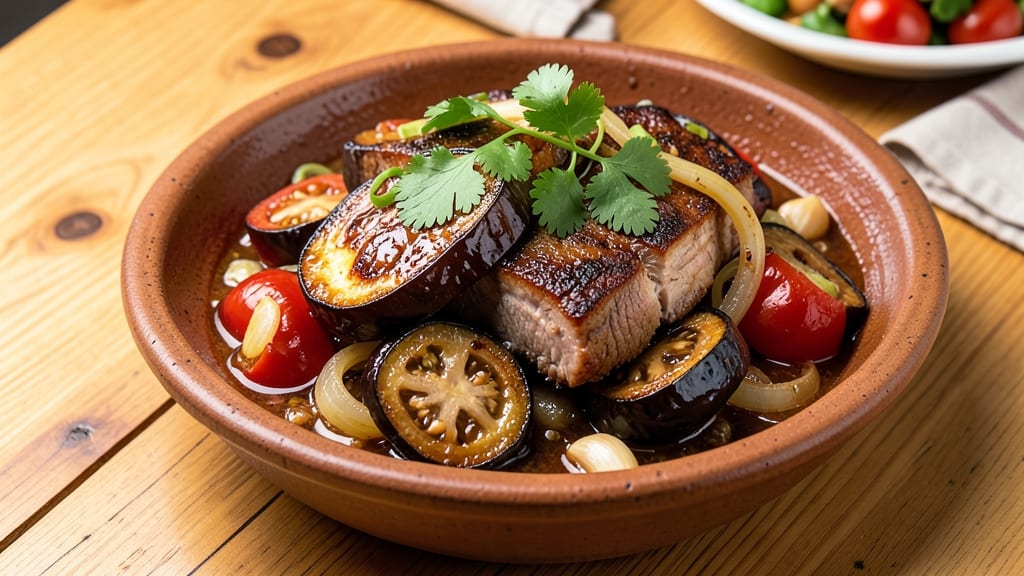
This Adobong Talong with Pork recipe brings the bold, smoky flavors of Filipino comfort food to your kitchen—where tender eggplant and pork simmer in a rich, tangy-sweet sauce. 💛 I first tasted this dish in Manila, where it transformed simple ingredients into something deeply satisfying.
The secret lies in balancing soy sauce, vinegar, and garlic to create that signature adobo depth while keeping the eggplant perfectly tender.
The magic happens in the slow cooking process, where the pork breaks down into melt-in-your-mouth pieces and the eggplant absorbs the sauce without turning mushy. This dish is a masterclass in Filipino home cooking—simple yet deeply flavorful, with just the right mix of savory, tangy, and slightly sweet notes.
The pork adds heartiness, while the eggplant brings a satisfying texture that holds up beautifully in the stew.
What you’ll end up with is a restaurant-quality stew that’s perfect for feeding a family or sharing with neighbors. The aroma alone—smoky, garlicky, and slightly sweet—will have everyone gathering around the table.
It’s the kind of dish that tastes even better the next day, making it ideal for meal prep or a cozy weekend dinner.
Whether you’re a fan of Filipino cuisine or just love hearty stews, this recipe delivers bold, authentic flavors without requiring fancy ingredients. Let’s get cooking—your taste buds will thank you.
Ingredients for adobong talong with pork
Pantry staples meet Filipino flavors in this comforting stew—where smoky garlic, tangy vinegar, and tender pork create magic.
| Ingredient | Amount | Notes |
|---|---|---|
| Pork Shoulder 🥩 | 1 ½ lb | Cut into 1.5-inch cubes |
| Eggplant 🍆 | 2 medium | Filipino or Japanese variety preferred |
| Garlic Cloves 🧄 | 8 cloves | Minced for sauce |
| Yellow Onion 🧅 | 1 medium | Sliced into half-moons |
| Canned Tomatoes 🍅 | 1 can | 28 oz, San Marzano preferred |
| Soy Sauce 🥄 | ½ cup | Dark soy for color |
| Cane Vinegar 🍶 | ¼ cup | White vinegar substitute |
| Sugar 🍚 | 2 tbsp | White granulated |
| Bay Leaves 🌿 | 2 whole | Dried, for aroma |
| Black Peppercorns 🌶️ | 10 whole | Crushed for heat |
| Salt 🧂 | 1 ½ tsp | Diamond Crystal preferred |
| Olive Oil 🫒 | 2 tbsp | Extra-virgin for frying |
| Green Onions 🧅 | 4 whole | Sliced for garnish |
The pork shoulder is non-negotiable here—Costco or Whole Foods carry the best cuts for this dish. Look for well-marbled meat, which breaks down beautifully during slow cooking. Eggplant variety matters too: Filipino or Japanese eggplant (long, slender) holds up best in stews, but regular globe eggplant works in a pinch. Trader Joe's often stocks the Filipino variety in their international aisle. If you can't find it, use globe eggplant but slice it 1/2-inch thick for even cooking. The garlic deserves special attention too—freshly minced releases more aroma than pre-minced. I always buy a whole head and crush it with the flat side of my knife for maximum flavor.
No cane vinegar? White vinegar or apple cider vinegar work just fine—they'll give you that signature tang. Short on sugar? Brown sugar or honey (if not vegan) adds depth, though white sugar keeps the sauce clear. The soy sauce can be swapped for coconut aminos if you're avoiding soy, but the color will be lighter. For the tomatoes, San Marzano cans are ideal, but any high-quality crushed tomatoes work. If you're making this ahead, let the sauce reduce longer—it'll deepen the flavors. The green onions are optional but add a fresh finish; freeze extras in the fridge for future use.
This stew tastes even better the next day as flavors meld. Store leftovers in the fridge for 4-5 days or freeze for 3 months—portion into containers for easy reheating. The eggplant absorbs the sauce beautifully, so if you prefer it less saucy, drain it slightly before serving. For extra richness, finish with a drizzle of toasted sesame oil. Double the recipe and freeze half—this is the kind of dish that disappears fast when you serve it.
Why You'll Love This Recipe
- One-Pan Magic: I swear by this recipe when I’m too tired to scrub pots—just brown the pork, toss in the eggplant, garlic, and tomatoes, then let it simmer. The eggplant soaks up all the rich, tangy sauce while the pork stays tender, and honestly? I’ve never needed more than one pan.
- Sauce That Sticks: That balance of sweet tomatoes, funky garlic, and just a hint of vinegar (if you’re using it) is ridiculously good. The eggplant gets this perfect texture—slightly crispy edges with a creamy center—while the pork melts in your mouth. I’ll be real: my husband licks the plate.
- Leftovers for Days: This dish actually tastes better the next day—yes, really. The flavors meld into something deeper, and it reheats like a dream. I make a big batch on Sundays and take it for work all week, or freeze portions because, let’s face it, no one turns down extra servings of this.
- Budget-Friendly Feast: Pork shoulder and eggplant are cheap staples, and canned tomatoes cut costs without sacrificing flavor. It stretches easily for four or even six people, and I’ve served it at potlucks, family dinners, and lazy weeknights—no one ever asks what’s for dinner, they just dig in.
Step-by-step instructions for smoky garlic-soy eggplant and pork stew
This Filipino classic delivers deep umami flavors and tender textures—let's build it properly.
🔥 Step 1: Sear the Pork Shoulder for Rich Flavor
Heat the 2 tablespoons olive oil in a large Dutch oven over medium-high heat. Add the 1.5 lb pork shoulder cut into 1.5-inch cubes and sear undisturbed for 3-4 minutes until golden brown on all sides. This step develops deep color and flavor through the Maillard reaction.
I press down gently on the pork cubes during the first minute—this prevents them from curling and ensures even contact with the pan. Once browned, transfer the pork to a plate and set aside. Don't drain the rendered fat; it's the foundation of our sauce.
🍳 Step 2: Build the Sauce Base with Aromatics
In the same Dutch oven, add the 1 medium yellow onion sliced into half-moons and cook for 4-5 minutes until softened and starting to caramelize. Add the 8 cloves minced garlic cloves and cook for 30 seconds until fragrant—don't let it brown or it'll turn bitter.
Stir in the 1 can canned tomatoes (crushed by hand if not already), 0.5 cup soy sauce, 0.25 cup cane vinegar, 2 tablespoons sugar, 1.5 teaspoons salt, 2 whole bay leaves, and 10 whole crushed black peppercorns. Bring to a gentle simmer for 5 minutes to let the flavors meld.
🥘 Step 3: Cook the Pork Until Tender
Return the seared pork to the Dutch oven and add just enough water to cover it by ½ inch. The liquid should come from the tomatoes and any juices released during searing. Bring back to a simmer, then reduce heat to low and cover partially.
Simmer for 1 hour to 1 hour 15 minutes, stirring occasionally, until the pork is fork-tender and easily shreds. The sauce should reduce slightly but still coat the back of a spoon. Here's the thing—if the liquid evaporates too quickly, add ¼ cup water to maintain the right consistency.
🍳 Step 4: Prepare and Add the Eggplant
While the pork cooks, prepare the 2 medium eggplant by cutting into 1-inch chunks (no need to peel). Heat 1 tablespoon olive oil in a separate skillet over medium heat and fry the eggplant for 4-5 minutes until golden brown and slightly blistered. The eggplant should be tender but still hold its shape.
Add the fried eggplant to the pork mixture and simmer uncovered for 10-12 minutes until heated through. The eggplant absorbs the smoky, garlicky sauce beautifully—this is where the dish really comes together. Taste and adjust seasoning if needed; you might need a touch more salt or vinegar depending on your tomatoes.
⏰ Step 5: Finish and Garnish
Remove the 2 whole bay leaves and discard. Stir in the 4 whole sliced green onions and simmer for 1-2 minutes just to wilt them slightly. The dish should have a balance of sweet, sour, salty, and umami flavors with a smoky aroma from the garlic and soy sauce.
Serve immediately over steamed rice, garnished with extra green onions if desired. The pork should be tender enough to pull apart with a fork, and the eggplant should be soft but still hold its shape with a slightly crisp exterior from the frying. This dish tastes even better the next day as the flavors deepen!
Pro Tips For Making Adobong Talong With Pork
- CHAR THE TOMATOES FIRST: I learned this the hard way—skipping the initial tomato char makes the sauce taste flat. Sauté those canned tomatoes with onions and garlic on medium-high heat until the edges darken slightly (about 5 minutes), then crush them with a wooden spoon. The caramelized bits add depth that raw tomatoes never will.
- SALT THE PORK TWICE: Most recipes say to season the pork shoulder once, but I double up: salt it generously before browning, then again after it’s cooked down. The first layer keeps it juicy while searing, and the second layer penetrates deeper after the meat breaks down. Trust me, the flavor is worth the extra pinch.
- DON’T SKIP THE EGPLANT PREP: Cutting eggplant into thick, even chunks (about 2 inches) ensures they cook through without turning mushy. My grandmother swore by this, and she was right: smaller pieces absorb too much sauce and turn to mush, while larger ones stay firm. A quick salt-and-sweat in a colander for 10 minutes before cooking removes bitterness too—don’t skip it.
- LOW AND SLOW FOR PORK: After browning, resist the urge to crank the heat. Simmer the pork shoulder in the adobo sauce on low heat (just enough to keep it bubbling gently) for at least 45 minutes. High heat makes the pork tough; slow cooking keeps it fork-tender. I know, I know—it’s tempting to rush, but your future self will thank you.
Wine and beer pairings for adobong talong with pork
Filipino Red Wine
For this rich, umami-packed stew, I always reach for a Filipino red wine like Lambrusco or Pinot Noir from the region. The Lambrusco—a sparkling red from Emilia-Romagna—cuts through the soy sauce's heaviness with its bright acidity and subtle berry notes.
A glass of Pinot Noir from the Languedoc region complements the dish's smoky garlic and sweet-savory balance beautifully. Both wines have enough body to stand up to the pork's richness while refreshing your palate between bites. 🍷
Asian-Inspired Sake
If you prefer something lighter, dry sake is a fantastic match. I love Junmai Daiginjo for its crisp, clean profile that highlights the eggplant's earthiness and the pork's tenderness. The sake's subtle sweetness also enhances the dish's natural umami without overpowering it.
Serve it slightly chilled for a refreshing contrast to the warm stew. For a non-alcoholic option, yuzu soda with a splash of soy sauce mimics sake's balance of sweet and tangy.
Craft Beer Pairings
For beer lovers, a Belgian-style witbier like Hoegaarden or Stella Artois works wonders. The citrusy notes from coriander and orange peel in witbiers echo the dish's vinegar and garlic, while the effervescence cleanses your palate.
If you prefer darker beers, a lightly roasted wheat beer (like Allagash White) adds a malty depth that pairs surprisingly well with the soy and pork. Avoid heavy IPAs—they’ll clash with the stew’s delicate balance.
Non-Alcoholic Options
For a refreshing non-alcoholic match, try sparkling yuzu lemonade—the citrus brightens the dish’s richness, while the bubbles mimic wine’s cleansing effect. Another great choice is hibiscus iced tea (sarsaparrilla), which is slightly tart and pairs beautifully with the soy and vinegar.
I often serve this at family gatherings when kids are around, and it’s a hit with adults too. The natural sweetness balances the stew’s savory depth without overpowering it. 💛
Regional Filipino Pairings
In the Philippines, this dish is often paired with barley tea (tsokolate) or calamansi juice for a local touch. The tea’s nutty, slightly bitter notes contrast the stew’s sweetness, while the calamansi’s tang cuts through the richness.
If you’re feeling adventurous, try tuba (coconut vinegar) mixed with a splash of water—it’s a traditional Filipino drink that enhances the adobo flavors. For a modern twist, serve with coconut water to balance the soy’s saltiness. 🌿
Nutrition facts
Frequently asked questions
Can I substitute regular eggplant for Filipino eggplant?
Yes, but with adjustments! Globe eggplant works, but slice it ½-inch thick and fry it longer (6-7 minutes) to prevent mushiness. Filipino eggplant's thinner skin and less water content make it ideal for stews—it absorbs sauce beautifully without falling apart. If using globe, add it to the stew 5 minutes earlier to avoid overcooking.
How do I make this dish less salty?
Reduce the soy sauce to ¼ cup and omit added salt initially. Use low-sodium soy sauce if available, and balance with extra vinegar (3 tbsp) for tang. For extra depth, add 1 tbsp fish sauce—it adds umami without saltiness. Taste frequently while simmering to adjust.
Can I make this in an Instant Pot?
Sear pork as directed, then add all ingredients except eggplant. Pressure cook on high for 25 minutes, then quick-release. Add eggplant and sauté 5 minutes to warm through. The Instant Pot reduces cooking time but may need 1 extra tablespoon vinegar to compensate for lost acidity during pressure cooking.
Why does my eggplant turn mushy?
Overcooking or under-frying are the usual culprits. Fry eggplant until golden brown (not just soft) before adding to stew, and simmer uncovered for no more than 10 minutes after adding. For extra stability, add eggplant 15 minutes before serving rather than at the start. The key is balance—eggplant should be tender but still hold its shape.
What's the best way to serve leftovers?
Reheat gently in a skillet with 1 tbsp water over low heat for 5-7 minutes, stirring occasionally. For rice, spread leftovers on a tray and reheat in the oven at 350°F for 20 minutes to prevent sogginess. The flavors actually improve after 24 hours as the eggplant absorbs more sauce—this is why it tastes better the next day!