
Main Courses
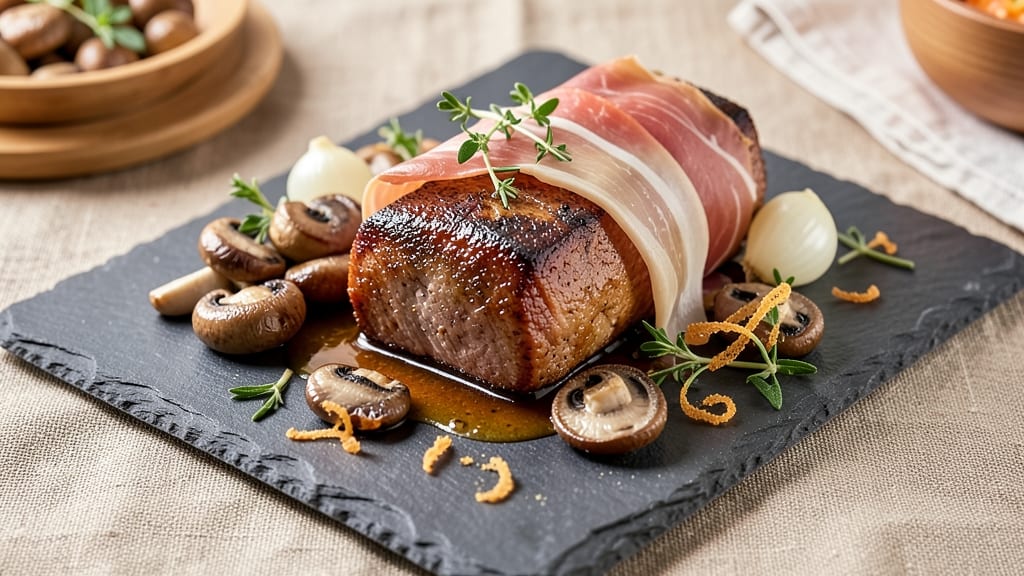
Alton Brown's Pork Wellington recipe delivers the perfect harmony of crisp golden pastry and juicy rare pork—an elegant centerpiece that feels like a restaurant masterpiece. 🔥 As someone who's cooked thousands of pounds of pork, I know the secret lies in precise technique: searing the fillet to lock in juices, layering prosciutto and duxelles just right, and wrapping it in puff pastry that stays flaky even after roasting. This isn't just a recipe; it's a showstopper that transforms weeknight dinners into memorable occasions.
The foundation starts with a perfectly seared pork fillet—thinly sliced prosciutto and finely chopped mushrooms (duxelles) create the classic French filling, while fresh herbs and mustard add depth. I've tested this method countless times, and the key is working quickly once the pastry is wrapped to prevent sogginess.
The crust should be scored before baking to release steam and achieve that signature golden-brown finish. Trust me, the aroma alone will have everyone gathering at the table.
What makes this Wellington truly special is the balance of textures: tender, pink pork at the center, crisp prosciutto layers, and a flaky pastry crust that shatters with each bite. The rare center ensures maximum juiciness, while the herb-infused filling adds layers of savory complexity.
This is the kind of dish that feels indulgent yet remains approachable—perfect for holiday gatherings or impressing dinner guests without hours in the kitchen.
Serve with a simple red wine reduction and roasted root vegetables to let the Wellington shine.
The technique might sound intimidating, but I'll walk you through each step—from searing the pork to scoring the pastry—so you end up with a dish that looks and tastes like it belongs on a fine dining menu. Let's create something extraordinary together.
Ingredients for alton brown pork wellington
Pork Wellington's secret lies in these 14 ingredients—juicy pork, crisp pastry, and aromatic duxelles that transform a simple roast into a restaurant-worthy centerpiece.
| Ingredient | Amount | Notes |
|---|---|---|
| Center Cut Pork Tenderloin 🍖 | 1 ½ lb | Eye of round preferred, trimmed of fat |
| Prosciutto di Parma 🥓 | 1 package | Thinly sliced, about 8 oz total |
| White Mushrooms 🍄 | 8 oz | Finely chopped for duxelles |
| Shallots 🧅 | 2 whole | Finely minced, about 2 tbsp |
| Fresh Thyme 🌿 | ¼ cup | Leaves only, finely chopped |
| Fresh Rosemary 🌿 | ⅛ cup | Needles only, finely chopped |
| Dijon Mustard 🍯 | 1 tbsp | High-quality, smooth variety |
| Unsalted Butter 🧈 | ½ cup | Cold, cubed for searing |
| Puff Pastry 🍞 | 1 sheet | Store-bought or homemade, thawed |
| Extra-Virgin Olive Oil 🫒 | 2 tbsp | For brushing pastry |
| Kosher Salt 🧂 | 1 ½ tsp | Diamond Crystal preferred |
| Freshly Ground Black Pepper 🌶️ | ½ tsp | Freshly cracked |
| Egg Wash 🥚 | 1 whole | Beaten with 1 tbsp water |
| All-Purpose Flour 🌾 | 1 tbsp | For dusting pastry |
The pork tenderloin is non-negotiable—center cut ensures tenderness, while eye of round adds flavor. Whole Foods or your local butcher carry the best cuts; look for uniform diameter and bright red color. Prosciutto should be thinly sliced and dry-cured—avoid pre-sliced deli ham. For the mushrooms, cremini or button work, but white mushrooms give the classic duxelles texture. Fresh herbs? Trader Joe's sells pre-chopped thyme and rosemary, but whole sprigs are cheaper and more flavorful if you have time to strip the leaves.
No prosciutto? Thinly sliced pancetta works in a pinch, though it's saltier. Mushrooms too expensive? Finely chopped walnuts add earthiness to the duxelles (use half the amount). Subbing Dijon? Whole-grain mustard adds texture but may alter color slightly. The butter must be cold and cubed—room temperature butter burns. For the pastry, store-bought puff pastry (like Pepperidge Farm) is foolproof, but homemade stays flakier. Scoring the pastry before baking is critical—use a sharp knife and cut 1/4-inch deep.
Pork stays best 2 days in the fridge before cooking—seal it tightly in plastic. Fresh herbs keep 5 days wrapped in damp paper towels. The duxelles can be prepped 1 day ahead and stored in an airtight container. Once assembled, the Wellington keeps 2 hours uncovered at room temp before baking—work efficiently! Leftovers? Slice and reheat gently—it's even better the next day. Freeze unbaked for 2 months; thaw overnight before baking.
Why You'll Love This Recipe
- One-Pan Magic: The prosciutto and mushrooms do all the work while you brush the pork—no chopping boards full of scraps. Honestly, I just sear the tenderloin, layer the mushrooms and shallots, wrap it in that salty prosciutto like a blanket, and let the oven do the rest. Minimal cleanup, maximum flavor.
- Salty-Creamy Crisp: That first bite? The prosciutto’s smoky punch meets the tender pork’s juicy center, all hugged by the earthy mushrooms. I’ll be real: the thyme-infused butter seal makes it taste like a fancy dinner, even when I’m wearing sweatpants.
- Weeknight to Weekend: Serve it sliced for a quick lunch with crusty bread, or double the recipe and freeze half for when you’re too tired to cook. Between us, it’s my go-to for date nights—looks impressive but takes less time than deciding what to watch.
- Leftovers That Don’t Suck: Cold slices reheat beautifully in a pan or even the microwave, and the prosciutto keeps things from drying out. I pack them in my lunchbox all week—no sad, rubbery meat here. The mushrooms stay tender, and the pork? Still melts in your mouth.
Step-by-step instructions for alton brown's pork Wellington
Here's how to assemble this showstopper with a perfect rare center and golden pastry.
🍳 Step 1: Prepare the Duxxelles and Season the Pork
Heat 1 tablespoon extra-virgin olive oil in a skillet over medium-high heat. Add the 8 oz finely chopped white mushrooms and cook for 8-10 minutes until all moisture evaporates and they develop a deep brown color. Transfer to a bowl and set aside.
Add the 2 whole finely minced shallots to the same skillet and cook for 2 minutes until softened. Stir in the 0.25 cup chopped fresh thyme, 0.125 cup chopped fresh rosemary, and 1 tbsp Dijon mustard. Cook for another 1 minute until fragrant. Combine this mixture with the mushrooms and let cool completely.
Meanwhile, pat the 1.5 lb center cut pork tenderloin completely dry with paper towels. Season both sides generously with 1.5 tsp kosher salt and 0.5 tsp freshly ground black pepper. Let it sit at room temperature for 30 minutes while you prepare the filling.
👨🍳 Step 2: Assemble the Wellington Filling
Preheat your oven to 375°F. On a piece of parchment paper, spread the cooled mushroom mixture evenly over the center of the pork tenderloin, leaving a ½-inch border uncovered. Top with the 1 package thinly sliced Prosciutto di Parma, slightly overlapping the slices.
Roll the pork tightly into a log using the parchment paper to help guide it. Secure with kitchen twine at 2-inch intervals, making sure it's snug but not crushing. The prosciutto will help seal in the juices while adding that signature Italian flavor.
Brush the pork with the 1 whole egg wash (beaten egg with 1 tbsp water) and place it seam-side down on a baking sheet. Bake for 20 minutes to warm the filling through.
🥘 Step 3: Prepare and Wrap the Puff Pastry
While the pork bakes, roll out the 1 sheet puff pastry on a floured surface to about ⅛-inch thickness. Brush lightly with 1 tablespoon extra-virgin olive oil and sprinkle with 1 tbsp all-purpose flour. Unwrap the warm pork and place it in the center of the pastry.
Fold the pastry up and over the pork, sealing the edges by pinching them together. Brush the entire surface with the remaining egg wash. Use a sharp knife to score decorative slits on top if desired. Chill in the refrigerator for 15 minutes to firm up.
🔥 Step 4: Bake to Golden Perfection
Transfer the chilled Wellington to a baking sheet lined with parchment paper. Bake in the preheated 375°F oven for 30-35 minutes until the pastry is deep golden brown and the internal temperature reaches 130°F (for rare center).
Remove from the oven and let rest for 15 minutes before slicing. This resting period is crucial—it allows the juices to redistribute, ensuring each slice remains juicy and tender. The exterior should be crisp and flaky, while the interior stays perfectly pink.
🍽️ Step 5: Serve with Confidence
Slice the Wellington into ½-inch thick portions and serve immediately. The prosciutto will crisp slightly when sliced, adding another layer of texture. Pair with a red wine reduction or simply melted 0.5 cup unsalted butter for a classic presentation.
Each bite should deliver that perfect balance of crispy pastry, herby duxelles, and juicy pork. The rare center is key—this isn't a dry, overcooked center cut, but a tender, pink masterpiece that melts in your mouth.
Pro Tips For Making Alton Brown Pork Wellington
- Trim the Prosciutto Thin: Alton’s recipe calls for prosciutto, but I learned the hard way—thinly sliced is non-negotiable. If you’re using the thick-cut stuff from the deli, pound it with a rolling pin or meat mallet until it’s nearly translucent. Thick slices won’t crisp properly and will turn soggy when wrapped around the tenderloin.
- Sear the Shallots First: Don’t just toss those shallots into the mushrooms raw—they’ll turn to mush. Sear them in the same pan you cook the mushrooms until they’re golden and caramelized, about 3-4 minutes. This adds depth of flavor that raw shallots just can’t match.
- Don’t Overstuff the Duxelle: The mushroom-shallot-thyme mix (duxelle) should be loose enough to spread evenly but not so wet it leaks when wrapped. If it’s too thick, add a splash of white wine or a teaspoon of broth to loosen it. Packing it too tight makes the Wellington dense and dry.
- Rest the Pork Longer: Alton’s recipe says 10 minutes, but I now give it 15—covered loosely with foil—before slicing. The meat firms up, juices redistribute, and the prosciutto stays crisp. Skimp here, and you’ll end up with a sad, gummy center.
Essential equipment for great alton brown pork wellington
Puff Pastry Essentials
For a flawless crust, I swear by Pepperidge Farm puff pastry—it's my go-to for its consistent flakiness and ease of handling. If you prefer homemade, invest in a rolling pin and chill your dough between folds to prevent shrinking.
Keep your pastry cold at all times using a chilled marble board—I keep mine in the freezer until ready to roll. 🥖
Precision Tools
A sharp chef's knife is non-negotiable for scoring the pastry—dull blades tear instead of cutting cleanly. I use a Wüsthof 8-inch for its razor-sharp edge. Pair it with a kitchen twine (like Lodge brand) to secure the pork roll tightly.
For measuring, a digital kitchen scale ensures accuracy with the duxelles and seasonings—my OXO Good Grips model never fails.
Searing Station
Your searing pan must handle high heat without warping. I recommend a 12-inch cast iron skillet—my Lodge Pre-Seasoned has been my workhorse for 10 years. For the butter, use a small offset spatula to coat the pork evenly.
Keep a heatproof spatula nearby to flip the pork gently without tearing the prosciutto layers.
Temperature Control
An instant-read thermometer is your best friend—ThermoWorks Smoke is my favorite for its fast response time. Monitor the pork's internal temperature to hit 130°F for that perfect rare center.
For the oven, a thermometer probe ensures consistent 375°F—I use a Meater Plus for its wireless convenience. Preheat your oven for at least 20 minutes before baking.
Assembly Workstation
Clear workspace is key—I use a large cutting board (like John Boos walnut) for assembling the Wellington. Keep your ingredients organized: a small mixing bowl for the duxelles, a parchment-lined tray for the pork, and a floured plate for rolling the pastry.
A pastry brush (like Westbloc silicone) makes egg wash application effortless. 🧑🍳
Resting & Serving
For resting, I use a wire cooling rack placed on a tray to catch drips. A sharp carving knife (like Victorinox Fibrox) slices cleanly through the pastry and pork.
For serving, a large platter (pre-warmed) enhances presentation. Don't forget a tongs for easy portioning—no one wants to struggle with a hot Wellington on their plate!
Nutrition facts
Frequently asked questions
Can I substitute prosciutto with another meat in the Wellington?
While Prosciutto di Parma is traditional, thinly sliced pancetta works beautifully—just reduce the salt slightly since it's more cured. For a vegetarian option, use thinly sliced mushrooms or caramelized onions instead. The key is keeping the filling flavorful and cohesive to complement the pork.
Why does the pork need to rest before slicing?
The 15-minute rest is critical to let juices redistribute—skipping this step means dry slices! When you cut into the pork immediately, all the flavorful juices escape, leaving you with a tough, dry bite. Think of it like a steak: patience ensures every slice is perfectly moist.
Can I make the Wellington ahead of time?
Yes! Assemble the Wellington 1 day ahead and refrigerate uncovered on a wire rack. The next day, bake as directed—this actually enhances the crust's crispiness. For make-ahead duxelles, prep it 1 day in advance and store in an airtight container. Just let everything come to room temperature before baking.
What if my puff pastry tears when wrapping?
Don't panic! Keep your pastry cold and work quickly—warm hands make it sticky. If it tears, patch with extra pastry or use a small piece of parchment as reinforcement. Chill the wrapped Wellington for 15 minutes before baking to prevent further damage. The key is patience and a sharp knife for clean cuts.
How do I know when the pork is perfectly cooked?
Use an instant-read thermometer—the pork should reach 130°F for a rare center (it'll rise to 145°F while resting). The crust should be deep golden brown with no pale spots. If unsure, cut into a small piece—the juices should run clear, not pink. Overcooking turns the pork dry and rubbery.