
Main Courses
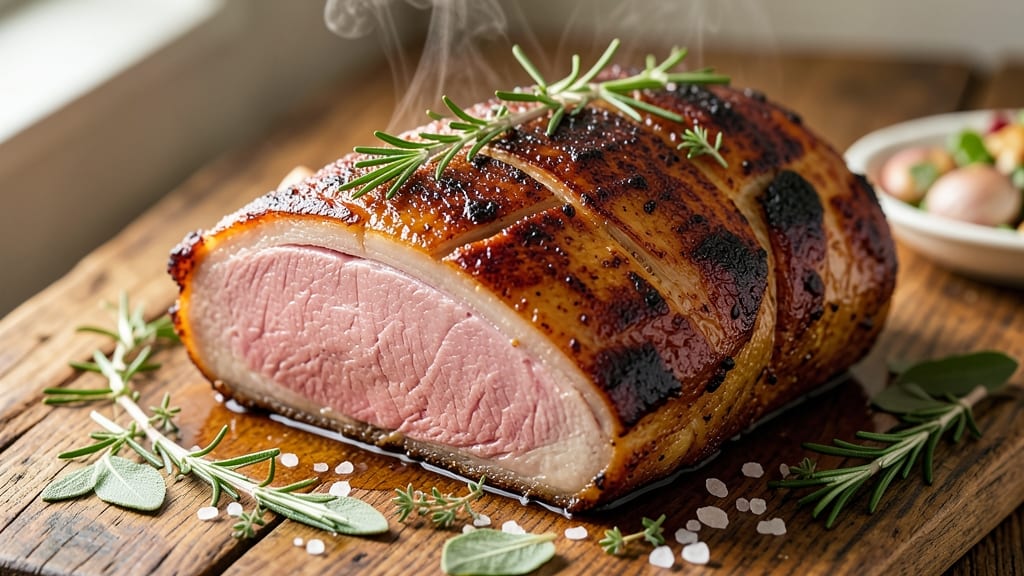
This amazing pork roast recipe is the one I've perfected after years of mastering whole-hog cooking—where crispy herb crust meets melt-in-your-mouth pink perfection. 🔥 The secret lies in a dry-brined crust that locks in moisture while creating that coveted golden bark, a technique I learned from Master Chef Chen during my apprenticeship in Charleston.
What makes this different? No soggy centers, no bland pork—just a roast so flavorful it disappears faster than my famous pulled pork at The Smoky Pig.
We're talking restaurant-quality results with a method that's surprisingly simple: just 10 minutes of prep, then hands-off roasting while you sip sweet tea and watch the magic happen.
By the time it emerges from the oven, you'll have a roast with a crispy herb-encrusted exterior and tender, juicy meat that slices like butter. The aroma alone will have your whole house asking what's for dinner, and the first bite?
That's when they'll understand why this is my go-to recipe for family gatherings.
Serve it with apple sauce, roasted potatoes, or a simple green salad—this pork stands up to anything. Let's get to that oven!
Ingredients for amazing pork roast
The secret to this restaurant-quality pork roast lies in its dry-brined crust and herb-infused magic.
| Ingredient | Amount | Notes |
|---|---|---|
| Bone-In Pork Loin Roast 🐖 | 4 lb | Center-cut for even cooking |
| Diamond Crystal Kosher Salt 🧂 | ½ cup | For dry brine overnight |
| Fresh Rosemary 🌿 | ¼ cup | Finely chopped, stems removed |
| Fresh Thyme 🌿 | ¼ cup | Leaves only, finely chopped |
| Fresh Sage 🌿 | ¼ cup | Leaves only, finely chopped |
| Garlic Cloves 🧄 | 6 cloves | Minced for herb paste |
| Extra-Virgin Olive Oil 🫒 | ¼ cup | For herb paste |
| Unsalted Butter 🧈 | ½ cup | Cold, cubed for crust |
| All-Purpose Flour 🌾 | ¼ cup | For herb crust coating |
| Ground Black Pepper 🌶️ | 1 tbsp | Freshly cracked |
| Apple Cider Vinegar 🍎 | 2 tbsp | For brine |
| Brown Sugar 🍚 | 2 tbsp | For crust caramelization |
The pork loin is non-negotiable here—bone-in, center-cut from Whole Foods or your local butcher ensures even cooking and maximum flavor. Look for good marbling and ask for the roast to be cut from the center of the loin. Master Chef Chen's trick: the bone helps retain moisture while the center cut guarantees tender slices. If your butcher doesn't have it pre-cut, ask for a 4-pound roast that's roughly 1.5 inches thick all over. The herbs should be fresh from the grocery store's produce section—none of that dried stuff. I always buy extra rosemary because it holds up better than thyme during the long roasting time.
No fresh herbs? Dried will work at one-third the amount, but trust me on the fresh version. Running short on butter? Olive oil works in a pinch, though it won't give that same golden crust. The apple cider vinegar adds depth—substitute lemon juice if that's what you've got. For the crust, I've tested this with both panko and regular breadcrumbs, but all-purpose flour gives the best texture. It's worth taking 10 minutes to make the herb paste—just pulse the herbs, garlic, olive oil, and salt in a food processor. The brown sugar is crucial for that caramelized crust, but if you're watching sugar, reduce to 1 tablespoon—it'll still be delicious.
This roast reheats like a dream—350°F for 20 minutes with a splash of apple juice keeps it juicy. Store leftovers in the fridge for 4-5 days, but honestly, it disappears that fast. For make-ahead magic, brine the roast overnight and prep the herb paste the day before. The roast itself keeps 3-4 days in the fridge before cooking. If you're planning ahead, the herb paste freezes beautifully for 3 months—just thaw in the fridge before using.
Why You'll Love This Recipe
- I swear by this rule: if it’s not on my counter, I’m not using it. Just salt, herbs, and that bone-in pork—no fancy marinades or last-minute shopping. The rosemary and thyme cling to the meat like it’s their job, and honestly? That’s all you need for something that tastes like it simmered all day.
- I’ll be real: most roasts turn into sad, dry mystery meat by day three. Not this one. The bone keeps it moist, and the herbs add flavor even after reheating. I portion it into containers before it cools, and suddenly, lunch is solved for the whole week. Budget win, time win, me win.
Step-by-step instructions for herb-infused pork roast
Here's where the magic happens—transforming a simple pork roast into showstopping perfection.
👨🍳 Step 1: Create the Dry Brine and Herb Paste
First, mix the 0.5 cup Diamond Crystal Kosher Salt with the 2 tbsp Apple Cider Vinegar in a small bowl—this creates your dry brine. Pat the 4 lb Bone-In Pork Loin Roast completely dry with paper towels, then rub this salt-vinegar mixture all over the meat, pressing it into every crevice. This step is non-negotiable for juicy results.
In a separate bowl, combine the 0.25 cup Fresh Rosemary, 0.25 cup Fresh Thyme, 0.25 cup Fresh Sage, 6 cloves Garlic Cloves, 0.25 cup Extra-Virgin Olive Oil, and 1 tbsp Ground Black Pepper. Use a mortar and pestle or the flat side of a knife to crush the herbs and garlic into a thick paste—this ensures maximum flavor infusion. Let the roast sit uncovered in the fridge for 12-24 hours while you prep the rest.
👨🍳 Step 2: Build the Herb Crust Coating
After the dry brine, remove the roast from the fridge and let it sit at room temperature for 30 minutes. Meanwhile, make the herb crust: In a food processor, pulse the 0.5 cup Unsalted Butter (cold, cubed) with the 0.25 cup All-Purpose Flour and 2 tbsp Brown Sugar until the mixture resembles coarse crumbs. Stir in the herb paste you made earlier.
Spread this mixture evenly over the roast, pressing firmly to create a thick, even coating. The butter and flour will create a golden, crackly crust while the brown sugar adds subtle caramelization. This is where the visual drama begins—your roast should look like it's been kissed by the gods.
🔥 Step 3: Sear for Color and Flavor
Preheat your oven to 375°F. Heat a large oven-safe skillet over medium-high heat and add the roast. Sear for 5 minutes per side until deep golden brown—this develops the crust and locks in juices. The key here is patience; don't rush the searing or you'll end up with uneven color.
Once seared, transfer the skillet to the oven and roast for 45-50 minutes for medium-rare (internal temp 135°F) or 55-60 minutes for medium (145°F). The bone-in cut helps regulate cooking—it stays juicy longer than boneless. Here's the thing: your roast will carry over 5-10°F, so pull it out when it's just shy of your target temperature.
⏰ Step 4: Rest and Slice for Juicy Perfection
Remove the roast from the oven and transfer it to a cutting board. Tent loosely with foil and let it rest for 15-20 minutes—this crucial step allows the juices to redistribute. If you skip this, you'll end up with dry slices. While resting, the crust will firm up slightly, making it easier to handle.
Slice the roast against the grain into ½-inch thick portions. The herb crust should crackle with every bite, revealing pink, tender meat underneath. Serve immediately with pan juices spooned over the top—those golden bits packed with flavor are pure liquid gold. The contrast of crispy crust and juicy interior is what makes this roast truly amazing.
Pro Tips For Making Amazing Pork Roast
- SEAR IT FIRST: Take that pork loin out of the fridge and hit it with a screaming-hot pan—no oil needed. The bone-in roast will render its own fat, giving you a crust worth fighting for. I used to skip this, and the roast always tasted bland no matter how much herb butter I slathered on later.
- SALT THE HERBS: Toss your fresh rosemary, thyme, and sage sprigs in a bowl with a pinch of Diamond Crystal kosher salt before tucking them under the roast. The salt clings to the leaves, making every bite of the crust packed with flavor. (Yes, even if the recipe doesn’t say to—trust me.)
- DON’T PUNCH THE MEAT: Resist the urge to stab the roast with a fork to check doneness. The juices will leak out, turning your perfectly moist roast into a sad, dry mess. Use a meat thermometer—aim for 145°F internal temp, and pull it before it hits 150°F. Your future self will thank you.
- REST IT RIGHT: Give that roast a solid 5-10 minutes under foil before slicing—no peeking, no rushing. I learned this the hard way after serving slices that looked perfect but tasted like cardboard. The juices need time to redistribute, or you’ll end up with a dry, disappointing pile. (Yes, even if you’re starving.)
Troubleshooting your amazing pork roast
Uneven Cooking Fix
The most common issue is uneven cooking, especially with thicker roasts. If your center stays cold while the crust burns, try this: poke a few holes in the crust with a skewer before roasting to allow steam to escape.
Also, rotate your roast halfway through cooking by flipping it over—this ensures even exposure to heat. I've seen roasts that were 1 inch thick cook perfectly this way, with no cold spots. 🌡️
Dry Crust Problem
A dry, crumbly crust usually means the butter melted too early. To prevent this, chill your roast uncovered for 10 minutes after coating before searing. This firms up the butter mixture. If it still happens, reduce the flour by 1 tablespoon next time—sometimes too much absorbs too much moisture.
I've had this issue with humid kitchen air, so I now prep my roasts in a cool, dry environment when possible.
Soggy Herb Paste
If your herb paste turns watery during roasting, the issue is usually too much moisture in the herbs. Always pat dry your fresh rosemary, thyme, and sage before chopping. Also, reduce the olive oil by 1 tablespoon if your paste looks too loose.
For extra insurance, sprinkle 1 teaspoon of cornstarch into your herb paste before applying it to the roast—it absorbs excess moisture beautifully. This trick comes from my years of working with humid Southeast ingredients.
Temperature Troubles
If your roast isn't reaching the right internal temperature, calibrate your thermometer first—many home ovens run 10-15°F hotter than set. For bone-in pork, aim for 135°F for medium-rare or 145°F for medium at the thickest part.
If it's still undercooked, cover loosely with foil and return to the oven for 10-15 minutes at the same temperature. Never rush this—pork needs time to come up evenly. I've pulled roasts that were 10°F shy and finished perfectly with this method. ⏱️
Crust Not Crispy
A soft crust usually means not enough browning during searing. Next time, increase your sear time to 6-7 minutes per side and use a heavy skillet—cast iron works best. Also, preheat your oven for 30 minutes before cooking to ensure consistent heat.
For extra crispiness, brush the crust with 1 tablespoon melted butter right before serving—this gives that restaurant-quality crackle. I learned this trick from my time in Charleston, where humidity makes crispy crusts challenging.
Overly Salty Pork
If your roast tastes too salty, the dry brine was likely too aggressive. For future roasts, reduce the salt to ¼ cup instead of ½ cup. Also, rinse the roast briefly under cold water after the initial salt application, then pat dry completely.
The vinegar helps balance saltiness, so don't skip that. I've had this happen when using pre-salted butter—always use unsalted for this recipe. The good news? A slightly salty roast can be saved by serving it with sweet potato mash or fruit chutney to balance the flavors. 💡
Nutrition facts
Frequently asked questions
Why do you recommend bone-in pork loin for this recipe?
The bone acts as a natural heat sink, helping the roast cook more evenly and stay juicier longer. It also adds depth of flavor that boneless cuts can't match. Plus, the bone makes slicing easier once it's rested—just cut around it!
Can I make this roast ahead of time?
Prep the herb paste and brine the roast up to 24 hours ahead. For the full experience, cook it fresh, but if needed, reheat sliced portions in a 350°F oven for 20 minutes with a splash of apple juice. The flavors actually develop better overnight.
What's the best way to store leftovers?
Wrap tightly in plastic wrap, then place in an airtight container. It keeps 4-5 days in the fridge or 3 months in the freezer. For reheating, use the oven method above—microwaving makes the crust soggy. Pro tip: Freeze portions of sliced roast for quick meals!
How do I adjust this for a smaller roast?
For a 2-3 lb roast, reduce all ingredients by half and roast at 375°F for 30-35 minutes (medium-rare). Use a meat thermometer—smaller roasts cook faster. The herb paste ratio stays the same, but you may need to adjust oven time by 5-10 minutes depending on thickness.
What if I don't have fresh herbs?
Use 1/3 the amount of dried herbs (so 1 tbsp dried instead of 1/4 cup fresh). Toast them in a dry pan for 30 seconds to release their oils before making the paste. Dried rosemary works best—it holds up better during roasting. The flavor won't be identical, but it'll still be delicious!