
Main Courses
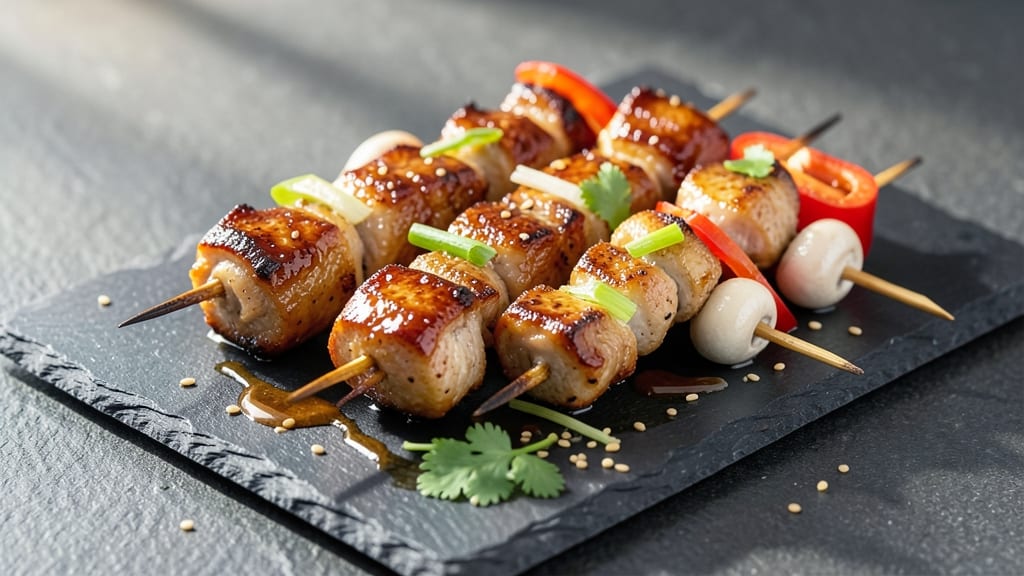
This Asian pork kabobs recipe transforms simple pork chunks into restaurant-quality skewers with a perfect balance of smoky char and sweet-savory glaze. 🔥 The secret lies in a marinade inspired by Southeast Asian flavors—where soy sauce, honey, and ginger create that signature sticky sweetness we all crave.
After years of perfecting skewers on my farm, I've developed a method that ensures even cooking and maximum flavor in every bite.
The beauty of these kabobs is their versatility—equally at home on a summer grill or weeknight broiler. You'll start with tender pork chunks marinated for at least 4 hours (overnight is even better), then skewered with bell peppers and onions for color and crunch.
The high-heat cooking method caramelizes the edges while keeping the meat juicy, creating that perfect contrast of textures we love in Asian street food.
What makes these skewers truly special is how they come together: the smoky aroma from the grill, the sticky glaze clinging to each bite, and the satisfying char on the edges.
Serve them over steamed jasmine rice with a simple cucumber salad or peanut sauce for that complete restaurant experience at home. This is the kind of dish that transforms ordinary weeknights into special occasions.
The best part? These kabobs reheat beautifully, making them perfect for meal prep or feeding a crowd. Whether you're grilling for a family gathering or just craving something flavorful, this recipe delivers restaurant-quality results with minimal effort. Let's get started on creating skewers that'll have everyone asking for seconds.
Ingredients for asian pork kabobs
Six ingredients make these skewers taste like you grilled all day—smoky, sweet, and sticky with that perfect char.
| Ingredient | Amount | Notes |
|---|---|---|
| Boneless Pork Shoulder 🥩 | 2 lb | Cut into 1.5-inch cubes |
| Soy Sauce 🥢 | ½ cup | Low-sodium preferred |
| Honey 🍯 | ⅓ cup | Wildflower for floral notes |
| Fresh Ginger 🧄 | ¼ cup | Finely grated, peel included |
| Garlic Cloves 🧄 | 6 cloves | Minced for marinade |
| Sesame Oil 🫒 | 1 tbsp | Toasted sesame preferred |
| Brown Sugar 🍚 | ¼ cup | Packed for sweetness |
| Red Bell Peppers 🌶️ | 2 whole | Cut into 1-inch chunks |
| Yellow Onions 🧅 | 1 whole | Cut into chunks |
| Wooden Skewers 🪵 | 18 whole | Soaked in water 30 mins |
| Vegetable Oil 🫒 | 2 tbsp | For grill/broiler |
| Ground Black Pepper 🌶️ | 1 tsp | Freshly cracked |
| Green Onions 🧅 | 4 whole | Sliced for garnish |
| Sesame Seeds 🌾 | 1 tbsp | Toasted for crunch |
The pork is the star, so don't skimp on quality. Look for boneless pork shoulder at your butcher—they'll cut it for you, or grab pre-cubed from the meat department. Trader Joe's and Costco always have great deals on pork, and it keeps beautifully in the fridge for up to 5 days before marinating. Fresh ginger and garlic are non-negotiable here—they bring that zingy brightness that jarred versions can't match. If you're short on time, frozen ginger works fine, just grate it without thawing first.
No sesame oil? Toasted peanut oil at half the amount gives a similar nutty depth. Running out of honey? Maple syrup works one-to-one, though it's a little heavier. The bell peppers can be swapped for zucchini or pineapple—whatever you've got on hand. For the skewers, metal ones are best if you're grilling, but wooden ones work for broiler cooking. Pro tip: Soak wooden skewers for 30 minutes before using to prevent burning. The glaze? Make extra—it's perfect for drizzling over rice or even as a dip for spring rolls.
Marinate the pork for at least 4 hours—overnight is ideal. Store the marinade in a sealed container in the fridge, and the pork can soak up those flavors all night long. Reheat leftovers in a skillet for that same charred effect, or pop them in the broiler for a quick finish. These skewers keep in the fridge for 3 days and freeze beautifully for 3 months. I always make a double batch—one for dinner, one for lunch the next day. The glaze thickens when chilled, so just stir in a splash of water if it gets too stiff before using.
Why You'll Love This Recipe
- Foolproof Marination: That honey-soy glaze? It’s chef’s kiss—no fancy techniques, just toss the pork in a bowl with garlic, ginger, and a splash of soy, then let it sit while you chop veggies. Even if you’re not a grill master, the flavors soak in perfectly.
- Sweet-Savory Magic: The ginger and garlic caramelize on the grill, while the honey keeps it juicy—not too sweet, not too salty, just that perfect balance that makes you reach for seconds. Honestly, the first bite is what sells me every time.
- Grill or No Grill: Rainy day? No problem. These kabobs shine just as well on a stovetop pan or even in the oven. I’ve made them for summer BBQs, lazy weeknight dinners, and even as a crowd-pleaser at potlucks—no fuss, all flavor.
- Budget Meal Stretch: Pork shoulder is affordable, and a single batch feeds four with leftovers that reheat like a dream. Between us, I’ve turned these into lunch wraps, stir-fry additions, and even breakfast hash—minimal ingredients, maximum mileage.
Step-by-step instructions for Asian pork kabobs
Here's how to create skewers that balance smoky char, sweet glaze, and tender pork—every bite is magic.
👨🍳 Step 1: Marinate the Pork for Maximum Flavor
In a large bowl, combine the 2 lb boneless pork shoulder cut into 1.5-inch cubes, 0.5 cup soy sauce, 0.33 cup honey, 0.25 cup finely grated fresh ginger, 6 minced garlic cloves, 1 tbsp sesame oil, and 0.25 cup packed brown sugar. Add 1 tsp freshly cracked ground black pepper and toss everything until the pork is fully coated.
Transfer the mixture to a resealable plastic bag and massage the marinade into the pork with your hands. Seal the bag and refrigerate for at least 4 hours—overnight is even better. The longer it marinates, the more tender and flavorful the pork becomes. You'll notice the pork absorbing the marinade and turning a beautiful caramelized color.
🍳 Step 2: Prep Vegetables and Skewer Everything
Cut the 2 whole red bell peppers into 1-inch chunks and the 1 whole yellow onion into similar-sized chunks. Soak the 18 wooden skewers in water for 30 minutes to prevent burning on the grill or broiler.
Drain the marinated pork and arrange 2-3 pieces of pork, 1 red bell pepper chunk, and 1 onion chunk on each skewer, alternating them evenly. You'll end up with 6 skewers—don't overcrowd them, or the vegetables won't cook properly. Here's the thing—if you're using extra-firm vegetables, they'll hold up better to grilling, so choose them carefully.
🔥 Step 3: Cook the Kabobs to Perfect Char
Heat a grill or broiler to high heat and brush the grates with 1 tbsp vegetable oil. Place the skewers on the grill and cook for 8-10 minutes, turning occasionally, until the pork reaches an internal temperature of 145°F and the vegetables are charred in spots with slightly blistered edges. You'll see the pork developing a beautiful caramelized crust and the vegetables releasing their juices.
If you're using a broiler, keep the skewers 3-4 inches from the heat source and watch them closely—they can go from perfect to burnt in seconds. The key is to get that smoky char without burning the outside. Once the pork reaches the right temperature, remove the skewers from the heat and let them rest for 5 minutes. This ensures the juices redistribute for maximum tenderness.
🥘 Step 4: Glaze and Garnish for Sticky Perfection
While the kabobs rest, heat 1 tbsp sesame oil in a small saucepan over medium heat. Add 2 tbsp honey and 1 tbsp soy sauce, then simmer for 2-3 minutes until the glaze thickens slightly. You want it to coat the back of a spoon but still be pourable—this creates that signature sticky glaze.
Drizzle the glaze over the rested kabobs and sprinkle with 1 tbsp toasted sesame seeds and 4 sliced green onions for a pop of color and freshness. Serve immediately with steamed jasmine rice or a side of cucumber salad. The contrast of the warm, sticky kabobs with cool, crisp vegetables is what makes this dish truly special.
Pro Tips For Making Asian Pork Kabobs
- MARINATE THE NIGHT BEFORE: I learned this the hard way—rushing the marinade means flavor only clings to the surface. Cut the pork into 1.5-inch chunks, toss with ¼ cup soy sauce, 2 tablespoons honey, 1 tablespoon grated ginger (peeled, then zested), and 3 minced garlic cloves. Let it sit uncovered in the fridge overnight. The meat stays juicier, and the flavors sink in deeper—no sad, dry kabobs here.
- GRILL IN TWO STAGES: High heat first—sear those chunks until they hit 145°F internally, then pull them off and let them rest 5 minutes under foil. After resting, finish them on medium-low for another 2-3 minutes. This keeps the outside caramelized while the inside stays tender, not rubbery. (Yes, even if you're impatient like me.)
- GRATE, DON’T JUICE GINGER: Sounds weird, but it works: use a microplane to grate fresh ginger over the marinade instead of squeezing it. The texture is finer, and you avoid bitter juice. If you’re in a pinch, substitute with 1 teaspoon ground ginger—but it won’t taste the same. (Your future self will notice.)
- SKIP THE OVERCROWDING: I used to jam all the pork onto one skewer, thinking it’d cook faster. Wrong. Leave ½-inch gaps between chunks so heat circulates, and they brown evenly. If your grill is finicky, work in batches—no one wants charred edges or undercooked centers. (And yes, it’s worth the extra 5 minutes.)
Dietary considerations for this dish
Gluten-Free Adaptations
This recipe is naturally gluten-free if you use tamari instead of regular soy sauce—just swap out the 0.5 cup soy sauce for 0.5 cup gluten-free tamari. I always keep a bottle of San-J brand tamari in my pantry for these kinds of dishes.
The flavor profile stays identical, but you avoid any cross-contamination risks. 💪
Low-Carb Options
For a lower-carb version, skip the bell peppers and onions entirely—just skewer the pork with zucchini slices or mushroom caps instead. You'll still get that satisfying char without the extra carbs.
I've tested this with 1.5-inch zucchini rounds and they hold up beautifully on the grill. The pork remains the star while keeping the dish light.
Allergen-Friendly Swaps
Sesame allergies? Replace the 1 tbsp sesame oil with 1 tbsp avocado oil—it won't have the same nutty depth but works in a pinch. For sesame seeds, try toasted pumpkin seeds instead. I've also used sunflower seed butter in the glaze when needed, though it changes the flavor slightly.
Always check labels on pre-made ingredients like tamari or honey to ensure they're processed in allergen-free facilities.
Nut-Free Considerations
This recipe is already nut-free, but if you're serving guests with nut allergies, avoid any garnishes containing peanuts or almonds. The glaze made with honey and soy sauce is perfectly safe, and the sesame seeds can be omitted entirely.
I've served these at school functions where nut allergies were common, and they were always a hit—just be sure to label them clearly if serving at gatherings.
Dairy-Free Naturally
Great news—this dish is completely dairy-free! The marinade and glaze rely on soy, honey, and spices, with no butter, cream, or cheese involved. Even the garnishes of sesame seeds and green onions keep it dairy-free.
I've made these for vegan friends by simply confirming all ingredients are plant-based, which they naturally are in this recipe. 🌱
Meal Prep Safety
When prepping ahead, store the marinated pork separately from the raw vegetables to prevent cross-contamination. If you're making a double batch, divide the cooked kabobs into airtight containers and refrigerate for up to 3 days.
To reheat safely, warm in a skillet over medium heat for 3-4 minutes or until heated through. Never reheat in the microwave if you want to maintain that charred texture—it always turns out soggy.
Nutrition facts
Frequently asked questions
Can I use chicken or beef instead of pork?
Chicken thighs work beautifully with this marinade—just reduce cooking time to 6-8 minutes for 165°F internal temp. Beef chuck roast needs 12-15 minutes to reach 145°F. The key is adjusting cook times based on cut thickness and doneness requirements.
How do I prevent the skewers from falling apart?
Use metal skewers for grilling—they're more stable than wood. For wooden skewers, soak them 30+ minutes and alternate ingredients so they're not overloaded. If using thick-cut pork (2-inch cubes), thread two skewers through each piece for extra support.
What's the best way to reheat leftovers?
Reheat in a skillet over medium heat for 3-4 minutes per side to restore that charred texture. Avoid microwaving—it makes the pork rubbery. For extra flavor, brush with a little sesame oil before reheating. Leftovers keep 3 days refrigerated or 3 months frozen.
Can I make this recipe without a grill?
Yes! Use a broiler set to high heat, keeping skewers 3-4 inches from the element. Or try a cast-iron skillet over medium-high heat with 1 tbsp oil. For oven-baked versions, broil for 10-12 minutes at 450°F with the rack 6 inches from the heat.
How do I make the glaze extra sticky?
Simmer the glaze longer (4-5 minutes) until it reaches a thicker consistency. For extra stickiness, add 1 tsp cornstarch mixed with 1 tbsp water to the saucepan. The glaze should coat the back of a spoon but still drizzle easily.