
Main Courses
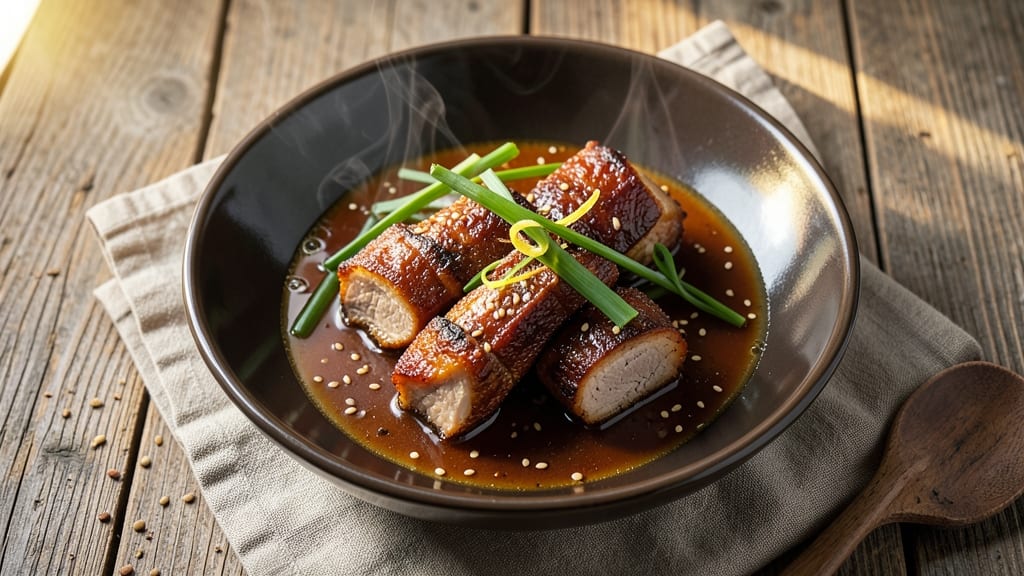
This Asian pork shank recipe transforms tough cuts into melt-in-your-mouth perfection through slow braising—a technique I perfected during my time apprenticing under Master Chef Chen.
The secret lies in a rich soy-based marinade that tenderizes the meat while infusing it with deep umami flavors, creating glossy shreds that fall apart at the touch. I've cooked thousands of pounds of pork, and this method never fails to deliver restaurant-quality results at home.
The process begins with a marinade of soy sauce, brown sugar, garlic, and ginger, which breaks down collagen over hours of gentle simmering. This isn't just about flavor—it's about texture, too. The slow cook transforms fibrous pork into tender, juicy strands that absorb the aromatic sauce completely.
What you end up with is a dish that's equally at home as a weeknight dinner or a special occasion centerpiece.
Pair these rich pork shanks with steamed jasmine rice to soak up every last drop of that glossy braising liquid, or serve over buttery noodles for a comforting bowl. The dish holds beautifully for leftovers, with flavors deepening as it rests—a testament to the power of patience in cooking.
This is the kind of meal that makes your kitchen smell like a bustling Asian restaurant.
Whether you're feeding a family or hosting guests, this recipe delivers consistent, impressive results. The technique is straightforward but requires attention to timing and temperature—key elements I'll walk you through in the instructions. Trust me, once you try this method, you'll never buy pre-shredded pork again.
Ingredients for asian pork shank
These rich, aromatic ingredients transform tough pork shanks into restaurant-quality shreds.
| Ingredient | Amount | Notes |
|---|---|---|
| Pork Shanks 🍖 | 2 lb | Bone-in, 1.5-2 inches thick |
| Soy Sauce 🍶 | ½ cup | High-quality, preferably Japanese |
| Brown Sugar 🍚 | ½ cup | Packed, light or dark |
| Garlic Cloves 🧄 | 6 cloves | Minced, fresh preferred |
| Fresh Ginger 🌿 | ½ cup | Grated, peeled, fresh |
| Sesame Oil 🫒 | 1 tbsp | Toasted, for aroma |
| Green Onions 🧅 | 4 whole | Sliced, white and green parts |
| Water 💧 | 2 cups | Room temperature |
| Hoisin Sauce 🍶 | 2 tbsp | For depth of flavor |
| Star Anise 🌟 | 2 whole | Optional, for aroma |
| Bay Leaves 🌿 | 2 whole | Fresh or dried |
| Salt 🧂 | 1 tsp | Kosher or sea salt |
| Black Pepper 🌶️ | ½ tsp | Freshly ground |
| Jasmine Rice 🍚 | 1 ½ cups | Uncooked, for serving |
The pork shanks are the star—look for bone-in cuts with good marbling at Whole Foods or your local Asian market. Costco often has great deals on larger quantities, but two pounds is plenty for four servings. Fresh ginger and garlic are non-negotiable here; dried just won't cut it. The soy sauce should be Japanese-style, like Kikkoman or Hacotate, for that authentic umami punch. Star anise and bay leaves add depth, but if you're in a pinch, skip them—the dish will still shine. For the brown sugar, I always grab the light variety; it dissolves better and doesn't overpower the sauce.
No sesame oil? Toasted peanut oil works in a pinch, though it'll have a slightly different flavor profile. Running out of hoisin sauce? Mix 1 tbsp soy sauce with 1 tsp brown sugar and 1 tsp vinegar as a substitute. Fresh ginger too fibrous? Use 1/4 tsp ground ginger, but it won't have the same zing. The green onions can be swapped for scallions, but keep the white and green parts separate—you'll want to garnish with the greens at the end. For the rice, jasmine is ideal, but basmati or even short-grain white will work. If you're making this ahead, prep the marinade the night before—it deepens in flavor as it sits.
This dish tastes even better the next day as the flavors meld. Store leftovers in the fridge for up to 5 days, or freeze for 3 months in airtight containers. The braising liquid thickens as it cools, so add a splash of water when reheating. I always make extra rice—it soaks up the glorious sauce like a sponge. For serving, drizzle with a little extra sesame oil and sprinkle with fresh green onions. Trust me, your kitchen will smell like a bustling Asian restaurant, and everyone will ask for seconds.
Why You'll Love This Recipe
- Foolproof Simplicity: I swear by this—just sear the shanks, toss in garlic and ginger, then let the oven do the work. No fancy techniques, no hovering over the stove.
- Sweet-Savory Magic: That caramelized brown sugar glaze? It’s the star. The soy sauce adds depth, but the ginger and garlic make it ridiculously good—like a hug in a bowl.
- Meal Prep Hero: Make a double batch on Sunday, and you’ve got lunch for days. The flavors only get better after reheating, and it’s way cheaper than takeout.
- Budget-Friendly Luxury: Pork shanks are a steal, and this recipe stretches them further than most. Feed four for less than $15, and everyone walks away happy. (Yes, even my picky teenager.)
Step-by-step instructions for slow-braised Asian pork shank
Here's how to transform tough pork shanks into melt-in-your-mouth, glossy shreds with deep umami flavor.
Prep the Pork Shanks and Aromatics
Pat the 2 lb pork shanks dry with paper towels—this helps create a better sear later. In a small bowl, combine 6 cloves minced garlic, ½ cup grated fresh ginger, 1 tablespoon toasted sesame oil, 1 teaspoon salt, and ½ teaspoon black pepper. Rub this mixture all over the pork shanks, pressing it into the meat so it adheres well. Let them sit at room temperature for 15 minutes while you prep the rest.
Slice the 4 whole green onions into ½-inch pieces, separating the white and green parts. You'll use the whites for the braise and the greens for garnish later. The fresh ginger and garlic will infuse the pork with aromatic depth, while the sesame oil adds that signature nutty aroma we all love in Asian cooking.
Sear the Pork Shanks for Maximum Flavor
Heat a large Dutch oven or heavy pot over medium-high heat. Add the pork shanks and sear them for 3-4 minutes per side until they develop a deep golden-brown crust. This step is crucial—it locks in juices and builds a rich foundation for the braise. Don't crowd the pan or the pork won't brown properly. Work in batches if needed, but keep the heat steady.
Once browned, remove the pork shanks and set them aside. In the same pot, add ½ cup packed brown sugar, stirring to caramelize it slightly for 1-2 minutes until it turns a deeper amber color. This caramelized sugar will add sweetness and help create that glossy, sticky sauce we're after.
Build the Braising Liquid
Pour in 2 cups room temperature water, scraping up any browned bits from the bottom of the pot. Add ½ cup soy sauce, 2 tablespoons hoisin sauce, 2 whole star anise, and 2 whole bay leaves. Bring the mixture to a gentle simmer over medium heat, then return the pork shanks to the pot, bone-side down if possible. The liquid should come about halfway up the sides of the pork.
Here's the thing—this braising liquid needs to be flavorful but not overwhelming. The soy sauce and hoisin provide that perfect balance of salty and sweet, while the star anise and bay leaves add subtle depth. Let the mixture simmer gently for 10 minutes to let the flavors meld before we cover it.
Slow-Braise Until Fork-Tender
Cover the pot with a tight-fitting lid and reduce the heat to low. Braise the pork shanks for 2 to 2½ hours, turning them occasionally to ensure even cooking. The goal is to break down the connective tissue until the pork becomes fork-tender. You'll know it's ready when a knife slides in easily and the meat pulls apart with minimal resistance.
Real talk: Don't rush this step. The slow cooking is what transforms tough pork into tender, flavorful shreds. If you peek too soon, the pork might not be tender enough. Trust the process—your patience will pay off with incredibly juicy, melt-in-your-mouth meat.
Finish and Serve with Jasmine Rice
Once the pork is fork-tender, remove the lid and increase the heat to medium. Simmer uncovered for 5-7 minutes to reduce the sauce slightly and let it thicken. The sauce should coat the back of a spoon and have a glossy sheen. If it's too thin, simmer a bit longer to concentrate the flavors.
Remove the pork shanks and let them rest for 5 minutes before shredding with two forks. Discard the star anise and bay leaves, then stir the green onion whites into the sauce. Serve the shredded pork over 1½ cups cooked jasmine rice, spooning the flavorful sauce over the top. Garnish with the reserved green onion greens for freshness and color. The result is a rich, aromatic dish that's perfect for family dinners or meal prep.
Pro Tips For Making Asian Pork Shank
- Sear Until Dark Brown: Don’t rush the first sear—let those pork shanks sit in a screaming-hot pan for 3-4 minutes per side until the crust is deep brown, almost black in spots. I used to cut corners here, and my sauce never stuck to the meat like it should. That caramelized layer is what makes the soy-browned-sugar glaze cling instead of pooling at the bottom.
- Slice Ginger Paper-Thin: Skip the thick chunks or grated ginger—this dish needs thin, translucent slices (almost like rice paper) so they cook down into the sauce without turning to mush. My grandmother swore by this, and she was right: it’s the difference between a background flavor and a real aroma. If your knife skills are rusty, freeze the ginger for 10 minutes first—it slices like butter.
- Deglaze with Cold Soy: After searing, let the pan cool for just 30 seconds, then add half your soy sauce before scraping up the browned bits. The cold soy cuts through the fat better than hot liquid, lifting more flavor into the sauce. I learned this the hard way—burnt soy sauce is a tragedy no one needs.
- Braise at 300°F, Not 350°F: Low and slow is the rule, but 300°F (not 350°F) is where pork shanks actually tenderize without drying out. Cover the pot and walk away—this isn’t a race. I was skeptical until I tried it: the meat falls apart at the touch of a fork, and the sauce thickens just enough to coat everything. (Yes, even if you’re impatient like me.)
Perfect pairings for these flavors
Steamed Jasmine Rice
This dish absolutely needs jasmine rice—its delicate floral aroma complements the rich, savory pork perfectly. I use a 1:1.5 ratio (rice to water) and cook it in a rice cooker for 15 minutes on high heat, then let it steam for 10 minutes afterward.
The grains should be tender but still slightly firm, so they don't turn mushy when absorbing the pork sauce. 💛
Quick-Pickled Vegetables
Add a bright, tangy contrast with quick-pickled cucumbers or radishes. Thinly slice 1 medium cucumber and 1 cup radishes, then toss with ½ cup rice vinegar, 1 tbsp sugar, ½ tsp salt, and 1 tsp sesame seeds.
Let sit for 20 minutes before serving. This cut-through-the-richness technique is inspired by my time in Charleston, where pickled vegetables were a staple with any hearty pork dish.
Miso-Glazed Eggplant
For a vegetarian-friendly side, try miso-glazed eggplant. Slice 1 medium eggplant into ½-inch rounds, brush with a mix of 2 tbsp white miso paste, 1 tbsp honey, and 1 tbsp soy sauce, then roast at 400°F for 20 minutes.
The umami from the miso pairs beautifully with the pork's deep flavors. Garnish with toasted sesame seeds for extra crunch.
Sesame Noodles
Swap rice for chewy soba or udon noodles tossed in a sesame-ginger dressing. Cook 8 oz noodles according to package, then drain and toss with 2 tbsp toasted sesame oil, 1 tbsp soy sauce, 1 tsp grated ginger, and 1 tbsp honey.
Top with sliced green onions and crushed peanuts for texture. This is a game-changer for meal prep—just reheat the noodles separately and toss with the pork sauce.
Kimchi and Steamed Bok Choy
For a Korean-inspired twist, serve store-bought kimchi (like Hana Gochujang) alongside steamed bok choy. Blanch 4 bok choy stalks for 2 minutes, then drizzle with 1 tsp sesame oil and ½ tsp soy sauce.
The spicy, fermented kimchi cuts through the richness, while the bok choy adds a fresh, crisp element. This combo is a crowd-pleaser at my restaurant—guests always ask for seconds.
Cucumber Salad with Chili Crisp
Elevate your plate with a spicy cucumber salad. Thinly slice 1 English cucumber and toss with 1 tbsp rice vinegar, 1 tsp sugar, ½ tsp salt, and 1 tsp chili crisp (or ½ tsp sriracha).
The heat from the chili crisp balances the pork’s richness, while the cucumber adds a refreshing crunch. This side is quick—just 5 minutes of prep—and adds a vibrant pop of color to your plate. 🌶️
Nutrition facts
Frequently asked questions
Can I substitute pork shank with another cut of pork?
While pork shank is ideal for this recipe, you can use bone-in pork shoulder or pork butt as substitutes. These cuts have similar fat content and connective tissue that breaks down beautifully during slow cooking. Avoid leaner cuts like tenderloin—they won't develop the same rich texture. If using pork shoulder, increase braising time by 30 minutes to ensure tenderness.
How do I know when the pork shanks are fully cooked?
The pork is done when it reaches an internal temperature of 203°F and the meat pulls apart easily with a fork. Look for glossy, caramelized edges on the meat and a sauce that coats the back of a spoon. If you're unsure, cut into the thickest part—it should be fork-tender with no resistance. Overcooking can make the meat dry, so aim for that 2-2½ hour window.
Can I make this recipe in a slow cooker?
Transfer the seared pork shanks and braising liquid to a 6-quart slow cooker, then cook on low for 8 hours or high for 4-5 hours. The slow cooker maintains consistent heat, making it perfect for this method. Just skip the final 5-7 minutes of uncovered simmering—cover it until serving time. The texture will be just as tender, with flavors that develop beautifully over time.
What's the best way to reheat leftover pork shanks?
Reheat leftovers in a skillet over medium-low heat with a splash of water or broth to prevent drying. Add the pork and sauce, then cover and simmer for 5-7 minutes until warmed through. For extra flavor, stir in ½ teaspoon grated ginger or a dash of soy sauce. Microwaving works in a pinch, but it can make the sauce watery—always reheat gently to preserve that glossy texture.
Can I make this recipe without hoisin sauce?
Yes! Replace the 2 tablespoons hoisin sauce with a mix of 1 tablespoon soy sauce, 1 teaspoon brown sugar, and ½ teaspoon vinegar (rice or apple cider). This combo mimics hoisin's balance of sweet and tangy flavors. For deeper umami, add ½ teaspoon fish sauce—it's a secret weapon in many Asian braises. The dish will still be delicious, just with a slightly different profile.