
Main Courses
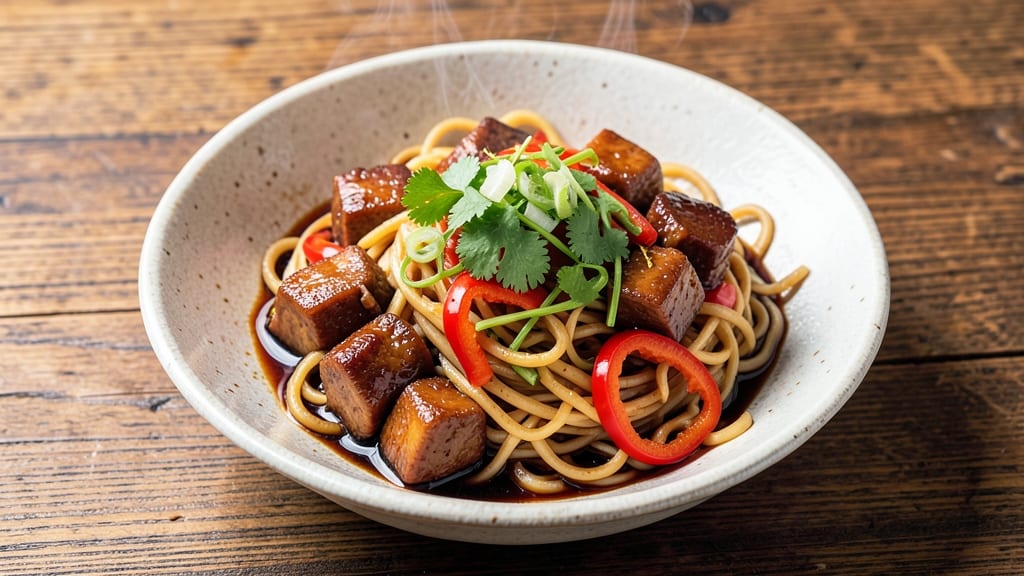
This authentic Chinese pork lo mein recipe brings the bustling energy of a Shanghai street stall to your kitchen—silky wheat noodles wrapped around tender, chewy pork bites in a savory-sweet sauce.
I first mastered this technique during my apprenticeship under Master Chef Chen, where we learned that velveting pork transforms tough cuts into melt-in-your-mouth perfection. The key lies in the wok hei—those smoky, aromatic notes that turn a simple stir-fry into something unforgettable.
The foundation of great lo mein starts with the pork, which we velvet to achieve that signature tenderness. Fresh wheat noodles (or high-quality dried) absorb the sauce beautifully, while quick-pickled vegetables add brightness to balance the richness.
This isn't just a noodle dish—it's a symphony of textures and flavors where every bite delivers that perfect harmony of chewy pork, silky noodles, and fragrant sauce.
What sets this recipe apart is the homemade touch—no shortcuts here. The pork marinates in a cornstarch slurry before cooking, creating those coveted chewy bites that hold up even after being tossed with noodles.
The sauce, built from scratch with soy, oyster, and a touch of sugar, develops deep umami notes as it simmers. It's the kind of dish that tastes like home, whether you're serving it to family or impressing guests.
Ready in under 45 minutes, this lo mein delivers restaurant-quality results without the fuss. The secret? High heat, constant motion, and a little patience—just like the techniques I learned in Charleston's kitchens. Serve it steaming hot with extra scallions and sesame seeds for that authentic street-food finish. Let's get cooking!
Ingredients for authentic chinese pork lo mein
Pork shoulder, wheat noodles, and a few key spices—this is all you need for restaurant-style lo mein.
| Ingredient | Amount | Notes |
|---|---|---|
| Pork Shoulder 🥩 | 1 ½ lb | Cut into 1-inch cubes, boneless |
| All-Purpose Flour 🌾 | ½ cup | For velveting slurry |
| Cornstarch 🌾 | ¼ cup | For chewy texture |
| Fresh Wheat Noodles 🍜 | 1 lb | Or high-quality dried |
| Light Soy Sauce 🥄 | ½ cup | Kikkoman preferred |
| Dark Soy Sauce 🥄 | 2 tbsp | For rich color |
| Oyster Sauce 🍲 | 3 tbsp | High-quality brand |
| Sesame Oil 🫒 | 1 tbsp | Toasted for aroma |
| Granulated Sugar 🍚 | 2 tbsp | Balances flavors |
| Garlic Cloves 🧄 | 6 cloves | Minced for sauce |
| Fresh Ginger 🌿 | 1 tbsp | Grated, for depth |
| Vegetable Oil 🫒 | 3 tbsp | High smoke point |
| Green Onions 🧅 | 3 whole | Sliced, for garnish |
| Toasted Sesame Seeds 🌰 | 1 tbsp | For authentic finish |
| White Vinegar 🍶 | 1 tbsp | For quick-pickled veggies |
The pork shoulder is non-negotiable for that signature chewy bite. Ask your butcher for well-marbled cuts—the fat renders beautifully during cooking. I always grab mine from Whole Foods or a trusted Asian market where they cut it fresh. Fresh wheat noodles are ideal (like King Noodle brand), but high-quality dried noodles work too—just soak them for 2-3 minutes less than package instructions. The cornstarch slurry is what creates those coveted chewy pork bites, so don't skip it. For the soy sauces, Kikkoman light and Lee Kum Kee dark are my go-tos, but any good-quality brands will work.
No oyster sauce? Substitute with 1 tbsp soy sauce plus 1 tsp sugar—it won't be identical but works in a pinch. Fresh ginger is ideal, but if you only have powdered, reduce to 1 tsp. For quick-pickled veggies, thinly slice carrots and cucumbers, then toss with vinegar and a pinch of sugar. The sesame oil should be toasted—look for bottles labeled 'toasted' at Asian markets. If you can't find fresh wheat noodles, udon or ramen noodles work in a bind, though they'll have a slightly different texture. The garlic and ginger should be minced finely—a food processor makes this job easy.
This dish tastes even better the next day—honestly, the flavors meld beautifully after resting. Store leftovers in an airtight container for up to 3 days in the fridge. For freezing, portion into single-serving containers—reheat with a splash of water or broth to restore moisture. The sauce can be made ahead and stored for 1 week in the fridge. I always double the sauce because it's perfect for quick stir-fries later in the week.
Why You'll Love This Recipe
- One-Pan Wonder: I swear by this trick—just toss the pork shoulder in a hot wok with a little oil, then let it sizzle until it’s caramelized. The cornstarch slurry thickens the sauce instantly while you cook, so no messy saucepans or last-minute fixes. (Yes, even on a Tuesday night.)
- Savory Umami Bomb: That light soy sauce? It’s the MVP here—deep, salty, and just sweet enough to balance the pork’s richness. The flour and cornstarch combo gives the sauce that signature glossy sheen, while the fresh wheat noodles soak up every last bit. Honestly, the first bite makes me forget I’m not in a Beijing alley.
- Leftover Goldmine: This dish begs to be made extra. The noodles soften slightly when reheated, but the pork stays tender, and the sauce clings like glue. Pack it for lunch or freeze portions—it’s just as good cold (yes, really) or microwaved. My freezer’s always stocked with it.
- Budget-Friendly Feast: Pork shoulder’s cheap, flour’s cheap, and a bag of fresh noodles lasts forever. You’re looking at a meal that feeds four for under $10, and it’s still restaurant-quality. Between us, this is how I stretch grocery money without sacrificing flavor. (My wallet and taste buds thank me.)
Step-by-step instructions for authentic Chinese pork lo mein
Here's how to create restaurant-quality lo mein with perfectly chewy pork and silky noodles.
Prepare the Velveting Slurry and Marinate the Pork
In a bowl, whisk together the 0.5 cup all-purpose flour and 0.25 cup cornstarch until completely combined. This creates the velveting slurry that will give your pork that signature tender yet chewy texture. Add the 1.5 lb pork shoulder cut into 1-inch cubes and toss to coat evenly, making sure each piece is fully covered.
In a separate bowl, mix 0.5 cup light soy sauce, 2 tbsp dark soy sauce, 3 tbsp oyster sauce, 2 tbsp granulated sugar, 6 cloves minced garlic, and 1 tbsp grated fresh ginger. Pour this marinade over the pork and stir until everything is well-coated. Cover and refrigerate for at least 30 minutes (or up to 2 hours for deeper flavor). The pork will develop a beautiful sheen and absorb the marinade completely.
Cook the Pork to Perfect Tenderness
Heat 1 tbsp vegetable oil in a large wok or deep skillet over medium-high heat. Add the marinated pork in a single layer, being careful not to overcrowd. Cook undisturbed for 3-4 minutes until the bottoms develop a golden crust. Flip the pork and cook another 3-4 minutes until the edges are slightly caramelized.
Remove the pork from the wok and set aside. To the same wok, add the remaining 2 tbsp vegetable oil and swirl to coat. Return the pork to the wok and reduce heat to medium-low. Cover and cook for 15-20 minutes, stirring occasionally, until the pork reaches an internal temperature of 165°F and is fork-tender. The pork should have a glossy sheen and be slightly sticky from the marinade.
Prepare the Noodles and Quick-Pickled Green Onions
While the pork cooks, prepare the 1 lb fresh wheat noodles according to package instructions. Boil them in salted water until al dente (usually 2-3 minutes), then drain and rinse briefly under cold water to stop the cooking process. Toss the noodles with 1 tbsp sesame oil to prevent sticking and keep them moist.
For the quick-pickled green onions, thinly slice the 3 whole green onions and place them in a small bowl. Add 1 tbsp white vinegar and toss to combine. Let them sit for 5 minutes to soften slightly and develop a bright, tangy flavor. This step adds a refreshing contrast to the rich pork and noodles.
Create the Savory Sauce
In the same wok where the pork cooked, increase heat to medium-high and add 1 tbsp vegetable oil. Add the 6 cloves minced garlic and 1 tbsp grated fresh ginger, cooking for 30 seconds until fragrant but not browned. Pour in the remaining marinade from the pork and scrape up any browned bits from the bottom of the wok with a wooden spoon.
Simmer the sauce for 3-4 minutes until it thickens slightly and reduces by about half. The sauce should coat the back of a spoon and have a glossy sheen. Taste and adjust seasoning if needed—you might want to add a splash of light soy sauce or a pinch of sugar to balance the flavors. Remove the wok from heat and set aside.
Combine Everything for the Final Dish
Return the cooked pork to the wok with the sauce and toss to coat evenly. Add the prepared noodles and toss gently to combine, ensuring every strand is coated with the savory sauce. Cook for an additional 1-2 minutes to heat everything through and allow the flavors to meld.
Transfer the lo mein to a large serving platter and garnish with the quick-pickled green onions and 1 tbsp toasted sesame seeds. Serve immediately while hot, with extra green onions on the side for garnish. Each bite should deliver perfectly chewy pork, silky noodles, and a rich, umami-packed sauce that balances sweet, salty, and tangy flavors authentically.
Pro Tips For Making Authentic Chinese Pork Lo Mein
- VELVETIZE THE PORK SHOULDER: I learned this the hard way—pork shoulder for lo mein needs to be tender, not just browned. After slicing it thin (about ¼-inch), pound it between plastic wrap with a meat mallet or rolling pin until it’s uniform and slightly softer. This cuts chewiness and ensures even cooking when stir-frying.
- SALT THE NOODLES FIRST: Fresh wheat noodles absorb flavor like sponges, but they need a head start. Toss them in a bowl with 1 teaspoon of light soy sauce before cooking—this seasons the strands directly. Skip this, and your noodles taste bland no matter how much sauce you add later.
- STIR-FRY IN BATCHES: Crowding the pan turns pork lo mein into a sad, steamed mess. Cook the pork in one layer over high heat for 2–3 minutes until edges crisp, then remove and set aside. Repeat with the noodles—this keeps them from turning mushy and guarantees a proper sear.
- SWAP CORNSTARCH FOR A THICKENER: Light soy sauce alone won’t coat your noodles properly. Mix 1 tablespoon cornstarch with 2 tablespoons water, then stir it into the sauce after the pork is cooked. Toss the noodles in this slurry for 30 seconds—they’ll absorb the sauce evenly and get that glossy, restaurant-style finish.
Make-ahead tips for leftovers
Marinade Prep Ahead
Make the pork marinade the night before—it develops deeper flavor and saves you time. Mix the 0.5 cup light soy sauce, 2 tbsp dark soy sauce, 3 tbsp oyster sauce, 2 tbsp sugar, 6 minced garlic cloves, and 1 tbsp grated ginger in a bowl.
Store in an airtight container in the fridge. The next day, simply toss the cubed pork in the slurry and let it sit for 30 minutes before cooking. This step is a game-changer for flavor infusion! 💫
Noodle Prep Shortcut
Fresh wheat noodles are ideal, but if you're short on time, use high-quality dried noodles like King Noodle or udon. Soak them in warm water for 10-15 minutes instead of boiling—this keeps them chewy and saves cleanup.
Drain, rinse with cold water, and toss with 1 tbsp sesame oil to prevent sticking. I do this prep the morning of cooking to keep things fresh.
Sauce Make-Ahead
The sauce can be made up to 1 week ahead and stored in the fridge. Simmer it as directed, then cool completely before transferring to an airtight container. Reheat gently in a saucepan over low heat until warmed through—no need to reduce it again.
This is perfect for busy weeknights: just toss with pre-cooked pork and noodles. 🍲
Pork Cooking Timeline
Plan your pork cooking in stages to avoid stress. First, velvet the pork and refrigerate the marinade overnight. The next day, cook the pork low and slow until tender (165°F internal temp), then let it rest for 10 minutes before tossing with noodles.
This method ensures the pork stays juicy and chewy, even when reheated. I often prep the pork in the morning and finish the dish in the evening.
Quick-Pickled Veggies
Slice and pickle the green onions the day before serving. Thinly slice 3 green onions and toss with 1 tbsp white vinegar—they’ll soften slightly and add bright flavor.
Store in a sealed container in the fridge. This step is foolproof and adds a refreshing crunch to every bite. No last-minute prep needed! 🌱
Reheating Leftovers
Lo mein reheats beautifully—just add 1-2 tbsp water or broth to the wok and toss everything over medium heat for 3-4 minutes. The steam helps restore the chewy texture. For extra flavor, drizzle with a little more sesame oil or a splash of light soy sauce.
I love making a big batch on Sundays for easy lunches all week. 🔥
Nutrition facts
Frequently asked questions
Why does the pork need to marinate overnight?
The overnight marinade creates those signature chewy pork bites through a process called velveting. The cornstarch slurry and soy sauce mixture tenderizes the meat while developing deep umami flavors. This step also helps break down connective tissue, ensuring each bite stays juicy even after tossing with noodles. Don't skip it—it's what makes this dish authentically restaurant-quality!
Can I use ground pork instead of pork shoulder?
Ground pork won't give you the same chewy texture that makes this dish special. The pork shoulder's fat and connective tissue create those perfect bite-sized pieces when cooked properly. If you're set on ground pork, try making a pork and chive dumpling soup instead—it's another delicious Chinese classic that works beautifully with ground meat.
How do I get the noodles to be chewy instead of mushy?
Fresh wheat noodles should be cooked just until al dente (about 2-3 minutes in boiling water), then immediately rinsed with cold water to stop cooking. For dried noodles, soak them in warm water for 10-15 minutes instead of boiling. Toss them with 1 tbsp sesame oil right after cooking to maintain their chewiness. Overcooking is the #1 reason for mushy noodles!
What's the best way to reheat leftovers?
Add 1-2 tbsp water or chicken broth to the wok with your cold lo mein. Stir-fry over medium heat for 3-4 minutes until everything is heated through. The steam helps restore that perfect chewy texture. For extra flavor, finish with a drizzle of sesame oil or a splash of light soy sauce. Reheated lo mein actually tastes even better the next day!
Can I make this gluten-free?
Use gluten-free tamari instead of soy sauce, gluten-free oyster sauce (check labels), and rice noodles or gluten-free wheat noodles. For the velveting slurry, substitute cornstarch with arrowroot powder. The texture will be slightly different but still delicious. Just be sure to check all your sauces and ingredients for hidden gluten.