
Main Courses
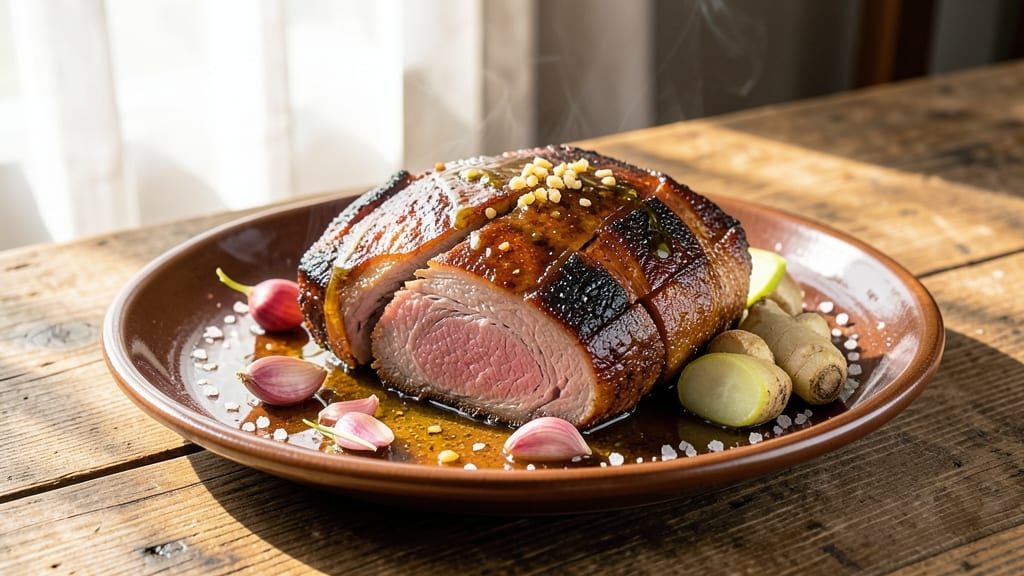
This authentic Hawaiian kalua pork brings the smoky, tender magic of an imu pit right to your oven—no underground oven required. ✨ I first tasted it during a family luau in Oahu, where the pork fell apart at the touch, infused with garlic, ginger, and the deep earthiness of Hawaiian salt.
The slow cooking transforms tough pork shoulder into melt-in-your-mouth perfection, just like the locals make it.
The secret lies in the marinade: garlic, ginger, and salt work together to create that signature Hawaiian flavor, while the slow cook transforms the meat into something so tender it practically dissolves.
I’ve adapted the traditional method for home cooks, using an oven or slow cooker to mimic the imu’s gentle heat. No fancy equipment—just patience and a little smoke if you’re feeling adventurous.
What you’ll end up with is pork so tender it’s nearly falling apart, with a smoky aroma that fills your kitchen and makes everyone gather around the table. The texture is rich and juicy, with just enough bite to keep it interesting.
Serve it with steamed rice, fresh pineapple, or even a simple coleslaw for the full Hawaiian experience.
This isn’t just a recipe—it’s a taste of Hawaii, brought to life in your own kitchen. Trust me, once you try it, you’ll understand why kalua pork is a staple at every luau. Let’s get cooking!
Ingredients for authentic hawaiian kalua pork
Six ingredients transform tough pork into melt-in-your-mouth Hawaiian magic—just like Oahu's luau tables.
| Ingredient | Amount | Notes |
|---|---|---|
| Pork Shoulder (Boston Butt) 🐷 | 4 lb | Bone-in preferred for flavor |
| Fresh Garlic 🧄 | 8 cloves | Peeled and smashed |
| Fresh Ginger 🌿 | ½ cup | Finely chopped or grated |
| Hawaiian Sea Salt 🧂 | 2 tbsp | Or Diamond Crystal kosher salt |
| Brown Sugar 🍯 | ½ cup | Packed tightly |
| Olive Oil 🫒 | ¼ cup | For basting |
| Fresh Pineapple Juice 🍍 | ½ cup | Or substitute orange juice |
| Fresh Lime 🍋 | 1 whole | Zested and juiced |
| Fresh Cilantro 🌿 | ¼ cup | Chopped, for garnish |
| Smoked Paprika 🌶️ | 1 tbsp | For smoky depth |
| Ground Black Pepper 🌶️ | 1 tsp | Freshly cracked |
| Fresh Pineapple Chunks 🍍 | 1 cup | For serving |
| Steamed White Rice 🍚 | 3 cups | Cooked, for serving |
The pork shoulder is non-negotiable—bone-in gives the most flavor, and 4 lbs feeds a crowd with leftovers. Look for a well-marbled cut at Costco or your local butcher. If you can't find Hawaiian sea salt, Diamond Crystal kosher works perfectly. Fresh ginger and garlic are worth the trip to the market—dried just won't cut it here. I always grab extra ginger because it's used in so many Hawaiian dishes. For the pineapple juice, Dole or Del Monte cans work fine if fresh isn't available.
No Hawaiian sea salt? Substitute with kosher salt plus a pinch of smoked paprika for that island touch. Running low on fresh ginger? Dried ginger at half the amount works in a pinch, though it's not as vibrant. Pineapple juice hard to find? Orange juice with a splash of lime mimics the brightness. The smoked paprika is key for that authentic smoky flavor—don't skip it! For the lime, if you only have bottled juice, add a pinch of salt to compensate for the missing zest. And if you're feeling fancy, char the garlic cloves before adding for extra depth.
This pork tastes even better the next day—plan ahead. Store leftovers in the fridge for 4-5 days or freeze for 3 months. I like to portion it into meal-sized containers so I can reheat just what I need. The marinade keeps for 3 days in the fridge if you want to prep ahead. For serving, I always toss the rice with a little extra pineapple juice and lime zest—trust me on this. The aromas alone will have everyone gathering around your table.
Why You'll Love This Recipe
- One-Pot Magic: I swear by this recipe because it’s literally hands-off after the initial prep. Toss the pork, garlic, ginger, and salt in a slow cooker or oven-safe pot—no chopping boards cluttered with scraps, no fuss. The brown sugar caramelizes into that sticky, smoky goodness without you lifting a finger after pressing start.
- Smoky-Sweet Obsession: That crispy bark on the outside? The tender, juicy melt-in-your-mouth center? It’s all thanks to the Hawaiian sea salt and brown sugar working their magic. The garlic and ginger add a bright, aromatic punch that makes every bite feel like a little vacation—no passport required.
- Budget-Friendly Feast: A whole pork shoulder feeds my family of four for days—and it’s cheaper than takeout. The ingredients? Basic, but the flavor? Anything but. I’ll be real: this is my secret weapon for potlucks, game days, or whenever I need to impress without breaking the bank.
Step-by-step instructions for authentic Hawaiian kalua pork
Let's bring that smoky, tender Hawaiian flavor into your kitchen with this traditional method.
🔥 Step 1: Prep the Pork and Build the Rub
Start by trimming any excess fat from the 4 lb pork shoulder (Boston Butt), leaving about ¼-inch fat cap for moisture during cooking. Pat the meat completely dry with paper towels—this helps the rub stick and creates that coveted crispy exterior. I like to make a small slit in the thickest part of the fat cap to help render fat during cooking.
In a bowl, combine the 8 cloves fresh garlic (peeled and smashed), 0.5 cup fresh ginger (finely chopped), 2 tbsp Hawaiian sea salt, 0.5 cup brown sugar (packed tightly), 1 tbsp smoked paprika, and 1 tsp ground black pepper. Mix well until the spices coat the garlic and ginger. Rub this mixture all over the pork, pressing it into the meat and fat cap. This ensures every bite gets that authentic Hawaiian flavor profile.
🔥 Step 2: Slow Cook in the Oven
Preheat your oven to 275°F—this low-and-slow temperature is key to tender, pull-apart pork. Place the seasoned pork in a roasting pan or Dutch oven (bone-in side down) and pour 0.25 cup olive oil into the bottom. The oil will baste the pork as it cooks, keeping it moist and flavorful.
Cover the pan tightly with aluminum foil and place it in the oven. Here's where patience pays off: cook for 6-8 hours until the internal temperature reaches 195-203°F and the meat is fork-tender. I check the temperature after 5 hours and then every 30 minutes after that. The pork will naturally release from the bone when done, and you'll see that beautiful mahogany color develop.
🥘 Step 3: Rest and Shred the Pork
Once the pork reaches the perfect temperature, remove it from the oven and transfer to a cutting board. Tent loosely with foil and let it rest for 30-45 minutes. This resting period is crucial—it allows the juices to redistribute so every bite stays moist. I know it's tempting to dig in immediately, but trust me on this step.
After resting, use two forks to shred the pork into bite-sized pieces. Discard any large fat chunks or connective tissue. The meat should pull apart easily with minimal effort—this is your sign that the slow cooking worked perfectly. Reserve the cooking juices in the pan for serving (they're packed with flavor!).
🍽️ Step 4: Serve with Hawaiian Sides
In a small saucepan, combine 0.5 cup fresh pineapple juice, the juice from 1 whole fresh lime (about 2 tablespoons), and a splash of the reserved pork juices. Simmer for 3-5 minutes until slightly reduced. Stir in 0.25 cup chopped fresh cilantro and taste—adjust seasoning if needed.
Serve the shredded pork over 3 cups steamed white rice with the pineapple-lime sauce spooned on top. Garnish with 1 cup fresh pineapple chunks and extra cilantro for that fresh Hawaiian touch. The combination of tender pork, sweet-tart sauce, and juicy pineapple creates that perfect balance of flavors you'd find at a luau.
Pro Tips For Making Authentic Hawaiian Kalua Pork
- CRANK THE OVEN TO 300°F: I learned this the hard way—starting too hot will steam the pork instead of rendering fat. Kalua pork needs that slow, steady 300°F to break down collagen and develop deep flavor. Yes, it takes patience, but rushing this step means you’ll end up with something closer to boiled pork than the tender, caramelized masterpiece you’re aiming for.
- PEEL AND SLICE GINGER THIN: Skip the grating or chopping—peel the ginger root and slice it paper-thin with a sharp knife. The slices stay intact in the pit (or oven), infusing flavor without turning to mush. Trust me, your pork will taste brighter and less bitter if you resist the urge to mince it.
- DON’T SKIP THE FAT CAP: Leave that fatty layer on the pork shoulder—it’s your flavor insurance. As it renders, it bastes the meat and creates a sticky, savory crust. If you trim it, you’re basically sabotaging the dish before you even start. (And yes, even if you’re impatient like me.)
- ADD SALT IN STAGES: Dust the pork with half the Hawaiian sea salt before it goes in, then sprinkle the rest halfway through cooking. This guarantees even seasoning and prevents the salt from dissolving into a salty brine too quickly. My first attempt was a salty disaster—I was overzealous with the initial coating.
Creative variations of authentic hawaiian kalua pork
Luau-Style Variations
For a true Hawaiian luau experience, serve your kalua pork with steamed white rice and pineapple-glazed macadamia nuts. I like to toss the rice with a little coconut milk and lime zest for extra island flair. The nuts add a buttery crunch that balances the smoky pork perfectly. 🍍
Spicy Kalua Twist
Want some heat? Add 1 tbsp Hawaiian chili paste (like Maui Chili) to the marinade for a fiery kick. This spicy version pairs wonderfully with cooling coconut milk rice or mango salsa.
I first tried this at a luau in Maui, and it became an instant favorite. Just be sure to adjust the amount based on your spice tolerance!
Slow Cooker Adaptation
No oven? No problem! Use a 6-quart slow cooker instead. Place the seasoned pork in the slow cooker with ½ cup water, cover, and cook on LOW for 8-10 hours.
The result is just as tender, with that same deep, smoky flavor. I’ve made this version countless times for large gatherings—it’s foolproof and always a hit. 🔥
Modern Fusion Ideas
For a contemporary twist, try serving kalua pork in sliders with garlic aioli and pickled onions on Hawaiian sweet rolls. Or, stuff it into baked sweet potatoes with mango chutney for a deconstructed luau platter.
My farm-to-table restaurant in Atlanta serves this as a "Hawaiian BBQ plate" with grilled pineapple wedges—it’s a crowd-pleaser every time!
Vegetarian Adaptation
While traditional kalua pork is made with meat, you can create a vegetarian version using portobello mushrooms or extra-firm tofu. Marinate them in the same rub and slow-cook until tender.
Serve with the same pineapple-lime sauce and rice for a lighter, plant-based take. I’ve tested this with my farm’s heirloom mushrooms, and it’s surprisingly close to the real deal! 🌱
Leftovers Reinvented
Turn leftover kalua pork into Hawaiian-style tacos with corn tortillas, avocado slices, and spicy mayo. Or, mix it into fried rice with peas, carrots, and soy sauce for a quick weeknight meal.
I always keep a stash of this pork in my freezer—it’s the ultimate meal prep hero for busy days. 💪
Nutrition facts
Frequently asked questions about authentic Hawaiian kalua pork
Why does traditional kalua pork need such a long cooking time?
The 6-8 hour slow cook is essential to break down collagen in the pork shoulder, transforming tough meat into melt-in-your-mouth tenderness. This low-and-slow method mimics the imu (Hawaiian underground oven) where heat penetrates evenly, creating that signature pull-apart texture. Patience is key—rushing it results in chewy pork that lacks the authentic Hawaiian flavor.
Can I use a different cut of pork for kalua pork?
While pork shoulder (Boston Butt) is traditional, you can use pork butt or pork picnic roast with similar results. Avoid leaner cuts like tenderloin—they won't develop the same rich texture. For best results, stick with bone-in cuts as the marrow adds incredible depth of flavor during cooking. If using boneless, increase cooking time by 1-2 hours to compensate.
What's the best way to test if kalua pork is fully cooked?
Use a meat thermometer to check for an internal temperature of 195-203°F—this is the magic zone where collagen fully breaks down. The meat should also pull apart easily with two forks and have a beautiful mahogany color. If it's not falling apart, return it to the oven for another 30-60 minutes covered. Never rely on color alone—pork can look cooked before reaching safe temperatures.
How can I make my kalua pork extra smoky without a smoker?
Add 1 tbsp smoked paprika to the rub and place a small bowl of apple cider vinegar or wood chips (soaked in water) on the oven rack during cooking. For deeper smoke flavor, try this: wrap the pork in foil with a few charred pineapple chunks (lightly torched in a pan) for 1 hour during cooking. The natural sugars caramelize and create that smoky aroma. Just don't overdo it—authentic kalua pork has a subtle smokiness, not a heavy BBQ flavor.
What's the deal with the brown sugar in the rub?
The ½ cup brown sugar isn't just for sweetness—it helps caramelize during cooking, creating that beautiful crust while balancing the salt and spices. This is a traditional Hawaiian technique that adds depth to the flavor profile. For a more authentic taste, use dark brown sugar (like Hawaiian turbinado sugar if available). If you're concerned about sweetness, reduce to ¼ cup but don't skip it entirely—the sugar helps tenderize the meat.