
Main Courses
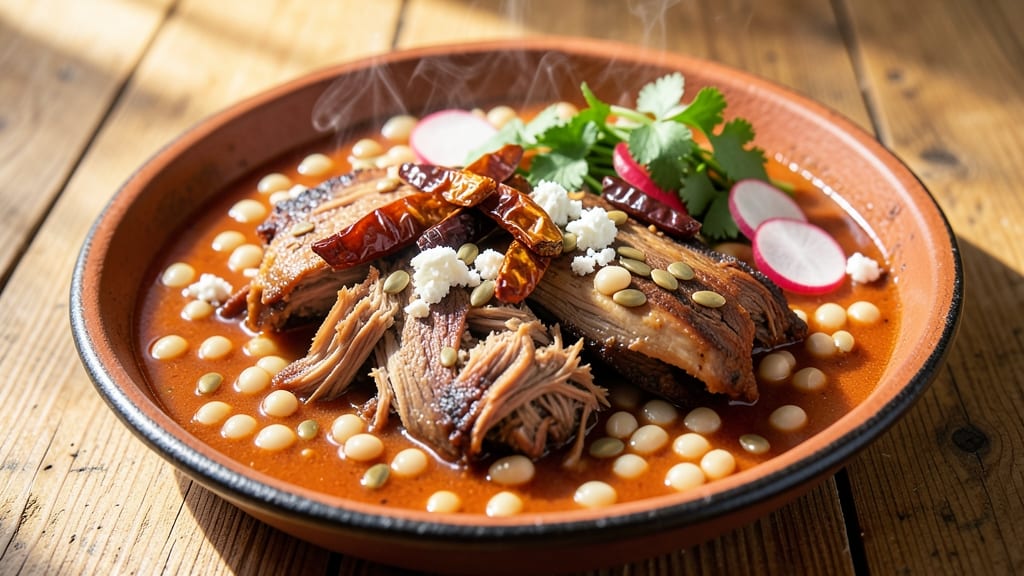
This authentic Mexican pork pozole recipe brings the soul of Mexican tradition to your kitchen with its smoky, spice-packed depth. 🌟 After years of perfecting the balance between tender pork, hominy, and achiote-infused broth, I've recreated the version my abuela served at family gatherings—where every spoonful tells a story of heritage and flavor.
The heart of pozole lies in its preparation: soaking dried hominy until tender, slow-cooking pork until it falls apart, and building a rich, aromatic broth with achiote paste, chiles, and spices.
This isn't just a stew—it's a celebration of Mexican comfort food, where every ingredient plays a role in creating that perfect harmony of smoky, tangy, and slightly sweet notes.
What makes this recipe special is the authenticity—no shortcuts, just the traditional method that delivers restaurant-quality results at home. The pork becomes irresistibly tender, the hominy plumps up beautifully, and the broth develops layers of flavor that make it worth the wait.
Serve it with all the classic toppings: shredded cabbage, radishes, lime, and cilantro.
Whether you're hosting a fiesta or simply craving a taste of Mexico, this pozole brings warmth and tradition to your table. The secret to its success? Patience and respect for the process—just like my abuela always said, "Good pozole can't be rushed." Let's get cooking!
Ingredients for authentic mexican pork pozole
Six ingredients build the base—pork, hominy, achiote, and chiles create that iconic smoky depth.
| Ingredient | Amount | Notes |
|---|---|---|
| Pork Shoulder 🐖 | 3 lb | Bone-in for flavor, cut into 2-inch chunks |
| Dried Hominy 🌽 | 2 cups | Soaked overnight, drained well |
| Achiote Paste 🌶️ | 2 tbsp | Traditional Mexican, vibrant red |
| Dried Guajillo Chiles 🌶️ | 4 whole | Stems/seeds removed, toasted |
| Dried Ancho Chiles 🌶️ | 2 whole | Stems/seeds removed, toasted |
| Garlic Cloves 🧄 | 6 cloves | Peeled, lightly toasted |
| White Onion 🧅 | 1 whole | Quartered, skin on for color |
| Tomatoes 🍅 | 4 whole | Roma or vine-ripened, halved |
| Bay Leaves 🌿 | 2 whole | Dried, for depth of flavor |
| Cumin Seeds 🌿 | 1 tbsp | Toasted for aromatic punch |
| Oregano 🍃 | 1 tbsp | Mexican oregano preferred |
| Salt 🧂 | 2 tsp | Adjust to taste, kosher preferred |
| Lime 🍋 | 1 whole | Juiced, for serving |
| Fresh Cilantro 🌿 | ½ cup | Chopped, for garnish |
| Shredded Cabbage 🥬 | 2 cups | Green or purple, for topping |
The pork shoulder is non-negotiable—bone-in for maximum flavor, and 3 lbs feeds a crowd. Look for well-marbled cuts at H-E-B or your local Mexican market. Dried hominy? La Costeña brand is my go-to, but any dried pozole-style hominy works. Soak it overnight—never skip this step—or it'll stay rock-hard. For the chiles, MexGrocer online has the best selection of dried guajillo and ancho, but any Latin market will have them too. Toast them lightly in a dry skillet until fragrant—this brings out their natural sweetness.
No achiote paste? Mix 1 tbsp annatto seeds with 2 tbsp oil as a substitute (trust me, it works). Fresh tomatoes are ideal, but canned San Marzano in a pinch—just drain well. The oregano matters: Mexican oregano has a completely different flavor profile than regular oregano. If you can only find regular, use double the amount. For the cumin, toast the seeds whole in a dry pan for 30 seconds before grinding—this deepens the aroma. The lime and cilantro are just for serving, but don't skip them—they brighten up every bite.
Pork and hominy keep 3 days in the fridge if stored properly—separate the broth from the solids. The broth freezes beautifully for up to 3 months—just thaw overnight in the fridge. I always make extra broth because it's so versatile. For serving, keep everything separate until ready to eat—tradition says you assemble at the table. The cabbage stays crisp for 2 days if wrapped in a damp towel, and the cilantro keeps for a week in a sealed container with paper towels.
Why You'll Love This Recipe
- One-Pot Magic: I swear by this—just toss everything into one pot, let it simmer, and walk away. No fancy techniques, no last-minute chopping frenzies. That achiote paste alone transforms the broth into something rich and golden without extra effort.
- Deep, Smoky Soul: The guajillo and ancho chiles give it that unmistakable warmth, while the pork shoulder melts into tender, flavor-packed shreds. Honestly, the first time I tasted it, I almost cried—it’s that good.
- Weeknight to Celebration: Make it for Tuesday dinners or Sunday gatherings—same recipe, just different toppings. Add radishes and lime for a quick weeknight bowl, or go all out with avocado, queso fresco, and tortilla strips for company.
- Leftovers That Don’t Suck: Unlike so many soups, pozole actually tastes better the next day. The flavors meld, the hominy softens just right, and it’s still hearty enough to pack for lunch. My freezer’s always stocked with it.
Step-by-step instructions for authentic Mexican pork pozole
This traditional recipe delivers smoky, spice-packed pozole with tender pork and hominy.
🔥 Step 1: Prepare the Pork and Hominy Base
In a large Dutch oven, combine the 3 lb pork shoulder cut into 2-inch chunks with the 2 cups dried hominy. Add 4 cups water (enough to cover the meat by 1 inch) and bring to a boil over high heat. Once boiling, reduce to a gentle simmer and cook uncovered for 1 hour. This initial cooking helps tenderize the pork and begins hydrating the hominy.
Here's the thing—don't skip this uncovered simmer. The open pot allows the pork to render its natural fats, which will later create a rich, flavorful broth. After 1 hour, you'll notice the pork has released its juices and the hominy is starting to soften. This is your signal to proceed to the next step.
🍳 Step 2: Build the Smoky Chile Paste
While the pork simmers, toast the 4 whole dried guajillo chiles and 2 whole dried ancho chiles in a dry skillet over medium heat for 30 seconds per side until fragrant. Place them in a bowl with 6 cloves garlic, 1 tbsp cumin seeds, 1 tbsp oregano, and 2 tsp salt. Cover with 1 cup hot water from the simmering pot and let steep for 15 minutes.
This creates the essential pozole paste—where all the authentic flavors come together. The toasted chiles develop deep, smoky notes while the garlic and spices infuse into the water. After steeping, blend the mixture until smooth, then strain through a fine-mesh sieve to remove seeds and skins. You should get about 1½ cups of vibrant red paste.
🍳 Step 3: Develop the Broth and Season the Pozole
Return the blended chile paste to the Dutch oven with the pork and hominy. Add the quartered white onion (skin on for color), halved tomatoes, 2 bay leaves, and 2 tbsp achiote paste. Stir well and bring to a rolling boil over high heat. Once boiling, reduce to a low simmer and cook uncovered for 3 hours, skimming off any foam that rises to the surface.
The achiote paste adds that signature Mexican red color while the tomatoes and onions sweeten the broth. After 3 hours, the pork should be fork-tender and the hominy fully hydrated. Taste the broth and adjust seasoning with additional salt if needed. This is where all the flavors meld into a harmonious, smoky-sweet base.
🥘 Step 4: Finish and Serve Traditionally
Remove the pork from the broth and shred it using two forks, discarding any large bones. Return the shredded pork to the pot and stir in the 2 cups shredded cabbage. Keep the pozole warm over low heat while you prepare the toppings: ½ cup chopped fresh cilantro and juice from 1 lime. The cabbage will wilt slightly but maintain its texture.
For authentic serving, ladle the pozole into bowls and let each person customize their own. Top with lime wedges, cilantro, and a sprinkle of shredded cabbage. The contrast of warm pozole with bright lime and fresh herbs makes every bite vibrant. Serve immediately while the broth is steaming hot and the flavors are at their peak.
Pro Tips For Making Authentic Mexican Pork Pozole
- Render Fat First: Sear the pork shoulder in batches over medium-high heat until the fat renders and the meat releases from the bone—this adds depth to the broth. I used to skip this, thinking it was extra work, but the difference in flavor is noticeable. (Yes, even if you're impatient like me.)
- Toast Chiles Properly: Dry-toast the guajillo and ancho chiles in a dry skillet for 30 seconds per side until fragrant—this removes bitterness and intensifies their smoky flavor. I learned this the hard way after my pozole tasted harsh instead of rich.
- Simmer Low and Slow: Once the broth starts boiling, reduce heat to a gentle simmer (small bubbles, not rolling) and cover partially. I used to rush it, and the hominy turned mushy while the pork stayed tough. Low and slow keeps everything tender.
- Soak Hominy Overnight: Skip the quick-soak—soak dried hominy in water for at least 12 hours (or overnight) to soften it evenly. I tried the 2-hour soak once, and the texture was uneven, with some pieces still hard. (Your future self will thank you.)
Make-ahead tips for this dish
Prep Ahead Strategy
Start the hominy soaking the night before—this is non-negotiable for perfect texture. I always soak 2 cups dried hominy in 8 cups water overnight. The next day, drain and rinse well before adding to the pot.
This step can be done 2 days ahead if stored in the fridge in its soaking liquid. 🌽
Broth Prep
Make the chile paste 1 day ahead and store it in an airtight container in the fridge. The flavors deepen overnight, and you'll save 30 minutes of prep time on cook day.
Toast the guajillo and ancho chiles as directed, then blend with garlic, cumin, and oregano. The paste keeps for 5 days in the fridge or 3 months frozen.
Pork Prep
Cut the 3 lb pork shoulder into 2-inch chunks and season lightly with 1 tsp salt. Store in a sealed container in the fridge for up to 3 days before cooking.
This allows the meat to absorb flavors and makes it easier to handle when ready to cook. I always prep the pork the night before—it's a game-changer for efficiency.
Freezer-Friendly Components
Freeze the cooked pozole broth separately from the solids for up to 3 months. Store the broth in quart-sized freezer bags, leaving 1 inch headspace for expansion.
Thaw overnight in the fridge before reheating. The solids (pork and hominy) can be frozen for 2 months—just reheat gently in the broth to maintain texture.
Topping Prep
Shred the 2 cups cabbage and store it in a sealed container with a damp paper towel to keep it crisp. Chop the ½ cup cilantro and store it separately in an airtight container.
Both toppings stay fresh for 3 days in the fridge. Juice the lime right before serving—fresh lime is essential for that bright, tangy finish. 🍋
Reheating Tips
Reheat the pozole gently on the stovetop over low heat for 15-20 minutes, stirring occasionally. Avoid microwaving as it can make the hominy mushy. If the broth seems thick, add ¼ cup water and stir well.
For extra richness, stir in 1 tbsp lard or bacon fat while reheating—this mimics the traditional method of adding fat to enhance flavor. 🔥
Nutrition facts
Frequently asked questions
What's the secret to perfectly tender pork in pozole?
Slow cooking is key! Use bone-in pork shoulder cut into 2-inch chunks and simmer it uncovered for 4 hours total—the first hour alone helps tenderize. The uncovered simmer renders natural fats that create a rich broth. Never rush this step—patience ensures melt-in-your-mouth texture.
Can I substitute dried hominy with fresh?
Fresh hominy (like canned white corn) won't give the same authentic texture—dried hominy is essential for that signature hearty bite. If you absolutely must substitute, use 2 cups frozen white corn thawed and drained, but expect a softer result. The soaking process with dried hominy develops its unique chewy quality that's central to pozole.
How do I make this vegetarian?
Replace the pork with 3 cups shredded jackfruit (for texture) or 3 cups extra-firm tofu pressed and cubed. Use 1 cup dried mushrooms rehydrated for umami depth. Boost the chile paste to 3 tbsp and add 1 tsp liquid smoke for that smoky flavor. The broth will still be rich, but the texture will differ from traditional versions.
Why does my pozole taste bland?
Most likely, you skipped the chile paste steeping time or didn't toast the chiles properly. Always toast chiles until fragrant and steep the paste for 15 minutes before blending. Another common mistake is not using enough achiote paste—start with 2 tbsp and adjust. Let the broth reduce uncovered to concentrate flavors, and taste frequently to adjust salt and acidity with lime.
What's the best way to reheat leftovers?
Reheat pozole gently on the stovetop over low heat for 15-20 minutes, stirring occasionally. Never microwave—it makes the hominy mushy. Add ¼ cup water if the broth thickens, and finish with a squeeze of lime and fresh cilantro. For extra richness, stir in 1 tbsp lard or bacon fat while reheating.