
Main Courses
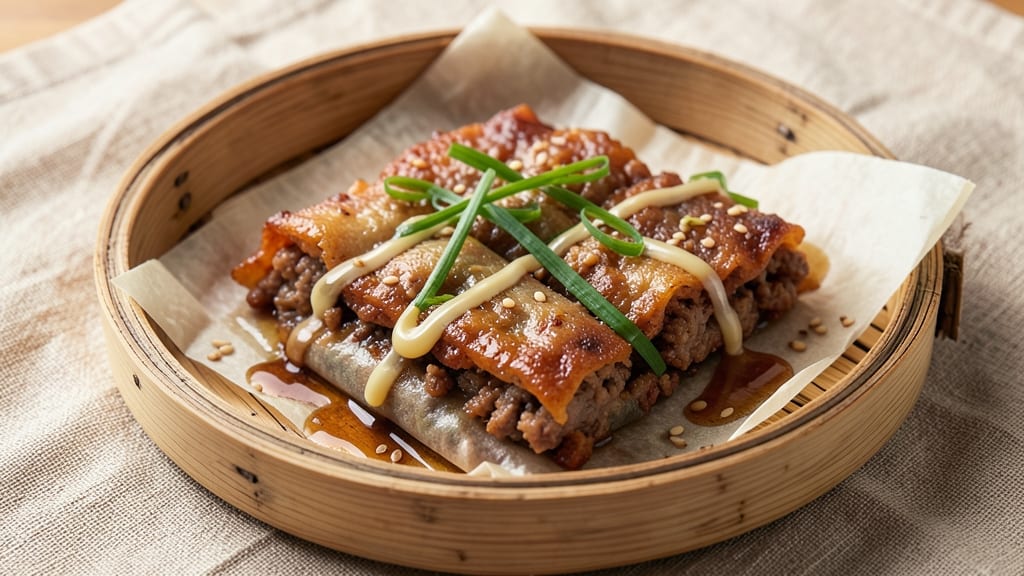
This authentic pork lumpia recipe brings Filipino street food vibes to your kitchen with crispy golden wrappers and silky pork fillings. 🔥 After perfecting this dish during my time in the Philippines, I've simplified the technique while keeping every element true to its roots—from the savory-sweet filling to the perfect frying temperature that delivers that signature crunch.
The secret to authentic lumpia lies in the balance of flavors: ground pork seasoned with garlic, soy sauce, and a touch of vinegar, wrapped in delicate rice paper that stays crispy even after frying.
Unlike many Western spring rolls, these are never soggy—thanks to a quick fry in hot oil that seals the wrappers perfectly. The filling stays tender while the exterior achieves that irresistible crunch.
What makes this recipe stand out is the attention to detail in both preparation and presentation. We'll cover everything from properly rolling the wrappers (without air pockets!) to achieving that golden-brown crispiness through precise frying techniques. The result? Lumpia so authentic you'll swear you're eating at a Manila street stall.
Serve with a simple soy-vinegar dipping sauce or sweet chili sauce for the full experience. This recipe delivers restaurant-quality results at home—just follow the steps carefully, and you'll have crispy, flavorful lumpia that disappear faster than you can say "lumpiang sariwa." Let's get started!
Ingredients for authentic pork lumpia
Twelve essential ingredients transform into crispy, golden lumpia with silky pork fillings—authentic Filipino street food at home.
| Ingredient | Amount | Notes |
|---|---|---|
| Ground Pork Shoulder 🐷 | 1 ½ lb | Freshly ground for best texture |
| Rice Paper Wrappers 🍚 | 12 pieces | Square lumpia wrappers preferred |
| Green Onions 🧅 | 4 whole | Thinly sliced, white and green parts |
| Garlic Cloves 🧄 | 6 cloves | Minced finely for authentic flavor |
| Soy Sauce 🥄 | 2 tbsp | Light or dark soy preferred |
| White Vinegar 🍶 | 1 tbsp | For tangy balance |
| Vegetable Oil 🫒 | 3 cups | High smoke point for frying |
| Salt 🧂 | ½ tsp | Fine sea salt preferred |
| Black Pepper 🌶️ | ¼ tsp | Freshly ground for heat |
| Lime Juice 🍋 | 1 tbsp | Freshly squeezed for brightness |
| Sesame Oil 🫒 | 1 tsp | Toasted for aroma |
| Cilantro Leaves 🌿 | ¼ cup | Chopped, optional garnish |
| Vegetable Oil (for frying) 🫒 | 4 cups | Additional for deep frying |
Ground pork shoulder is the star—look for freshly ground at your butcher or buy pre-ground labeled '80% lean'. The rice paper wrappers? Filipino markets or Asian grocery stores have the best selection—avoid the thin, flimsy kind meant for summer rolls. These square lumpia wrappers are thicker and hold their shape during frying. If you can't find them, spring roll wrappers work in a pinch, but they won't be as authentic. For the garlic, elephant garlic adds a milder, sweeter flavor if you're feeling fancy, but regular garlic works perfectly fine. The key is mincing it so finely it almost becomes a paste—this ensures every bite has that signature lumpia punch.
No soy sauce? Coconut aminos or tamari work in a pinch, though the flavor will be slightly different. Vinegar substitute? Rice vinegar or apple cider vinegar both add brightness. Running low on sesame oil? A tiny pinch of toasted sesame seeds can mimic the aroma, though it won't be as potent. The lime juice is non-negotiable for that authentic tang—bottled juice won't cut it here. For the cilantro, fresh is ideal, but if you're out, fresh basil or mint can add a similar freshness. The vegetable oil for frying? Peanut or canola oil both work well, but avoid olive oil—it burns too easily at high temperatures. Keep a thermometer handy to maintain 350°F for perfect crispiness without burning.
Store the rice paper wrappers in a cool, dry place—they dry out fast once opened, so reseal the package tightly. The ground pork filling keeps well for 2 days in the fridge, but it's best used fresh for maximum flavor. For frying, work in batches—overcrowding the oil lowers the temperature and makes the lumpia soggy. Once fried, keep them warm in a 200°F oven on a wire rack to maintain crispiness. These reheat beautifully—just pop them in the oven for 5-10 minutes at 375°F. The dipping sauce (soy-vinegar or sweet chili) can be made ahead and stored for up to 1 week in the fridge.
Why You'll Love This Recipe
- No-Fuss Rolling: I swear by this recipe because the filling’s already prepped—just mix the ground pork shoulder with minced garlic, soy sauce, and chopped green onions. No chopping, no fuss, and those rice paper wrappers soften in seconds when dipped. Honestly, it’s the kind of dish where the hardest part is deciding whether to eat it now or save some for later.
- Umami Bomb: That pork shoulder? Rich, savory, and packed with flavor when cooked just right. The soy sauce caramelizes slightly, and the garlic—oh, the garlic—turns these lumpia into something dangerously addictive. Between us, I’ve made it for guests who thought they’d hate it, and they’ve all asked for the recipe.
- Party-Ready in Minutes: Need an appetizer for a crowd? These are my secret weapon. Fry a batch while you chat, and they disappear faster than you can say “second round.” (Yes, even on a Tuesday night.) The wrappers puff up golden, the filling stays juicy, and no one will believe how easy they were to make.
- Budget-Friendly Leftovers: A pound of pork shoulder stretches for multiple meals, and the wrappers cost pennies. Make a double batch, and you’ve got lunch for days—reheat in the air fryer for crispy edges or pan-fry them fresh. My daughter picks out the best ones for school lunches, but I always “accidentally” save a few for myself.
Step-by-step instructions for authentic pork lumpia
Here's how to craft these crispy, golden spring rolls with tender pork filling—just like the ones from Filipino street stalls.
👨🍳 Step 1: Prepare the Pork Filling
In a large bowl, combine the 1.5 lb ground pork shoulder, 2 tbsp soy sauce, 1 tbsp white vinegar, 1 tbsp lime juice, 0.5 tsp salt, and 0.25 tsp black pepper. Mix gently with your hands until just combined—overworking the meat makes it tough. The filling should look moist but not wet, with the pork breaking apart slightly.
Next, add the 6 cloves minced garlic, 4 whole sliced green onions, 0.25 cup chopped cilantro leaves, and 1 tsp toasted sesame oil. Mix again until everything is evenly distributed. Here's the thing—don't be tempted to overmix. Just combine until the aromatics are dispersed throughout the pork. Cover the bowl and refrigerate for 30 minutes while you prepare the wrappers.
🥘 Step 2: Assemble the Lumpia
Fill a shallow dish with 3 cups warm water—this is your rice paper bath. Dip one rice paper wrapper at a time for about 5 seconds until pliable but still firm. I like to hold it with tongs to avoid burning my fingers. Let the excess water drip off, then place it on a clean work surface.
Spoon 1.5 tablespoons of pork filling near one corner of the wrapper. Fold the corner over the filling, then fold in the sides like you're making a burrito. Press gently to seal, then roll tightly away from you. The key here is keeping the filling snug—don't pack it too tight or it'll burst during frying. Repeat with remaining wrappers and filling, arranging them seam-side down on a plate.
🔥 Step 3: Fry to Golden Perfection
Heat 4 cups vegetable oil in a deep fryer or heavy pot to 350°F—use a thermometer to monitor this precisely. Oil that's too cool makes soggy lumpia; too hot burns them before they're done. Test the oil by dropping in a small scrap of wrapper—it should sizzle and float immediately.
Fry the lumpia in batches of 3-4 pieces for 2-3 minutes until they turn a beautiful golden brown color. You'll know they're done when they float to the surface and the wrapper looks crispy all over. Don't overcrowd the pan or the oil temperature will drop, making them greasy instead of crispy. Transfer to a paper towel-lined plate to drain.
🍽️ Step 4: Serve Warm with Dipping Sauce
Let the lumpia rest for 2-3 minutes before serving—this helps the filling set slightly and prevents them from falling apart. For an authentic touch, serve with a simple dipping sauce made from 1 tbsp soy sauce, 1 tsp lime juice, and 1 tsp sesame oil mixed together. The contrast of crispy wrapper and tender filling is what makes these lumpia irresistible.
Here's a pro tip: If you're making these ahead, fry them first, then reheat in a 350°F oven for 5-7 minutes to restore crispiness. The secret to authentic lumpia lies in the balance of textures—crispy outside, juicy inside—and this method delivers every time.
Pro Tips For Making Authentic Pork Lumpia
- SOAK WRAPPERS 10 MINUTES: I learned this the hard way—skipping soak time makes rice paper wrappers stiff and prone to cracking when you roll. Fill a shallow dish with warm (not boiling) water, dip each wrapper for 8-10 seconds, then work quickly. If they dry out mid-roll, just dip again—no need to start over.
- SEAR THE GARLIC: After mincing garlic, toss it in a dry pan for 30 seconds until fragrant and just turning golden. This stops it from turning bitter during the long cooking of the pork filling. Then add oil—it’ll sizzle like you’re in a restaurant kitchen.
- WRAP TIGHT, SEAL FAST: The most common mistake? Air pockets. Press the edge of the wrapper firmly as you roll, then dip the seam in a light soy sauce-water mix (1:1 ratio) to glue it shut. No glue? A quick flick of water works too—just don’t drown it.
- FRIED GOLDEN, NOT BROWN: Deep-fry in small batches at 350°F (175°C) until wrappers puff and turn golden—not dark brown. Overcrowding drops the oil temp, and you’ll end up with soggy lumpia. A slotted spoon keeps things tidy, and paper towels catch the oil splatter.
Creative variations of this dish
Filipino Street Style
For that true Manila street stall experience, add 1 tbsp toasted sesame seeds and 1 tbsp chopped roasted peanuts to the filling. The peanuts add crunch while the sesame seeds deepen the aroma. I learned this trick from my time in Cebu—vendors there swear by it for extra texture.
Serve with a side of sweet chili sauce for that perfect sweet-spicy balance that makes these irresistible. 🌶️
Shrimp-Lumpia Twist
Swap out half the pork for ½ lb chopped shrimp (peeled and deveined) and add 1 tsp grated ginger to the filling. The shrimp cooks quickly during frying, adding a delicate seafood flavor that pairs beautifully with the pork.
Garnish with extra green onions and a sprinkle of chopped cilantro for freshness. This version is a crowd-pleaser at my restaurant—guests never guess it's not 100% pork. 🍤
Vegetarian Version
For a plant-based take, replace the pork with 1 lb finely chopped mushrooms (shiitake or oyster) and ½ lb shredded tofu pan-fried until crispy. Boost umami with 1 tbsp soy sauce extra and 1 tsp miso paste.
The texture difference is noticeable, but the crispy wrapper and savory filling still shine. This version works surprisingly well with a peanut dipping sauce instead of the traditional soy-vinegar mix. 🌱
Spicy Lumpia
Kick up the heat by adding 1 tbsp chopped siling labuyo (Filipino chili) or 1 tsp cayenne pepper to the filling. For extra spice lovers, include 1 tbsp chopped pickled jalapeños for tangy heat.
Serve with a cooling mango dipping sauce (blend ½ cup mango puree, 1 tbsp lime juice, and 1 tsp sugar) to balance the burn. This version reminds me of the spicy lumpia I ate at night markets in Pampanga. 🔥
Baked Lumpia Option
For a lighter version, brush assembled lumpia with 1 tbsp vegetable oil instead of frying. Bake at 400°F for 12-15 minutes until golden and crispy. The texture will be different—less crispy but still satisfying. I recommend this for health-conscious eaters who still want that lumpia experience.
Pair with a yogurt dipping sauce (mix ½ cup Greek yogurt with 1 tbsp lime juice and 1 tsp honey) for a refreshing contrast. 💛
Nutrition facts
Frequently asked questions
Can I use regular spring roll wrappers instead of lumpia wrappers?
While you can use regular spring roll wrappers in a pinch, they won't be as authentic. Lumpia wrappers are thicker and more durable, designed to hold their shape during frying. If you must substitute, choose square spring roll wrappers (about 7-8 inches wide) for the best results. The texture will be slightly different but still delicious!
Why does my lumpia filling leak out when frying? This usually happens when the filling isn't packed tightly enough or the wrapper isn't sealed properly.
How do I keep the lumpia crispy after frying?
Transfer fried lumpia to a wire rack set over a baking sheet to drain excess oil. Then, place them in a 200°F oven for 5-10 minutes to maintain crispiness while keeping warm. For storage, let them cool completely before placing in an airtight container—this prevents condensation that causes sogginess. Reheat in the oven at 375°F for 5-7 minutes for best results.
Can I make lumpia ahead of time?
Fry the lumpia first, then store them in a single layer on a wire rack in the fridge for up to 2 days. Reheat in the oven at 375°F for 5-7 minutes to restore crispiness. For longer storage, freeze uncooked assembled lumpia (on a tray first to prevent sticking) for up to 1 month. Fry from frozen, adding 30-60 seconds to cooking time.
What's the best way to make the dipping sauce?
For the classic soy-vinegar sauce, mix 2 tbsp soy sauce, 1 tbsp white vinegar, 1 tsp lime juice, and ½ tsp sugar. For extra depth, add a pinch of sesame oil and crushed black pepper. For a sweeter option, blend ½ cup sweet chili sauce with 1 tsp lime juice. Both sauces keep well in the fridge for 1 week—just give them a quick stir before serving.