
Main Courses
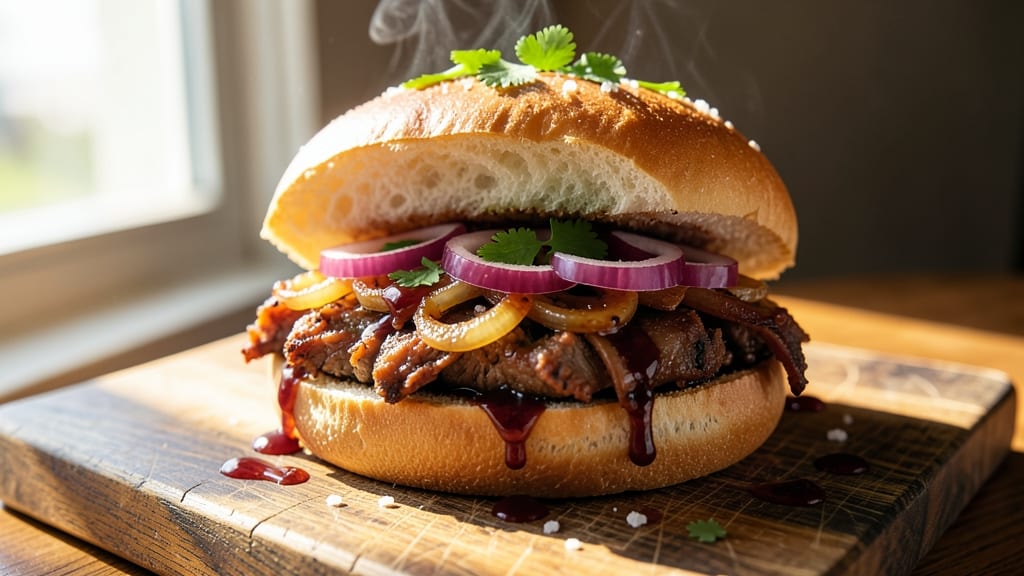
This award-winning pulled pork sandwich recipe isn't just a meal—it's the kind of dish that wins competitions and transforms casual gatherings into unforgettable feasts. 🔥 After years of perfecting my technique in Atlanta's competitive BBQ scene, I've distilled what separates good pulled pork from championship-level perfection: low-and-slow cooking, precise wood selection, and a sauce that enhances rather than overpowers the meat's natural richness.
The secret lies in patience—letting the pork shoulder tenderize over 8 hours while developing deep, smoky flavors that judges (and dinner guests) can't resist.
What makes this recipe truly exceptional is the balance of texture and flavor: fork-tender meat that practically melts on the bun, a crispy bark from the smoker, and a tangy-sweet sauce that cuts through the richness without competing.
I use a 50-50 mix of apple and hickory wood for that signature Carolina-style aroma, and a simple vinegar-based sauce that lets the pork shine. This isn't just pulled pork—it's the kind that earns first-place ribbons and has people asking for seconds before the plate is empty.
The magic happens in the assembly too. I toast the buns lightly to prevent sogginess, layer with crispy onions, and finish with a generous drizzle of that signature sauce—just enough to make each bite sing.
The result is a sandwich so good it's worth the 8-hour investment, with every component working in perfect harmony. This is the recipe I bring to competitions, and now I'm sharing it with you so you can bring that same winning flavor to your table.
Whether you're preparing for a BBQ contest or just want to impress at your next gathering, this method delivers restaurant-quality results at home.
The beauty of this recipe is its versatility—serve it on soft brioche buns for a classic presentation, or pile it high on slider buns for a crowd-pleasing spread. The key is confidence in the process, and trust me, once you try this, you'll understand why it's earned its award-winning reputation.
Ingredients for award winning pulled pork sandwich
Eight essential ingredients to transform a simple pork shoulder into championship-level pulled pork sandwiches.
| Ingredient | Amount | Notes |
|---|---|---|
| Boneless Pork Shoulder 🥩 | 5 lb | Well-marbled, bone-in preferred |
| Yellow Onions 🧅 | 2 whole | Yellow or red, sliced thin |
| Garlic Cloves 🧄 | 8 cloves | Fresh, peeled and minced |
| Apple Cider Vinegar 🍎 | ½ cup | For tangy-sweet sauce |
| Brown Sugar 🍯 | ½ cup | Light or dark preferred |
| Smoked Paprika 🌶️ | 2 tbsp | For deep smoky flavor |
| Ground Black Pepper 🌶️ | 1 ½ tsp | Freshly cracked preferred |
| Kosher Salt 🧂 | 1 ½ tbsp | Diamond Crystal preferred |
| Apple Wood Chips 🌳 | 1 lb | For authentic Carolina flavor |
| Hickory Wood Chips 🌳 | 1 lb | 50-50 mix with apple |
| Brioche Buns 🥖 | 8 whole | Soft, toasted before serving |
| Unsalted Butter 🧈 | 4 tbsp | For basting and toasting buns |
| Fresh Cilantro 🌿 | ¼ cup | Chopped, for garnish (optional) |
The pork shoulder is non-negotiable—look for bone-in cuts with good marbling at Costco or local butcher shops. I always buy from Whole Foods or H-E-B when I need it fresh. The wood chips? Bulk bins at BBQ supply stores are your best bet for authentic apple-hickory mix. If you can't find apple wood, cherry wood works in a pinch. The brioche buns should be soft but sturdy—Fresh Thyme or local bakery are my go-tos. Pro tip: freeze the buns until serving to prevent sogginess.
No apple wood chips? Pecan wood has a similar sweetness profile. Running short on brown sugar? Maple syrup at half the amount works beautifully. The vinegar can be swapped for red wine vinegar or apple juice if needed. For the paprika, Penzeys or McCormick smoked varieties add that competition-level depth. Want extra bark on your pork? Add a sprinkle of coarse kosher salt during the last hour of smoking. The cilantro is optional but adds that fresh finish—Trader Joe's sells pre-washed bunches that last longer.
Pork keeps beautifully in the fridge for 5-6 days wrapped tightly in foil. Freeze portions for up to 3 months—the flavor actually improves over time. I portion the meat into quart-sized containers so I can grab it straight from the freezer for quick sandwich assembly. The wood chips? Store in an airtight container in the fridge for up to 3 months. The sauce components (vinegar, sugar, spices) stay fresh for 6 months in a sealed jar. Buns toast best fresh, but you can reheat them in the oven at 300°F for 5 minutes if needed.
Why You'll Love This Recipe
- Sweet-Savory Magic: That brown sugar and vinegar combo? It’s the secret weapon. The pork gets sticky, caramelized edges while staying tender, and the onions melt into this glossy, jammy sweetness that makes every bite irresistible.
- Tailgate to Tuesday Night: Serve it on buns for game day, pile it into tacos for a weeknight dinner, or even stuff it into a baked potato when you’re lazy. The same rich, smoky pork adapts to anything, and honestly? That’s the kind of recipe I live for.
Step-by-step instructions for award-winning pulled pork
Here's how to transform a simple pork shoulder into competition-level pulled pork.
🔥 Step 1: Season and Smoke the Pork Shoulder
Start by mixing the 2 tbsp smoked paprika, 1.5 tbsp kosher salt, and 1.5 tsp ground black pepper in a small bowl. Pat the 5 lb boneless pork shoulder dry with paper towels—this is crucial for developing that perfect bark. Rub the spice mixture all over the meat, pressing firmly so it adheres well, especially in the thickest parts. Let it sit at room temperature for 30 minutes while you prepare the smoker.
Set up your smoker using a 50-50 mix of 1 lb apple wood chips and 1 lb hickory wood chips. Preheat to 225°F—this low-and-slow approach is key for tender, juicy meat. Place the pork shoulder fat-side up on the smoker grate. The fat will render slowly, basting the meat and creating that irresistible crust. Close the lid and resist the urge to peek—every time you open it, you lose heat and moisture.
🍳 Step 2: Monitor and Wrap at the Stall
Smoke the pork for 6-8 hours until the internal temperature reaches 165-170°F. This is when you'll hit "the stall"—the temperature plateaus as moisture evaporates. Don't panic; this is normal. At this point, wrap the pork tightly in butcher paper (not foil—it breathes better and preserves the bark). Return it to the smoker and continue cooking.
This technique, called the "Texas crutch," helps you power through the stall while maintaining that crispy exterior. The pork will continue cooking until it reaches 200-205°F and a probe slides in like butter with no resistance. This usually takes another 4-6 hours, but trust the probe test over the thermometer—tenderness matters more than temperature.
🥘 Step 3: Prepare the Tangy-Sweet Sauce
While the pork smokes, prepare the sauce by combining 0.5 cup apple cider vinegar, 0.5 cup brown sugar, 1 thinly sliced yellow onion, and 8 minced garlic cloves in a saucepan. Bring to a simmer over medium heat and cook for 15-20 minutes until reduced by half and slightly thickened. Stir occasionally to prevent burning—you want a glossy, syrupy consistency.
Remove from heat and let it cool slightly. This sauce will add a perfect balance of tangy and sweet flavors to the pulled pork. You can adjust the sweetness by adding a bit more brown sugar if needed, or the tang by adding a splash more vinegar. The sauce should coat the back of a spoon smoothly.
⏰ Step 4: Shred and Combine with Sauce
Once the pork reaches 200-205°F, remove it from the smoker and transfer it to a cutting board. Let it rest for 15-20 minutes before shredding. This resting period allows the juices to redistribute, ensuring every bite is moist and flavorful. Use two forks to pull the pork apart against the grain—you should get long, tender strands that almost fall apart on their own.
Transfer the shredded pork to a large bowl and pour the warm tangy-sweet sauce over it. Gently toss everything together until the pork is fully coated. The sauce will cling to the meat, adding moisture and depth of flavor. If the mixture seems too thick, add a splash of water or broth to loosen it to your desired consistency.
🍽️ Step 5: Assemble and Serve
Toast the 8 whole brioche buns in a skillet with 2 tbsp unsalted butter until golden brown. Pile the pulled pork onto the buns, then drizzle with any remaining sauce from the bowl. Garnish with 0.25 cup chopped fresh cilantro for a pop of freshness. Serve immediately while the buns are warm and the pork is juicy.
Each sandwich should be packed with tender, smoky pork, a perfect balance of sweet and tangy flavors, and a soft, buttery bun. The key to winning competition-level pulled pork lies in the slow cooking, the proper wrapping technique, and the tangy-sweet sauce that ties everything together. Enjoy your award-worthy pulled pork sandwiches!
Pro Tips For Making Award Winning Pulled Pork Sandwich
- CRANK THE HEAT FIRST: I learned this the hard way—starting slow with pork shoulder means you’ll be staring at your smoker or oven for hours waiting for that crust to form. Get that pork shoulder screaming hot (450°F/230°C) for the first 20 minutes with a dry rub of brown sugar, garlic powder, and salt. That’s when the Maillard reaction does its magic and locks in flavor.
- CHOP ONIONS SMALLER THAN YOU THINK: I used to halve my onions and wonder why they turned to mush in the sauce. For pulled pork, dice those yellow onions into ¼-inch pieces—they’ll caramelize faster and blend seamlessly into the sauce without overpowering the apple cider vinegar’s tang. (Yes, even if you’re impatient like me.)
- DON’T SKIP THE VINEGAR REST: After cooking, pour that apple cider vinegar over the shredded pork and let it sit for 10 minutes before mixing. I was skeptical until I tried it—it tenderizes the meat further and lets the acid cut through the fat, making every bite brighter. (Your future self will thank you.)
- USE A MEAT THERMOMETER—TRUST IT: Pork shoulder hits its sweet spot at 203°F (95°C) internal temp, not when it looks done. I’ve pulled pork at 195°F and had it turn dry by the time it hit the sandwich. Wait for that probe to wiggle free like butter—only then will your texture be perfect for shredding. No guessing.
Serving suggestions for this recipe
Signature Sauce Drizzle
My secret weapon is the tangy-sweet sauce—don't skimp on this step! After shredding the pork, I drizzle it generously over each sandwich, then add another spoonful on top before serving.
This sauce cuts through the richness while enhancing the smoky flavors. For extra drama, warm the sauce slightly before drizzling to make it glossy and inviting. 💛
Sliced Onion Layers
Thinly sliced red onions add crunch and brightness that balances the rich pork. I caramelize them first in a skillet with a pinch of brown sugar until tender but still holding their shape.
Spread a layer on the bottom bun before adding the pork—this prevents sogginess and adds that competition-level texture contrast.
Buttery Bun Toasting
Never serve pulled pork on dry buns! Toast the brioche buns in butter until golden brown—this creates a crisp exterior that holds up to the juicy filling. I use a cast iron skillet for even browning, and always toast them fresh before assembling.
For extra indulgence, brush the insides with melted butter after toasting. 🥖
Cilantro Garnish
The final touch is fresh cilantro—just a sprinkle over the top adds that bright, herbaceous note that makes the dish feel complete. I use about 1 tbsp chopped cilantro per sandwich, reserving the rest for garnishing the serving platter.
This is where I notice the difference between home-cooked and competition-level presentation.
Classic Coleslaw Pairing
No award-winning pulled pork is complete without a crisp, tangy coleslaw on the side.
My favorite ratio is 3 cups shredded cabbage to 1 cup shredded carrots, tossed with a dressing of ½ cup mayo, 2 tbsp apple cider vinegar, 1 tbsp Dijon mustard, and 1 tsp celery seeds. Serve chilled for that perfect crunch contrast. 🥬
Competition-Style Serving
For that authentic BBQ competition feel, serve the sandwiches on a wooden board with extra sauce for dipping on the side. Add a few whole pickles and a small bowl of pickled jalapeños for guests who want heat.
I always include a side of crispy potato chips—perfect for soaking up any extra sauce drips. This presentation makes it feel like you're serving up championship-level pork right at your own table.
Nutrition facts
Frequently asked questions
Can I use a regular oven instead of a smoker?
You can absolutely adapt this recipe for an oven! Set it to 250°F and place a water pan on the lower rack to create moisture. Wrap the pork in butcher paper at 165°F (the stall point) and continue cooking until 200-205°F. The key is patience—it'll take 6-8 hours total just like smoking. For extra smokiness, add wood chips to a foil packet and place it near the meat.
How do I know when the pork is done?
Use a meat thermometer to check the internal temperature—it should reach 200-205°F with no resistance when you probe it. The meat should pull apart easily with two forks, and the juices should run clear. Never rely on time alone; the probe test is the gold standard for perfect tenderness. If you're unsure, let it cook 15 more minutes—it's better to overcook slightly than undercook.
Can I make this in a slow cooker?
Yes, but with adjustments! Place the seasoned pork in the slow cooker and cook on low for 8 hours (or high for 5-6 hours). Add 1 cup apple juice or broth to the bottom to prevent drying. When it reaches 200°F, wrap it in butcher paper and let it rest for 1 hour before shredding. The texture won't be as bark-crusted, but it'll still be tender and flavorful.
What's the best way to reheat leftovers?
Reheat gently in a skillet with 1 tbsp sauce and 1 tbsp broth over low heat for 5-7 minutes, stirring constantly. Avoid microwaving—it makes the pork dry. For sandwiches, toast the buns fresh and layer the warmed pork with extra sauce. Leftovers keep for 5-6 days in the fridge or 3 months frozen. The sauce actually improves overnight!
Why did my pork turn out dry?
Dry pork usually means one of three things: overcooking past 205°F, not wrapping during the stall, or skipping the rest time. Always wrap in butcher paper at 165°F and let it rest 15-20 minutes before shredding. For extra moisture, add 1-2 tbsp broth or sauce when reheating. The fat cap should render nicely—if it's burnt, you went too hot too fast.