
Main Courses
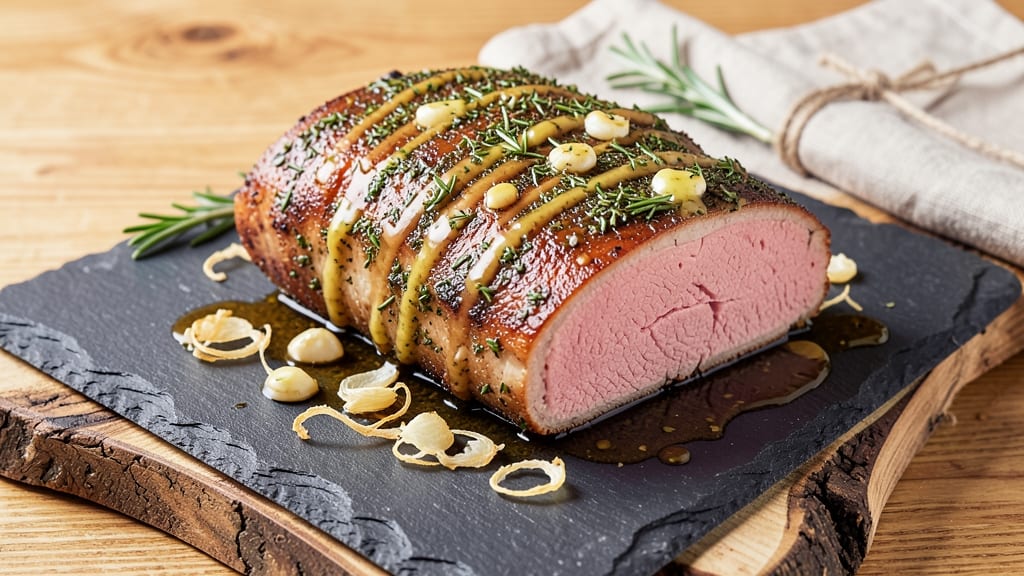
This boneless pork loin rib roast recipe delivers restaurant-quality results with tender, juicy meat that practically melts in your mouth.
After years of perfecting pork roasts in my kitchen—and later at The Smoky Pig—I’ve cracked the code for achieving that ideal balance of crispy exterior and moist interior without the hassle of a bone.
The secret lies in a herb-crusted dry brine that enhances flavor and moisture retention, making every slice worth savoring.
The recipe begins with a 24-hour dry brine, a technique I learned from my time apprenticing under Chef Chen. This step ensures the pork stays incredibly juicy, even when roasted to perfection.
We’ll use a mix of fresh herbs, garlic, and mustard to create a flavorful crust that seals in moisture while adding depth. The roasting process itself is straightforward—400°F for about 25 minutes per pound, with a final resting period to let the juices redistribute.
What you’ll end up with is a tender, golden-brown roast that slices effortlessly, offering a perfect harmony of textures and flavors. The herb crust adds a fragrant aroma that fills your kitchen, while the meat itself remains succulent and rich.
This is the kind of dish that elevates a weeknight dinner into something special—without requiring hours in the kitchen or a complicated process.
Pair it with roasted root vegetables, a simple green salad, or even a batch of my herb-roasted potatoes for a complete meal. The beauty of this recipe is its versatility—it’s perfect for family dinners, holiday gatherings, or even a cozy night in.
Let’s get started on creating a pork roast that’ll have everyone asking for seconds.
Ingredients for boneless pork loin rib roast
Six ingredients transform simple pork into a restaurant-worthy roast with crispy edges and juicy perfection.
| Ingredient | Amount | Notes |
|---|---|---|
| Boneless Pork Loin Rib Roast 🥩 | 4 lb | Center-cut, even thickness preferred |
| Fresh Rosemary 🌿 | ¼ cup | Finely chopped, stems removed |
| Fresh Thyme 🌿 | ¼ cup | Leaves only, packed |
| Garlic Cloves 🧄 | 8 cloves | Minced, not powdered |
| Dijon Mustard 🍯 | 2 tbsp | High-quality, no sugar added |
| Extra-Virgin Olive Oil 🫒 | ½ cup | For crust and basting |
| Kosher Salt 🧂 | 2 tbsp | Diamond Crystal preferred |
| Freshly Ground Black Pepper 🌶️ | 1 tbsp | Coarse grind preferred |
| Unsalted Butter 🧈 | ½ cup | Cold, cubed for basting |
| Red Wine Vinegar 🍷 | 1 tbsp | For herb marinade |
| Fresh Sage Leaves 🌿 | ⅛ cup | Chopped, for garnish |
The pork loin is the star—center-cut ensures even cooking, and 4 pounds gives generous servings for a crowd. Grab it from the butcher counter if your grocery store doesn't carry pre-trimmed rib roasts; they'll cut it to your exact specifications. For herbs, fresh is non-negotiable—dried won't give that fragrant crust. I always buy organic rosemary and thyme from Whole Foods or my local farmers market, but the grocery store's fresh section works too. Look for bright green, vibrant leaves—anything wilted or yellow gets tossed. The Dijon mustard should be smooth, not grainy, and no sugar added—that's a game-changer for depth of flavor.
No fresh rosemary? Dried at half the amount works in a pinch, but it won't have that same aromatic punch. Short on thyme? Fresh oregano is a decent swap, though the flavor profile shifts slightly. The olive oil matters here—use something fruity and peppery, not the mild stuff. For the butter, European-style (like Plugrá) has higher fat content and melts beautifully for basting. The red wine vinegar can be swapped for lemon juice, but wine adds a subtle complexity. Pro tip: Toast your garlic cloves in the olive oil for 30 seconds before mincing—it deepens the flavor dramatically (trust me on this).
This roast tastes even better the next day, so plan ahead. Store leftovers in an airtight container in the fridge for up to 4 days, or freeze for 3 months. For reheating, low and slow is key—350°F until internal temp hits 145°F. I always make a double batch because it reheats so well for lunches. The herb crust keeps beautifully if you wrap tightly in parchment before refrigerating. And if you've got extra time, let it rest 15 minutes before slicing—that's when all the juices redistribute for maximum tenderness.
Why You'll Love This Recipe
- No Fuss Roast: I swear by this one—just a few slashes with a knife, a quick rub of Dijon and herbs, and it’s in the oven. No brining, no basting, no stress. The pork loin’s natural tenderness does all the heavy lifting.
- Herb-Packed Magic: That rosemary and thyme combo? It’s like a warm hug for your taste buds. The garlic cloves caramelize just enough to add depth without overpowering, and the Dijon mustard ties everything together with a tangy kick.
- Weeknight to Weekend: Between us, this roast works for everything. Toss it on a sheet pan for a lazy Tuesday dinner, slice it for sandwiches on Thursday, or serve it at your cousin’s BBQ on Sunday. It’s the ultimate crowd-pleaser that doesn’t require a Pinterest-perfect presentation.
- Leftovers That Don’t Suck: Honestly, I make this specifically for leftovers. The meat stays juicy, the flavors only get better, and it reheats like a dream. Pack it for lunches, freeze portions for later, or just eat it cold in a sandwich—no one will judge. (Yes, even on a Tuesday night.)
Step-by-step instructions for herb-crusted pork loin roast
Here's how to transform a simple boneless pork loin into a showstopping centerpiece with crisp edges and melt-in-your-mouth tenderness.
Prepare the Herb Crust and Season the Roast
In a food processor, pulse together the 0.25 cup fresh rosemary, 0.25 cup fresh thyme, 8 cloves garlic, 2 tbsp Dijon mustard, 1 tbsp red wine vinegar, 2 tbsp kosher salt, and 1 tbsp freshly ground black pepper until finely chopped but not pasty. With the processor running, slowly drizzle in the 0.5 cup extra-virgin olive oil until the mixture forms a coarse paste.
Transfer this herb mixture to a bowl and stir in the 0.5 cup cold unsalted butter, cutting it in until fully incorporated. The butter should look like coarse sand with visible herb flecks. Pat the 4 lb boneless pork loin rib roast dry with paper towels—this is crucial for developing that perfect crust. Spread half of the herb butter mixture evenly over the entire surface of the roast, pressing gently to adhere.
Sear for Maximum Flavor Development
Heat a heavy oven-safe skillet over medium-high heat until very hot. Place the roast in the skillet, fat-side down, and sear undisturbed for 4-5 minutes until a deep golden crust forms. Flip the roast and sear the other side for another 4-5 minutes. The goal is to create a flavorful crust while keeping the interior juicy.
Real talk: Don't rush this step. You'll know it's ready when the herb crust is deeply caramelized and releases easily from the pan. Transfer the skillet to a preheated 400°F oven (you'll want to preheat while searing). Roast for 15 minutes to begin cooking the interior while maintaining that beautiful crust.
Finish with Perfect Doneness
After the initial 15 minutes, remove the roast from the oven and increase the temperature to 425°F. Spread the remaining herb butter mixture evenly over the top of the roast. Return to the oven and roast for an additional 20-25 minutes (for medium-rare) or until the internal temperature reaches 145°F for medium.
Here's the thing—pork continues cooking after removal from the oven. For the most accurate reading, use a meat thermometer inserted into the thickest part of the roast, avoiding the bone if present. The exterior should be deeply browned with crisp herb crust, while the interior should be juicy with just a hint of pink in the center for medium-rare.
Rest and Garnish for Presentation
Transfer the roast to a cutting board and tent loosely with aluminum foil. Let it rest for 15-20 minutes—this allows the juices to redistribute throughout the meat, ensuring every slice is moist and flavorful. While resting, use a sharp carving knife to trim any excess fat if needed.
Just before serving, sprinkle the roast evenly with the 0.125 cup chopped fresh sage leaves. This final garnish adds a beautiful contrast of color and a fresh herbal note that complements the rich, crusty exterior. Slice against the grain into ½-inch thick portions for maximum tenderness, and serve immediately with your favorite sides.
Pro Tips For Making Boneless Pork Loin Rib Roast
- Sear First, Roast Slow: Get that pan screaming hot—cast iron or stainless steel—and sear the pork for 3-4 minutes per side before transferring to the oven. I used to skip this, and the roast just ended up bland and dry; that crust locks in flavor and keeps the juices inside where they belong.
- Smash Those Garlic Cloves: Don’t just mince the garlic—smash the whole cloves with the flat side of your knife first. This releases more flavor into the mustard and herbs, and it’s way easier than peeling tiny cloves after chopping. (Yes, even if you’re impatient like me.)
- Skip the Overcrowded Pan: If you’re browning the pork in a skillet, resist the urge to add all the garlic and herbs at once. Cook the pork first, then pull it out and crisp the garlic in the leftover fat before tossing in the rosemary and thyme. Overcrowding steams instead of sears, and you’ll end up with sad, wet herbs.
- Rest It Like Your Life Depends On It: The moment that pork hits 145°F, pull it out and tent it with foil—no peeking, no cutting, no rushing. Give it a solid 10-15 minutes. I learned this the hard way when a slice fell apart like overcooked chicken. The juices redistribute, and that’s when it gets tender. (Your future self will thank you.)
Pro cooking tips for great boneless pork loin rib roast
Dry Brine Like a Pro
I can't stress enough how crucial the 24-hour dry brine is for this recipe. Start by patting your 4 lb pork loin completely dry with paper towels—this helps the salt penetrate deeper.
In a bowl, mix 2 tbsp kosher salt with 1 tbsp freshly ground black pepper, then generously coat every inch of the roast. Place it on a wire rack set over a baking sheet and refrigerate uncovered for 24 hours.
This isn't just about seasoning; it's about transforming the meat's texture and moisture retention. The salt breaks down proteins, allowing the meat to hold onto juices better during cooking. Trust me, skipping this step means a drier, less flavorful roast. 💪
Perfect Sear Technique
Your skillet must be ripping hot before adding the roast—this is non-negotiable. I use a 10-inch cast iron skillet from my collection, preheated for at least 10 minutes on medium-high. Place the roast fat-side down and let it sear undisturbed for 4-5 minutes until a deep golden crust forms.
The key here is patience; don't move it around. You're building flavor through the Maillard reaction, not just cooking. After the first side, flip carefully and sear the other side for another 4-5 minutes.
Pro tip: If your skillet isn't hot enough, the butter in the crust will melt too quickly, ruining your beautiful sear. 🔥
Temperature Control Secrets
Start at 400°F for the initial 15 minutes to establish that perfect crust while gently cooking the interior. Then crank it up to 425°F for the final 20-25 minutes. This two-stage approach gives you both a crisp exterior and a juicy interior.
Use an instant-read thermometer like the ThermoWorks Smoke to monitor the internal temperature—145°F for medium is ideal. Here's my secret: If your oven runs hot, reduce the temperature by 25°F and add 5-10 minutes to your cooking time.
Every oven behaves differently, so don't rely solely on the recipe's timing. 🌡️
Resting: The Game Changer
This is where most home cooks mess up. As soon as that roast comes out of the oven, transfer it to a cutting board and tent loosely with foil. Let it rest for 15-20 minutes—this allows the juices to redistribute throughout the meat.
I've seen people slice into roasts immediately, and it's a crime against tenderness. The meat will hold its shape better and every slice will be moist. While resting, use this time to trim any excess fat with a sharp knife and prepare your sides.
Patience here makes all the difference in the final result. ⏰
Herb Butter Mastery
The herb butter isn't just a topping—it's the flavor bomb that ties everything together. After searing, spread the remaining herb butter mixture evenly over the roast before finishing in the oven. The butter should be cold and cubed when you mix it in, creating those beautiful, crisp herb flecks.
I like to use Plugrá European-style butter because it has a higher fat content that melts beautifully. For extra flavor, toast your garlic cloves in olive oil for 30 seconds before mincing—this adds a depth that raw garlic can't match.
The result? A roast that's rich, aromatic, and packed with flavor in every bite. 🧈
Slicing Against the Grain
This final step is what separates a good roast from a great one. Always slice against the grain into ½-inch thick portions. The grain runs lengthwise along the roast, so you'll need to rotate your cutting board halfway through.
I use my Dexter-Russell 12-inch slicing knife for this—it's sharp enough to glide through the meat without tearing. Slicing against the grain shortens the muscle fibers, making each bite more tender. Serve immediately with your favorite sides, and watch as everyone at the table asks for seconds. 🥩
Nutrition facts
Frequently asked questions
What's the best way to store leftover pork loin rib roast?
Wrap individual slices tightly in plastic wrap, then store in an airtight container in the fridge for up to 4 days. For longer storage, freeze for 3 months—just thaw overnight in the refrigerator before reheating. Reheat gently at 350°F until internal temp reaches 145°F to maintain moisture.
Can I use this recipe for smaller portions?
Scale down the ingredients proportionally—use a 2 lb roast and reduce all other measurements by half. The cooking time will be about 15-20 minutes at 425°F for medium doneness. Keep the herb crust ratio the same for maximum flavor impact.
Why does my pork loin sometimes turn out dry?
Most common causes are skipping the 24-hour dry brine or not resting the meat. The brine helps retain moisture, while resting lets juices redistribute. Also ensure your oven thermometer is accurate—pork continues cooking after removal. For extra insurance, baste with pan juices every 10 minutes during roasting.
What's the difference between pork loin and pork tenderloin?
Pork loin comes from the back and includes more connective tissue, giving it a slightly firmer texture. Tenderloin is the leaner, more delicate cut from the belly side. Both work for this recipe, but tenderloin cooks 10-15 minutes faster due to its size and tenderness. Loin handles the herb crust better for crispy edges.
Can I make this recipe ahead of time?
Yes! Prepare the herb butter mixture and dry brine the roast up to 2 days ahead. For best results, sear and roast the day you plan to serve. If making the full roast ahead, refrigerate wrapped in foil and finish cooking from cold. Reheat at 325°F until internal temp reaches 145°F.