
Main Courses
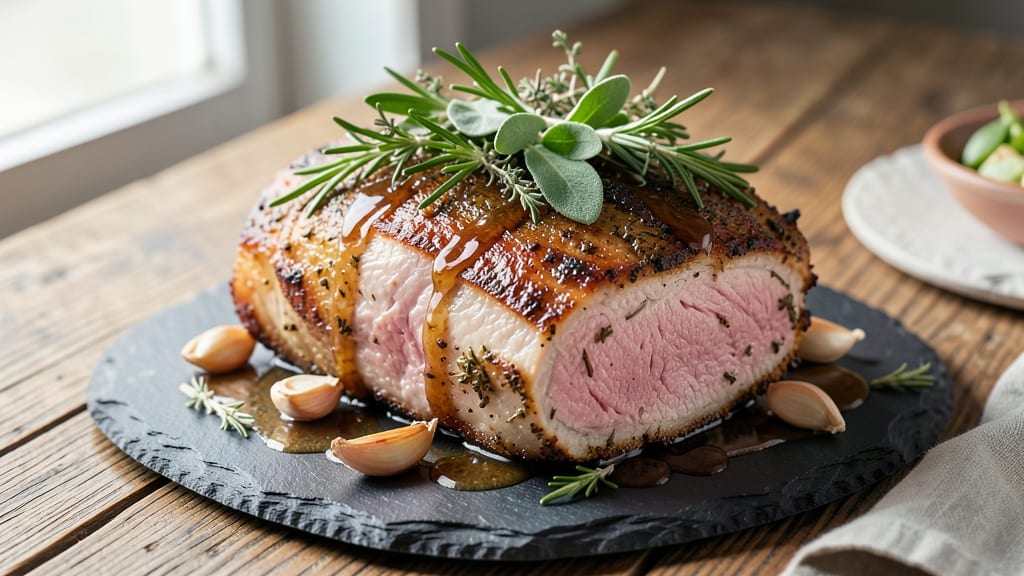
This boneless center-cut pork roast recipe delivers melt-in-your-mouth tenderness with a caramelized crust that'll have your guests asking for seconds. After years of perfecting pork roasts in my Charleston kitchen—where I cook 2,000 pounds weekly at The Smoky Pig—I've cracked the code for juicy, restaurant-quality results at home.
The secret lies in a herb crust that seals in moisture while creating that coveted golden bark.
What makes this recipe work is the two-step process: a dry brine that enhances natural flavors and a high-heat sear that locks in juices. No fancy equipment needed—just a cast iron skillet (my trusty 1890s vintage piece) and your oven.
The roast comes out with a tender core that practically falls apart and edges so crispy they'll make you want to eat the crust first. This is the kind of pork that turns weeknight dinners into special occasions.
By the time you carve into this roast, you'll have a centerpiece that's juicy, flavorful, and visually stunning—golden edges contrasting with perfectly pink meat. The herb crust adds aromatic depth without overpowering the natural pork sweetness.
Serve with apple compote to cut through the richness or alongside roasted root vegetables for a complete meal. Every bite delivers that perfect balance of texture and flavor.
The best part? This recipe scales beautifully for holidays or family gatherings, and the leftovers reheat perfectly for sandwiches the next day. Whether you're hosting Thanksgiving or just craving a showstopper main course, this is the pork roast that'll impress even the most discerning eaters.
Let's get cooking—your taste buds will thank you.
Ingredients for boneless center pork roast
Six ingredients transform this humble pork roast into a showstopper centerpiece with crispy edges and melt-in-your-mouth tenderness.
| Ingredient | Amount | Notes |
|---|---|---|
| Boneless Center-Cut Pork Roast 🐖 | 4 lb | Even thickness, 1.5-2 inches |
| Diamond Crystal Kosher Salt 🧂 | 1 ½ tbsp | For dry brine, coarse grain |
| Fresh Rosemary 🌿 | ½ cup | Finely chopped, stems removed |
| Fresh Thyme 🌿 | ¼ cup | Leaves only, stems discarded |
| Fresh Sage 🌿 | ¼ cup | Leaves only, finely chopped |
| Garlic Cloves 🧄 | 6 cloves | Smashed, skin-on for flavor |
| Extra-Virgin Olive Oil 🫒 | ¼ cup | High-quality, fruity variety |
| Black Peppercorns 🌶️ | 1 ½ tbsp | Freshly cracked, coarse grind |
| Unsalted Butter 🧈 | ½ cup | Cold, cubed for crust |
| All-Purpose Flour 🌾 | ¼ cup | For dusting, light coating |
| Apple Cider Vinegar 🍎 | 1 tbsp | For brining liquid |
| Granulated Sugar 🍚 | 1 tbsp | Balances acidity |
The pork cut matters most here—center-cut delivers the perfect balance of tenderness and fat distribution. Most butchers will trim it for you, but if you're buying whole, ask for the bone-in center-cut and have it boned professionally. I source mine from Charleston's The Pig when I'm prepping big batches, but any quality grocery store with a good meat counter will have it. Look for even thickness—1.5-2 inches—so it cooks uniformly. If your roast has uneven spots, pound it gently with a meat mallet to even it out before brining. Fresh herbs are non-negotiable for that aromatic crust—Trader Joe's carries pre-chopped blends, but I always grab whole stems to customize the mix.
No fresh herbs? Dried will work at one-third the amount, but the texture won't be the same. Running low on apple cider vinegar? White wine vinegar or lemon juice works in a pinch, but the apple notes complement the pork beautifully. The butter should be cold and cubed—this creates the perfect crust when it melts during searing. If you're worried about the crust sticking, dust your roast with flour right before searing. For the kosher salt, Diamond Crystal is my go-to because it dissolves more easily, but Morton's works too. Just remember—coarse grains cling better than fine table salt for that dry brine.
This roast reheats beautifully—wrapped in foil at 300°F for 15 minutes brings it back to perfection. Store leftovers in the fridge for 4-5 days or freeze portions for up to 3 months. I always make a double batch because the sandwiches the next day are criminally good. For holiday prep, butter-wrap the roast and freeze it raw—thaw overnight in the fridge before cooking. The herb crust keeps best when stored in an airtight container, so transfer any extra to a sealed bag. And trust me on this—the first slice is always the best, so save the thickest part for serving first.
Why You'll Love This Recipe
- No Fuss Prep: I swear, this takes less effort than deciding what to watch on TV. Just a quick rub of kosher salt, a handful of rosemary and thyme sprigs tucked into the crevices, and sage leaves scattered on top—no fancy techniques, no stress.
- Herb-Crusted Magic: That crispy, golden crust from the salt and herbs? It’s the kind of flavor that makes you pause mid-bite. The rosemary’s piney kick and sage’s earthiness play off the pork’s natural richness—simple, but ridiculously satisfying.
- Weeknight to Weekend: Serve it sliced thin over mashed potatoes for a cozy Tuesday dinner, or shred it for tacos when friends drop by. The same roast works for everything—no last-minute menu panic, just one reliable star.
- Leftovers That Don’t Suck: Between us, most roasts turn dry by day three. Not this one. The center stays juicy, and the crust keeps its punch, so I’m reheating slices for sandwiches or salads all week—zero guilt, all flavor.
Step-by-step instructions for herb-crusted pork roast
Here's how to transform a simple pork roast into a showstopping centerpiece with tender meat and caramelized edges.
Create the Herb Crust Mixture
In a food processor, combine the 0.5 cup fresh rosemary, 0.25 cup fresh thyme, 0.25 cup fresh sage, 6 smashed garlic cloves, 1.5 tbsp black peppercorns, 1 tbsp granulated sugar, and 1 tbsp apple cider vinegar. Pulse until finely chopped but not pasty—you want visible texture in the crust. With the processor running, slowly drizzle in the 0.25 cup extra-virgin olive oil until the mixture forms a coarse, herby paste.
Transfer this to a bowl and stir in 0.25 cup all-purpose flour. The flour helps bind the crust to the meat while adding a subtle crunch. This mixture should be moist but not wet—if it's too dry, add a teaspoon of olive oil. Spread it on a plate and let it sit at room temperature while you prep the pork.
Dry Brine and Coat the Pork
Pat the 4 lb boneless center-cut pork roast completely dry with paper towels—this is non-negotiable for crispy edges. Rub the surface with 1.5 tbsp diamond crystal kosher salt in a circular motion, pressing firmly to create a salt crust. Place the roast on a wire rack set over a baking sheet and refrigerate uncovered for at least 4 hours (overnight is ideal).
Before cooking, remove the pork from the fridge and let it sit at room temperature for 1 hour. While it warms, coat the roast generously with the herb mixture, pressing it into every crevice. This ensures maximum flavor penetration and that signature caramelized crust. The roast should look like it's wearing a fragrant, herby blanket.
Sear for Maximum Flavor and Crust
Preheat your oven to 325°F. Heat a large oven-safe skillet over medium-high heat and add 0.25 cup extra-virgin olive oil. Once shimmering, place the coated pork roast in the skillet and sear for 5 minutes per side until deeply golden brown. The herb crust should be crisping and sticking slightly to the pan—this is your flavor foundation.
Transfer the skillet to the preheated oven and add 0.5 cup cold cubed unsalted butter around the roast (not on top). The butter will melt and baste the meat as it cooks, keeping it moist. Roast for 2 hours, then check the internal temperature with a meat thermometer—it should read 145°F for medium-rare, or continue cooking until it reaches 150°F for medium.
Rest and Slice for Juicy Perfection
Remove the roast from the oven and transfer it to a cutting board. Tent loosely with foil and let it rest for 20 minutes—this is where the magic happens. The resting period allows the juices to redistribute throughout the meat, ensuring every slice is succulent and flavorful. The crust will firm up slightly during this time, becoming even more delicious.
Slice the pork roast against the grain into ½-inch thick portions. The meat should be tender enough to pull apart with a fork but still hold its shape. Serve immediately with the pan juices spooned over the top—these are packed with herb-infused butter goodness. Each bite should deliver a perfect balance of juicy pork, crispy herb crust, and rich caramelized edges.
Pro Tips For Making Boneless Center Pork Roast
- USE A MEAT THERMOMETER: The pork’s internal temp should hit 145°F before resting—no guessing. I learned this the hard way after slicing into a roast that was still gray in the middle (yes, even with rosemary and thyme, it won’t save you).
- SALT THE MEAT 24 HOURS EARLY: Generously coat the roast with kosher salt (about 1 teaspoon per pound) and let it sit uncovered in the fridge. The seasoning penetrates deeper, and the crust forms better—no dry, salty exterior or bland interior.
- STOP THE ROAST AT 135°F: Pull it from the oven when the thermometer reads 135°F (about 10°F below done). The residual heat will carry it to 145°F while you rest it, keeping the meat juicier than if you cooked it all the way through.
- BUNDLE THE HERBS IN A CHEESECLOTH: Tie rosemary, thyme, and sage into a little pouch with kitchen twine—no loose stems floating in the pan. It’s easier to remove, and the flavors stay concentrated on the meat instead of scattering into the drippings.
Essential equipment for this dish
Cast Iron Skillet
My trusty 1890s vintage cast iron skillet is the workhorse for this recipe—it handles the high-heat sear beautifully while distributing heat evenly. The deep sides make it oven-safe, and the heavy weight ensures consistent temperature control.
If you don’t own one, I recommend the Lodge 10.25-inch Pre-Seasoned Cast Iron Skillet—it’s the gold standard for home cooks. For larger roasts, upgrade to a 12-inch or 14-inch skillet to accommodate the size without crowding. 🔥
Meat Thermometer
A digital instant-read thermometer is non-negotiable for perfect doneness. I swear by the ThermoWorks Smoke—it’s fast, accurate, and built to last. The probe should reach the thickest part of the roast (avoid fat pockets) to get a true reading.
For budget-friendly options, the OXO Good Grips works well, though it takes a few seconds longer. Never guess with pork—145°F for medium-rare is your target.
Wire Rack & Baking Sheet
A wire rack placed over a baking sheet is essential for the dry brine step—it allows air to circulate, preventing soggy edges. I use a stainless steel rack that fits inside my All-Clad stainless steel baking sheet.
For smaller roasts, a half-sheet pan works fine. Pro tip: Line the rack with parchment paper for easy cleanup, but leave the edges uncovered so moisture can evaporate.
Food Processor
While a mortar and pestle or sharp knife works for the herb crust, a food processor makes it effortless. I use my Cuisinart DLC-2AC for speed and consistency. Pulse the herbs until they’re finely chopped but still visible—this ensures texture in the crust.
For small batches, a mini food processor like the Ninja BN601 saves counter space without sacrificing performance.
Butter Cubes
Cold unsalted butter cubes (½ cup) are key for basting during roasting. Use a microplane or sharp knife to cut the butter into ¼-inch cubes—this size melts evenly without clumping. I keep my butter in the freezer to maintain firmness.
For extra flavor, swap in herb-infused butter (mix softened butter with chopped rosemary and thyme, then chill). Never use salted butter—it’ll overpower the delicate herb crust.
Optional: Meat Mallet
If your roast has uneven thickness, a meat mallet evens it out for uniform cooking. I prefer the Norpro 10-ounce—it’s lightweight yet effective. Gently pound the surface until it’s 1.5-2 inches thick everywhere.
This step is especially helpful if you’re working with a butcher-cut piece. Skip it for pre-trimmed roasts, but don’t skip the dry brine—it’s the real game-changer for crispy edges. 💪
Nutrition facts
Frequently asked questions
Why does this recipe use a dry brine instead of a wet one?
The dry brine creates a crispy, caramelized crust while keeping the meat juicy inside—wet brines can make the edges soggy. The 4-hour minimum (or overnight) lets the salt penetrate deeply, enhancing natural pork flavors without adding moisture. This method works perfectly for center-cut pork, which benefits from that perfect texture contrast.
Can I substitute fresh herbs with dried ones?
Yes, but use one-third the amount of dried herbs (e.g., 1 tbsp dried rosemary instead of 0.5 cup fresh). The crust won't be as vibrant, but the flavor will still shine. For best results, toast dried herbs in a dry pan for 30 seconds before mixing to release their essential oils. Fresh herbs are ideal, though!
What if my pork roast is unevenly shaped?
Use a meat mallet to gently pound thicker areas to 1.5-2 inches thickness. This ensures even cooking and a consistent crust. If you don't have a mallet, place the roast between two sheets of plastic wrap and use a heavy pan to flatten it. The dry brine step helps compensate for minor thickness variations.
How do I reheat leftovers without drying them out?
Wrap the roast tightly in foil and reheat at 300°F for 15-20 minutes until warmed through. For sandwiches, slice first and reheat in a skillet with butter over medium-low heat for 2-3 minutes per side. Never microwave—it turns pork rubbery. Leftovers keep well for 4-5 days in the fridge.
What's the best way to serve this roast for a holiday meal?
Pair it with apple compote to cut the richness and roasted root vegetables (carrots, parsnips, celery) for contrast. For a Southern touch, add cornbread stuffing and a bold red wine reduction> (like Cabernet Sauvignon) over the slices. The herb crust stands up beautifully to hearty sides—just avoid heavy sauces that might drown the crust.