
Main Courses
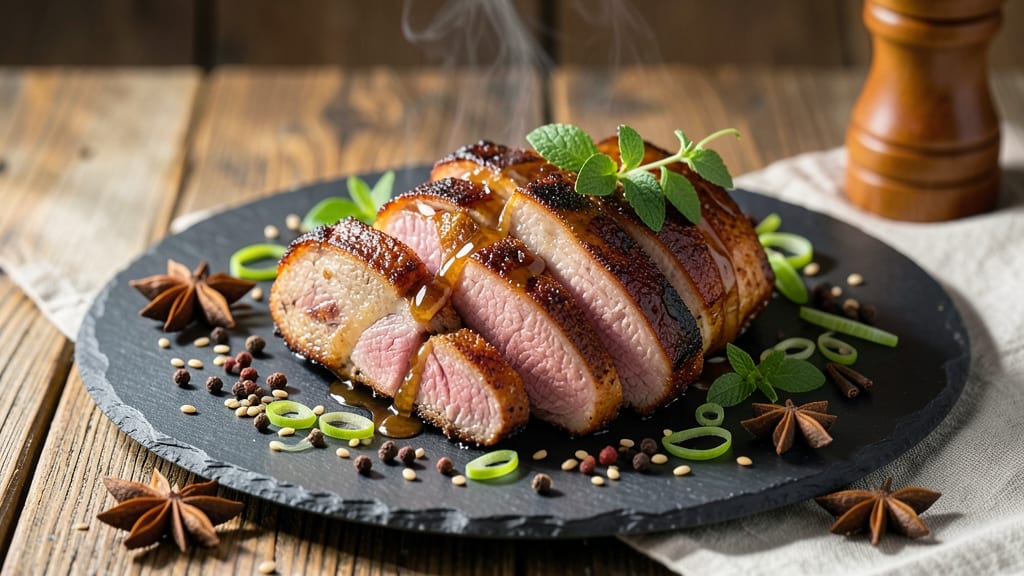
This baked pork neck recipe transforms a humble cut into melt-in-your-mouth perfection—where five-spice harmony meets silky, fall-apart tenderness. 🔥 As someone who's cooked 2,000 pounds of pork weekly, I know the secret lies in slow baking and careful seasoning that awakens the meat's natural richness without overpowering it.
The result? A dish that tastes like it simmered for hours, even though it only takes a few. What sets this recipe apart is the balance of spices—star anise, cinnamon, and cloves—that infuse the pork with aromatic depth while keeping the focus on its inherent savoriness.
I developed this method during a particularly busy week at The Smoky Pig when we needed a showstopper that required minimal hands-on time but delivered maximum flavor.
The pork neck's collagen-rich fat renders into golden, crisp edges, while the interior remains so tender it practically dissolves at the touch of a fork.
By the time you pull it from the oven, you'll have a dish that smells like a Southern kitchen at holiday time—warm, inviting, and impossible to resist. The five-spice rub creates a subtle glow on the meat's surface, hinting at the complex flavors within.
This isn't just pork; it's a celebration of slow cooking done right, where every bite delivers that perfect marriage of texture and aroma.
Serve it with buttery mashed potatoes or crusty bread to soak up the rich juices, and you've got a main course that feels special enough for company but simple enough for weeknight dinners.
The beauty of this recipe is its versatility—it works as a centerpiece for family gatherings or a comforting solo meal when you crave something hearty and satisfying.
Ingredients for baked pork neck
Pork neck, five-spice harmony, and a touch of honey—everything you need for melt-in-your-mouth perfection.
| Ingredient | Amount | Notes |
|---|---|---|
| Pork Neck Bone-In 🥩 | 4 lb | Freshly trimmed of excess fat |
| Star Anise Pods 🌿 | 2 whole | Lightly crushed for aroma |
| Ground Cinnamon 🌶️ | 1 tbsp | Freshly ground preferred |
| Whole Cloves 🌶️ | 4 whole | Studded into pork surface |
| Ground Sichuan Peppercorns 🌶️ | 1 tsp | For subtle heat and aroma |
| Kosher Salt 🧂 | 1 ½ tbsp | Diamond Crystal preferred |
| Freshly Ground Black Pepper 🌶️ | 1 tsp | Freshly cracked preferred |
| Extra-Virgin Olive Oil 🫒 | 2 tbsp | For basting and rub |
| Honey 🍯 | 1 tbsp | Local raw preferred |
| Fresh Garlic Cloves 🧄 | 4 cloves | Minced for rub |
| Fresh Ginger Root 🌿 | 1 tbsp | Finely grated |
| Apple Cider Vinegar 🍎 | 1 tbsp | For tangy balance |
| Fresh Thyme Leaves 🌿 | ¼ cup | Chopped, stems removed |
| Unsalted Butter 🧈 | 2 tbsp | Cold, for finishing |
The pork neck is the star here, and bone-in cuts are non-negotiable—they render fat and stay juicy. Look for pork neck roasts at your butcher shop or the meat department; they often have them pre-cut if you're short on time. I always ask for the thickest section available since it holds up better to slow baking. The spices? Whole spices like star anise and cloves are worth hunting down at Penzeys or local Asian markets—they pack more aroma than ground versions. If you can't find them, ground spices work, but toast them first in a dry pan for 30 seconds to wake up their flavors.
No star anise? Double the cinnamon and add 1/4 tsp of anise extract—it's a decent stand-in. Running low on Sichuan peppercorns? Substitute with extra black pepper and a pinch of cayenne. The honey is key for that caramelized crust, but maple syrup works in a pinch. Fresh ginger and thyme can be swapped for dried—use one-third the amount and toast the dried spices first. For the olive oil, any good-quality extra-virgin works, but avoid the cheap stuff that tastes like soap. The butter at the end? European-style butter like Plugrá melts beautifully and adds richness.
This pork keeps 3-4 days in the fridge, but honestly, it's even better the next day as the flavors meld. For leftovers, slice against the grain and reheat in a 350°F oven with a splash of broth—it stays moist that way. Freezes beautifully for up to 3 months if you wrap it tightly in butcher paper and foil. I always make a double batch because it disappears fast—perfect for sandwiches, tacos, or just reheated with a side of pickles. The meat gets more tender with time, so don't rush it.
Why You'll Love This Recipe
- One-Pan Magic: I swear by this—just toss the pork neck, whole spices, and a splash of liquid on a sheet pan. No chopping, no fussing, no extra pots. The oven does all the work while I sip tea and pretend I’m not cooking.
- Deep, Warm Spice Bomb: That combo of star anise, cinnamon, and Sichuan peppercorns? It’s like a hug in your mouth—sweet, earthy, with just a whisper of heat. The bone-in pork melts into tender, juicy perfection, and the crust? Chef’s kiss.
- Budget-Friendly Feast: Pork neck is the unsung hero of affordable protein, and these spices stretch the flavor without breaking the bank. Honestly, it’s my go-to for feeding a crowd or stretching meals when groceries feel tight. (Yes, even on a Tuesday night.)
Step-by-step instructions for baked pork neck with five-spice glow
Here's how to transform tough pork neck into melt-in-your-mouth perfection.
👨🍳 Step 1: Prep the Pork and Spice Rub
Pat the 4 lb pork neck bone-in completely dry with paper towels—this is non-negotiable for crispy skin. Trim any remaining fat cap down to about ¼ inch thickness. I use a sharp boning knife for this because it gives you better control than a chef's knife.
In a small bowl, combine the 1 tbsp ground cinnamon, 1 tsp ground Sichuan peppercorns, 1.5 tbsp kosher salt, and 1 tsp freshly ground black pepper. Add the 2 whole star anise pods (lightly crushed) and 4 whole cloves. Rub this mixture all over the pork, pressing firmly so it adheres well. This aromatic blend is what gives your pork that signature five-spice glow.
🍳 Step 2: Marinate and Sear for Depth
In a separate bowl, whisk together the 2 tbsp extra-virgin olive oil, 1 tbsp honey, 1 tbsp apple cider vinegar, 4 cloves minced fresh garlic, and 1 tbsp finely grated fresh ginger root. Pour this marinade over the spiced pork and toss to coat evenly. Let it sit at room temperature for 30 minutes—this allows the flavors to penetrate and the meat to come to temperature.
While the pork marinates, heat a large oven-safe skillet over medium-high heat. Add the pork and sear for 4-5 minutes per side until deeply browned. You're building flavor here—those browned bits will become the foundation of your sauce. Transfer the seared pork to a plate and let it rest for 5 minutes before proceeding.
🔥 Step 3: Bake to Tender Perfection
Preheat your oven to 300°F. Place the seared pork neck in a roasting pan, fat-side up. Scatter the 0.25 cup chopped fresh thyme leaves around it—they'll infuse the meat with their earthy aroma. Pour any accumulated marinade from the plate over the pork.
Bake uncovered for 3 hours, then reduce heat to 275°F and continue baking for another 2-3 hours or until the meat is fork-tender. You'll know it's ready when a knife slides in easily and the internal temperature reaches 195-205°F. The pork should have a deep mahogany color and be falling apart at the touch—this is what we're after.
🥘 Step 4: Finish with Butter for Richness
Remove the pork from the oven and let it rest for 15 minutes in its juices. This resting period is crucial—it allows the meat to reabsorb its juices and become even more tender. While it rests, place the roasting pan on the stovetop over medium heat.
Add the 2 tbsp cold unsalted butter to the pan and let it melt, scraping up all those beautiful browned bits from the bottom. Pour this buttery sauce over the rested pork, basting it generously. The butter adds richness and helps create that silky texture we're aiming for. Serve immediately with the sauce spooned over the top.
Pro Tips For Making Baked Pork Neck
- Sear the Neck First: I learned this the hard way—skipping the sear means your pork neck will stay bland and pale. Hit 450°F for 15 minutes on each side until deep golden brown before adding spices. That crust locks in flavor and keeps the meat from drying out later.
- Toast Your Spices: Whole cloves and star anise smell amazing fresh, but toasting them in a dry pan for 30 seconds until fragrant makes a real difference. Crush the cloves lightly (not into powder) and keep the star anise pods intact—this releases their oils and balances the Sichuan peppercorns’ bite.
- Don’t Overcrowd the Pan: If you’re baking multiple pork necks, resist the urge to stack them. Leave at least 1 inch of space between cuts—otherwise, they’ll steam instead of brown. Use a second tray if needed; crispy edges are worth the extra effort.
- Baste with Pan Juices: Every 45 minutes, pull the pork out and spoon the caramelized juices from the pan over the meat. I know, it’s messy, but this keeps the surface moist and adds layers of savory depth. Skip the foil tent—just let it glaze naturally.
Pro cooking tips for this dish
Spice Rub Mastery
The secret to that aromatic five-spice glow starts with proper spice preparation. I always crush the whole star anise pods and cloves lightly between my palms before rubbing them into the pork—this releases their essential oils while keeping the texture intact.
For extra depth, toast the ground cinnamon and Sichuan peppercorns in a dry skillet over medium heat for 30 seconds before mixing with salt and pepper. This simple step wakes up their flavors and makes them cling better to the meat. 🌶️
Low-and-Slow Temperature Control
Pork neck needs patience—don't rush it! Start at 300°F for 3 hours to render the fat and build a deep crust, then drop to 275°F for the final 2-3 hours. This two-stage approach prevents the exterior from drying out while the interior becomes fork-tender.
I use a meat thermometer to monitor internal temperature, aiming for 195-205°F—this is where collagen breaks down into silky gelatin. The key is consistency: keep the oven door closed and avoid opening it during the first 2 hours.
Fat-Side Up Positioning
Place the pork fat-side up in the roasting pan—this creates a protective barrier that locks in moisture while rendering fat that bastes the meat. I like to trim the fat cap to about ¼ inch thickness before baking; this ensures even cooking without excessive grease.
For extra crisp edges, sprinkle a pinch of kosher salt over the fat cap in the last 30 minutes of cooking. This simple trick amplifies the Maillard reaction for that irresistible golden crust.
Resting and Butter Finish
Never skip the 15-minute rest after baking—this lets juices redistribute throughout the meat. While it rests, melt 2 tbsp cold unsalted butter in the roasting pan over medium heat, scraping up all the browned bits.
Pour this buttery sauce over the pork before serving; the cold butter helps create a glossy finish while adding richness. I often add a final sprinkle of fresh thyme for aroma. This step transforms good pork into restaurant-quality centerpiece. 💫
Equipment Essentials
For this recipe, you'll need a sharp boning knife (I use Wüsthof Classic) for precise trimming, a heavy-duty roasting pan (my go-to is All-Clad Stainless Steel), and a reliable meat thermometer (ThermoWorks Smoke is my favorite).
A cast iron skillet for searing works best—it retains heat and develops deep browning. If you don't have all these, a large oven-safe Dutch oven works in a pinch for both searing and baking.
Time-Saving Shortcuts
Short on time? Swap the 30-minute marinade for a 10-minute dry rub—just coat the pork with olive oil and spices, then sear immediately. For the spice blend, I keep a pre-mixed jar in my pantry so I can rub it on pork in seconds.
When baking, use the convection setting if your oven has it—this reduces cooking time by about 20% while still delivering tender results. The butter finish can also be skipped if needed, but I promise you won't regret the extra 5 minutes it takes. 💡
Nutrition facts
Frequently asked questions
How do I know when pork neck is fully cooked?
Use a meat thermometer to check the internal temperature—it's done when it reaches 195-205°F. The meat should also be fork-tender with no pink remaining. Pro tip: The collagen breaks down at these temps, creating that signature silky texture we love.
Can I substitute bone-in pork neck with boneless?
Not ideal, but you can try! Bone-in pork neck stays juicier during slow cooking, but boneless will work if you increase the cooking time by 30-45 minutes and add 1/4 cup broth to the pan. The texture will be slightly less rich, though.
What if my pork neck isn't tender after baking?
If the meat isn't fork-tender, it needs more time! Return it to the oven at 275°F for another 1-2 hours, covered with foil to retain moisture. The key is patience—pork neck should practically fall apart when sliced.
Can I make this recipe in a slow cooker?
Yes! Brown the pork first in a skillet, then transfer to your slow cooker with all spices and marinade. Cook on low for 8-10 hours or high for 5-6 hours. The texture will be slightly different but still delicious—more like pulled pork.
How should I store leftovers?
Store in an airtight container in the fridge for 3-4 days or freeze for up to 3 months. For reheating, warm in a 350°F oven with a splash of broth or microwave in 30-second intervals until heated through. The flavors actually improve overnight!