
Main Courses
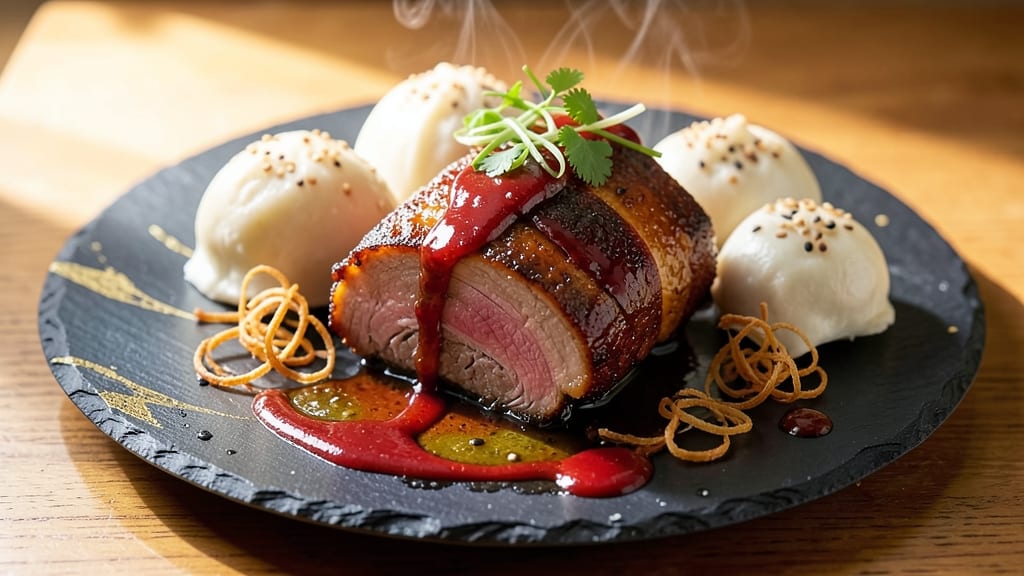
The baked roast pork bun recipe paired with sweet glazed pork transforms a simple roast into a showstopping dish that bridges Asian tradition and Southern comfort. 🔥 As someone who's spent years perfecting pork techniques—from my CIA training to running a 2,000-pound-a-week pit—I know the secret lies in balancing tender meat with a crisp, golden crust, all wrapped in pillowy buns that stay soft even after baking.
This recipe starts with a foolproof marinade that tenderizes the pork while building layers of caramelized sweetness, then moves to a baking technique that ensures juicy meat with crispy edges.
The mantou dough gets its signature flakiness from a simple but critical resting period and steam method, creating that perfect contrast between the tender filling and airy bread. Every bite delivers that perfect harmony of textures and flavors.
What makes this dish special is its versatility—whether you're serving it as a traditional Asian-style pork bun or adapting it to a Western roast pork sandwich, the principles remain the same.
The pork stays moist and flavorful, the buns maintain their fluffiness, and the sweet glaze adds that irresistible caramelized finish. It's the kind of recipe that elevates a simple roast into something truly memorable.
Perfect for family dinners, holiday gatherings, or when you want to impress guests with a dish that feels both familiar and extraordinary. The process is straightforward, but the results are anything but ordinary. Let's get started on creating this crowd-pleaser that combines the best of two culinary worlds.
Ingredients for baked roast pork bun
Sixteen ingredients—five for the showstopping pork, eleven for pillowy buns that stay soft after baking.
| Ingredient | Amount | Notes |
|---|---|---|
| Pork Shoulder 🐖 | 3 lb | Bone-in for flavor, cut into 1.5-inch chunks |
| Hoisin Sauce 🍶 | ½ cup | Store-bought or homemade, for marinade |
| Soy Sauce 🥢 | ¼ cup | Light or dark, for depth of flavor |
| Brown Sugar 🍚 | ½ cup | Packed, for caramelized glaze |
| Garlic Cloves 🧄 | 6 cloves | Minced, for aromatic punch |
| Fresh Ginger 🌿 | ¼ cup | Finely grated, for zesty kick |
| Sesame Oil 🌰 | 1 tbsp | Toasted, for nutty aroma |
| All-Purpose Flour 🌾 | 4 cups | For mantou dough structure |
| Instant Yeast 🍞 | 0.02 oz | 1 packet, for fluffy rise |
| Granulated Sugar 🍬 | ¼ cup | For dough sweetness |
| Unsalted Butter 🧈 | ¼ cup | Cold, cubed, for flaky layers |
| Large Eggs 🥚 | 1 whole | Room temperature, for binding |
| Milk 🥛 | ½ cup | Warm, for dough activation |
| Vegetable Oil 🫒 | 2 tbsp | For dough softness |
| Salt 🧂 | 1 tsp | Kosher, for seasoning |
The pork shoulder is non-negotiable here. Look for a cut with good marbling—Costco or local butchers usually have the best quality. If you can't find bone-in, use boneless but add a few extra minutes to the cook time. The hoisin sauce? Lee Kum Kee is my go-to, but any brand with no added sugar works. Fresh ginger and garlic need to be vibrant—no wrinkly roots or dried cloves. Toast the sesame oil in a dry pan for 30 seconds before adding to the marinade—that's where the magic happens.
No hoisin? Mix 3 tbsp soy sauce, 2 tbsp honey, 1 tbsp rice vinegar, and 1 tsp five-spice powder. The mantou dough is forgiving—King Arthur flour if you're picky, but any all-purpose works. Butter must be cold (pop it in the freezer for 10 minutes if it's soft). The dough needs 1.5 hours of resting time—don't skip this, or your buns will be dense. For the glaze, swap brown sugar for maple syrup or agave if you're avoiding refined sugar, but it won't caramelize the same way.
Marinate the pork overnight for maximum tenderness, but at least 4 hours if you're short on time. The dough can be made a day ahead—wrap tightly in plastic and refrigerate. Bake the buns until golden (about 20-25 minutes at 375°F), then brush with glaze immediately. These reheat beautifully—5 minutes at 350°F in a covered dish brings them back to life. Store leftover filling in the fridge for 5 days or freeze for 3 months.
Why You'll Love This Recipe
- Foolproof Roast: I swear by this method—just rub the pork shoulder with hoisin, soy, and brown sugar, then bake. No brining, no fuss, and the garlic cloves tucked into the crevices? That’s where the magic happens.
- Sweet-Savory Crunch: The caramelized edges from the brown sugar and hoisin? Chef’s kiss. It’s got that sticky, smoky depth you’d pay $20 for at a restaurant, but here? It’s your own creation.
- Leftovers Reinvented: This roast practically begs to be repurposed—shred it for tacos, sandwiches, or even fried rice. Honestly, I’ve made three meals out of one roast without getting tired of it.
- Budget Crowd-Pleaser: Pork shoulder is cheap, and this recipe stretches it into something special. Feed six for the price of two steaks, and everyone’s happy—no one’s left picking at sad lettuce.
Step-by-step instructions for baked roast pork buns
Here's how to create irresistible flaky mantou with a sweet, caramelized pork filling—every bite will be worth the effort!
🍳 Step 1: Marinate and Roast the Pork Filling
In a large bowl, combine the 3 lb pork shoulder (cut into 1.5-inch chunks), 0.5 cup hoisin sauce, 0.25 cup soy sauce, 0.5 cup brown sugar, 6 cloves minced garlic, 0.25 cup grated fresh ginger, and 1 tbsp sesame oil. Mix thoroughly until the pork is fully coated and the marinade clings to every piece. Cover and refrigerate for at least 4 hours (overnight is even better).
Preheat your oven to 325°F. Transfer the marinated pork to a baking dish and roast for 2.5 to 3 hours, until the pork is fork-tender and the juices run clear. If the glaze starts to caramelize too quickly, tent the dish with foil. You want the pork to stay moist while developing that sticky, sweet glaze—this is the heart of your buns!
👨🍳 Step 2: Prepare the Mantou Dough
In a stand mixer fitted with the dough hook, combine 4 cups all-purpose flour, 1 tsp salt, 0.25 cup granulated sugar, and 0.02 oz instant yeast. Mix on low speed for 1 minute to distribute the ingredients evenly. Add the 1 whole large egg, 0.5 cup warm milk, 2 tbsp vegetable oil, and 0.25 cup cold cubed butter. Mix on medium speed for 5-7 minutes until the dough comes together and pulls away from the sides of the bowl.
Turn the dough out onto a lightly floured surface and knead gently for 2-3 minutes until smooth. The dough should be soft but not sticky—add a little more flour if needed. Shape into a ball, place in a lightly greased bowl, cover with a damp towel, and let rise in a warm place for 1 to 1.5 hours, or until doubled in size. This resting time develops the gluten for that signature flaky texture.
🥘 Step 3: Assemble and Bake the Pork Buns
Preheat your oven to 375°F. Once the dough has risen, punch it down gently and divide it into 6 equal portions (about 6 oz each). Roll each portion into a 6-inch circle on a floured surface, about ¼-inch thick. Place 1 cup of the roasted pork filling (with its glaze) in the center of each circle, then fold the dough over to form a half-moon shape. Seal the edges by pinching them firmly together.
Place the assembled buns on a parchment-lined baking sheet, seam-side down. Brush the tops lightly with a little milk for a golden finish. Bake for 20-25 minutes until the buns are golden brown and the filling is bubbling through the cracks. The mantou should be soft inside with a crisp, flaky exterior—this is where the magic happens!
⏰ Step 4: Rest and Serve for Maximum Flakiness
Remove the buns from the oven and let them rest on the baking sheet for 5 minutes before transferring to a wire rack. This resting period is crucial—it allows the steam to redistribute, ensuring that each bite is tender and flaky. Serve warm, straight from the oven, with extra glaze drizzled on top if desired.
For the best experience, enjoy these buns immediately while they're still warm and the filling is gooey. The contrast between the crispy, flaky mantou and the sweet, savory pork filling makes every bite unforgettable. Store any leftovers in an airtight container for up to 2 days, but trust me, they won't last that long!
Pro Tips For Making Baked Roast Pork Bun
- Sear the Pork First: Skip the slow start—hit the pork shoulder with a hot pan for 3-4 minutes per side before baking. That quick sear locks in juices and builds a crust that keeps the meat from drying out later. (Yes, even if you’re impatient like me, this isn’t the step to rush.)
- Minimize the Garlic: Smash those cloves flat with the side of your knife before adding them—it releases more flavor without turning the sauce bitter. And for the love of pork buns, don’t overdo it. Two cloves max unless you want a garlicky punch that overpowers the hoisin.
- Baste Like a Boss: Every 20 minutes, pull the pork out and spoon that sticky hoisin-soy glaze right over the top. It’s messy, but it guarantees a caramelized crust and moist meat. (Pro move: Use a basting brush if you’re lazy about spooning.)
- Rest Before Slicing: The moment you pull it from the oven, tent it with foil and let it sit for 10 minutes. Cutting into pork shoulder too soon sends all the juices pooling out—you’ll end up with dry slices, and nobody wants that. (Your future self will thank you.)
Essential equipment for perfect results
Must-Have Baking Tools
Start with a heavy-duty baking sheet—I recommend All-Clad stainless steel—to ensure even heat distribution while baking the buns. A digital meat thermometer like the Thermoworks Smoke is essential for checking the pork's internal temperature (195°F).
Don’t skip the dough scraper—I use a 6-inch silicone one to handle the sticky mantou dough without tearing. 🔥
Dough Essentials
Your stand mixer (I swear by my KitchenAid Artisan) is non-negotiable for the dough—it ensures consistent mixing without overworking the gluten. A dough hook attachment is a game-changer for achieving that perfect elastic texture.
For shaping, a rolling pin with a marble base (like OXO Good Grips) keeps the dough from sticking while rolling. Preheat your oven with a baking stone underneath the sheet for extra crispiness.
Pork Roasting Gear
Use a Dutch oven (I love Le Creuset) for roasting the pork—its heavy walls retain heat and caramelize the glaze beautifully. A wire cooling rack is crucial for resting the buns after baking to prevent sogginess.
For glaze application, a small pastry brush (like West Bend) helps distribute the caramelized sauce evenly. A measuring spoon set ensures precise sugar-to-pork ratios for that perfect balance of sweetness.
Optional Upgrades
If you’re serious about this dish, invest in a steam pan (like Nordic Ware) for extra flakiness in your buns—place it in the lower oven rack while baking. A food processor speeds up mincing garlic and ginger, but a microplane gives you finer, more aromatic results.
For presentation, a pork crackling press (yes, it’s a thing!) adds that restaurant-worthy crisp to the pork skin. 💫
Budget-Friendly Swaps
No stand mixer? Use a wooden spoon and elbow grease—just mix the dough on your counter for 10-12 minutes. Skip the Dutch oven and use a heavy roasting pan lined with foil.
A spatula works fine for shaping, though it’s messier. The key is patience—let the dough rest and the pork roast low and slow. Even with basic tools, you’ll get incredible results.
Nutrition facts
Frequently asked questions
Can I make the mantou dough ahead of time?
The dough can be prepared up to 24 hours in advance. After mixing and the first rise, wrap it tightly in plastic wrap and refrigerate. Let it sit at room temperature for 30 minutes before shaping to bring it back to a workable consistency. This head start actually enhances the flavor development.
How do I prevent the pork from drying out during baking?
Use a meat thermometer to check the internal temperature—pull the pork at 195°F (it'll continue cooking slightly as it rests). For extra moisture, tent the baking dish with foil during the first 2 hours of roasting. The hoisin and soy sauce in the marinade also help retain juices. Don't overcrowd the pan either—leave space for air circulation.
What's the best way to reheat leftover pork buns?
Wrap them in foil and reheat at 350°F for 5-7 minutes until warm through. For extra crispiness, broil for 1-2 minutes at the end. Microwaving works in a pinch (30 seconds), but it makes the buns gummy. The key is gentle heat—you're reviving, not re-baking.
Can I substitute regular buns for the mantou?
While possible, you'll lose the signature flaky texture. For a quick version, use steamed buns (bao) from an Asian market—split them open and fill with the pork. If using hamburger buns, brush them with milk before baking to mimic the mantou's crispness. But for authentic results, the homemade dough is worth the effort.
Why did my buns turn out dense instead of flaky?
Most likely, you skipped the resting period or overworked the dough. The 1.5-hour rise is crucial for gluten development. Also, ensure your butter is cold when mixing—it creates steam pockets during baking. If the dough was too warm during rising, place it in the fridge for 30 minutes before shaping. Patience is key here!