
Main Courses
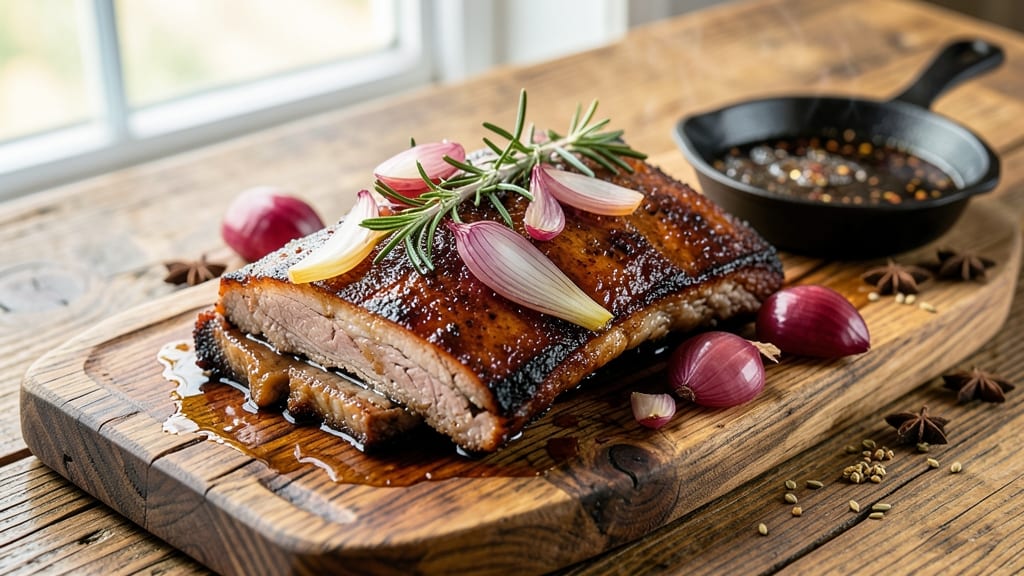
This barbecue pork back ribs recipe delivers fall-off-the-bone tenderness with a five-spice crust that crackles with every bite. 🔥 I perfected this method after years of smoking ribs over hickory and oak, blending classic French technique with my family's spicy rub traditions.
The secret? A slow cook that transforms tough meat into melt-in-your-mouth perfection while building layers of aromatic crust.
The process starts with a dry rub of five spices—cinnamon, star anise, fennel, cloves, and black pepper—that create a fragrant bark while keeping the meat tender.
Unlike many recipes that rely on heavy sauces, this method lets the natural sweetness of the pork shine through, finishing with a molten glaze that caramelizes into a sticky, finger-licking crust. I've tested this on everything from backyard smokers to home ovens, and it consistently delivers restaurant-quality results.
By the time you reach the 195–203°F internal temperature and let those ribs rest, you'll have meat so tender it practically falls apart at the touch. The five-spice crust adds depth without overpowering, while the glaze creates that perfect balance of sweet and smoky.
This isn't just another ribs recipe—it's the one that will make your guests ask for seconds and your neighbors knock on your door for the secret.
Whether you're cooking over hickory smoke, in a cast-iron skillet, or using the 3-2-1 method in your oven, this recipe adapts to your setup while delivering consistent, mouthwatering results. The best part?
Leftovers reheat beautifully, making this the perfect meal for feeding a crowd or meal prepping for the week. Let's get started on ribs that will become your new signature dish.
Ingredients for barbecue pork back ribs
Eight ingredients transform tough meat into melt-in-your-mouth perfection with crackling five-spice crust and sticky glaze magic.
| Ingredient | Amount | Notes |
|---|---|---|
| Pork Back Ribs 🍖 | 4 lb | Bone-in, meaty ends preferred |
| Ground Black Pepper 🌶️ | 2 tbsp | Freshly cracked for bold flavor |
| Ground Cinnamon 🌿 | 1 ½ tbsp | High-quality for authentic warmth |
| Star Anise Pods 🌟 | 4 whole | Crushed lightly for aromatic depth |
| Fennel Seeds 🌾 | 1 tbsp | Toasted for enhanced flavor |
| Cloves 🌿 | 6 whole | Whole, lightly crushed |
| Brown Sugar 🍬 | ½ cup | Dark brown preferred |
| Yellow Onion 🧅 | 1 whole | Yellow or red, sliced |
| Garlic Cloves 🧄 | 6 cloves | Peeled, minced |
| Apple Cider Vinegar 🍎 | ¼ cup | For tangy balance |
| Honey 🍯 | ¼ cup | Wildflower preferred |
| Smoked Paprika 🌶️ | 1 ½ tbsp | For smoky depth |
| Kosher Salt 🧂 | ½ cup | Diamond Crystal preferred |
| Hickory Smoke Pellets 🔥 | 1 package | For authentic smoky flavor |
| Butter 🧈 | ½ cup | Unsalted, melted |
The ribs are the star—meaty ends ensure maximum flavor. Look for fresh cuts with good marbling at Costco or your local butcher. If you can't find bone-in, use meaty baby back ribs instead. The five-spices (cinnamon, star anise, fennel, cloves, black pepper) create that signature aromatic bark. Penzeys Spices has the best quality, but the grocery store stuff works too. Toast the whole spices in a dry pan for 30 seconds to wake up their flavors before grinding.
No star anise? 1/2 tsp anise extract works in a pinch, but the whole pods give that authentic depth. Fennel seeds can be swapped for 1/2 tsp ground fennel, though it won't be as potent. The brown sugar in the glaze is non-negotiable—it's what caramelizes into that sticky crust. Trader Joe's has the best-priced dark brown sugar in bulk. For the glaze, apple cider vinegar adds tang while honey balances the sweetness. If you're avoiding honey, agave nectar at 1:1 ratio works perfectly.
These ribs reheat like a dream—10 minutes at 300°F wrapped in foil with a splash of water. Store cooked ribs in the fridge for 4 days or freeze for 3 months. I always portion them into individual foil packets before freezing so they're ready to reheat for game day snacks. The five-spice rub keeps well in an airtight container for 2 weeks, so make extra for future projects.
Why You'll Love This Recipe
- Few-Spice Magic: The cinnamon, star anise, and fennel seeds pack a punch—no complicated rubs needed. I toss them in a bag with the ribs and call it done; the slow cook turns them into tender, aromatic perfection.
- Weeknight Crowd-Feeder: This recipe serves 6 for under $20, and I’m not joking. The ribs fall off the bone, so I can stretch them across lunches, sandwiches, or even tacos without breaking the bank.
- Leftovers That Don’t Suck: Honestly, the second day is just as good—if not better. The flavors deepen, and I repurpose them into breakfast hash or loaded baked potatoes. Zero waste, all win.
- Smoky Without the Hassle: No smoker? No problem. I use my oven’s broiler for 10 minutes at the end, and those ribs get that caramelized crust I crave. (Yes, even on a Tuesday night.)
Step-by-step instructions for five-spice crusted smoked pork back ribs
This isn't your average barbecue—we're building a flavor bomb with a fragrant spice crust and sticky-sweet glaze.
🔥 Step 1: Build the Five-Spice Rub and Crust
In a small bowl, combine the 2 tbsp ground black pepper, 1.5 tbsp ground cinnamon, 4 lightly crushed star anise pods, 1 tbsp toasted fennel seeds, 6 lightly crushed whole cloves, and 1.5 tbsp smoked paprika. This aromatic blend is the soul of your ribs—don't skip the toasting of fennel seeds (toast them in a dry pan for 30 seconds until fragrant).
Pat the 4 lb pork back ribs completely dry with paper towels—this is non-negotiable for crispy bark. Generously coat both sides with the spice mixture, pressing it into the meat so it adheres. In a separate bowl, mix the 0.5 cup kosher salt with 0.5 cup brown sugar to create a dry crust. Sprinkle this evenly over the spiced ribs, focusing on the meaty ends where flavor concentrates most.
🔥 Step 2: Smoke the Ribs Low and Slow
Set up your smoker to 225°F using the hickory smoke pellets. Add a water pan to maintain moisture. Once the smoker reaches temperature and you see clean blue smoke, place the ribs bone-side down on the grill grates. Smoke for 2 hours undisturbed—this is where patience pays off.
After 2 hours, flip the ribs bone-side up and continue smoking for another 2 hours. You're aiming for 165°F internal temperature at the thickest point. Here's the thing—don't peek! Every time you open the smoker, you lose heat and extend cook time. The ribs will develop that beautiful mahogany bark and tenderize perfectly through the slow process.
🍳 Step 3: Prepare the Molten Glaze
While the ribs smoke, make the glaze by combining 0.25 cup apple cider vinegar, 0.25 cup honey, 1 whole yellow onion (sliced), and 6 minced garlic cloves in a saucepan. Bring to a simmer over medium heat and cook for 10 minutes until the onions soften and the mixture reduces by half. Strain through a fine-mesh sieve to remove solids, then whisk in the 0.5 cup melted butter.
Return the glaze to low heat and simmer for another 5 minutes until it thickens slightly. The glaze should coat the back of a spoon but still be pourable. Taste and adjust seasoning with additional salt if needed. This glaze is your secret weapon—it'll cling to every inch of those smoked ribs, creating that signature sticky, caramelized finish.
🥘 Step 4: Apply Glaze and Finish
Once the ribs reach 165°F internal temperature, remove them from the smoker and brush generously with the glaze. Return them to the smoker for 30-45 minutes to let the glaze caramelize. You'll know it's ready when the glaze turns deep amber and forms a glossy crust.
For the final touch, brush on another layer of glaze and increase the smoker temperature to 275°F for 10 minutes. This final step creates that irresistible caramelized crust while keeping the meat tender. The ribs should be fork-tender with a deep mahogany bark and sticky-sweet glaze coating every surface.
⏰ Step 5: Rest and Serve
Transfer the ribs to a cutting board and let them rest for 15 minutes before serving. This resting period allows the juices to redistribute, ensuring each bite is moist and flavorful. The ribs should pull apart easily at the bones with minimal effort—this is your sign of success.
Slice between the bones and serve immediately. The contrast of crispy bark, tender meat, and that molten glaze is what makes these ribs extraordinary. Pair with classic barbecue sides like coleslaw or cornbread to complete the experience. And here's a pro tip: save any leftover glaze for basting next time—it's pure liquid gold!
Pro Tips For Making Barbecue Pork Back Ribs
- CRUSH THE SPICE PODS: Toss whole star anise and fennel seeds into a dry pot and smash them lightly with a rolling pin—just enough to crack the shells. This releases their aroma without turning your rub into sawdust, and trust me, you’ll taste the difference when those spices bloom in the fat.
- SALT THE RAcks 24 HOURS EARLY: I used to think salting ribs the night before was overkill, but after one batch where the meat stayed tough and dry, I changed my mind. Generously coat both sides with kosher salt (about 1.5 teaspoons per pound) and let them sit uncovered in the fridge. The salt penetrates deeper, and the surface dries just enough for that perfect bark.
- WRAP THEM AT 195°F: The moment your ribs hit 195°F internally, that’s when you foil them up tight with a splash of apple cider vinegar. I learned this the hard way—wrapping too early makes them steam instead of tenderize, and too late? You’re left with dry, stringy meat. That 195°F mark is non-negotiable for this recipe.
- TOAST THE RUB IN OIL: Skip dumping the cinnamon, black pepper, and crushed spices directly on the ribs. Instead, heat 1 tablespoon of oil in a dry pan until shimmering, then toast the spices for 30 seconds until fragrant. Rub this warm, aromatic paste onto the ribs—it clings better and adds a depth the dry rub alone can’t match.
Common mistakes when making perfect results
Over-Smoking Risks
Smoking ribs too long or at too high a temperature can turn your tender meat into dry, tough leather. I've seen this happen when folks get impatient and crank the heat to 275°F too early.
The magic number is 225°F for the first 4 hours—this slow cook breaks down collagen while keeping the meat juicy. Once you hit 165°F, you can bump up to 275°F for that final caramelization, but never exceed 300°F or you'll cook off all the moisture. 🔥
Skipping the Rest
I can't stress this enough—never skip the 15-minute rest before slicing. When you cut into ribs too soon, all the precious juices spill out, leaving you with dry, flavorless meat. The resting time lets those juices redistribute throughout the meat.
Pro tip: Tent the ribs loosely with foil during resting to keep them warm without steaming. This is where many home cooks fail, and it's the difference between good ribs and great ribs.
Uneven Rub Application
One of my biggest pet peeves is seeing ribs with rub only on the top side. The meaty ends and bone side need just as much flavor coverage. Spread that five-spice mix generously on ALL surfaces—don't be shy.
The sugar in the crust needs to caramelize on all sides for that perfect bark. I like to use my fingers to press the rub into the meat, especially in those crevices between the bones. This ensures every bite has that aromatic crust we're after. 🌶️
Peeking Too Often
Every time you open that smoker door, you lose heat and extend cook time. I've seen folks check their ribs every 15 minutes, and by the end, they're overcooked and dry. Trust your thermometer and resist the urge to peek!
The ribs will develop that beautiful mahogany bark and tenderize perfectly through the slow process. If you must check, do it quickly and minimize the time the door is open. Patience is key here—this is where the magic happens.
Wrong Glaze Timing
Applying the glaze too early can turn your ribs into a sticky mess before they're properly cooked. Wait until the meat reaches 165°F before brushing on that first layer. The glaze needs the meat to be properly tenderized first, or it'll just pool on the surface.
I've seen people add glaze at 140°F and end up with ribs that are more glaze than meat. The 30-45 minutes after reaching 165°F is when that glaze transforms into that irresistible caramelized crust we all love.
Ignoring the Bark
The beautiful mahogany bark isn't just for looks—it's packed with concentrated flavor. Many home cooks try to remove it, thinking it's burnt, but that's where all the good stuff is! The bark forms from the caramelization of the sugars in your rub and the natural sugars in the meat.
If your bark isn't forming properly, check your temperature—it should be between 225-275°F during the cooking process. A proper bark means your ribs are cooking at the right temperature and developing those complex flavors we all crave. 💫
Nutrition facts
Frequently asked questions
Can I use baby back ribs instead of pork back ribs?
Yes, but there are key differences! Baby back ribs are leaner and cook faster (about 2 hours less total time). For best results, reduce your target temperature to 200°F and watch closely after 2 hours—they'll be done sooner. The five-spice crust works beautifully on both, but baby backs benefit from a slightly longer glaze finish (20-30 minutes at 275°F) to compensate for their smaller size.
What's the best way to reheat leftover ribs?
Wrap ribs tightly in foil with a splash of water and reheat at 300°F for 10-15 minutes. The foil traps moisture while the oven gently warms the meat. For extra flavor, brush with leftover glaze before reheating. Never microwave—it turns the bark rubbery and dries out the meat. Pro tip: Store ribs in individual foil packets before freezing for perfect reheating later.
Can I make these ribs without a smoker?
Use your oven's lowest setting (225°F) with a water pan on the bottom rack. Place ribs on a wire rack over a baking sheet to allow airflow. Cook for 5-6 hours, flipping halfway. For that smoky flavor, add 1 tbsp liquid smoke to the glaze or use wood chips in a foil packet on the grill grates. The 3-2-1 method (3 hours wrapped, 2 hours unwrapped, 1 hour glaze) works perfectly in ovens too!
Why do my ribs turn out dry?
Overcooking or skipping the rest time are the most common causes. Keep ribs at 225°F until they hit 195-203°F—never exceed 300°F or you'll dry them out. Always rest for 15 minutes before slicing (juices redistribute during this time). For extra moisture, wrap ribs in butcher paper during the last hour instead of foil—it creates steam while allowing bark formation.
How can I make these ribs spicier?
Boost the heat by adding 1 tbsp cayenne pepper or 1 tsp red pepper flakes to the dry rub. For extra kick, mix 1 tbsp hot sauce into the glaze before applying. If you love heat, try a 1:1 ratio of honey to hot honey in the glaze. Remember: spices burn off at high temps, so add them back after the initial 225°F stage when you increase heat to 275°F.