
Main Courses
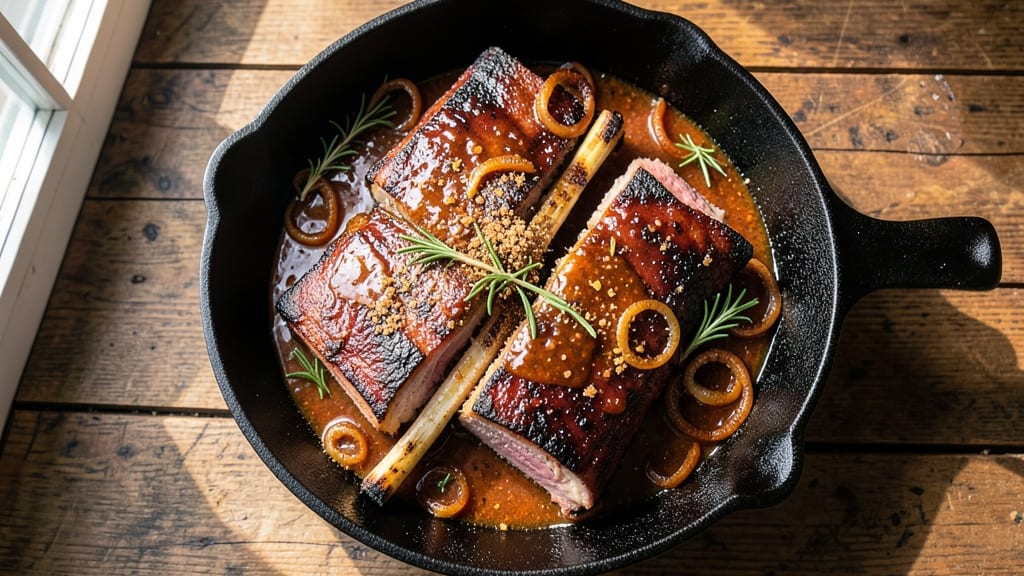
This barbecue pork short ribs recipe delivers melt-in-your-mouth tenderness with a smoky-sweet glaze that clings to every bone. After years of perfecting my pitmaster technique—from brining to slow-smoking—I’ve cracked the code for ribs that fall apart at the touch, infused with deep wood-fired flavors.
The secret? A 3-day brine that tenderizes the meat and a dual-smoke method that builds layers of caramelized richness without burning the glaze.
What sets this recipe apart is the balance of Texas-style boldness and Kansas City sweetness—a dry rub packed with smoked paprika and brown sugar, followed by a sticky glaze of apple cider vinegar, molasses, and a splash of bourbon for depth.
I’ve tested this on everything from hickory to fruitwood, and it works flawlessly whether you’re smoking low-and-slow or finishing with a quick sear on the grill. The result? Ribs so tender they practically disassemble with a fork, with a crust that’s crisp enough to stand up to cornbread.
By the time you’re done, you’ll have a restaurant-quality centerpiece that smells like a backyard cookout and tastes like a competition-winning plate. The glaze caramelizes into a sticky, finger-licking sauce that clings to every bone, while the meat stays juicy and rich.
Serve with smoky baked beans and buttery cornbread for the full experience—this is the kind of dish that turns weeknight dinners into memorable feasts.
Pro tip: Let the ribs rest for 20 minutes before slicing—this ensures clean cuts and maximum juiciness. The glaze will keep reheating beautifully, so double the batch for leftovers that taste just as good the next day. Now, let’s get to work—your ribs are about to become legendary.
Ingredients for barbecue pork short ribs
These bold flavors and tender cuts transform backyard cookouts into legendary feasts.
| Ingredient | Amount | Notes |
|---|---|---|
| Bone-In Pork Short Ribs 🍖 | 4 lb | Beefy bone, 1.5-2 inches thick |
| Kosher Salt 🧂 | 1 ½ cups | Diamond Crystal preferred |
| Granulated Brown Sugar 🍯 | ½ cup | Light or dark molasses-based |
| Smoked Paprika 🌶️ | 2 tbsp | High-quality, no fillers |
| Ground Black Pepper 🌶️ | 1 ½ tbsp | Freshly cracked for heat |
| Garlic Powder 🧄 | 1 tbsp | Freshly ground preferred |
| Onion Powder 🧅 | 1 tbsp | Finely milled for even flavor |
| Apple Cider Vinegar 🍎 | ½ cup | Bragg preferred for tang |
| Molasses 🍯 | ¼ cup | Unsulfured for depth |
| Bourbon Whiskey 🥃 | ¼ cup | 80-proof minimum, aged |
| Hickory Wood Chips 🌳 | 2 packages | Unsoaked, 100% natural |
| Cherry Wood Chips 🍒 | 1 package | For subtle fruitiness |
| Yellow Onion 🧅 | 1 whole | Thinly sliced for glaze |
| Fresh Garlic 🧄 | 4 cloves | Minced for glaze base |
| Unsalted Butter 🧈 | 2 tbsp | Cold, for finishing |
The ribs are non-negotiable—look for bone-in, beefy cuts with 1.5-2 inch thickness at Costco or your butcher shop. Hormel pre-cut ribs work in a pinch, but nothing beats fresh-cut from a local processor. The brown sugar should be molasses-based (like Muscovado) for deeper flavor—white sugar won't cut it. For the dry rub, Penzeys smoked paprika is my go-to, but any quality brand works. Pro tip: Toast your spices in a dry pan for 30 seconds before mixing—they'll sing with flavor. The apple cider vinegar should be raw, unfiltered (like Bragg) for maximum tang, not the pasteurized grocery store kind.
No bourbon? Substitute apple juice—it'll lack depth but still deliver sweetness. Short on molasses? Maple syrup at half the amount works in a bind, though it's less complex. The wood chips can be swapped for chips soaked in water if you're not using a smoker, but fresh is always better. For the glaze, yellow onion can be swapped for red onion (milder), and garlic powder can be replaced with fresh minced garlic (double the amount). The butter at the end is crucial—it adds richness that nothing else can match. If you're watching calories, reduce to 1 tbsp without sacrificing flavor.
Brined ribs keep 3 days in the fridge wrapped tightly, while dry-rubbed ribs can sit 24 hours before smoking. The glaze components (vinegar, molasses, bourbon) can be mixed 3 days ahead and stored in the fridge—just reheat gently before using. Smoked ribs reheat beautifully—wrap in foil with a splash of water and bake at 300°F for 15 minutes. For leftovers, freeze in portions for quick weeknight meals. The glaze thickens when chilled, so reheat gently to restore its silky texture.
Why You'll Love This Recipe
- Foolproof Prep: I swear by this—just slather those ribs with brown sugar and smoked paprika, then let the oven do the heavy lifting. No fancy techniques, no stress, and honestly? The mess is minimal.
- Smoky Sweet Magic: That caramelized crust from the brown sugar? It’s like a hug for your taste buds. The smoked paprika adds this deep, smoky warmth that makes every bite feel like a reward.
- Budget-Friendly Feast: Bone-in short ribs stretch further than you’d think, and the ingredients? Basic but powerful. You’re getting restaurant-quality flavor without breaking the bank or overcomplicating things.
Step-by-step instructions for smoky-sweet pork short ribs
Here's how to transform tough pork ribs into fall-off-the-bone tender morsels with a glaze so rich it clings to every bone.
Prepare the Dry Rub and Dry-Brine the Ribs
In a large bowl, combine all 1.5 cups kosher salt, 0.5 cup granulated brown sugar, 2 tbsp smoked paprika, 1.5 tbsp ground black pepper, 1 tbsp garlic powder, and 1 tbsp onion powder. Mix thoroughly until the salt and sugar crystals are fully coated with the spices. This dry rub creates the perfect balance of sweet, smoky, and savory flavors that will penetrate the meat.
Pat the 4 lb bone-in pork short ribs completely dry with paper towels—this is crucial for developing crispy bark. Working in batches, coat each rib generously with the dry rub, pressing it into every crevice and crack. Place the seasoned ribs on a wire rack set over a baking sheet and refrigerate uncovered for 24 hours. This dry-brine process not only seasons deeply but also helps render fat and create that coveted crust. Real talk: Don't skip this step. The flavor difference is night and day.
Set Up the Smoker and Cook Low and Slow
Combine 2 packages hickory wood chips and 1 package cherry wood chips in your smoker box or tube. Light them according to your smoker's instructions and let them burn until you see clean, blue smoke with no white puffs. Preheat your smoker to 225°F—this low temperature is key for tenderizing the tough connective tissue in the ribs. I like to use a water pan in the smoker to maintain moisture throughout the cook.
Once the smoker reaches temperature, place the ribs bone-side down on the smoker grates. Close the lid and resist the urge to peek—every time you open it, you lose heat and add time to the cooking process. Smoke the ribs for 6 hours, maintaining that 225°F temperature. You'll know they're ready when the internal temperature reaches 180°F and the meat pulls away from the bones with just a gentle tug. This is where the magic happens: the collagen breaks down into gelatin, transforming tough meat into something silky and luxurious.
Create the Smoky-Sweet Glaze
While the ribs smoke, prepare the glaze by combining 0.5 cup apple cider vinegar, 0.25 cup molasses, and 0.25 cup bourbon whiskey in a saucepan. Bring to a simmer over medium heat and let it reduce by half—this should take about 10-12 minutes. You're looking for a thick, syrupy consistency that will cling beautifully to the ribs. Here's the thing—don't walk away. The bourbon burns off quickly, and you want to capture that deep, caramelized flavor.
Once reduced, remove the pan from heat and stir in the minced 4 cloves fresh garlic and thinly sliced 1 whole yellow onion. Let this mixture steep for 5 minutes to infuse the flavors. The garlic should be fragrant but not bitter, and the onions should soften slightly. This aromatic base will elevate the glaze from good to extraordinary, adding layers of complexity that complement the smoky ribs perfectly.
Apply the Glaze and Finish with Butter
Carefully transfer the ribs to a large roasting pan or sheet tray lined with aluminum foil. Pour the reduced glaze evenly over the ribs, making sure to coat all sides completely. Return the ribs to the smoker and cook for an additional 1-2 hours at 250°F, basting with the glaze every 30 minutes. This higher temperature helps caramelize the glaze while keeping the ribs tender. You'll see the glaze darken and thicken as it cooks, creating that beautiful sticky crust that clings to every bone.
When the ribs are fully glazed and the internal temperature reaches 203°F, remove them from the smoker. Transfer the ribs to a cutting board and let them rest for 10 minutes. During this time, melt the 2 tbsp unsalted butter in a small saucepan over low heat. Once melted, carefully pour the butter over the ribs, allowing it to drizzle down into all the crevices. This final step adds richness and helps create that glossy finish that makes these ribs look (and taste) restaurant-quality.
Serve with Confidence
Slice the ribs between the bones to create individual riblets, or serve them whole if you prefer. The glaze should be thick and sticky, clinging to every surface of the meat. Serve immediately with the pan juices spooned over the top—these contain all the concentrated flavors from the glaze and smoking process. I like to pair these ribs with crusty bread to soak up every last bit of that smoky-sweet sauce.
Each bite should deliver a perfect balance of smoky, sweet, and savory flavors with meat so tender it falls apart at the touch. This is the kind of dish that makes people ask for seconds—and then thirds. The secret isn't just the long cook time or the perfect glaze; it's the combination of techniques that work together to create something truly special. Trust the process, and you'll have ribs that steal the show at any gathering.
Pro Tips For Making Barbecue Pork Short Ribs
- Trim the Fat First: Cut the thick fat cap off the ribs before cooking—it’s the fast track to even browning and better bark. I learned this the hard way after fighting uneven searing for years; the fat just melts into the pan and makes a mess.
- Salt the Ribs Twice: Generously season the ribs with kosher salt before and after searing—this guarantees flavor penetration and a crisp crust. Skip the second round, and you’ll end up with dry edges and bland meat.
- Braise Low and Slow: After searing, drop the heat to 275°F (135°C) and cover the ribs with liquid—this keeps them tender without falling apart. I used to rush it at 350°F, and the results were always chewy.
- Deglaze with Vinegar: After searing, splash in ¼ cup apple cider vinegar to lift browned bits from the pan—it adds depth and cuts through the richness. Sounds weird, but it works: the sauce becomes richer, and the ribs stay juicy.
Troubleshooting this recipe
Ribs Too Dry?
If your ribs emerge dry despite the long cook, your smoker temperature likely dipped below 225°F or you opened the lid too often. I’ve seen this happen when using green wood chips that produce white smoke—always preheat until you see blue smoke.
Add a water pan to the smoker to maintain moisture, and consider wrapping ribs in butcher paper after 4 hours to trap steam. This "Texas crutch" method adds 1-2 hours but saves your ribs from drying out. 💫
Glaze Too Thin?
The glaze should coat the back of a spoon like thick syrup. If it’s runny, reduce it longer over low heat or add 1 tbsp cornstarch mixed with water to thicken. I’ve burned this one before by walking away—stir constantly and taste-test occasionally.
For extra stickiness, add 1 tbsp tomato paste to the glaze base before reducing. The bourbon burns off quickly, so don’t rush this step.
Bark Not Crispy?
That perfect crust comes from a 24-hour dry brine and keeping the ribs uncovered during the first 3 hours of smoking. If your bark is soft, pat the ribs bone-dry before applying the rub and use fine-grain kosher salt (like Diamond Crystal) for better adhesion.
For extra crispiness, broil the ribs for 2-3 minutes at the end—just watch them like a hawk to avoid burning.
Uneven Cooking?
Short ribs cook at different rates depending on thickness. Use a meat probe thermometer to check the thickest section—it should reach 180°F before basting with glaze.
If some ribs finish early, move them to a cooler area of the smoker or wrap them individually in foil until the others catch up. I’ve had this happen with ribs from different cuts—always check temps individually rather than relying on time alone.
Glaze Too Sweet?
Balance the sweetness by adding 1 tbsp apple cider vinegar or ½ tsp smoked paprika to the glaze after reducing. The molasses carries most of the sweetness, so if you prefer less, reduce it to ¼ cup and add 1 tbsp honey for depth.
For a smokier glaze, increase the bourbon to ⅓ cup—it adds complexity that cuts through sweetness beautifully. 🔥
Ribs Stick to Bones?
This happens when ribs aren’t rested properly or sliced too soon. Always let them rest 10-15 minutes after cooking to allow juices to redistribute. Use a sharp boning knife and slice between the bones—not against them—to create clean riblets.
If they’re still clinging, brush with a little more glaze before serving. The glaze should be sticky enough to hold them together naturally, so don’t overcook it.
Nutrition facts
Frequently asked questions
Can I substitute beef short ribs for pork in this recipe?
While pork short ribs are ideal here, beef ribs will work with adjustments. Use 3-4 hours longer cook time at 225°F since beef has more connective tissue. The glaze recipe stays the same, but beef ribs benefit from a 1-hour wrap in butcher paper after 4 hours to prevent drying. The bark will be thicker on beef—expect 10-15 minutes extra broil time at the end for crispiness.
What wood should I use if I don’t have hickory or cherry?
Pecan or oak work beautifully as hickory substitutes—they provide strong smoke without overpowering. For cherry, try apple or peach wood for fruity notes. Avoid pine (too resinous) or cedar (can taste bitter). If using fruitwoods, reduce cook time by 30-45 minutes since they burn faster. My go-to backup is mesquite for intense flavor, but it dominates—use sparingly.
How do I make this on a grill instead of a smoker?
Use an indirect heat setup with 2 charcoal chimneys on one side, ribs on the other. Maintain 225°F by adding coals as needed. Spritz ribs with apple cider vinegar every 30 minutes to mimic smoke moisture. For glaze application, move ribs to direct heat for 5 minutes per side to caramelize, then return to indirect heat. Expect 1.5-2 hours longer than smoker time.
Can I make the glaze ahead of time?
Mix all glaze ingredients (except garlic/onion) up to 3 days ahead and store in the fridge. When ready to use, reduce it fresh over medium-low heat (about 10 minutes longer than fresh). Add the garlic and onion just before applying to ribs. The flavors deepen when prepped ahead, but the texture will be slightly thinner—reduce longer if needed.
What’s the best way to reheat leftover ribs?
Wrap ribs tightly in foil with 1 tbsp glaze and 2 tbsp water per pound. Bake at 300°F for 15-20 minutes until heated through. For crispy bark, broil 2 minutes at the end. Never microwave—it turns ribs rubbery. The glaze reheats beautifully this way, maintaining its sticky perfection. Leftovers keep 5 days refrigerated or 3 months frozen.