
Main Courses
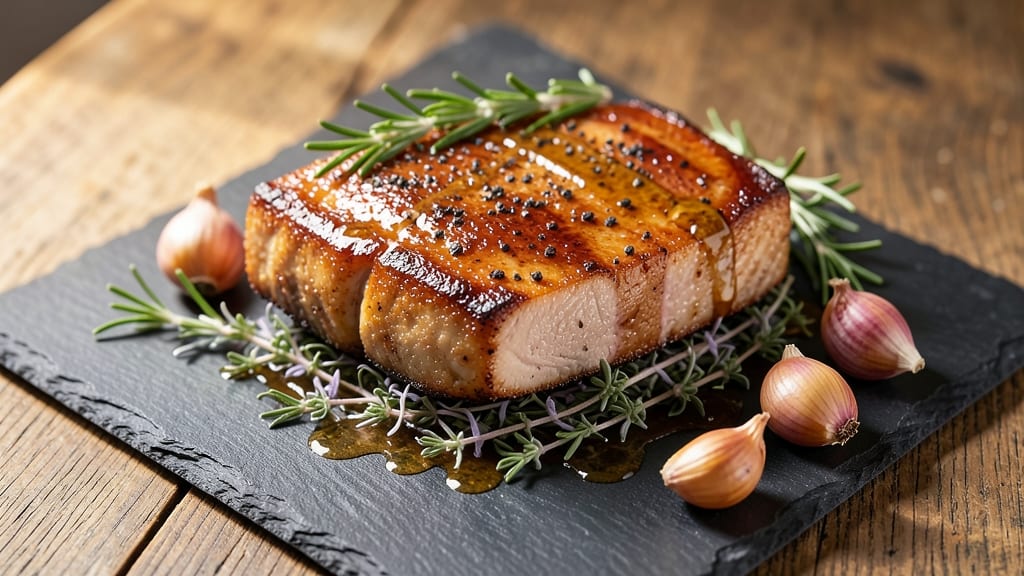
This basic pork loin recipe transforms a simple cut into a showstopping centerpiece with just a few smart techniques and a garlic-herb crust. 💛 As someone who's cooked thousands of pounds of pork, I know the secret isn't fancy—it's precision: a dry rub that creates a flavorful bark, even cooking to avoid dryness, and proper resting to keep every slice juicy.
The one-pan method makes it foolproof for weeknight dinners or special occasions alike.
What sets this recipe apart is the balance of simplicity and restaurant-quality results. You'll start with a basic dry brine (just salt and pepper) that enhances natural pork flavors, then build a crust of garlic, rosemary, and thyme that caramelizes beautifully during roasting.
The reverse sear method—low oven first, then a quick high-heat finish—ensures perfect doneness every time without overcooking.
By the time you're done, you'll have a golden-brown pork loin with a crispy, aromatic crust and tender, juicy meat that slices beautifully. The pan juices reduce into a rich, savory sauce that elevates simple sides like roasted potatoes or green beans.
This is the kind of pork dish that feels impressive yet stays approachable for home cooks.
Perfect for family dinners, holiday meals, or when you want to impress guests without stress. The technique scales easily, so you can adjust the portion size while maintaining perfect results. Let's get cooking—this pork loin will be the star of your table.
Ingredients for basic pork loin
Just twelve ingredients transform simple pork into a showstopping centerpiece with crispy crust and juicy perfection.
| Ingredient | Amount | Notes |
|---|---|---|
| Pork Loin 🐖 | 2 lb | Center-cut, bone-in preferred |
| Kosher Salt 🧂 | 1 ½ tbsp | Diamond Crystal preferred |
| Freshly Ground Black Pepper 🌶️ | 1 ½ tsp | Cracked peppercorns preferred |
| Garlic Cloves 🧄 | 8 cloves | Smash with side of knife |
| Fresh Rosemary 🌿 | ½ cup | Chopped, stems removed |
| Fresh Thyme 🌿 | ¼ cup | Leaves only, stems removed |
| Extra-Virgin Olive Oil 🫒 | 2 tbsp | For crust and pan searing |
| Unsalted Butter 🧈 | 2 tbsp | Cold, for finishing |
| All-Purpose Flour 🌾 | 1 tbsp | For dusting cutting board |
| Garlic Powder 🧄 | 1 tsp | For extra flavor depth |
| Onion Powder 🧅 | ½ tsp | For balanced seasoning |
| Yellow Onion 🧅 | 1 whole | Sliced for pan sauce |
The pork loin is your hero here—center-cut with the bone stays juicier longer. Grab one from the butcher section if you can (they'll often trim it to your size), or pick up a pre-cut one from Costco or Whole Foods—both have great quality. If it's still wrapped in plastic, let it sit out for 30 minutes before seasoning so the crust adheres better. The garlic-herb crust? Fresh rosemary and thyme make all the difference—dried works in a pinch, but fresh gives that restaurant-quality aroma. Smash those garlic cloves with the side of your knife for maximum flavor release. Pro tip: if your rosemary stems are too woody, just use the needle-like leaves.
No fresh rosemary? Dried thyme at double the amount works, but you'll miss that piney aroma. Short on garlic? Garlic powder plus an extra pinch of onion powder bridges the gap. The onion in the pan sauce can be swapped for shallots if you're feeling fancy—just halve the amount. For the crust, if you're worried about the pork drying out, brine it overnight (1/4 cup salt per 4 cups water) for extra moisture. And trust me, the cold butter finish isn't just for show—it creates that golden crust that makes this dish look like you slaved over it.
Let the pork rest 10-15 minutes after roasting—this is non-negotiable for juicy slices. Store leftovers in the fridge for up to 4 days, or freeze portions for 3 months. The pan sauce reheats beautifully—just add a splash of water or broth to deglaze. I always make double portions because this reheats even better than it tastes fresh. For serving, slice against the grain for those perfect, tender pieces. And save those herb stems—they make great garnish for soups or salads later!
Why You'll Love This Recipe
- Here’s what sold me: cold pork loin the next day is still amazing. Shred it for sandwiches, dice it into pasta, or just eat it straight—it holds up better than most proteins. And since it’s budget-friendly, you’re not wasting money on takeout.
- Foolproof Seasoning: I swear by this combo—just salt, pepper, crushed garlic, and rosemary rubbed right onto the meat. No fancy marinades, no overthinking. The rosemary stays bright and fresh, not bitter, because we’re using it fresh (not dried, please).
- One-Pan Magic: Honestly, this is my lazy-day hero. Sear the pork in the same pan you’ll roast it in—no extra dishes, no stress. The crust forms while the inside stays juicy, and cleanup? One spatula, one pan. Done.
- Weeknight to Weekend: Between us, this cuts my grocery budget and my cooking time. Use it for a quick family dinner or slice it for charcuterie boards on Sundays. The same simple flavors work for both—no need to reinvent the wheel.
Step-by-step instructions for one-pan garlic-herb roasted pork loin
This method delivers juicy, flavor-packed pork with a golden crust—all in one pan!
👨🍳 Step 1: Prep the Pork and Herb Paste
Start by patting the 2 lb pork loin completely dry with paper towels—this is non-negotiable for crispy skin. Place it on a cutting board dusted with 1 tbsp all-purpose flour (this prevents sticking later).
In a small bowl, mix 1.5 tbsp kosher salt, 1.5 tsp freshly ground black pepper, 1 tsp garlic powder, and 0.5 tsp onion powder. Finely chop 0.5 cup fresh rosemary and 0.25 cup fresh thyme (stems removed), then smash 8 garlic cloves with the side of your knife. Combine everything with 2 tbsp extra-virgin olive oil to form a thick paste.
Spread this mixture all over the pork, pressing it into the surface so it sticks. Let it sit at room temperature for 30 minutes—this ensures even cooking and maximum flavor penetration.
🔥 Step 2: Sear the Pork for Maximum Flavor
Preheat your oven to 425°F. Heat a large oven-safe skillet over medium-high heat until smoking hot. Add the pork loin and sear for 4-5 minutes per side until deeply golden brown. You're looking for a crust that releases easily when you lift it.
Here's the thing—don't rush this step. The sear locks in juices and builds that incredible crust we're after. If the pan isn't hot enough, the oil will absorb into the meat instead of creating that gorgeous caramelization.
Once seared, transfer the skillet to the preheated oven. Roast for 20-25 minutes until the internal temperature reaches 145°F (use a meat thermometer). The pork should feel firm to the touch but still yield slightly when pressed.
🍳 Step 3: Build the Pan Sauce
While the pork rests (this is CRITICAL—don't skip it!), remove it from the skillet and tent loosely with foil. Reduce heat to medium and add 1 whole yellow onion, sliced into thin half-moons. Cook for 3-4 minutes until softened.
Pour in ½ cup water (or white wine if you have it) and scrape up all those delicious browned bits from the bottom of the pan. Add 2 tbsp cold unsalted butter, cut into small pieces, and let it melt into the sauce. The butter will create a silky finish that ties everything together.
Return the pork to the skillet, spooning sauce over the top. Let it sit for 2 minutes to absorb those amazing flavors. The sauce should coat the back of a spoon with just a touch of thickness—this is perfect.
🍽️ Step 4: Rest and Serve with Confidence
Transfer the pork to a cutting board and let it rest for 10-15 minutes before slicing. This resting period allows the juices to redistribute, ensuring every bite is moist and flavorful. During this time, you can finish the sauce by adding a splash more water if needed.
Slice the pork against the grain into ½-inch thick pieces. The crust should be golden and crispy, while the inside remains tender with perfect pink centers. Serve immediately with the pan sauce spooned over the top—it's that simple!
Pro Tips For Making Basic Pork Loin
- USE A MEAT THERMOMETER: I learned this the hard way—pork loin looks done when it’s still overcooked. Aim for 145°F internal temp, then let it rest. No more dry, gray slabs of meat.
- MINCE THAT GARLIC FINE: Pre-chopped garlic is convenient, but for this dish, it’s a flavor downgrade. Smash those cloves with the flat side of your knife first, then mince them into tiny specks—it’ll melt into the pork instead of sitting as chunks.
- SALT THE PORK TWICE: Don’t just season it right before cooking. Give it a generous first salt 30 minutes before you start, then hit it again right before hitting the pan. The first layer lets the salt work its magic, while the second ensures a proper crust.
- DON’T SKIP THE REST: I know, you’re hungry now. But if you cut into that pork loin right after it comes off the heat, all the juices will spill out. Wrap it loosely in foil and let it sit for 5-10 minutes—your knife will thank you.
Serving suggestions for this recipe
Classic Southern Sides
This pork loin shines with traditional Southern sides that balance its richness. Serve with creamy mashed potatoes—I make mine with butter, whole milk, and a splash of cream—and brown sugar-glazed carrots roasted at 400°F for 25 minutes with a pinch of smoked paprika.
For extra flair, add crispy fried onions on top of the mash. 🥔
Fresh Spring Vegetables
Lighten the meal with spring vegetables that complement the pork's herbaceous notes. Asparagus roasted with lemon zest and olive oil at 425°F for 12 minutes pairs perfectly. For a crisp contrast, serve shaved fennel salad with orange segments, parsley, and a light honey-mustard dressing.
The anise notes in fennel cut through the pork's richness beautifully.
Rich Pan Sauce Applications
That pan sauce you worked so hard on deserves star treatment. Use it to deglaze the pan for a quick pork gravy—just add 1 cup beef broth and reduce by half.
Drizzle it over egg noodles or spoon it onto roasted Brussels sprouts with crispy bacon. For a fancy touch, finish with fresh thyme leaves and a crack of black pepper.
Bread and Starch Options
For heartier meals, serve with cornbread—I love a savory version with jalapeños and cheddar baked at 375°F for 20 minutes. Alternatively, garlic-herb focaccia from your local bakery adds texture. Warm the bread slightly before serving so it soaks up the pan sauce beautifully. 🍞
Dessert Pairings
End the meal with a Southern classic: peach cobbler with vanilla ice cream or bourbon caramel apples. The sweetness contrasts the savory pork perfectly. For something lighter, try lemon bars—the citrus notes cleanse your palate.
I always keep a small batch of peach preserves on hand to serve with dessert or even as a glaze for the pork if you want to get creative.
Make-Ahead Serving Tips
Prep ahead to save time on serving day. Reheat the pork in a 350°F oven for 15 minutes with a splash of water. Keep sides like mashed potatoes and roasted veggies in airtight containers in the fridge for up to 3 days.
For the pan sauce, store it separately and reheat with 1 tbsp water to loosen. Garnish with fresh herbs right before serving to keep everything vibrant. ✨
Nutrition facts
Frequently asked questions
Why does the recipe call for resting the pork?
Resting lets the juices redistribute throughout the meat after cooking. If you slice pork loin too soon, those precious juices will run out, leaving you with dry meat. The 10-15 minute rest at room temperature ensures every bite stays juicy and tender—trust me, this step makes all the difference!
Can I cook pork loin without a meat thermometer?
You can estimate doneness, but a thermometer is ideal. For medium-rare, aim for 140°F internal temp; 145°F is perfect for medium. Press the pork gently—it should feel firm but still yield slightly. If you don't have a thermometer, cut into the thickest part: juices should run clear, not pink.
What's the best way to store leftovers?
Slice the pork and store it in an airtight container in the fridge for up to 4 days. Reheat in a skillet with a splash of water or broth to prevent drying. The pan sauce reheats well too—just warm it gently on the stove. For longer storage, freeze portions for 3 months.
Is bone-in pork loin better than boneless?
Bone-in stays juicier longer because the bone acts as a natural insulator. The bone also adds flavor and helps stabilize the shape during cooking. If you must use boneless, look for a thicker cut (at least 1.5 inches) to prevent drying out.
How do I adjust this for a larger group?
Scale the recipe proportionally—1.5 lbs of pork per person is ideal. For a 6-person meal, use a 9 lb loin. Cooking time increases by about 10-15 minutes for larger cuts. Use two roasting pans if needed, and increase your sides proportionally.