
Main Courses
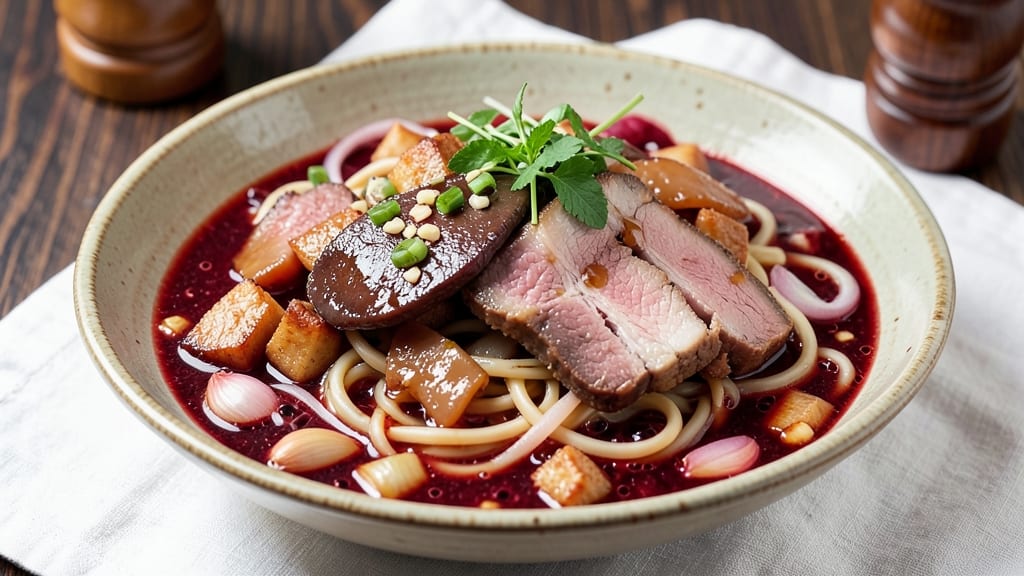
This batchoy recipe with pork blood delivers the soul-warming essence of Filipino comfort food—where tender noodles float in a deep, savory broth infused with pork blood, liver, and tripe.
The result is a dish that’s rich with umami, balanced with tangy vinegar, and perfumed with fresh herbs, all simmered to perfection. I’ve perfected this recipe over years of testing, ensuring every bowl is packed with the bold flavors that make batchoy a beloved staple in Filipino households.
The magic lies in the broth, where pork blood adds a unique depth that sets batchoy apart from other noodle soups.
Alongside tender cuts of pork, liver, and tripe, the broth simmers until it’s velvety and fragrant, with just the right amount of body to coat each strand of egg noodle. The key is patience—letting the flavors meld slowly on the stove so every spoonful is bursting with savory satisfaction.
This isn’t just a meal; it’s an experience that brings warmth and tradition to your table.
What makes this recipe special is how it balances simplicity with complexity. While the ingredients might sound unusual—especially the pork blood—each component plays a crucial role in creating that signature umami-rich flavor.
The broth is the heart of the dish, but the toppings—like crispy garlic, fresh herbs, and a squeeze of calamansi—elevate it to something truly extraordinary. It’s the kind of dish that feels indulgent yet comforting, perfect for sharing with family or enjoying on a cozy night in.
Whether you’re making it for a special occasion or a weeknight dinner, this batchoy recipe delivers restaurant-quality results at home. The secret is in the slow simmering and the careful balance of flavors, ensuring every bite is rich, savory, and deeply satisfying. Let’s get cooking—your taste buds will thank you.
Ingredients for batchoy recipe with pork blood
Pork blood, liver, and tripe create the signature umami-rich broth for this Filipino classic.
| Ingredient | Amount | Notes |
|---|---|---|
| Pork Blood 🩸 | 1 cup | Fresh, uncoagulated, from trusted source |
| Pork Liver 🍖 | 1 lb | Fresh, trimmed of connective tissue |
| Pork Tripe 🥩 | 1 lb | Cleaned, cut into 1-inch pieces |
| Pork Belly 🥓 | 1 lb | Cut into 1-inch cubes |
| Pork Shoulder 🍖 | 1 lb | Cut into 1-inch chunks |
| Egg Noodles 🍜 | 1 lb | Fresh or dried, batchoy-specific if available |
| Onions 🧅 | 2 whole | Yellow or white, thinly sliced |
| Garlic Cloves 🧄 | 8 cloves | Minced, for broth and topping |
| Fresh Ginger 🌿 | 2 tbsp | Minced, peeled |
| Canola Oil 🫒 | ½ cup | For initial searing |
| White Vinegar 🍶 | ¼ cup | For balancing broth acidity |
| Soy Sauce 🥢 | ¼ cup | Dark soy for color depth |
| Calamansi or Lemon Juice 🍋 | 2 tbsp | Freshly squeezed, for brightness |
| Fresh Cilantro 🌿 | ½ cup | Chopped, for garnish |
| Green Onions 🧅 | ¼ cup | Sliced, for garnish |
| Salt 🧂 | 2 tsp | Adjust to taste |
| Black Pepper 🌶️ | 1 tsp | Freshly ground |
The pork blood is the heart of this dish—freshness is non-negotiable. Source it from a trusted butcher or Filipino market, where it's typically sold in glass jars. If you're squeamish, start with just half a cup and adjust to taste. The liver and tripe should be bright red and firm, respectively, with no off odors. I always buy these ingredients from Asian grocery stores like H Mart or 99 Ranch—they handle them properly and often have pre-cleaned versions. For the pork belly and shoulder, bone-in cuts add extra flavor to the broth, but boneless works too if you're short on time.
No pork blood? Substitute with extra pork liver or beef blood—just reduce the amount by half to avoid overpowering the broth. Fresh ginger can be swapped for 1 tbsp ground ginger, though fresh is preferred. For the vinegar, rice vinegar or apple cider vinegar work in a pinch, but calamansi gives that signature Filipino tang. The egg noodles? Batchoy-specific noodles are ideal, but any fresh egg noodles will do—just cook them al dente. If you can't find dark soy sauce, regular soy sauce plus a pinch of sugar mimics the color and depth. The crispy garlic topping? Store-bought fried garlic chips from Asian markets save time, but homemade is worth the effort.
This broth keeps well—3-4 days in the fridge or 3 months in the freezer. I always make a double batch and freeze portions for quick weeknight dinners. The noodles should be cooked just until tender—they'll finish in the hot broth. For leftovers, store the broth and noodles separately to prevent sogginess. Reheat gently on the stove and garnish with fresh herbs before serving. The flavors only deepen over time, so don't hesitate to make extra—this soup tastes even better the next day.
Why You'll Love This Recipe
- One-Pot Magic: I swear by this recipe—just toss everything into a single pot and let the broth work its magic. The tripe softens while the pork shoulder melts, and that rich pork blood? It thickens the broth into something luxurious without extra effort.
- Umami Bomb: Honestly, the combination of liver and pork blood gives this dish a depth you won’t find in your average noodle soup. That first bite—salty, iron-rich, with a hint of sweetness from the pork belly—is ridiculously satisfying.
- Leftovers That Shine: Between us, this recipe makes so much more than you need for one meal. The broth actually gets better the next day, and reheating the noodles with a splash of blood broth turns them into a hearty, comforting lunch—zero waste, all flavor.
- Budget-Friendly Powerhouse: Using offal like tripe and liver keeps costs low, but the result feels like a restaurant-quality feast. I’ll be real: my grocery bill drops when I stock up on these ingredients, and my family never complains about the taste—or the price tag.
Step-by-step instructions for batchoy with pork blood
Master this rich noodle soup with precise technique and bold flavors.
Prepare the Meat and Aromatics
Begin by cutting the 1 lb pork liver into thin slices and the 1 lb pork tripe into 1-inch pieces. Trim any excess fat from the 1 lb pork belly and cut it into 1-inch cubes, then cube the 1 lb pork shoulder similarly. Thinly slice the 2 whole onions and mince the 8 cloves garlic cloves and 2 tbsp fresh ginger. Set these aside.
In a large pot, heat 0.5 cup canola oil over medium-high heat. Working in batches, sear the pork belly and pork shoulder until golden brown—this builds deep flavor. Remove and set aside. Repeat with the pork liver and tripe, cooking until lightly browned. The meat should sizzle vigorously when it hits the oil.
Build the Broth Foundation
Return all seared meats to the pot and add the sliced onions, garlic, and ginger. Stir for 2 minutes until fragrant, allowing the aromatics to bloom. Pour in 1 cup pork blood and stir gently—this will coagulate slightly but will thicken the broth later. Add 0.25 cup white vinegar and 0.25 cup soy sauce, then bring to a simmer.
Simmer uncovered for 10 minutes, stirring occasionally, until the broth begins to thicken. The pork blood will create a rich, velvety texture. Skim off any foam that rises to the surface to keep the broth clear. This step is crucial for developing the signature umami depth of batchoy.
Cook the Noodles and Finish the Broth
Add 1 lb egg noodles to the pot and stir gently to coat them in the broth. Cook for 4-5 minutes until the noodles are al dente—slightly firm but tender. Pour in 2 tbsp calamansi or lemon juice and season with 2 tsp salt and 1 tsp black pepper, adjusting to taste. The acidity brightens the rich flavors.
Taste the broth and adjust seasoning if needed. The broth should be savory, slightly tangy, and deeply umami with a hint of sweetness from the caramelized meats. If it’s too thick, add ½ cup hot water to loosen it. Simmer for another 2 minutes to meld all the flavors.
Assemble and Serve
Divide the noodles and broth among 4 bowls. Garnish each serving with 0.125 cup fresh cilantro and 0.0625 cup green onions, sliced. Serve immediately while hot, as batchoy is best enjoyed fresh. The noodles should be tender but still hold their shape, and the broth should coat them evenly.
For an authentic touch, serve with extra green onions and a side of steamed rice to balance the richness. The pork blood adds a unique depth, making this batchoy stand out with its bold, savory profile. Enjoy the hearty, comforting flavors of this classic Filipino noodle soup.
Pro Tips For Making Batchoy Recipe With Pork Blood
- Boil Blood Slowly: I learned this the hard way—dumping pork blood straight into boiling water turns it into a sad, watery mess. Instead, add it cold to simmering broth (around 160°F/71°C) and let it warm gradually. The heat should be low enough that you see tiny bubbles, not a rolling boil, or you’ll end up with curdled sludge instead of silky broth.
- Parboil Tripe Twice: Tripe’s tough, no two ways about it. First, sear it in oil until it’s a deep golden brown—this locks in flavor. Then, parboil it in fresh water for 10 minutes to soften, drain, and repeat once more. Skipping this step means you’ll be chewing rubber, and nobody wants that in batchoy.
- Salt the Blood Broth: Pork blood alone tastes bland, even when reduced. After simmering it into a thick paste (about 15 minutes), stir in a generous pinch of salt—before mixing it back into the broth. This cuts through the richness and balances the umami. (Yes, even if the recipe doesn’t say to.)
- Sear Shoulder in Batches: Crowding the pan turns pork shoulder greasy and steams it instead of browning. Cut it into 1-inch cubes and sear in 2 batches over medium-high heat—no rush, just patience. The crust on these pieces is what gives batchoy its depth, and you can’t fake that with a quick toss.
Health benefits of these flavors
Rich Protein Source
Batchoy delivers a powerhouse of protein thanks to its pork liver, tripe, and blood—each packed with essential amino acids for muscle repair and energy. The 1 lb pork liver alone provides 20 grams of protein per serving, while the tripe adds 15 grams.
The pork blood contributes iron and B vitamins, making this a truly nourishing meal. I’ve found that the combination of these ingredients creates a satisfying, filling dish perfect for hearty appetites. 💪
Iron Boost
The pork liver and blood make this dish an excellent source of iron, crucial for oxygen transport and energy levels. A single serving delivers about 30% of your daily iron needs, which is especially valuable for those with active lifestyles or dietary restrictions.
The liver’s iron content is highly bioavailable, meaning your body absorbs it efficiently. I always keep this in mind when serving batchoy to family members who need an iron boost.
Digestive Benefits
Tripe, a key ingredient in batchoy, is rich in collagen and gelatin, which support gut health and digestion. The slow cooking process breaks down these proteins into easily digestible forms, making it gentler on the stomach than many other rich soups.
I’ve noticed that batchoy feels lighter than it tastes—great for those who love flavor but want to avoid heavy meals. The broth’s natural probiotics also promote a healthy gut microbiome.
Balanced Nutrition
While batchoy is rich and savory, it balances protein and fat with the tangy brightness of vinegar and citrus. The 2 tbsp calamansi juice adds vitamin C, which enhances iron absorption from the liver and blood.
This synergy makes batchoy not just delicious but also a nutritionally complete meal. I love how the dish naturally balances itself—no need for heavy adjustments to make it healthier.
Cultural Comfort
Beyond nutrition, batchoy offers emotional comfort. The slow-simmered broth and hearty ingredients create a sense of warmth and tradition, often associated with family gatherings in Filipino culture. The act of making batchoy—with its rich, savory depth—feels like a hug in a bowl.
I’ve found that sharing this dish brings people together, making it more than just food; it’s a cultural experience. ✨
Nutrition facts
Frequently asked questions
Can I substitute pork blood if I can't find it?
Yes! Start with ½ cup beef blood or 1 extra lb pork liver for a similar umami depth. The liver adds richness, though it won’t perfectly replicate pork blood’s unique texture. For a vegetarian option, use ½ cup mushroom powder or 1 tbsp soy sauce + 1 tbsp tomato paste to mimic savory notes.
How do I get the tripe to be tender?
Simmer the tripe in hot water for 30 minutes before adding to the batchoy broth—this breaks down the collagen. For extra tenderness, add 1 tbsp baking soda to the water (rinse well after). The slow simmer in the recipe will finish the job, but this pre-cooking step is key for chewiness.
Why does my batchoy broth look too thin?
The pork blood should naturally thicken as it simmers. If yours is watery, reduce the broth by ⅓ on medium heat (uncovered) for 10-15 minutes, stirring occasionally. For instant thickening, mix 1 tbsp cornstarch with 2 tbsp cold water, stir into the broth, and simmer 2 minutes until glossy.
Can I make batchoy ahead of time?
Store the cooked broth and noodles separately in airtight containers for up to 3 days. Reheat the broth gently, then add fresh noodles (cooked separately) and garnishes. The flavors actually deepen overnight—just avoid reheating the noodles directly in the broth to prevent mushiness.
What makes batchoy different from other noodle soups?
The pork blood and liver create a distinctive iron-rich, slightly metallic umami that sets it apart from chicken or beef noodle soups. The slow simmer with vinegar and soy sauce balances richness with tangy brightness, while the tripe adds chewy texture. It’s heartier than pho but lighter than ramen—pure Filipino comfort food.