
Main Courses
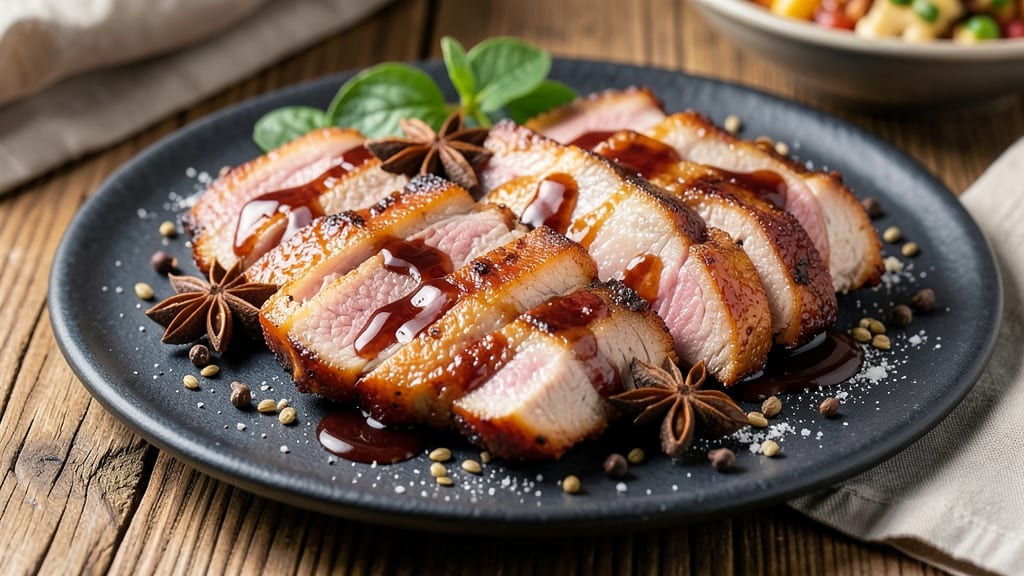
This BBQ pork belly slices recipe delivers the perfect balance of crispy edges and tender meat, all wrapped in a sticky, aromatic glaze that’ll have everyone reaching for seconds. 🔥 After years of perfecting my technique—from the right fat cap thickness to the ideal roasting temperature—I’ve cracked the code for restaurant-quality results at home.
The secret lies in slow-roasting until the fat renders into golden pools, then finishing with a glaze that caramelizes into a glossy, sweet-savory crust.
The beauty of this recipe is its simplicity: just five spices—star anise, cinnamon, fennel, cloves, and black pepper—transform ordinary pork belly into something extraordinary. I start by scoring the skin to help the fat render evenly, then roast it low and slow until the internal temperature hits 160°F.
That’s when the magic happens—the skin crisps to a shatteringly thin layer while the meat stays juicy and tender.
What you’ll end up with is crispy, caramelized pork belly slices that hold their shape when sliced, each bite offering a perfect contrast of textures—crunchy skin giving way to tender, flavorful meat.
The glaze, made with honey, soy sauce, and a touch of vinegar, adds a sticky-sweet finish that ties everything together. This is the kind of dish that turns a simple weeknight dinner into a showstopper.
Serve with steamed greens or a crisp salad to cut through the richness, or pile it onto buns for a gourmet take on pulled pork sandwiches. The leftovers? Even better the next day—if they last that long. Let’s get cooking!
Ingredients for bbq pork belly slices
Five spices, one pork belly, and a glaze that’ll make your kitchen smell amazing.
| Ingredient | Amount | Notes |
|---|---|---|
| Pork Belly 🐖 | 2 lb | With fat cap intact, scored skin |
| Star Anise Pods 🌿 | 2 whole | Whole, not ground |
| Ground Cinnamon 🌶️ | 1 tbsp | Freshly ground preferred |
| Ground Fennel Seeds 🌿 | 1 tbsp | Toasted for depth |
| Whole Cloves 🌶️ | 4 whole | Lightly crushed |
| Ground Black Pepper 🌶️ | 1 tsp | Freshly cracked |
| Olive Oil 🫒 | ¼ cup | For scoring skin |
| Honey 🍯 | ½ cup | Wildflower preferred |
| Soy Sauce 🍶 | ⅓ cup | Light or dark |
| Apple Cider Vinegar 🍎 | 1 tbsp | For tangy balance |
| Garlic Cloves 🧄 | 4 cloves | Minced for glaze |
| Fresh Ginger 🌿 | 1 tbsp | Grated, fresh |
| Salt 🧂 | 1 ½ tsp | Kosher or sea |
The pork belly is the star—look for a thick fat cap (at least 1/2-inch) at Costco or Whole Foods for the best texture. Ask the butcher to score the skin in a diamond pattern if they won’t do it for you—this helps the fat render evenly. I always grab the belly with the thickest fat layer, even if it costs a few bucks more. Whole spices like star anise and cloves make all the difference here—ground versions just don’t have the same punch. Toast them lightly in a dry pan for 30 seconds before grinding to release their aroma.
No star anise? Anise seeds or a pinch of anise extract works in a pinch (literally). Running short on fennel? Extra cinnamon or a dash of licorice root powder adds depth. For the glaze, Trader Joe’s honey is my go-to—it’s sweeter and adds great flavor. No fresh ginger? Ground ginger at half the amount gets you close. The soy sauce can be swapped for tamari if you're gluten-sensitive, but don’t skip it—the umami is crucial. If your vinegar smells sharp, let it sit open for 10 minutes to mellow out the acidity.
Score the pork belly the night before and refrigerate uncovered—this helps the fat render faster. The glaze keeps for 1 week in the fridge, so make extra for other dishes. Leftovers reheat beautifully—wrap tightly in foil and warm in a 300°F oven for 15 minutes. For serving, slice against the grain for maximum tenderness. Store cooked pork belly in the fridge for 4 days or freeze for 3 months—it actually gets better as the flavors meld.
Why You'll Love This Recipe
- One-Pan Magic: I swear by this—just score the pork, toss it on a sheet with the spices, and let the oven do the work. No flipping, no fussing, no extra bowls to wash.
- Spice Bomb Combo: That star anise and cinnamon blend? It’s like a warm hug in your mouth—sweet, earthy, and just a hint of smoky depth. The fennel seeds add this weirdly addictive crunch that makes it impossible to stop at one slice.
- Party in a Bag: Between us, these slices reheat like a dream. Toss them in a container after cooking, and they’re ready for lunchboxes, potlucks, or that last-minute "who wants leftovers?" text from your roommate.
- Budget Luxury: Pork belly feels fancy, but it’s actually my wallet’s best friend. A few slices stretch across meals—crunchy on sandwiches, shredded in ramen, or just eaten straight up with a fork. (Yes, I’ve done all three.)
Step-by-step instructions for five-spice roasted pork belly
Here's how to transform that fatty cut into irresistible, crispy-edged slices with a sweet-savory glaze.
🔪 Step 1: Score and Season the Pork Belly
Start by scoring the skin of the 2 lb pork belly in a diamond pattern using a sharp knife. Cut through the fat cap to the meat—about ¼-inch deep—but don't slice into the meat itself. This creates channels for the fat to render out and the skin to crisp beautifully.
In a small bowl, mix together the 1 tbsp ground cinnamon, 1 tbsp ground fennel seeds, 1 tsp ground black pepper, 1.5 tsp salt, 2 whole star anise pods, and 4 whole cloves (lightly crushed). Rub this aromatic blend all over the pork belly, pressing it into the scored lines and the fat cap. Let it sit at room temperature for 30 minutes—this helps the seasoning penetrate and the meat cook more evenly.
🍳 Step 2: Roast Until Crispy and Golden
Preheat your oven to 325°F and place a wire rack on a rimmed baking sheet. This rack elevates the pork belly for even air circulation. Rub the scored skin with ¼ cup olive oil—this helps the skin crisp up beautifully. Roast the pork belly fat-side down for 2 hours, then flip it fat-side up and roast for another 1 hour. You're aiming for 165°F internal temperature and skin that's deep golden brown and crispy enough to crack when you press it gently.
Here's the thing—I usually check the temperature after 2 hours, then flip and continue roasting. The skin should be crispy but not burnt, and the fat should be rendered but not pooled on the sheet. If it's browning too quickly, tent it loosely with foil to prevent over-browning.
🥘 Step 3: Make the Sticky Glaze
While the pork belly roasts, make the glaze by combining ½ cup honey, ⅓ cup soy sauce, 1 tbsp apple cider vinegar, 4 cloves minced garlic, and 1 tbsp grated fresh ginger in a small saucepan. Bring to a simmer over medium heat and cook for 5-7 minutes until slightly thickened. The glaze should coat the back of a spoon—if it's too runny, simmer a bit longer. Taste and adjust seasoning with a pinch more salt if needed.
This glaze is what ties everything together. The honey adds sweetness, the soy sauce brings umami depth, and the vinegar cuts through the richness. Don't rush this step—let the flavors meld properly so the glaze isn't just sweet but complex and balanced.
🔥 Step 4: Glaze and Finish the Pork Belly
Once the pork belly reaches 165°F and the skin is crispy, remove it from the oven and brush half of the glaze all over the top. Return it to the oven for 10-15 minutes to let the glaze caramelize slightly. Then brush on the remaining glaze and broil for 2-3 minutes until bubbly and golden. Watch it closely—broiling can happen fast, and you want that glossy finish without burning.
Here's where it gets fun—the glaze should be sticky and shiny, clinging to every crispy edge. If it starts to burn, pull it out immediately. The pork belly should be caramelized on top with a glossy sheen, and the fat should be crispy and crackling when you cut into it.
⏰ Step 5: Rest and Slice for Perfect Texture
Let the pork belly rest for 15 minutes before slicing. This resting period is crucial—it allows the juices to redistribute so every slice is moist and flavorful, not dry. While it rests, tent it loosely with foil to keep it warm.
Slice the pork belly against the grain into ¼-inch thick slices. Each piece should have crispy, crackling skin on one side and tender, juicy meat on the other. Serve immediately with the extra glaze spooned over the top. The contrast of crispy skin and sticky glaze is what makes this dish so addictive!
Pro Tips For Making Bbq Pork Belly Slices
- CRACK THE BELLY FIRST: Pork belly’s fat layers are stubborn—score the skin in a crosshatch pattern before salting, then let it sit uncovered in the fridge for 24 hours. This isn’t just about rendering fat; it’s about making sure the spices (especially that ground fennel) cling to the meat instead of sliding off like they’re on a greased slide.
- TOAST WHOLE SPICES: Skip the pre-ground cinnamon and cloves—lightly toast the whole spices (star anise, cloves) in a dry pan for 30 seconds until fragrant. Crush them after cooking, not before. I learned this the hard way when my batch tasted like sawdust instead of warmth.
- LOW AND SLOW ISN’T PATIENCE: If you’re braising or roasting, start with a screaming-hot oven (450°F/230°C) for 10 minutes to sear the slices. Then drop to 275°F (135°C) for the rest—this locks in juices and keeps the fat from turning into a greasy mess. (Yes, even if you’re impatient like me.)
- DON’T SKIP THE REST: After cooking, tent the pork belly with foil and let it sit for a solid 5–10 minutes. The slices will look sad and limp at first, but this is where the magic happens—they’ll tighten up, hold their shape, and stay juicy when sliced. I skip this when I’m lazy, but the dish is noticeably better when I don’t.
Regional styles of this bbq pork belly slices
Southern Smokehouse Style
In the South, pork belly gets treated like royalty—slow-smoked over hickory or pecan wood until the fat renders into pools of golden goodness.
I’ve seen pitmasters in North Carolina use a 225°F smoker for 8-10 hours, then finish with a dry rub of brown sugar, smoked paprika, and cayenne before slicing. The key difference? They skip the glaze entirely, letting the wood smoke infuse the meat.
For a hybrid approach, try smoking your pork belly for 4 hours before transferring to the oven to crisp the skin. 🔥
Asian-Inspired Five-Spice
This recipe’s five-spice blend actually has roots in Chinese and Vietnamese cuisine, where pork belly is a staple. In Hong Kong, they often use a char siu-style glaze with hoisin sauce instead of soy, plus a splash of Shaoxing wine for depth.
For a fusion twist, swap the apple cider vinegar for 1 tbsp rice vinegar and add 1 tsp sesame oil to the glaze. Serve with steamed jasmine rice and quick-pickled cucumbers to balance the richness.
Caribbean Jerk Twist
Jerk seasoning transforms pork belly into something entirely different—think smoky, spicy, and slightly sweet. Replace the five-spice blend with 2 tbsp jerk seasoning (I love Badia brand), 1 tbsp allspice berries, and 1 tsp Scotch bonnet powder.
Roast as directed, then brush with a glaze of ½ cup pineapple juice, 2 tbsp brown sugar, and 1 tbsp lime zest. The heat level? Adjust to your tolerance—jerk pork belly pairs perfectly with coconut rice and mango salsa.
Japanese Tonkatsu Adaptation
For a crispy, breaded version, coat the scored pork belly in panko breadcrumbs mixed with 1 tsp grated ginger and ½ tsp garlic powder before roasting. Use a 350°F oven for 45 minutes (flip halfway) to achieve that signature crunch.
Replace the glaze with a tonkatsu sauce made from ¼ cup ketchup, 2 tbsp Worcestershire sauce, and 1 tbsp honey. Serve with shredded cabbage and steamed rice for a comforting, umami-packed meal.
Mediterranean Herb Crust
Swap the five-spice blend for a mix of 1 tbsp dried oregano, 1 tbsp dried thyme, 1 tsp smoked paprika, and ½ tsp crushed red pepper flakes.
After roasting, press a paste of 2 tbsp olive oil and 1 tbsp lemon zest onto the skin before finishing with the glaze. For a glaze twist, add 1 tbsp balsamic vinegar and 1 minced shallot to the honey-soy mixture.
Pair with roasted Mediterranean vegetables and crusty bread for a bright, herbaceous contrast.
Nutrition facts
Frequently asked questions
Why does the recipe call for scoring the pork belly skin?
Scoring creates channels for the fat to render out evenly while roasting, which gives you that perfect crispy, crackling skin we all love. Without scoring, the skin might not crisp properly and could end up rubbery. The diamond pattern also helps the glaze cling better during the finishing step.
Can I use a different cooking method besides roasting?
For extra smoky flavor, try slow-smoking at 225°F for 6-8 hours before finishing with the glaze. Or for a quicker method, sear the pork belly in a cast-iron skillet at medium-high heat until the fat renders, then transfer to the oven to crisp. Just watch the temperature closely to avoid overcooking.
How do I know when the pork belly is done?
Use a meat thermometer to check for 165°F internal temperature—that’s your golden rule. The skin should also be deep golden brown and crisp enough to crack when pressed gently. If it’s browning too fast, tent it loosely with foil to prevent burning while it finishes cooking.
What if my pork belly slices aren't crispy?
Crispiness comes from rendering the fat properly. If your slices are soft, try roasting at a slightly lower temperature (300°F) for a longer time, or finish under the broiler for 1-2 minutes after glazing. For extra crunch, chill the cooked pork belly for 10 minutes before slicing—this helps set the fat.
Can I make this recipe ahead of time?
Yes! Cooked pork belly actually tastes better the next day as the flavors meld. Store leftovers in an airtight container in the fridge for up to 4 days. Reheat in a 300°F oven for 15 minutes to restore crispiness. For freezing, wrap slices tightly in plastic wrap and freeze for up to 3 months—thaw overnight in the fridge before reheating.