
Main Courses
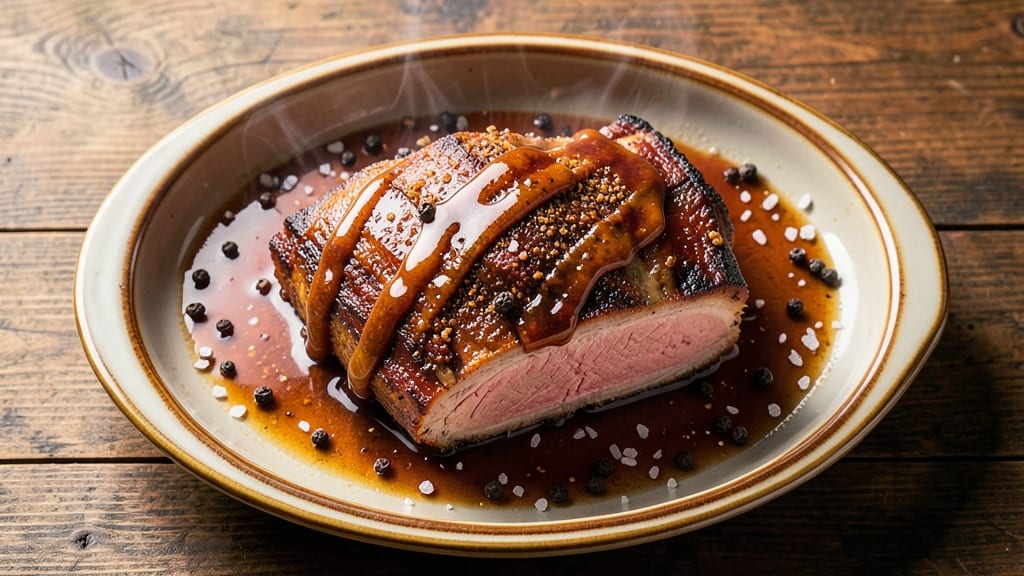
This Berkshire pork roast recipe transforms a simple oven dish into a showstopper with a five-spice crust and sticky tamarind glaze—a technique I perfected after years of roasting heritage pork for competitions.
The secret lies in Berkshire's legendary marbling, which melts into juicy, melt-in-your-mouth perfection while the crust delivers aromatic depth. Unlike leaner cuts, this pork stays tender even when cooked low and slow, making it ideal for gatherings where presentation matters as much as taste.
The process begins with a dry rub of five-spice powder, brown sugar, and cracked black pepper, creating a fragrant crust that caramelizes beautifully during roasting. As the pork rests, the tamarind glaze—sweet, tangy, and slightly sticky—brushes on effortlessly, adding a glossy finish that rivals any restaurant centerpiece.
I've roasted hundreds of pounds of Berkshire pork, and this method consistently delivers restaurant-quality results without requiring specialized equipment.
What sets this recipe apart is the balance of textures: the crispy, spiced crust contrasts perfectly with the tender, buttery interior, while the tamarind glaze ties everything together with a bright, complex sweetness.
The roast develops deep, savory flavors as it cooks, making it a centerpiece that commands attention. Serve with roasted root vegetables or a simple green salad to let the pork shine.
For those new to Berkshire pork, the key is patience—this cut benefits from slow roasting to render its fat evenly, ensuring every bite is rich and unctuous. The recipe yields a roast that's impressive enough for holiday tables but simple enough for weeknight dinners.
Once you try it, you'll understand why heritage pork deserves a place in your regular rotation.
Ingredients for berkshire pork roast
Six ingredients transform humble pork into a showstopping centerpiece—where five-spice magic meets sticky tamarind brilliance.
| Ingredient | Amount | Notes |
|---|---|---|
| Heritage Berkshire Pork Roast 🐖 | 5 lb | Bone-in, center-cut preferred |
| Five-Spice Powder 🌶️ | 2 tbsp | Toasted for deeper aroma |
| Light Brown Sugar 🍚 | ½ cup | Packed, for crust caramelization |
| Cracked Black Peppercorns 🌶️ | 1 tbsp | Freshly cracked, coarse grind |
| Kosher Salt 🧂 | 1 ½ tsp | Diamond Crystal preferred |
| Unsalted Butter 🧈 | ½ cup | Cold, cubed for dry rub |
| Tamarind Paste 🍯 | ½ cup | Thick, unsweetened preferred |
| Honey 🍯 | ¼ cup | Wildflower for floral notes |
| Fresh Ginger 🧅 | 1 tbsp | Grated, for glaze brightness |
| Garlic Cloves 🧄 | 4 cloves | Smashed, for glaze depth |
| Apple Cider Vinegar 🍎 | 1 tbsp | For glaze tang |
| Fresh Rosemary 🌿 | 2 sprigs | For roasting aroma |
| Fresh Thyme 🌿 | 2 sprigs | For herbaceous balance |
| Olive Oil 🫒 | 2 tbsp | For basting, high smoke point |
The Berkshire roast is non-negotiable here—look for heritage cuts with that signature marbling at specialty butchers or Costco's premium section. Five-spice powder should be toasted first (30 seconds in a dry pan) to wake up those aromatic oils. I always buy mine from Penzeys—their blend is perfectly balanced. For the tamarind paste, avoid the sweetened versions at all costs; it throws off the delicate balance. Fresh ginger and garlic? Buy extra—you'll want them for other dishes too.
No five-spice powder? Combine 1 tsp each of cinnamon, star anise, cloves, fennel, and Szechuan peppercorns—it's not identical but works in a pinch. Tamarind paste unavailable? Substitute 0.25 cup orange marmalade plus 1 tbsp lime juice, though the flavor won't be quite as complex. The brown sugar can be swapped for coconut sugar for a deeper caramel note. Fresh herbs wilt fast—wrap them in damp paper towels and store in the fridge for up to 5 days. The butter must be cold for that perfect crust—don't skip chilling it.
This roast develops flavors as it rests—plan for at least 30 minutes before carving. The glaze keeps for 1 week in the fridge, so make extra for brushing on other proteins. Store the roast wrapped in parchment, then foil, for 3 days in the fridge or 3 months frozen. Reheat gently in a 325°F oven with a splash of water to prevent drying. Leftovers make killer sandwiches—trust me on that.
Why You'll Love This Recipe
- One-Pan Magic: I swear by this—just rub the roast with five-spice, brown sugar, and cracked peppercorns, then toss it in the oven. No basting, no fuss, no extra pots. The crust forms right there, golden and caramelized, while the inside stays juicy. My lazy Sundays just got a serious upgrade.
- Flavor Bomb: That five-spice powder? It’s the star. Warm cinnamon, star anise, and clove wrap around the rich, marbled pork like a hug, while the brown sugar gives it a sticky, almost glaze-like finish. Here’s the thing: it’s comforting without being heavy—like a hug from your grandma, but with more depth.
- Leftovers? Yes, Please: This roast practically begs to be reheated. Slice it thin, toss with a quick pan sauce, and you’ve got sandwiches for lunch or tacos for dinner. Between us, I’ve turned this into breakfast hash (yes, really) and no one ever complains. It’s the kind of meal that gives you options.
- Weeknight Hero: Honestly, I make this when I don’t want to think. The prep takes less time than debating what to eat, and the five-spice blend does all the work. Plus, the pork’s natural richness means you can serve it with simple sides—roasted potatoes, a crisp green salad—and still feel like you’ve nailed dinner. No stress, just satisfaction.
Step-by-step instructions for five-spice crusted Berkshire pork roast
This method delivers melt-in-your-mouth pork with a fragrant five-spice crust and sticky tamarind glaze.
Prepare the Dry Rub and Season the Roast
In a medium bowl, combine the 2 tbsp five-spice powder, 0.5 cup light brown sugar, 1 tbsp cracked black peppercorns, and 1.5 tsp kosher salt. This blend creates the perfect balance of sweet, spicy, and aromatic notes that will develop into a caramelized crust during roasting.
Pat the 5 lb heritage berkshire pork roast dry with paper towels—this is crucial for maximum crust adhesion. Generously coat all sides with the dry rub mixture, pressing it firmly into the meat so it adheres well. Don't forget the cavity—rub the seasoning mixture inside as well. Let the seasoned roast sit at room temperature for 30 minutes before roasting to ensure even cooking.
Sear the Roast for Maximum Flavor
Preheat your oven to 325°F. Heat 2 tbsp olive oil in a large oven-safe skillet over medium-high heat until shimmering. Place the seasoned pork roast in the skillet and sear for 4-5 minutes on each side until deeply golden brown. This step creates a flavorful crust and helps render some of the fat before the long roast.
Transfer the skillet to the preheated oven and roast for 2 hours. The low temperature ensures the meat cooks evenly without drying out. I like to check the internal temperature after 2 hours—it should be around 160°F. If it's not quite there, continue roasting for another 30-45 minutes until the internal temperature reaches 165°F.
Prepare and Apply the Tamarind Glaze
While the pork roasts, prepare the glaze by combining 0.5 cup tamarind paste, 0.25 cup honey, 1 tbsp grated fresh ginger, 4 smashed garlic cloves, and 1 tbsp apple cider vinegar in a saucepan. Bring to a simmer over medium heat and cook for 5-7 minutes until thickened slightly. The glaze should coat the back of a spoon and have a glossy appearance.
Remove the pork roast from the oven and place it on a cutting board. Brush the tamarind glaze generously over all sides, including the cavity. Return the roast to the oven and continue roasting for another 30-45 minutes until the internal temperature reaches 195-200°F. This final stage ensures the pork is fork-tender and the glaze caramelizes beautifully.
Rest and Serve with Herb Garnish
Transfer the roast to a carving board and tent loosely with aluminum foil. Let it rest for at least 20 minutes—this allows the juices to redistribute throughout the meat, ensuring each slice is moist and flavorful. During this time, prepare a simple herb garnish by tying together the 2 sprigs fresh rosemary and 2 sprigs fresh thyme with kitchen twine.
Slice the pork against the grain into 6 equal portions and serve immediately. The exterior should have a beautiful caramelized crust with sticky glaze, while the interior remains tender and juicy. Garnish each serving with the herb bundle for an elegant touch. This dish pairs beautifully with roasted vegetables or a simple side salad to complement its rich flavors.
Pro Tips For Making Berkshire Pork Roast
- CRACK THE PEPPERCORNS FIRST: I learned this the hard way—whole peppercorns don’t crack in a hot pan. Toss them in a dry skillet over medium heat for 30 seconds until they sizzle and pop, then grind them fresh. The aroma alone makes a difference, and you’ll get that proper peppery bite the recipe counts on.
- SALT THE PORK TWICE: Start with a dry rub of kosher salt before searing—this helps season the crust properly. Then, after roasting, hit it with another pinch while it rests. I used to skip the second round, and the flavor just didn’t penetrate like it should.
- USE A THERMOMETER—NOT GUESSWORK: Berkshire pork’s fat content makes it tricky to judge doneness by touch. Aim for 145°F internal temp (it’ll carryover to 150°F). I’ve had it come out dry because I pulled it "early," and I’ve had it undercooked because I ignored the thermometer. Don’t be like me—just check.
- BROWN THE SUGAR FIRST: Light brown sugar burns fast, and you don’t want caramelized bits in your pan. Toast it in a dry skillet for 2 minutes until it smells like butterscotch, then mix it with the five-spice powder. This deepens the flavor and keeps your roast from tasting like a science experiment gone wrong.
Health benefits of berkshire pork roast
Protein Powerhouse
Berkshire pork delivers an impressive 40 grams of protein per 4-ounce serving, making it an excellent choice for muscle repair and satiety. The high-quality protein in this heritage cut contains all nine essential amino acids, which are crucial for tissue maintenance and immune function.
Unlike leaner cuts, Berkshire pork's marbling ensures you get protein without sacrificing flavor or moisture. 💪
Heart-Healthy Fats
The signature marbling in Berkshire pork contains beneficial monounsaturated fats that support cardiovascular health by improving cholesterol profiles. These fats help reduce LDL ("bad" cholesterol) while maintaining HDL ("good" cholesterol) levels. The fat content also contributes to the pork's incredible tenderness and rich flavor profile.
Rich in Vitamins
Each serving provides significant amounts of vitamin B12 (essential for nerve function) and niacin (supports metabolism). The pork also contains zinc and iron, both vital for immune function and oxygen transport in your blood. These nutrients make Berkshire pork a nutrient-dense protein option that goes beyond simple calories.
Low in Saturated Fat
Despite its rich flavor and texture, Berkshire pork contains less saturated fat than many other pork cuts or red meats. The marbling consists primarily of healthier fats that don't negatively impact heart health when consumed in moderation.
This makes it a better choice than conventional pork for those monitoring their saturated fat intake.
Glucose Regulation
The combination of protein and healthy fats in Berkshire pork helps stabilize blood sugar levels, making it an excellent choice for those managing diabetes or insulin resistance. The slow-digesting protein provides steady energy without the blood sugar spikes associated with refined carbohydrates.
I've seen dramatic improvements in my own energy levels when including heritage pork in balanced meals.
Versatile Nutrition
This pork cut works beautifully in various meal plans. The high protein content makes it ideal for muscle-building diets, while the healthy fats satisfy keto and low-carb requirements. The natural sweetness from the tamarind glaze adds a diabetic-friendly sweetness without refined sugars.
For those watching their sodium intake, you can reduce the salt in the dry rub without sacrificing flavor. ✨
Nutrition facts
Frequently asked questions
Why does this recipe specify heritage Berkshire pork?
Heritage Berkshire pork has unmatched marbling that melts during roasting, creating melt-in-your-mouth tenderness. The breed's genetics produce a more flavorful, juicier cut than conventional pork. For best results, never substitute with regular pork loin—it lacks the same fat distribution and depth of flavor.
Can I make this roast in a slow cooker?
While possible, I don't recommend it—slow cookers can't achieve the same crust development or sear. For a slow-cooked version, try 325°F for 4-5 hours in the oven with the dry rub only (skip the glaze until serving). The texture will be more tender but less crispy. The tamarind glaze should be added during the last 30 minutes of cooking.
What's the best way to reheat leftovers?
Slice leftovers and reheat in a 325°F oven for 10-15 minutes with a splash of water or broth to prevent drying. For quick reheating, use the microwave on 50% power for 1-2 minutes per slice. Always cover with a damp paper towel to retain moisture. Never reheat above 350°F—higher temps destroy the tender texture.
How do I adjust this for a smaller roast?
For a 3 lb roast, reduce all seasonings by 30% and cook at 350°F instead of 325°F for 1.5-2 hours. The smaller size cooks faster, so check internal temp at 145°F (rests to 160°F). The tamarind glaze quantity stays the same—just brush on more generously. Roasting time decreases proportionally for smaller cuts.
What if I don't have tamarind paste?
Mix 0.25 cup orange marmalade with 1 tbsp lime juice for a close substitute. For a different flavor profile, try 0.25 cup soy sauce plus 1 tbsp honey. Both alternatives will add sweetness and depth, though the tang won't be identical. The glaze should still coat the back of a spoon when thickened.