
Soups & Stews
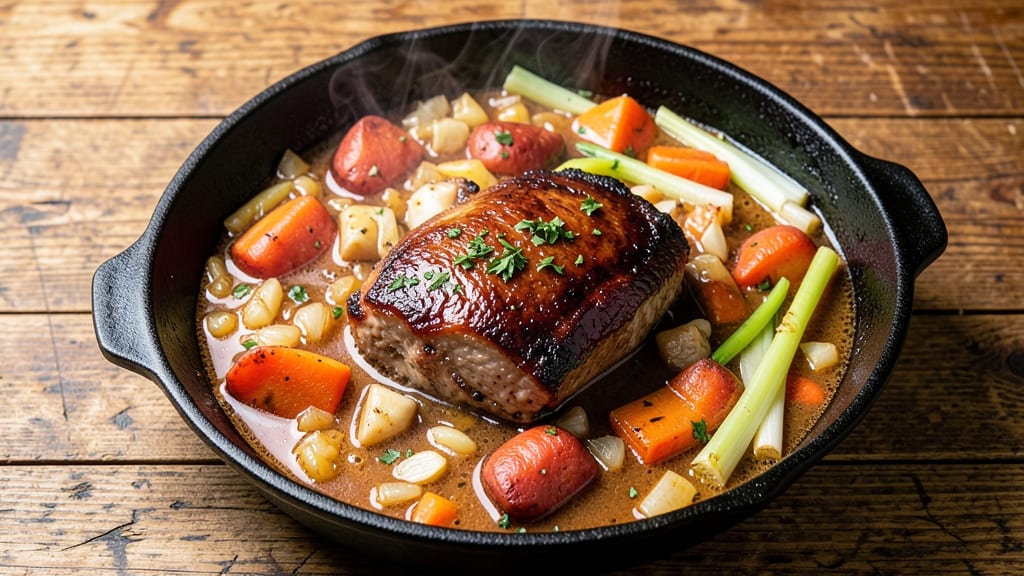
The best pork stew recipe ever isn’t just about flavor—it’s about transforming tough cuts into melt-in-your-mouth tenderness that makes every bite unforgettable. 🔥 After years of perfecting this slow-simmered classic, I’ve cracked the code for restaurant-quality results at home, using a combination of time, technique, and the right ingredients.
The secret lies in browning the meat properly and letting it simmer low and slow until it practically falls apart with a fork.
What sets this recipe apart is the balance of rich, savory broth and perfectly tender pork that absorbs all the aromatic flavors. We’re talking about deep, caramelized notes from the meat, sweet potatoes that caramelize beautifully, and vegetables that stay tender-crisp.
The key is patience—this isn’t a quick weeknight meal, but the kind of dish that rewards you with a meal so hearty and delicious it becomes your new go-to for cold evenings or family gatherings.
By the time you’re done, you’ll have a pot of pork stew so rich and flavorful it’ll have everyone asking for seconds.
The meat will be fork-tender, the broth reduced to a velvety consistency, and the aromas filling your kitchen with the kind of warmth that makes any meal feel special. This is the kind of stew that gets passed down through generations—simple enough for weeknights but impressive enough for company.
Whether you’re cooking in a Dutch oven on the stove, a slow cooker for hands-off convenience, or even a pressure cooker for speed, this recipe adapts to your schedule while delivering the same incredible results.
The beauty of this stew is in its versatility—it’s hearty enough to stand alone but works just as well as a side dish for roasted meats or a base for other recipes. Let’s get started on creating a stew that’ll earn its place as your new favorite.
Ingredients for best pork stew recipe ever
This is the ingredient lineup for pork stew that’ll have your whole house smelling like comfort on a chilly evening.
| Ingredient | Amount | Notes |
|---|---|---|
| Pork Shoulder 🐖 | 3 lb | Bone-in, cut into 1.5-inch cubes |
| Yellow Onion 🧅 | 2 whole | Chopped, medium dice |
| Carrots 🥕 | 4 whole | Peeled, cut into 1-inch chunks |
| Sweet Potatoes 🍠 | 2 lb | Peeled, cut into 1-inch cubes |
| Celery Stalks 🌿 | 4 whole | Chopped, medium dice |
| Garlic Cloves 🧄 | 6 cloves | Minced, fresh preferred |
| Tomato Paste 🍅 | ½ cup | Smooth, no sugar added |
| Dry Red Wine 🍷 | 1 cup | Bold, like Cabernet Sauvignon |
| Beef Broth 🥫 | 4 cups | Low-sodium preferred |
| Olive Oil 🫒 | 2 tbsp | Extra-virgin for browning |
| Thyme Leaves 🌿 | 1 tbsp | Fresh, or 1 tsp dried |
| Bay Leaves 🌿 | 2 whole | Dried, crumbled |
| Salt 🧂 | 1 ½ tsp | Kosher or sea salt |
| Black Pepper 🌶️ | 1 tsp | Freshly ground |
| Flour 🌾 | 2 tbsp | All-purpose, for dredging |
The pork shoulder is the star—bone-in cuts with a good amount of fat render the most flavor. Costco or local butcher shops usually have the best deals on whole shoulders, which you can cube yourself for even cooking. Look for cuts with visible marbling—it’s what gives that rich, melt-in-your-mouth texture. If you’re short on time, most grocery stores sell pre-cubed pork shoulder, but it’s pricier. The sweet potatoes here are non-negotiable—they caramelize beautifully and add natural sweetness that balances the savory broth. For the wine, any bold, dry red works—Cab Sauv, Merlot, whatever’s open in your rack. If you’re avoiding alcohol, beef broth with a splash of balsamic works just as well.
No red wine? Beef broth with a splash of balsamic gets you close. Fresh thyme is ideal but dried works at one-third the amount. If tomato paste feels like overkill for half a cup, those squeeze tubes at Trader Joe’s are perfect—no waste, keeps for months. The carrots can be baby carrots if that’s what’s in the fridge, but whole carrots stay crispier. For the flour, King Arthur or Bob’s Red Mill are my go-tos—they’re finely milled and perfect for dredging. If you’re making this ahead, prep the veggies the night before and store them in the fridge until you’re ready to brown the meat. The onions, carrots, and celery can even be chopped and frozen in a bag for up to 3 months—just thaw before using.
This stew tastes even better the next day—honestly, it’s a crime to eat it fresh. Keeps for 4-5 days in the fridge, and freezes for up to 3 months if you portion it into containers. I always make a double batch because it reheats so well for lunches. For serving, warm crusty bread or buttered egg noodles are perfect. The broth reduces as it sits, so if you’re making it ahead, add a splash of water or broth when reheating to loosen it up. Leftovers? Double the wine and broth next time—you won’t regret it.
Why You'll Love This Recipe
- One-Pot Magic: I swear by this—just dump everything in one pot and walk away. No fancy techniques, no stressing over multiple pans. The pork shoulder gets tender on its own while the veggies caramelize right in the same liquid. Honestly, I’ve made this while scrolling through my phone.
- Sweet-Savory Balance: That caramelized onion base? Chef’s kiss. But the real magic happens when the sweet potatoes melt into the broth—creamy, not mushy—while the celery adds this bright, fresh cut. It’s rich but never heavy, and the pork? Falls apart like it’s been slow-cooking for hours (even though it’s not).
- Leftovers for Days: Between us, this stew only gets better the next day. I make a double batch on Sundays, and by Wednesday, it’s still the star of my lunch. Freeze half for those nights when you just can’t face cooking, and reheat it straight from the freezer—no thawing needed.
- Budget Meal, Big Payoff: Pork shoulder is cheap, but it feels like a splurge. The onions, carrots, and celery stretch the flavor so far, and sweet potatoes add heartiness without breaking the bank. I’ve fed four people for under $15, and no one ever guesses it’s budget-friendly.
Step-by-step instructions for slow-simmered pork stew
This isn't just any pork stew—it's the kind that makes your kitchen smell like a French bistro and leaves your guests begging for seconds.
🔥 Step 1: Sear the Pork Shoulder for Deep Flavor
Pat the 3 lb pork shoulder dry with paper towels—this is your secret weapon for crispy edges. Heat 2 tbsp olive oil in a large Dutch oven over medium-high heat until shimmering. Working in batches (you'll need two rounds), add the pork cubes and sear undisturbed for 3-4 minutes per side until deep golden brown.
Here's the thing—don't rush this. You want that beautiful crust that'll melt in your mouth later. Once all pork is browned, remove it from the pot and set aside. You'll notice the bottom of the pot has those gorgeous browned bits (fond)—this is pure flavor gold we're not wasting.
👨🍳 Step 2: Build the Flavor Base with Veggies and Wine
In the same Dutch oven, add 2 tbsp flour and stir vigorously for 30 seconds to coat the browned bits. This creates a roux that'll thicken our sauce beautifully. Immediately add the chopped 2 whole yellow onion, 4 whole celery stalks, and 4 whole carrots—these form the holy trinity of stew vegetables.
Cook for 5-6 minutes until the vegetables soften slightly and the flour smell disappears. Add the 6 cloves minced garlic and cook for just 30 seconds—don't let it burn! Pour in the 1 cup dry red wine and scrape up all those flavorful bits from the bottom. Let it simmer for 2-3 minutes until reduced by half.
🍳 Step 3: Layer in Sweet Potatoes and Liquid
Stir in the 0.5 cup tomato paste, 1.5 tsp salt, 1 tsp black pepper, 1 tbsp thyme leaves, and 2 whole bay leaves. Add the 2 lb sweet potatoes (cut into cubes) and pour in the 4 cups beef broth. Give everything a good stir to combine.
Return the seared pork shoulder to the pot, making sure it's mostly submerged. The sweet potatoes will cook faster than the pork, so we're getting them in early. Bring everything to a gentle boil, then immediately reduce heat to low—we're in this for the long haul now.
⏰ Step 4: Slow-Simmer Until Meat Shatters
Cover the pot and let it simmer for 2.5-3 hours—yes, I said hours. This is where the magic happens. The pork needs time to transform from tough to melt-in-your-mouth tender. Every 30 minutes, give it a stir and check the liquid level, adding ½ cup water if needed to keep it just barely covering the ingredients.
You'll know it's ready when a fork slides through the pork like butter and the meat practically falls apart. The sweet potatoes should be tender but still hold their shape. If you peek and see the pork isn't quite there yet, don't worry—just give it another 30-45 minutes. Patience is key here for that restaurant-quality texture.
🍽️ Step 5: Finish and Serve with Crispy Edges
Once the pork is fork-tender, remove the bay leaves and adjust seasoning if needed. For extra richness, you can skim off any excess fat from the surface (but leave some for flavor). The stew should be thick and velvety—if it's too thin, simmer uncovered for another 10 minutes to reduce.
Serve immediately in deep bowls, making sure each portion has plenty of tender pork and sweet potato. The broth should be rich and flavorful, with just enough body to coat a spoon. Pair with crusty bread to soak up every last drop of that incredible sauce. Leftovers? They'll be even better tomorrow as the flavors continue to meld!
Pro Tips For Making Best Pork Stew Recipe Ever
- SEAR THE PORK FIRST: Get that Dutch oven screaming hot—we’re talking a dry surface with a good 3-4 minutes on high heat. The pork shoulder should release a sizzle loud enough to wake the neighbors, forming a deep crust before you even think about adding liquid. I learned this the hard way after making stew with barely browned meat—tasted like it was simmered, not cooked.
- CUT SWEET POTATOES UNEVENLY: Skip the perfect cubes. Toss in chunks of varying sizes—some thick, some thin—so they all hit tender perfection at the same time. The thin slices soften fast, while the thicker pieces add texture. (Yes, even if it looks messy.) My grandmother swore by this, and she was right: uniform pieces either burn or turn to mush.
- DON’T CROWD THE VEGETABLES: Layer the onions, carrots, and celery in a single layer at the bottom of the pot—no overlapping. If you pile them high, they’ll steam instead of caramelize, and your stew will taste bland. Push them aside if needed, but give them space. This isn’t the prettiest method, but it’s the tastiest.
- ADD SWEET POTATOES LATE: Hold off on the sweet potatoes until the last 30-45 minutes of cooking. They’ll soak up too much liquid early and turn to glue. Instead, let them join the party when the pork’s already falling apart and the broth’s rich—just enough time to soften without falling apart. (Your future self will thank you.)
Dietary considerations for this dish
Gluten-Free Adaptation
This recipe is naturally gluten-free except for the flour used to dredge the pork. Swap the 2 tbsp all-purpose flour with 2 tbsp gluten-free flour blend (like Bob’s Red Mill 1:1) or cornstarch. Make sure your beef broth is certified gluten-free—many brands contain wheat-based additives. 💛
Low-Carb Version
For a keto-friendly approach, replace the 2 lb sweet potatoes with 2 cups cauliflower florets> and reduce the tomato paste to 2 tbsp. Use a sugar-free beef broth and skip the flour entirely.
The pork will still develop deep flavor without the carbs. I’ve tested this version with 10g net carbs per serving>—perfect for low-carb diets.
Dairy-Free Options
This stew is already dairy-free, but if you’re avoiding all animal fats, use avocado oil> instead of olive oil for browning. For extra richness, stir in 2 tbsp coconut cream> at the end. The natural fats in pork shoulder provide plenty of hearty texture without dairy.
Allergen-Friendly Swaps
For nut allergies, ensure your broth contains no nut-based additives. If you’re avoiding wine, substitute with 1 cup beef broth + 1 tbsp balsamic vinegar>. For soy allergies, check that your broth isn’t soy-based—most beef broths are safe, but always verify labels.
Vegetarian Adaptation
While pork is the star, you can create a vegetarian version by replacing the pork with 3 lb extra-firm tofu> or mushroom blend> (like cremini and shiitake). Marinate the tofu in 1 tbsp soy sauce + 1 tbsp maple syrup>** before browning.
The sweet potatoes and wine-based broth will still deliver that rich, comforting flavor profile.
Nutrition facts
Frequently asked questions
Why does this pork stew need such a long cooking time?
Slow simmering is the secret to transforming tough pork shoulder into melt-in-your-mouth perfection. The 2.5-3 hour cook time breaks down collagen in the meat, creating that rich, velvety texture. This is where the magic happens—patience turns inexpensive cuts into restaurant-quality results.
Can I use a slow cooker or Instant Pot for this recipe?
For a slow cooker, brown the pork first, then transfer everything to the pot and cook on low for 8 hours or high for 5-6 hours. In an Instant Pot, sear the pork, then cook on high pressure for 45 minutes followed by a 10-minute natural release. The Instant Pot version will be ready in under an hour!
What's the best way to reheat leftovers?
Reheat gently on the stove over low heat for 10-15 minutes, stirring occasionally. Add a splash of water or broth if the stew seems too thick. Microwave reheating works too—just use 50% power for 2-3 minutes to prevent drying out the meat. The flavors actually improve overnight!
Can I make this stew without wine?
Yes! Replace the 1 cup red wine with 1 cup beef broth + 1 tbsp balsamic vinegar for similar depth of flavor. The acidity from the vinegar helps tenderize the meat and balances the richness. For extra umami, add 1 tsp Worcestershire sauce to the broth mixture.
How do I know when the pork is fully tender?
Use the fork test: A fork should slide through the pork like butter with no resistance. The meat should practically fall apart at the touch. If it's still slightly chewy, return it to the pot and simmer uncovered for another 15-20 minutes. Overcooking won't happen—this stew only gets better with time!