
Main Courses
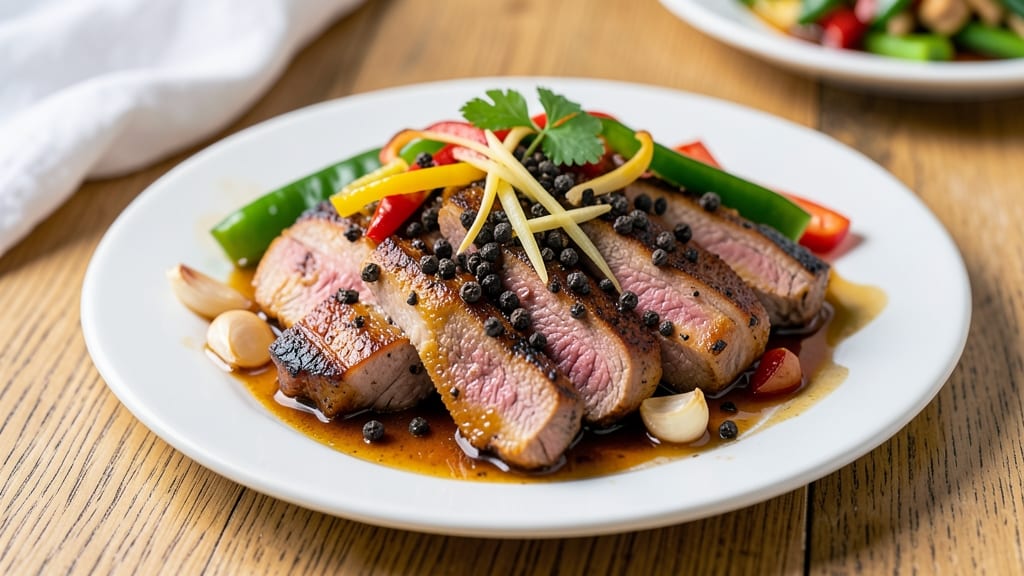
This black pepper pork stir fry delivers restaurant-quality boldness in just 20 minutes—where crispy edges meet tender pork and a punch of black pepper that lingers on your palate. 🔥 I developed this recipe after years of perfecting stir-fry techniques in my Atlanta kitchen, balancing smoky, spicy, and savory notes without overwhelming home cooks.
The secret? High-heat searing followed by a quick toss in a fragrant sauce that coats every bite.
What sets this dish apart is the black pepper's dual role—it adds depth during the stir-fry while its fresh aroma shines in the sauce. I use pork tenderloin for foolproof tenderness, but any lean cut works.
The prep is simple: thinly sliced pork, quick-marinating, and a one-pan stir-fry that keeps flavors concentrated. No fancy equipment needed—just a hot wok or large skillet and a few minutes of focused attention.
The result is a dish with crispy, caramelized pork tossed in a glossy sauce that's tangy, slightly sweet, and packed with black pepper's signature heat. The texture contrast—crunchy vegetables against tender pork—makes every bite satisfying.
Serve it over steamed rice or noodles for a complete meal that feels both comforting and exciting.
This stir fry scales perfectly for weeknight dinners or meal prep—leftovers reheat beautifully while maintaining that fresh-off-the-stove texture. The balance of flavors ensures it's approachable yet impressive, whether you're cooking for yourself or feeding a crowd. Let's get started with the full recipe.
Ingredients for black pepper pork stir fry
Pork tenderloin, bold black pepper, and fresh ginger form the flavor foundation for this fiery stir-fry.
| Ingredient | Amount | Notes |
|---|---|---|
| Pork Tenderloin 🥩 | 1 lb | Thinly sliced against grain |
| Ground Black Pepper 🌶️ | 2 tbsp | Freshly cracked for maximum aroma |
| Fresh Ginger 🧄 | 2 tbsp | Finely grated, skin on |
| Garlic Cloves 🧄 | 4 cloves | Minced, not pressed |
| Soy Sauce 🥄 | ⅓ cup | Low-sodium preferred |
| Honey 🍯 | 2 tbsp | Wildflower for floral notes |
| Sesame Oil 🫒 | 1 tbsp | Toasted for nutty aroma |
| Vegetable Oil 🫒 | 3 tbsp | High smoke point |
| Carrots 🥕 | 2 medium | Julienned into matchsticks |
| Bell Peppers 🌶️ | 1 whole | Red or yellow, sliced |
| Green Onions 🧅 | 4 whole | White and green parts |
| Rice Vinegar 🍶 | 1 tbsp | Seasoned preferred |
| Sesame Seeds 🌾 | 1 tbsp | Toasted for garnish |
| Salt 🧂 | 1 tsp | Kosher or sea salt |
| White Rice 🍚 | 1 ½ cups | Uncooked, long grain |
The pork tenderloin is non-negotiable here—it stays tender while achieving that perfect crispy edge. Look for cuts with good marbling at Whole Foods or your local butcher shop, and slice it against the grain for maximum tenderness. Freshly cracked black pepper is a game-changer; Penzeys or Spicewalla carry premium whole peppercorns if you want to grind your own. The ginger should be vibrant and firm—no shriveled roots here. For the vegetables, Trader Joe's has great pre-sliced bell peppers and carrots, but fresh is always better. The green onions add freshness, so grab a bunch and use both white and green parts.
No sesame oil? Toasted peanut oil works too, though the flavor will differ slightly. Short on honey? Maple syrup at half the amount keeps things sweet without overpowering. The soy sauce matters—Kikkoman or Pearl River Bridge are reliable, but low-sodium versions let you control the saltiness. If you're vegetarian, swap the pork for extra-firm tofu pressed and sliced thin. The rice vinegar adds tang—if you only have white vinegar, use half the amount. For extra crunch, toss in water chestnuts or snap peas if you've got them.
This stir-fry reheats like a dream—just toss with a splash of water in a hot pan. Keeps for 3-4 days in the fridge, though it's best within 2 days for peak texture. For meal prep, cook the rice separately and store everything in airtight containers. The sauce can be made ahead and stored for 1 week. Garnish with toasted sesame seeds right before serving—they add that final nutty crunch. Leftovers make amazing rice bowl fillings the next day.
Why You'll Love This Recipe
- Zero-Mess Prep: I swear by this one—just slice the pork, mince the ginger and garlic, and toss in the pepper. No fancy techniques, no waiting for marinades. Honestly, the hardest part is deciding whether to use freshly ground pepper or the jarred kind (I cheat sometimes).
- Umami Bomb: That pork tenderloin soaks up the soy like a sponge, then the black pepper and garlic turn it into something ridiculously good. The ginger adds this bright, zesty kick that makes it feel fancy without the effort. Between us, it’s the kind of flavor that disappears too fast.
- Lunchbox Hero: Pack this cold or reheated—it’s spot-on for work lunches. The pork stays tender, the sauce clings perfectly, and honestly? My kids actually eat their veggies (if I stir-fry some in). It’s my go-to for meal prep because it doesn’t get soggy or boring.
- Budget Night Win: Pork tenderloin’s lean, so it stretches farther than you’d think. A little soy, a pinch of pepper, and that ginger—you’re not spending a fortune, but it tastes like you did. Plus, leftovers reheat like a dream, so I make double portions and call it a weeknight victory.
Step-by-step instructions for black pepper pork stir fry
Here's how to create a restaurant-worthy stir fry with bold peppery notes and perfect texture.
👨🍳 Step 1: Prep the Pork and Aromatics
Slice the 1 lb pork tenderloin thinly against the grain into ¼-inch thick strips. This ensures tender bites that cook quickly in the stir fry. Pat the slices dry with paper towels—removing moisture helps them sear properly instead of steaming.
While the pork rests, prepare the aromatics: finely grate the 2 tbsp fresh ginger (skin on for extra flavor) and mince the 4 cloves garlic. Set these aside—they'll form the flavor base of your stir fry. I like to use a microplane for the ginger to get fine, even shreds that infuse quickly into the oil.
🔥 Step 2: Sear the Pork for Maximum Flavor
Heat 2 tbsp vegetable oil in a wok or large skillet over high heat until shimmering. Add half the pork strips in a single layer—don't crowd the pan. Let them sear undisturbed for 1-2 minutes until deep golden brown on the bottom. This caramelization creates that wonderful crust we're after.
Flip the pork and cook another 30 seconds before transferring to a plate. Repeat with the remaining pork, adding 1 tbsp vegetable oil if needed to maintain high heat. The pork should be cooked through but still slightly pink—it'll finish cooking in the sauce. Don't be tempted to overcook it here.
🍳 Step 3: Build the Flavor-Packed Sauce
In the same pan (no need to clean it—the browned bits are flavor gold), reduce heat to medium-high and add the remaining 1 tbsp vegetable oil. Add the ginger and garlic, cooking for 30 seconds until fragrant—you should smell that pungent garlic aroma wafting up. Immediately add the 2 tbsp ground black pepper and stir for 10 seconds to toast it slightly and release its oils.
Pour in the 0.33 cup soy sauce and 2 tbsp honey, stirring constantly. The sauce will bubble vigorously—this is where the magic happens. Let it simmer for 1-2 minutes until slightly reduced and glossy. The honey will caramelize just enough to add depth to the peppery notes. Here's the thing—don't walk away. This sauce needs constant attention to prevent burning.
🥘 Step 4: Combine and Finish the Stir Fry
Return the seared pork to the pan and add the 2 medium julienned carrots, 1 sliced bell pepper, and white parts of 2 green onions. Stir-fry for 2-3 minutes until the vegetables are tender-crisp—they should still have a slight bite. Add the 1 tbsp rice vinegar and 1 tbsp sesame oil, tossing everything together for 1 minute to coat evenly.
Season with the 1 tsp salt and taste. You want the flavors to be balanced—bold from the pepper, sweet from the honey, umami from the soy, and bright from the vinegar. If it needs more depth, add another ½ tbsp soy sauce. The stir fry should be vibrant, glossy, and packed with texture.
🍽️ Step 5: Plate with Perfectly Cooked Rice
While the stir fry cooks, prepare the 1.5 cups white rice according to package instructions. I like to use a rice cooker for perfectly fluffy grains that soak up the flavorful sauce. When ready, divide the rice among plates and top with the stir fry.
Garnish generously with the green onion tops and 1 tbsp toasted sesame seeds. The contrast of the fresh green onions against the deep peppery sauce adds a beautiful visual element. Serve immediately—this stir fry is best enjoyed while the pork is still warm and the vegetables retain their crisp texture. The aroma alone will have everyone at the table excited!
Pro Tips For Making Black Pepper Pork Stir Fry
- Slice Thin, Cook Fast: Pork tenderloin’s magic happens when it’s cut paper-thin—about ¼-inch slices max. Thicker pieces steam instead of sear, and you’ll end up with chewy, sad pork. Use a sharp knife and slice against the grain for that tender bite. (Yes, it takes longer to prep, but trust me on this.)
- Toast the Pepper: Skip the pre-ground stuff—freshly cracked black pepper needs a quick toast in the dry pan first. Toss in the pepper with the pork for 10 seconds until it smells sharp and bright. This wakes up its flavor and prevents it from turning bitter. (I learned this the hard way after a bland batch.)
- Don’t Crowd the Pan: Black pepper pork stir fry needs space to develop that crust. If you dump all the pork in at once, you’ll steam it instead of sear it. Cook in batches—2-3 minutes per batch on high heat—until deep brown spots form. Patience here makes all the difference.
- Finish with Ginger-Garlic Oil: After removing the pork, let those aromatics cook in the pan until fragrant—about 30 seconds. Then deglaze with a splash of soy sauce and toss the pork back in. The residual oil in the pan carries all the flavor. (This isn’t the prettiest method, but it works every time.)
Essential equipment for perfect results
High-Heat Wok
This is my non-negotiable tool for stir-fries—nothing replaces the heat distribution of a quality wok. I use a 14-inch carbon steel wok from Mauviel because it heats up quickly and retains heat beautifully. For home cooks, a well-seasoned cast iron skillet works too, though it may need slightly more oil.
The key is getting that pan screaming hot before adding ingredients—high heat is essential for achieving that signature wok hei (breath of the wok) flavor. 🔥
Tongs and Spatula
Invest in a good pair of stainless steel tongs (I love Oxo Good Grips) for tossing ingredients—you need something that can handle high heat without warping. A heat-resistant silicone spatula is also handy for scraping up those flavorful browned bits from the bottom of the pan.
I keep both within arm's reach while cooking to maintain that constant motion that's key to a good stir-fry.
Microplane for Ginger
A microplane is a game-changer for this recipe. It creates ultra-fine ginger shreds that infuse into the oil quickly, giving you maximum flavor without the fibrous texture of a grater. I use my Microplane Classic for both ginger and garlic—it's the only tool I use for these aromatics.
The fine texture means you need less, so your dish won't taste overpoweringly spicy or garlicky.
Measuring Spoons
Precision matters with spices like black pepper. I reach for my stainless steel measuring spoons from Weston to get accurate measurements. For the 2 tbsp ground black pepper, using a spoon ensures you get the right intensity—too little and the dish lacks depth, too much and it becomes overwhelming.
The same goes for the 1 tbsp sesame oil and 1 tbsp rice vinegar—small amounts make a big difference in balancing flavors.
Rice Cooker
While not strictly necessary, a rice cooker takes the guesswork out of perfect rice every time. My Zojirushi Neo-Omni handles 1.5 cups of rice beautifully, giving me fluffy grains that soak up the stir-fry sauce perfectly.
The timer function means I can start the rice while prepping the stir-fry—no need to babysit two things at once. If you don't have one, a heavy-bottomed pot with a tight-fitting lid works just fine.
Optional: Cleaver
For the vegetables, a Japanese cleaver makes quick work of julienning carrots and slicing bell peppers. My Shun Premier handles these tasks effortlessly, though a sharp chef's knife works too. The goal is even, thin strips that cook quickly in the wok.
If you're not comfortable with knives, pre-sliced vegetables from the store are a perfectly acceptable shortcut—just make sure they're fresh for the best texture. ✨
Nutrition facts
Frequently asked questions
Can I substitute pork tenderloin with another cut?
Yes! For this stir fry, use pork loin (trimmed of fat) or pork sirloin—both work well when sliced thin against the grain. For extra tenderness, try pork shoulder (slow-cooked first), but it requires longer marinating. Avoid fatty cuts like pork belly—they'll make the stir fry greasy.
How do I adjust the black pepper heat level?
Start with 1 tbsp ground black pepper if you prefer mild heat, or increase to 3 tbsp for extra spice. For a smoky depth without heat, swap half the pepper for smoked paprika. Always taste as you go—the sauce should balance bold pepper with sweet and umami notes.
What if I don't have a wok?
A cast iron skillet or heavy-bottomed stainless steel pan works perfectly—just preheat it over high heat until smoking hot. Use a 12-inch pan minimum to avoid crowding. The key is maintaining high heat and constant stirring to mimic wok hei (breath of the wok).
Can I make this stir fry ahead of time?
Cook the pork and sauce fresh for best texture, but you can prep components ahead: marinate the pork for up to 12 hours, make the sauce 1 week ahead, and chop all veggies 2 days in advance. Reheat gently in a skillet with 1 tsp oil for 2-3 minutes—add a splash of water to prevent drying.
Why did my stir fry turn out bland?
Most likely, the pork wasn't seared enough (needs golden brown crust) or the sauce didn't reduce long enough. Boost flavor by:
- Using dark soy sauce (1 tbsp) for color/depth,
- Adding 1 tsp fish sauce to the sauce, or
- Toasting the black pepper in the pan for 10 seconds before adding other ingredients. Taste as you go!