
Main Courses
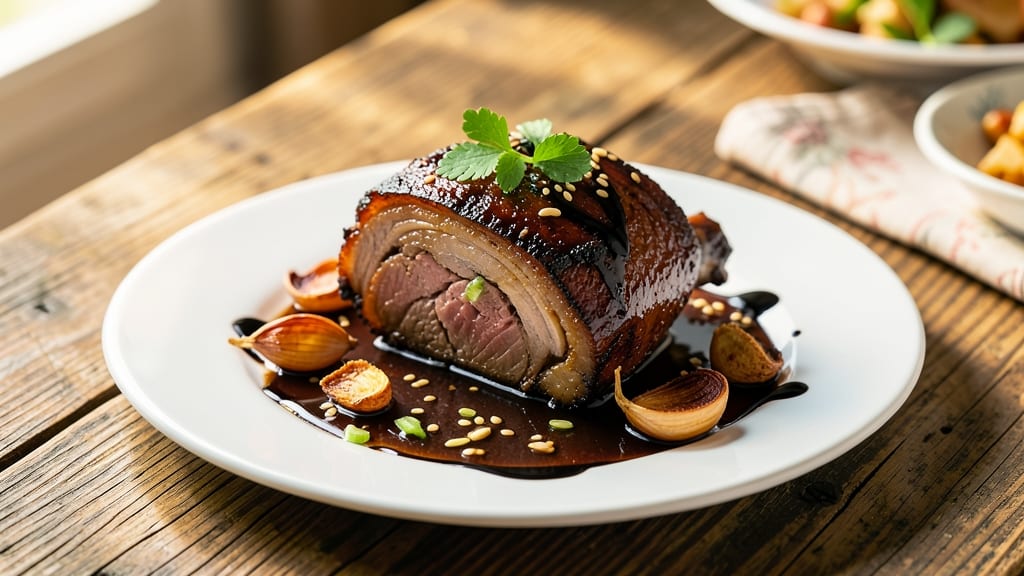
This black vinegar pork knuckle recipe delivers restaurant-quality depth with just five key ingredients—charred edges, sticky-sweet glaze, and tender meat that falls apart at the touch. 🔥 The secret lies in the marriage of black vinegar's tangy bite with slow-braised richness, a technique I perfected during my Charleston apprenticeship where whole-hog cooking was an art form.
What makes this dish special is how it transforms tough pork into melt-in-your-mouth perfection through precise timing and layering of flavors.
The process begins with a dry rub that creates a flavorful bark before the knuckle is seared and braised in a rich sauce of black vinegar, soy sauce, and aromatic spices. This isn't your typical braised pork—it's a balance of tangy, savory, and umami that builds complexity as it simmers.
I've developed this method to be approachable yet impressive, delivering professional results without requiring specialized equipment. The key is patience; letting the knuckle cook low and slow until the meat practically disintegrates.
By the time you serve this dish, you'll have a pork knuckle with a deep mahogany crust that contrasts beautifully with the tender, juicy meat beneath. The black vinegar glaze adds a sticky-sweet sheen that makes every bite irresistible.
This is the kind of dish that becomes the centerpiece of any meal, whether served over steamed rice or alongside pickled vegetables for balance. The aroma alone will have everyone gathered at your table.
Perfect for special occasions or weekend family dinners, this recipe scales beautifully and tastes even better the next day. The leftovers keep their rich flavors and tender texture, making them ideal for lunchboxes or quick meals. Let's get started on creating this showstopping centerpiece that combines tradition with restaurant-quality technique."
Ingredients for black vinegar pork knuckle
Five ingredients transform tough pork into melt-in-your-mouth perfection with charred edges and sticky-sweet glaze.
| Ingredient | Amount | Notes |
|---|---|---|
| Whole Pork Knuckle 🍖 | 3 lb | Bone-in, skin-on preferred |
| Black Vinegar 🍶 | ½ cup | Authentic Chinese black vinegar |
| Light Soy Sauce 🥄 | ¼ cup | Kikkoman preferred |
| Brown Sugar 🍚 | ½ cup | Packed, light brown preferred |
| Garlic Cloves 🧄 | 8 cloves | Minced, skin-on for flavor |
| Fresh Ginger 🌿 | 2 tbsp | Grated, peeled, fresh preferred |
| Star Anise Pods 🌟 | 2 whole | Lightly crushed |
| Cinnamon Sticks 🌿 | 2 whole | 2-inch pieces |
| Bay Leaves 🌿 | 2 whole | Dried, standard size |
| Vegetable Oil 🫒 | ¼ cup | High smoke point preferred |
| Diamond Crystal Kosher Salt 🧂 | 1 ½ tsp | For dry rub |
| Ground Black Pepper 🌶️ | 1 tsp | Freshly ground preferred |
| Water 💧 | 1 cup | For braising liquid |
| Sesame Oil 🫒 | 1 tbsp | Toasted, for finishing |
The pork knuckle is non-negotiable—look for one with good marbling and visible fat cap at your local butcher or Costco. If you can't find a whole knuckle, two pork shanks work as a substitute. Black vinegar is the soul of this dish—skip the cheap imitations; Lee Kum Kee or Hinode brands deliver authentic depth. For the soy sauce, Kikkoman is a safe bet, but any light soy will do. The brown sugar should be packed—light brown has better caramel notes than dark. Fresh ginger and garlic are essential; dried won't cut it here. Whole spices like star anise and cinnamon add complexity—buy them whole and crush lightly before adding.
No black vinegar? Balsamic vinegar with 1 tsp molasses mimics the sweet-tangy profile, though it won't be identical. Short on brown sugar? Honey or maple syrup at half the amount works in a pinch, but the texture will differ slightly. The sesame oil is purely for finishing—toasted sesame oil is a must; regular won't have the nutty aroma. If you can't find star anise, 1/2 tsp ground anise is a weak substitute. For the dry rub, Diamond Crystal kosher salt
This dish tastes even better the next day—plan ahead. The pork knuckle keeps for 4-5 days in the fridge, and the braising liquid freezes beautifully for 3 months. Store leftovers in an airtight container with any accumulated juices to maintain moisture. For serving, reheat gently in the oven at 300°F until warmed through. The glaze thickens as it cools, so adding a splash of water while reheating helps restore its silky texture. Portion the meat into individual containers for easy lunches—it's perfect cold or reheated.
Why You'll Love This Recipe
- Foolproof Prep: I swear by this—just sear the knuckle, toss it in a pot with black vinegar and soy sauce, then let it simmer. No fancy techniques, no stress, and the flavor builds itself.
- Tangy-Sweet Magic: That first bite? The black vinegar cuts through the richness while the brown sugar caramelizes into pure satisfaction. The garlic? Oh, it’s there—but in the best way, like a warm hug for your taste buds.
- Leftovers That Don’t Suck: Honestly, this dish tastes even better the next day. I make a double batch on Sundays, and by Wednesday, it’s still the star of my lunch. (Yes, even when reheated.)
- Budget Feast: A whole pork knuckle stretches for a crowd—think family dinners, potlucks, or just feeding yourself for three meals. The black vinegar and soy sauce are cheap, but they make it feel like a restaurant dish.
Step-by-step instructions for black vinegar pork knuckle
Here's how to transform a simple pork knuckle into tender, caramelized perfection with a sticky-sweet glaze.
🔥 Step 1: Char the Pork Knuckle for Deep Flavor
Preheat your oven to 450°F and line a baking sheet with heavy-duty aluminum foil. Place the 3 lb whole pork knuckle on the foil, skin-side up. Rub it generously with 0.25 cup vegetable oil to prevent sticking and promote browning.
Roast for 30 minutes, turning every 10 minutes until the skin develops deep, crackling char marks. You're looking for a dark mahogany crust in several spots—this is where all the magic happens. The charred exterior will infuse the braising liquid with smoky depth later. Let it cool slightly before proceeding.
👨🍳 Step 2: Build the Aromatic Braising Liquid
In a large Dutch oven, combine 0.5 cup black vinegar, 0.25 cup light soy sauce, 0.5 cup packed brown sugar, 1 cup water, 8 cloves minced garlic cloves, 2 tbsp grated fresh ginger, 2 lightly crushed star anise pods, 2 cinnamon sticks, and 2 bay leaves. Bring to a simmer over medium-high heat for 5 minutes to bloom the aromatics.
The mixture should smell like a spice market—tangy, sweet, and earthy. This aromatic base will penetrate the meat during braising. Reduce heat to medium-low and let it simmer uncovered for 10 minutes until slightly thickened. Here's the thing—don't rush this step. The longer the spices steep, the more complex the flavor.
🥘 Step 3: Braise Until Fork-Tender
Carefully place the charred pork knuckle into the Dutch oven, skin-side up. Add enough of the braising liquid to come about halfway up the knuckle—you'll have about 1 cup remaining. Sprinkle 1.5 tsp diamond crystal kosher salt and 1 tsp ground black pepper directly on the meat.
Cover tightly with a lid and transfer to a 300°F oven. Braise for 2.5-3 hours, rotating the pot 180 degrees halfway through, until the meat is fork-tender and the bone slides out cleanly. The liquid should reduce to a thick, glossy glaze. If it's not caramelized enough, uncover and simmer on the stovetop for 10-15 minutes to concentrate the flavors.
🔥 Step 4: Glaze and Finish with Sesame Oil
Remove the pork knuckle from the braising liquid and transfer it to a cutting board. Skim any excess fat from the liquid, then return it to the Dutch oven. Simmer uncovered over medium-high heat for 5-7 minutes until reduced to a thick, syrupy consistency that coats the back of a spoon.
Brush the reduced glaze generously over the pork knuckle, then drizzle with 1 tbsp toasted sesame oil. The sesame oil adds a nutty aroma and helps create that signature sticky-sweet sheen. Let it rest for 10 minutes before carving—this allows the juices to redistribute for maximum tenderness.
🔪 Step 5: Carve and Serve with Confidence
Slice the pork knuckle against the grain into ½-inch thick slices. The meat should be so tender it practically falls apart with gentle pressure, with a perfect balance of sweet, tangy, and umami flavors in every bite. Serve immediately with the reserved braising liquid spooned over the top and garnished with extra sesame oil.
This dish shines with steamed jasmine rice and quick-pickled vegetables to cut through the richness. The contrast of crisp, bright flavors against the deep, caramelized pork makes every bite unforgettable. Real talk: the first time I made this, I nearly ate the whole thing straight from the cutting board—just don't judge me.
Pro Tips For Making Black Vinegar Pork Knuckle
- Parboil First: Drop the pork knuckle in simmering water for 15-20 minutes before braising—this isn’t just about softening, it’s about keeping the meat from turning into a chewy brick later. I learned this after my first attempt ended with a fork-resistant slab, and trust me, you’ll notice the difference when the meat pulls apart cleanly.
- Use Thick Black Vinegar: Skip the thin stuff—look for aged, syrupy black vinegar (the kind used in Chinese BBQ). It’s sweeter, richer, and won’t evaporate into nothingness halfway through cooking. My first batch with cheap vinegar tasted flat; the second? Like a revelation.
- Don’t Crowd the Pan: If you’re braising in a single pot, leave space between the knuckle and other ingredients—this lets heat circulate and prevents steaming instead of browning. I used to jam everything in, and the result was soggy garlic and undercooked edges. A little patience here saves the dish.
- Caramelize the Sugar: Let that brown sugar melt into a deep amber before adding liquid—it’s the shortcut to a glossy, sticky glaze that clings to the pork. I was lazy once and just stirred it in; the sauce ended up watery. Now I watch it bubble until it smells like a bakery, and the pork? Irresistible.
Troubleshooting perfect results
Undercooked Pork
The most common issue is pork that's still tough after braising. This usually happens when the oven temperature isn't consistent or the knuckle isn't fully submerged in liquid. I've seen this happen when using a 300°F oven that fluctuates—consider using an oven thermometer to verify accuracy.
The knuckle should be submerged halfway; if it's not, add a splash of water or broth. For extra insurance, I use a meat thermometer and check the internal temperature at 195°F—this is when collagen fully breaks down. 🌡️
Overly Dry Meat
Dry pork often results from braising too long at high heat or not enough liquid. When I first started, I'd forget to rotate the Dutch oven halfway through cooking, causing uneven moisture distribution. Always rotate the pot 180 degrees after 1.5 hours to ensure even cooking.
If your knuckle looks dry, add ¼ cup water and cover tightly for another 30 minutes. The liquid should always cover at least half the knuckle—never less.
Bland or Sour Flavor
If your pork tastes flat or overly vinegary, it's likely from insufficient caramelization or using low-quality vinegar. I once made this with cheap balsamic vinegar as a substitute, and the dish lacked depth. Always use authentic black vinegar like Lee Kum Kee or Hinode.
For extra richness, reduce the braising liquid until it coats the back of a spoon—this concentrates the flavors. If it's still too sour, balance it with 1 tsp honey or ½ tsp brown sugar at the end.
Skin Not Crispy
Uneven charring happens when the knuckle isn't oiled properly or the oven isn't hot enough. Before roasting, pat the skin dry with paper towels and rub it with 0.25 cup vegetable oil—this creates a barrier for even browning.
If your oven runs hot, reduce the temperature to 425°F and extend the charring time to 40 minutes. For extra crispiness, broil the knuckle for 2-3 minutes at the end of braising, watching closely to avoid burning.
Glaze Too Thin
A runny glaze usually means the braising liquid didn't reduce enough. I've fixed this by simmering the reduced sauce on medium-high heat until it thickens to a syrup-like consistency. If it's still too thin, remove the pork and reduce the liquid uncovered for 5-7 minutes.
For a quicker fix, mix 1 tbsp cornstarch with 2 tbsp water, stir into the sauce, and simmer for 2 minutes until thickened. Brush this glaze generously over the pork before serving.
Spices Not Infusing
If your dish lacks aromatic depth, the spices likely didn't steep long enough. Always simmer the braising liquid for 10 minutes before adding the pork to allow the spices to bloom.
I crush star anise pods lightly with the side of my knife to release their oils—this makes a noticeable difference. For extra flavor, toast the whole spices in a dry pan for 30 seconds before adding them to the liquid.
If the spices taste bitter, they may be burnt—remove them before serving.
Nutrition facts
Frequently asked questions
What makes black vinegar different from regular vinegar in this recipe?
Black vinegar has a deeper, maltier flavor with subtle sweetness and umami notes that regular vinegar lacks. It's aged with wheat or rice, creating a complex profile that balances perfectly with the pork's richness. For this dish, authentic brands like Lee Kum Kee are essential—they provide that signature tangy-sweet depth that transforms ordinary braised pork into something extraordinary.
Can I substitute pork knuckle with pork shoulder?
You can use pork shoulder, but the texture will differ slightly. The knuckle's bone structure creates pockets that trap flavorful braising liquid, while shoulder meat will be more uniform. If substituting, reduce cooking time by 30-45 minutes since shoulder cooks faster. For best results, trim excess fat and use a 2.5 lb portion to maintain similar yield.
How do I know when the pork is fully cooked?
Use a meat thermometer to check the internal temperature at 195°F—this is when collagen fully breaks down for maximum tenderness. The bone should also slide out cleanly with gentle pressure. If you don't have a thermometer, insert a fork: the meat should separate easily with no pink center. The braising liquid should reduce to a thick, glossy glaze that coats the back of a spoon.
What's the best way to store leftovers?
Store in an airtight container with any accumulated juices to maintain moisture. The pork keeps for 4-5 days in the fridge and freezes beautifully for 3 months. For reheating, warm gently in the oven at 300°F until heated through. The glaze may thicken when cold—add a splash of water while reheating to restore its silky texture.
Can I make this dish in a slow cooker?
Yes, but with adjustments. Brown the knuckle first in a skillet, then transfer to the slow cooker with all ingredients except sesame oil. Cook on low for 8-10 hours or high for 5-6 hours, adding water as needed to maintain liquid. The texture will be slightly different—more saucy than oven-braised—but still delicious. Finish with sesame oil and reduce the braising liquid separately to achieve the signature glaze.