
Main Courses
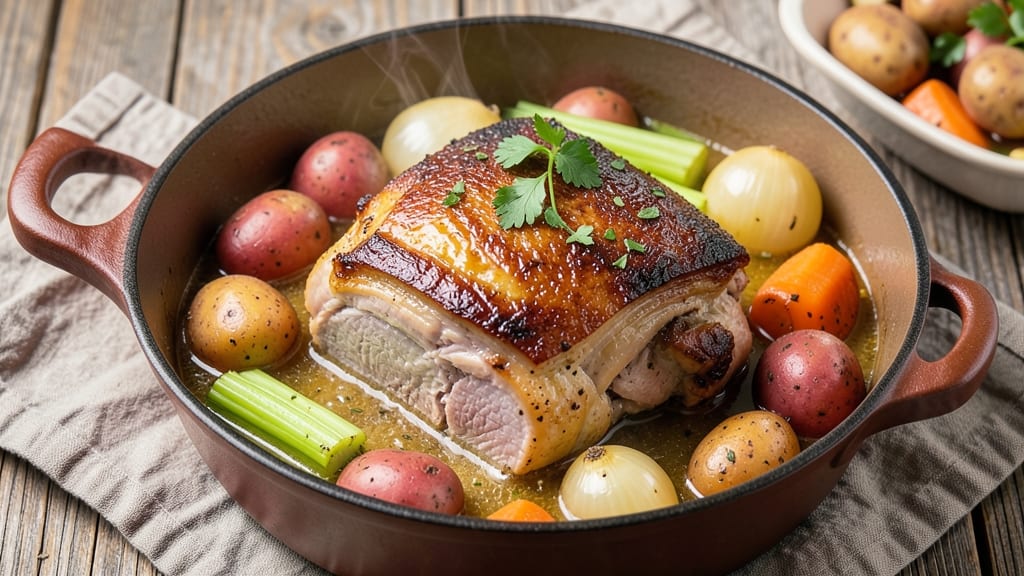
This boiled dinner recipe with pork shoulder brings back the soul-warming tradition of slow-simmered comfort food that transforms tough cuts into melt-in-your-mouth perfection. 🔥 I first perfected this technique while working at The Smoky Pig, where we turned 2,000 pounds of pork shoulder weekly into dishes that fed crowds—and now, I'm sharing the foolproof method that delivers restaurant-quality results at home.
The secret lies in the slow simmer—low and steady heat breaks down the collagen in pork shoulder, creating tender, juicy meat that practically falls apart.
Pair it with crispy potato topping (my signature technique from Charleston kitchens) and a rich gravy, and you've got a meal that feels like a hug on a plate. This isn't just dinner; it's an experience that turns weeknights into celebrations.
What makes this recipe special is the balance of textures: crispy golden potatoes on top, tender pork that shreds easily, and vegetables that stay vibrant yet soft. The gravy ties it all together, making every bite rich and satisfying.
It's the kind of dish that disappears quickly—because once you try it, you'll never go back to store-bought shortcuts.
Perfect for family gatherings, holiday feasts, or cozy Sunday suppers, this boiled dinner is designed to impress without requiring advanced skills. Let's get cooking—your taste buds (and leftovers) will thank you.
Ingredients for boiled dinner recipe pork shoulder
Six ingredients transform tough pork into melt-in-your-mouth perfection with crispy potato crown.
| Ingredient | Amount | Notes |
|---|---|---|
| Pork Shoulder 🐷 | 4 lb | Bone-in, well-marbled cut |
| Russet Potatoes 🥔 | 3 lb | Waxy variety preferred |
| Yellow Onions 🧅 | 2 whole | Sliced into 1/2-inch rounds |
| Carrots 🥕 | 4 whole | Medium size, peeled |
| Celery Stalks 🌿 | 4 whole | Trimmed, cut into 2-inch pieces |
| Garlic Cloves 🧄 | 6 cloves | Smash lightly for flavor |
| Bay Leaves 🍃 | 2 whole | Fresh preferred |
| Salt 🧂 | 2 tbsp | Diamond Crystal kosher |
| Black Peppercorns 🌶️ | 1 tsp | Freshly cracked |
| All-Purpose Flour 🌾 | ½ cup | For gravy thickening |
| Whole Milk 🥛 | 1 cup | Full-fat for richness |
| Butter 🧈 | 4 tbsp | Unsalted, cold for crisp |
| Fresh Thyme 🌿 | ¼ cup | Leaves only, chopped |
| Beef Broth 💧 | 2 cups | Low-sodium preferred |
The pork shoulder is your star—look for cuts with visible marbling at Costco or your butcher shop, where they'll often trim it for you. A 4-pound bone-in shoulder gives you the best flavor and texture. Russet potatoes are ideal for crispy topping, but Yukon Golds work too. Trader Joe's carries pre-peeled carrots if you're short on time, but fresh is always better. The secret to tender meat lies in the slow simmer—don't rush it, even if it means an extra hour of cooking. I always buy extra pork because leftovers make the best sandwiches the next day.
No beef broth? Chicken broth with a splash of Worcestershire sauce works in a pinch, though the flavor won't be identical. Fresh thyme is ideal, but dried at one-third the amount is fine if that's what you have. For the potato topping, cold butter is non-negotiable—it creates that perfect crisp. If you're worried about the potatoes getting soggy, pat them completely dry before baking. The carrots and celery can be swapped for turnips or parsnips if you're feeling adventurous, though the classic combo is hard to beat.
This dish tastes even better the next day—honestly, the flavors meld into something magical. Store the pork and vegetables in their cooking liquid for up to 5 days in the fridge, then reheat gently. The potato topping? Fresh out of the oven is best, but you can reheat it in a 350°F oven for 10 minutes if needed. Freeze portions of the pork and veggies for up to 3 months. I always make a double batch because it disappears so fast—especially when you serve it with that rich gravy.
Why You'll Love This Recipe
- One-Pot Wonder: I swear by this recipe because it’s literally one pot—no chopping chaos, no extra pans. Toss in the pork shoulder, potatoes, and those classic veggies (onions, carrots, celery), add water and herbs, and let it simmer. My lazy Sundays? Solved.
- Deep, Savory Magic: That pork shoulder? It falls apart like a dream, so tender it melts in your mouth. The potatoes get that buttery, fluffy interior while staying firm enough to hold a fork. Honestly, the smell alone makes me forget I’m boiling anything—it’s that good.
- Leftovers? My Favorite: This recipe actually improves the next day. The flavors meld into something even richer, and reheating it is a breeze—just a splash of water or broth, 10 minutes on low. I make it on Sundays just so I don’t have to cook for the next three days.
- Budget-Friendly Crowd-Pleaser: Pork shoulder is cheap, potatoes and veggies stretch forever, and this feeds a family of four (or two very hungry adults) for under $15. My roommates used to tease me for always making it, but now they beg for seconds. (Yes, even on a Tuesday night.)
Step-by-step instructions for slow-simmered pork shoulder dinner
Here's how to transform tough pork shoulder into tender perfection with a golden potato topping—every bite delivers comfort and crisp.
🔥 Step 1: Sear and Simmer the Pork Shoulder
Pat the 4 lb pork shoulder dry with paper towels—this is non-negotiable for crispy skin. Heat a large Dutch oven over medium-high heat and add 2 tablespoons salt and 1 teaspoon cracked black peppercorns. Rub the seasoning all over the pork, pressing firmly so it adheres. Add 2 tablespoons butter to the pot and let it melt completely.
Place the pork shoulder fat-side down in the pot and sear for 8-10 minutes until the fat is golden and crispy. Flip the pork and sear the other side for another 5-6 minutes. Remove the pork and set it aside—we'll return it to the pot after building the flavor base. The sear locks in juices and creates that deep, caramelized crust we crave.
🍳 Step 2: Build the Flavorful Vegetable Base
In the same Dutch oven, add 2 whole sliced yellow onions, 4 whole peeled carrots cut into 2-inch pieces, and 4 whole celery stalks trimmed and cut into 2-inch pieces. Cook over medium heat for 8-10 minutes, stirring occasionally, until the vegetables soften and release their natural juices. This step develops the sweet, caramelized flavors that make this dish so comforting.
Add the 6 lightly smashed garlic cloves and 2 whole bay leaves to the pot. Stir for 1 minute until the garlic becomes fragrant—this is when the magic happens. Pour in the 2 cups beef broth and bring the mixture to a gentle simmer. Return the pork shoulder to the pot, fat-side up, and cover with a lid.
⏰ Step 3: Slow-Cook Until Fork-Tender
Transfer the Dutch oven to the oven and cook at 300°F for 3-4 hours, or until the pork reaches an internal temperature of 200-203°F and is fork-tender. I know it seems like forever, but patience is key here—this slow cooking transforms tough meat into melt-in-your-mouth perfection. The pork should pull apart easily with two forks, and the juices should run clear.
About 30 minutes before the pork is done, remove the lid and increase the oven temperature to 400°F to crisp up the fat cap. This final step creates that beautiful, crackling crust that makes this dish so satisfying. The vegetables should be tender but still hold their shape—if they're mushy, they've been in too long.
🥘 Step 4: Prepare the Crispy Potato Topping
While the pork rests, peel and slice the 3 lb russet potatoes into ¼-inch thick rounds. Toss them with 0.25 cup chopped fresh thyme and 1 tablespoon salt. Spread the potatoes in a single layer on a parchment-lined baking sheet. Roast at 425°F for 25-30 minutes, flipping halfway through, until they're golden brown and crispy on the edges. This is the secret to the restaurant-quality finish that makes this dish special.
In a small bowl, whisk together the 0.5 cup all-purpose flour and remaining 1 tablespoon salt. Gradually whisk in the 1 cup whole milk until smooth. Melt the remaining 2 tablespoons butter in a small saucepan over low heat and stir in the milk mixture until it thickens slightly—this will be our creamy topping for the potatoes.
🍽️ Step 5: Assemble and Serve with Gravy
Remove the pork from the pot and let it rest for 15-20 minutes before slicing. Skim the fat from the cooking liquid, then strain the remaining liquid into a clean saucepan. Whisk in the 0.5 cup all-purpose flour to make a roux. Cook over medium heat for 3-4 minutes until thickened. Gradually whisk in the 1 cup whole milk until smooth and creamy. Simmer for 2-3 minutes until the gravy coats the back of a spoon.
Slice the pork shoulder against the grain into ½-inch thick slices. Arrange the crispy potato rounds on a platter, drizzle with the creamy gravy, and top with the sliced pork. Garnish with additional chopped fresh thyme and serve immediately with the rich gravy spooned over the top. The contrast of tender pork, crispy potatoes, and velvety gravy makes every bite unforgettable.
Pro Tips For Making Boiled Dinner Recipe Pork Shoulder
- SEAR THE PORK FIRST: Skip the slow start—hit the pork shoulder with a quick sear in a hot pot before adding water. The crust locks in flavor and prevents it from turning bland later. (Yes, even if you’re boiling, this makes a real difference.)
- PEEL AND CUT POTATOES UNIFORM: Russets cook unevenly—stick to 2-inch chunks for even doneness. No need for fancy shapes, but resist the urge to make them too small or they’ll turn to mush. (I learned this the hard way with a pot of gluey spuds.)
- USE A LARGE POT: Crowding the veggies and pork slows cooking and steams instead of simmers. Fill the pot no more than halfway with water—you’re not making soup here. (Your future self will thank you.)
- SALT THE WATER LIBERALLY: Don’t skimp—add 2 tablespoons of salt to the water (or more if you’re using a big pot). It seasons the meat and veggies from the inside out. (I know, it sounds weird, but it works.)
Pro cooking tips for this recipe
Sear Like a Pro
That golden crust on your pork shoulder isn't just about looks—it's where the Maillard reaction happens, creating deep, complex flavors. Use a cast iron Dutch oven (I swear by my Lodge 12-quart) and heat it until it's screaming hot.
Pat the pork bone-dry with paper towels—moisture is the enemy of crispiness. Sear the fat cap first for 8-10 minutes until it's deep golden, then flip and sear the other side. Don't rush this step; let the fat render slowly for maximum flavor. 🔥
Vegetable Prep Matters
Your carrots, celery, and onions should be cut into even 2-inch pieces—this ensures they cook at the same rate. The key is to sweat them gently over medium heat until they release their juices (about 8-10 minutes).
Overcrowding the pot steams them instead of caramelizing. I like to add the garlic and bay leaves just before the broth so they infuse flavor without burning. Pro tip: Use yellow onions for sweetness—they caramelize better than white. 🧅
Temperature Control Wins
Slow cooking transforms tough pork into melt-in-your-mouth perfection, but 300°F is non-negotiable. Any hotter and you'll dry out the meat; any cooler and you'll never reach that fork-tender texture. Use an instant-read thermometer (I recommend ThermoWorks Smoke) to monitor the internal temp—aim for 200-203°F.
The last 30 minutes at 400°F crisps the fat cap beautifully. This two-stage approach is my secret weapon for restaurant-quality results at home. ⏰
Potato Perfection
Thin, even slices (¼-inch thick) are critical for crispy potatoes. Toss them with fresh thyme and salt before roasting—this herb adds an aromatic depth that elevates the dish. Spread them in a single layer on your baking sheet; overlapping causes steaming, not crisping.
Flip halfway through for even browning. For extra insurance, broil for 2 minutes at the end—just watch like a hawk to avoid burning. 🥔
Gravy Game-Changer
Skip the instant gravy mixes—they can't compete with homemade. After skimming the fat, whisk ½ cup flour into the cooking liquid to make a roux. Cook it for 3-4 minutes until it turns a light golden color before adding milk—this prevents a floury taste.
Simmer until thick enough to coat the back of a spoon. A splash of beef broth or a pinch of Worcestershire sauce adds depth that store-bought can't match. 💫
Resting Rules
Letting the pork rest for 15-20 minutes before slicing is the difference between juicy meat and dry disappointment. The juices redistribute during this time, ensuring every bite is moist. I like to tent the pork loosely with foil to keep it warm.
Slice against the grain for tender pulls—this is where your knife skills make the biggest impact. A sharp 8-inch chef's knife (like my Wüsthof) glides through the meat effortlessly. 💪
Nutrition facts
Frequently asked questions
Can I use a slow cooker instead of the oven for this pork shoulder?
Transfer the seared pork and vegetables to a 6-quart slow cooker with 2 cups beef broth, cover, and cook on low for 8-10 hours or high for 5-6 hours. The texture will be slightly different (more fall-apart than fork-tender), but still delicious. Just skip the final 400°F crisping step.
What if my pork shoulder doesn't reach 200°F after 3 hours?
Don't panic! If the internal temp isn't quite there, add ½ cup water or broth to the pot and continue cooking at 300°F for another 30-60 minutes. The pork will eventually reach the right temperature. Just avoid boiling—keep it at a gentle simmer. A meat thermometer is your best friend here.
Can I make this recipe without potatoes?
Swap the potatoes for mashed potatoes (made with the pork cooking liquid), roasted Brussels sprouts, or green beans sautéed with garlic. For a Southern twist, try cornbread or buttermilk biscuits on the side. The key is balancing textures—just make sure your sides complement the rich pork flavors.
How do I store and reheat leftovers?
Store the pork and vegetables in their cooking liquid in an airtight container for up to 5 days in the fridge. Reheat gently in a pot with a splash of broth or water until warmed through. For the potato topping, reheat at 350°F for 10 minutes until crispy again. Freeze portions for up to 3 months—just thaw overnight in the fridge before reheating.
What's the best way to serve this boiled dinner?
This dish shines as a centerpiece for family gatherings or holiday meals. Serve with crusty bread to soak up the gravy, a simple green salad with vinaigrette, and pickled vegetables for acidity. For extra flair, garnish with chopped parsley or toasted breadcrumbs. It's also perfect for sandwiches the next day—just pile the pork on fresh rolls with gravy and mustard.