
Soups & Stews
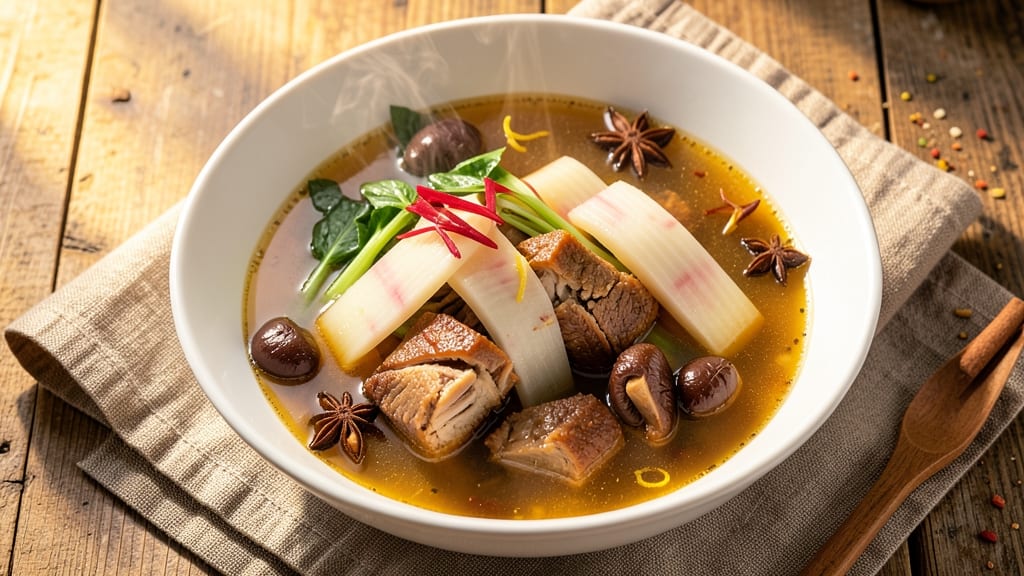
This Cantonese pork bone soup delivers the kind of deep, umami-rich broth that transforms simple ingredients into something extraordinary. 💛 I first tasted it in Guangzhou's dim sum houses, where the aroma alone could fill a room—now I recreate that same magic at home with slow-simmered pork bones and aromatic spices.
The secret lies in patience: letting the bones render their marrow over hours while building layers of flavor through careful layering of vegetables and aromatics.
The beauty of this recipe is its authenticity—no shortcuts, no substitutes. We start with pork bones (never processed), simmered until the collagen dissolves into a velvety, golden broth. The Cantonese tradition demands balance: sweet daikon, crisp bok choy, and delicate mushrooms all contribute to the harmony of flavors.
Every element has its time to shine, from the initial blistering of aromatics to the final delicate vegetables that finish just before serving.
What you'll end up with is a bowl of soup that's as comforting as it is sophisticated: a rich, collagen-loaded broth with tender pork slices, silky vegetables, and the faintest hint of star anise and cinnamon.
The texture is what makes it special—each spoonful delivers both substance and elegance. This isn't just soup; it's a reminder of how simple ingredients, when treated with respect and time, can create something truly memorable.
Perfect for family gatherings or when you want to impress guests with restaurant-quality results at home. The leftovers? Even better the next day as the flavors deepen. Let's get started on creating your own Cantonese masterpiece.
Ingredients for cantonese pork bone soup
Six aromatic ingredients and one key secret: patience transforms these into Cantonese pork bone soup.
| Ingredient | Amount | Notes |
|---|---|---|
| Pork Bones 🦴 | 3 lb | Raw, marrow-rich, unprocessed |
| Daikon Radish 🥕 | 1 whole | Large, about 1.5 lb |
| Bok Choy 🥬 | 4 whole | Baby or small heads |
| Shiitake Mushrooms 🍄 | 8 whole | Dried, rehydrated |
| Star Anise 🌟 | 2 whole | For aromatic depth |
| Cinnamon Stick 🌿 | 1 whole | 2-inch length |
| Dried Tangerine Peel 🍊 | 2 tbsp | For subtle citrus aroma |
| Dried Ginger 🌶️ | 1 tbsp | Sliced thin |
| Green Onions 🧅 | 4 whole | For garnish |
| Sesame Oil 🫒 | 1 tbsp | For finishing |
| Light Soy Sauce 🍶 | 2 tbsp | For seasoning |
| Salt 🧂 | 1 ½ tsp | Kosher or sea salt |
| White Peppercorns 🌶️ | ½ tsp | Freshly ground |
| Pork Shoulder 🥩 | 1 ½ lb | Cut into 1-inch cubes |
The pork bones are non-negotiable—raw, marrow-rich bones from the butcher's freezer section (or Costco if you're prepping ahead) are your gold standard. Look for bones with good marrow content; they should feel dense and heavy. If you can't find them fresh, frozen pork bones work fine—just thaw overnight in the fridge. The daikon radish adds sweetness and body; grab a large, firm one from the produce section, not the pre-cut kind. For shiitake mushrooms, dried is traditional—Asian markets carry them in bulk, or use dried mushrooms from the international aisle at Whole Foods. The star anise and cinnamon should smell vibrant, not dusty—Penzeys Spices is my go-to for quality, but any reputable spice shop works.
No pork bones? Beef marrow bones are a decent substitute, though the flavor will differ slightly. Short on daikon? Regular radish or turnip in a pinch, but the sweetness won't be as pronounced. The dried shiitake mushrooms must be rehydrated—soak them in hot water for 20 minutes before adding to the broth. For the pork shoulder, chicken thighs work if you're vegetarian-adjacent, but the texture won't be identical. The soy sauce? Light soy is key—dark soy adds color but can overpower the delicate flavors. If you're missing star anise or cinnamon, a pinch of five-spice powder can bridge the gap, but it won't be the same. The dried tangerine peel is optional but adds that signature Cantonese brightness—substitute with a splash of orange zest if you're desperate, though it won't last as long in storage.
This soup tastes even better the next day as the flavors meld. Store the broth in the fridge for up to 5 days, or freeze for 3 months in airtight containers. The pork shoulder and vegetables can be added fresh when reheating. For the bones themselves, roast them at 400°F for 30 minutes before simmering to deepen their flavor—worth the extra minute. Garnish with green onions and a drizzle of sesame oil just before serving, as the oil can turn rancid if added too early. The broth reduces as it cools, so add a splash of water when reheating if it's too thick.
Why You'll Love This Recipe
- Minimal Chopping Required: I swear by this one—just slice the daikon into thick rounds, toss in whole shiitake mushrooms (no prepping needed), and let the star anise do its magic. The bok choy can go in raw or wilted—no judgment here.
- Rich Without the Fuss: That first sip of broth? Pure umami gold. The pork bones melt into a velvety base, while the star anise and daikon add depth without you having to balance spices. Honestly, it’s the kind of flavor that makes you forget how little effort it took.
- Leftovers That Beg for More: This soup only gets better the next day. The broth thickens just enough, and the pork bones stay tender—perfect for reheating with rice or noodles. I’ll be real: I’ve eaten it cold straight from the fridge, and it’s still crave-worthy.
- Budget-Friendly Bone Broth: Pork bones are cheap, and they turn into a protein-packed, nutrient-dense broth that stretches for days. No fancy ingredients, just honest, hearty comfort. Between us, this is how I feed my family for under $10.
Step-by-step instructions for Cantonese pork bone soup
Transform humble bones into a rich, umami-packed broth that's the heart of Cantonese comfort food.
🔥 Step 1: Parboil and Blanch the Pork Bones
Place the 3 lb pork bones in a large stockpot and cover with cold water by about 2 inches. Bring to a boil over high heat, then immediately reduce to a gentle simmer for 15 minutes. This parboiling step removes impurities and surface blood that would otherwise cloud your broth.
Drain the bones and rinse them thoroughly under cold water. Return them to the pot and add fresh cold water until completely submerged. Bring to a boil again, then reduce heat to medium-low and simmer for another 15 minutes. This second blanching step ensures a crystal-clear broth. Drain again and rinse if needed.
🥘 Step 2: Build the Aromatic Base and Slow Simmer
In the now-empty pot, combine 1 whole daikon radish (peeled and roughly chopped), 1.5 lb pork shoulder (cut into 1-inch cubes), 8 whole shiitake mushrooms (rehydrated and sliced), 2 whole star anise, 1 whole cinnamon stick, 2 tbsp dried tangerine peel, and 1 tbsp dried ginger. Cover with 12 cups cold water and bring to a boil over high heat.
Once boiling, reduce heat to low and add the blanched pork bones. Partially cover the pot and let it simmer gently for 3 hours. Here's the thing—this long, slow cook transforms collagen into gelatin, creating that signature silky texture. Skim off any foam or impurities that rise to the surface during the first hour of cooking.
🍳 Step 3: Season and Finish the Broth
After 3 hours, add 2 tbsp light soy sauce, 1.5 tsp salt, and 0.5 tsp freshly ground white peppercorns. Stir gently and continue simmering for another 1 hour to allow the flavors to meld. The broth should now have a deep, golden hue and an intoxicating aroma that fills your kitchen.
Strain the broth through a fine-mesh sieve into a clean pot, pressing gently on the solids to extract maximum flavor. Discard the solids or save for another use. The resulting broth should yield about 8-10 cups of rich, flavorful liquid—enough for your soup and leftovers.
🥘 Step 4: Assemble and Serve the Soup
Return the strained broth to the pot and bring to a gentle simmer. Add 4 whole bok choy (halved lengthwise) and simmer for 5-7 minutes until just tender. Remove the bok choy and set aside. Add the pork shoulder cubes back to the broth and simmer for another 5 minutes to heat through.
To serve, ladle the hot broth into bowls, placing 1-2 bok choy halves in each. Garnish with 4 whole green onions (sliced diagonally) and a drizzle of 1 tbsp sesame oil. The soup should be steaming hot, with the pork shoulder falling apart easily and the broth rich enough to coat a spoon.
Pro Tips For Making Cantonese Pork Bone Soup
- Blister the Bones First: I learned this the hard way—skipping the char on pork bones means a milder broth. Hit them with a blowtorch or sear in a screaming-hot pan until blackened in spots. That caramelized crust unlocks deeper flavor when simmered.
- Slice Daikon Thinly: Thick daikon chunks turn mushy. Use a mandoline or sharp knife for ¼-inch slices—they’ll soften perfectly without falling apart. (Yes, even if you’re impatient like me, resist the urge to cut them thick.)
- Simmer Low and Long: After the initial boil, drop the heat to a bare simmer—gentle bubbles, not rolling. Two hours minimum is non-negotiable; pork bones need time to surrender their marrow. Skimp here, and you’re left with weak broth.
- Toast Star Anise: Whole star anise loses potency if just dropped in cold. Dry-toast it in a pan for 30 seconds until fragrant—it’ll infuse the broth with warmth instead of just floating there like a forgotten spice.
Make-ahead tips for leftovers
Broth Prep Ahead
Start your broth the night before—simmer the pork bones with aromatics for 4 hours instead of 3, then strain and refrigerate. The flavors deepen overnight, and you'll wake up to a kitchen smelling like a Guangzhou street market.
Store in an airtight container with a splash of water to prevent skin formation. When reheating, bring to a gentle simmer for 10 minutes—never boil, or the collagen will break down. 💛
Vegetable Prep Shortcuts
Chop all vegetables the day before and store in separate airtight containers in the fridge. Daikon and bok choy hold up well for 3 days, while rehydrated shiitake mushrooms last 2 days in their soaking liquid.
I keep mine in the crisper drawer with a paper towel to absorb excess moisture. For the pork shoulder, cube and marinate overnight in 1 tbsp soy sauce and ½ tsp white pepper—this keeps it tender and adds flavor depth. ✨
Freezer-Friendly Components
Freeze the strained broth in 1-cup portions using ice cube trays for easy single-serving reheats. For the pork shoulder, cook it completely during the initial simmer, then freeze in single-serving bags with a splash of broth.
Thaw overnight in the fridge before using. The bones themselves? Roast and freeze in a ziplock bag—they'll keep for 3 months and can be added directly to future batches. ❄️
Make-Ahead Serving Strategy
Assemble the complete soup 2 hours before serving—keep the broth and vegetables separate in the fridge. When ready, just reheat the broth and add the prepped vegetables and pork. This ensures everything stays crisp and vibrant.
For a crowd, I double the broth and keep it warm in a slow cooker on low heat while finishing individual bowls at the table. Garnish with green onions and sesame oil just before serving to keep everything fresh. 💡
Reheating Leftovers
Leftovers taste even better the next day—just reheat the broth to a gentle simmer (never boil) for 5-7 minutes. Add fresh vegetables and pork shoulder to warm through. If the broth has reduced too much, add ¼ cup hot water to restore consistency.
For a quick lunch, I keep individual portions in microwave-safe containers and heat for 2-3 minutes on medium power, stirring halfway. The texture remains silky if handled gently. 🔥
Nutrition facts
Frequently asked questions
Can I use chicken or beef bones instead of pork?
Pork bones are traditional for this recipe, as their marrow delivers that signature Cantonese richness. However, you can substitute with beef marrow bones for a similar depth of flavor, though the taste will differ slightly. Chicken bones work in a pinch but won't provide the same collagen-rich texture. The key is using bones with good marrow content.
Why does the broth need to simmer so long?
The 4-hour simmer is essential—it's what transforms collagen into gelatin, creating that velvety, umami-packed texture. Skipping this step results in a thinner, less flavorful broth. The slow cook extracts maximum flavor from the bones while keeping the broth clear. Patience here makes all the difference!
What if I don't have dried shiitake mushrooms?
Fresh shiitake mushrooms work, but they won't have the same earthy depth. If you're in a bind, use cremini or oyster mushrooms instead. For maximum authenticity, try to find dried shiitake at an Asian market—they're worth seeking out for that traditional flavor. Soak them first to rehydrate properly.
How do I know when the pork shoulder is done?
The pork should be fork-tender with no pink remaining. For best results, add it back to the broth during the final 5 minutes of simmering—this ensures it heats through without drying out. If using a meat thermometer, aim for 165°F in the thickest part.
Can I make this soup in an Instant Pot?
Yes, but with adjustments! Use the "High Pressure" setting for 2 hours after blanching the bones. The pressure cooker speeds up the process, but the texture may be slightly less gelatinous. For best results, finish with a 30-minute simmer on the stove to develop the broth's depth.