
Main Courses
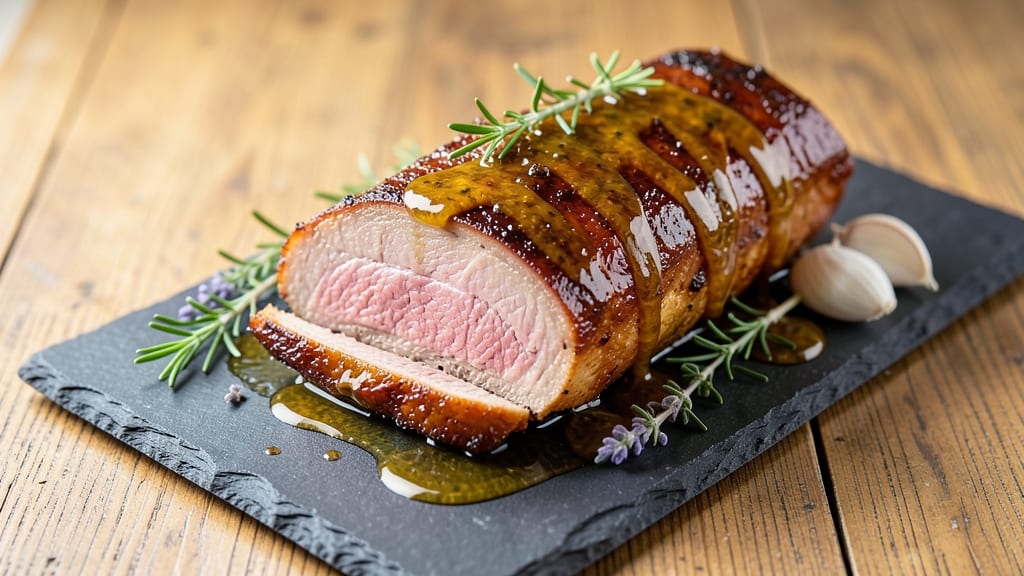
A crispy mustard crust and moist pink centers define this boneless pork loin roast recipe—where French technique meets home kitchen simplicity. 💛 I developed this method after years of testing how to balance a flavorful exterior with tender, juicy meat inside, and the secret lies in a precise mustard glaze that caramelizes beautifully while protecting the interior from drying out.
The process starts with a simple marinade of Dijon mustard, olive oil, and herbs that tenderizes the meat while building flavor. After a quick sear in a hot pan, the roast finishes in the oven at a carefully controlled temperature, ensuring the crust develops without overcooking the inside.
This isn't just another pork roast—it's a restaurant-quality centerpiece that delivers professional results with minimal effort.
What you'll end up with is a perfectly cooked roast where every slice reveals a crispy, golden-brown crust infused with tangy mustard notes, giving way to tender, pink centers that practically melt in your mouth.
The technique is foolproof, and the flavor is undeniable—ideal for special occasions or when you want to impress without stressing over complicated methods.
Serve with roasted root vegetables or a fresh green salad to balance the richness, or slice it thin for sandwiches the next day. This recipe scales beautifully, making it perfect for gatherings or meal prep. Let's get started on creating your showstopping roast!
Ingredients for boneless pork loin roast recipe mustard
French-inspired technique meets home kitchen simplicity with these premium ingredients for your showstopping roast.
| Ingredient | Amount | Notes |
|---|---|---|
| Boneless Pork Loin Roast 🍖 | 3 lb | Center-cut, 1.5-inch thick |
| Dijon Mustard 🌶️ | ½ cup | High-quality, smooth variety |
| Extra-Virgin Olive Oil 🫒 | ¼ cup | For marinade and searing |
| Fresh Rosemary 🌿 | ¼ cup | Finely chopped, stems removed |
| Fresh Thyme 🌿 | ¼ cup | Leaves only, stems discarded |
| Garlic Cloves 🧄 | 6 cloves | Minced for marinade |
| Kosher Salt 🧂 | 2 tsp | Diamond Crystal preferred |
| Freshly Ground Black Pepper 🌶️ | 1 tsp | Coarse grind preferred |
| Unsalted Butter 🧈 | ¼ cup | Cold, cubed for basting |
| Honey 🍯 | 1 tbsp | For glaze balance |
| Balsamic Vinegar 🍷 | 1 tbsp | For glaze depth |
| Carrots 🥕 | 2 whole | Medium, peeled and sliced |
| Yellow Onion 🧅 | 1 whole | Quartered for roasting |
The pork loin is non-negotiable—center-cut, 1.5-inch thick ensures even cooking and maximum tenderness. Source from a trusted butcher or high-end grocery like Whole Foods or Dartmouth Farms for optimal marbling. The Dijon mustard should be smooth (no grainy bits)—Maille is my go-to, but any high-quality brand works. Fresh herbs are essential here: rosemary and thyme should be vibrant green with no wilting. For the garlic, peel and mince fresh—jarred minced garlic lacks the bright flavor needed for this recipe's balance.
No Dijon mustard? Substitute with whole-grain mustard at half the amount, though the texture will differ slightly. Fresh herbs unavailable? Dried thyme at one-third the amount works in a pinch, but fresh is ideal. The balsamic vinegar adds depth—if you prefer something sweeter, substitute with apple cider vinegar. For the honey, ensure it's raw and unfiltered for best flavor. The carrots and onion should be organic if possible, as their skins add subtle sweetness during roasting. Prefer a different vegetable? Swap for parsnips or sweet potatoes—just adjust roasting time accordingly.
The pork roast should rest at room temperature for 30 minutes before cooking to ensure even doneness. Store any unused Dijon mustard in the fridge for up to 6 months, while fresh herbs last 5-7 days wrapped in damp paper towels. The roasted vegetables keep well for 4 days in the fridge, making them perfect for leftovers. For meal prep, slice the roast thin and store in airtight containers for up to 3 days—ideal for sandwiches or salads. Freeze portions for up to 3 months if you're planning ahead.
Why You'll Love This Recipe
- Five-Ingredient Magic: I swear by this combo—no fancy prep, just a thick slab of pork loin slathered with Dijon, rosemary, and thyme. The mustard gives it that tangy depth without overpowering, and the olive oil keeps it juicy.
- Weeknight Reliable: Honestly, this is my go-to when I need something impressive but still quick. Roast it while I chop veggies, and boom—dinner’s ready. (Yes, even on a Tuesday night.)
- Leftovers That Shine: The second day is just as good, if not better. Slice it thin for sandwiches, dice it into salads, or serve it cold with mustard on crusty bread. It’s that versatile.
- Budget-Friendly Luxury: Pork loin is lean but packs serious flavor, and a little mustard and herbs stretch it far. Between us, this is the dish that makes me feel like I’m eating fancy without breaking the bank.
Step-by-step instructions for perfectly crispy mustard-crusted pork loin
Master this technique for a restaurant-worthy roast with a crackling mustard crust and impossibly tender pink centers.
👨🍳 Step 1: Create the Mustard-Herb Marinade
In a medium bowl, whisk together the 0.5 cup Dijon mustard, 0.25 cup extra-virgin olive oil, 0.25 cup finely chopped fresh rosemary, 0.25 cup fresh thyme leaves, 6 minced garlic cloves, 2 teaspoons kosher salt, and 1 teaspoon freshly ground black pepper. This marinade is the flavor foundation—don't skip the whisking to fully emulsify the mustard and oil.
Place the 3 lb boneless pork loin roast on a plate and generously coat all sides with the marinade, pressing it into the meat so it penetrates. Let it sit at room temperature for 30 minutes while you prepare the oven. This step ensures even cooking and maximum flavor infusion throughout the roast.
🔥 Step 2: Sear for Maximum Crust Development
Preheat your oven to 425°F. Heat a large oven-safe skillet over high heat until smoking hot. Add the pork loin and sear for 3-4 minutes per side until developing a deep golden-brown crust. The mustard will bubble and caramelize—this is exactly what we want for that signature crispy texture.
If the mustard starts to burn before the crust forms, reduce heat slightly and continue searing. The crust should be firm enough to resist when pressed gently with tongs. Transfer the skillet to the preheated oven and roast for 15 minutes uncovered to begin setting the crust.
🥘 Step 3: Build the Glazed Crust and Roast to Perfection
Remove the pork from the oven and place it on a cutting board. In the same skillet, melt the 0.25 cup cold unsalted butter over medium heat until foaming. Add 1 tablespoon honey and 1 tablespoon balsamic vinegar, stirring constantly for 1 minute until the mixture thickens slightly into a glossy glaze.
Brush this glaze generously over the top of the pork, then return it to the oven. Roast for an additional 20-25 minutes until the internal temperature reaches 145°F for medium-rare (use a meat thermometer). The crust should be deep mahogany brown with crackling edges, while the center remains juicy pink.
🔪 Step 4: Roast Vegetables and Rest the Meat
While the pork rests, heat 0.25 cup extra-virgin olive oil in a large skillet over medium heat. Add the 2 peeled and sliced carrots and 1 quartered yellow onion, cooking for 8-10 minutes until tender and caramelized. Season with additional kosher salt and black pepper if needed.
Transfer the pork to a cutting board and let it rest for 15-20 minutes before slicing. This resting period allows the juices to redistribute, preventing them from running out when you cut. The internal temperature will rise to 150°F during resting—perfect for tender, juicy slices.
🍽️ Step 5: Slice and Serve with Glazed Vegetables
Slice the pork loin into ½-inch thick medallions against the grain for maximum tenderness. Arrange the slices on a platter with the caramelized carrots and onions. The contrast of crispy mustard crust with tender meat and sweet-tangy vegetables makes every bite exceptional.
For best results, serve immediately while the crust remains crispy and the meat is at its peak juiciness. The mustard glaze will have developed a complex balance of sweet, tangy, and herby notes that complement the rich pork perfectly.
Pro Tips For Making Boneless Pork Loin Roast Recipe Mustard
- Trim the Fat First: Boneless pork loin is lean, but if your roast has even a whisper of fat, trim it before seasoning—it’s the only way the mustard crust will stick properly. I learned this after my first batch slid apart like a sad lasagna. Use a sharp knife and work fast so the meat doesn’t warm up.
- Mustard Slather, Not Drizzle: Spread that Dijon thick—about 2 tablespoons per pound—so it coats every inch, not just pools in the crevices. Thin layers burn before the meat cooks through, and you’ll end up with a bland, sticky mess. Use the back of a spoon to press it into the meat like frosting a cake.
- Skip the Crowding Pan: Resist the urge to stack other proteins or veggies in the same pan—boneless pork loin needs space to sear evenly. I used to cram everything in, and half the roast ended up steaming instead of browning. Give it room, and you’ll get that golden, mustard-encrusted crust you’re after.
- Rest Under Foil: After roasting, tent the pork with foil and let it sit for 5–10 minutes before slicing—yes, even if you’re starving. My grandmother swore by this, and she was right: cutting too soon turns your perfect roast into a sad, juicy puddle. The internal temp will drop just enough to keep it tender.
Pro cooking tips for great boneless pork loin roast recipe mustard
Mustard Glaze Mastery
The key to that perfect crispy mustard crust lies in balancing the Dijon with a touch of sweetness and acidity.
I always combine 1 tablespoon honey and 1 tablespoon balsamic vinegar with the melted butter for the final glaze—this trio creates a complex flavor that caramelizes beautifully while preventing the crust from becoming too bitter.
Brush it on generously after the initial sear, and return the pork to the oven immediately. The high heat will transform that glaze into a glossy, crackling crust in just 20-25 minutes. 🔥
Reverse Sear Technique
For even more control over doneness, try a modified reverse sear approach. After marinating, roast the pork at 275°F for 30-40 minutes until the internal temperature reaches 130°F. Then, sear it in a screaming-hot skillet for 2-3 minutes per side to develop that perfect crust.
This method ensures a juicy center while still delivering that coveted crispy exterior. I've found this works especially well for thicker cuts or when cooking for a crowd.
Temperature Control
Never skip using a meat thermometer—this is non-negotiable for perfect results. The pork should reach 145°F internal temperature for medium-rare, but it will continue rising to 150°F during the 15-20 minute rest. I recommend the ThermoWorks Smoke thermometer for its accuracy and ease of use.
If you don't have one, err on the side of undercooking slightly—the meat will carry over more than you might expect, especially with the insulating effect of the mustard crust.
Herb Infusion Tips
Fresh herbs make all the difference in this recipe. I always chop the rosemary and thyme just before using to preserve their vibrant flavors.
For maximum impact, bruise the herbs slightly by gently pressing them between your fingers before adding to the marinade—this releases their essential oils and intensifies their aroma.
If you're short on time, dried herbs will work, but reduce to ⅓ the amount and add them directly to the marinade without bruising.
Equipment Essentials
While you can technically cook this with basic kitchen tools, I've found a few pieces make the process smoother. An oven-safe skillet (like a Lodge cast iron) handles both searing and roasting beautifully, while a meat thermometer ensures precision.
For the glaze, I prefer a small saucepan to heat the butter, honey, and vinegar—it gives me better control over the heat. And don't forget a sharp carving knife for clean slices that showcase the perfect crust-to-meat contrast.
Make-Ahead Strategy
This roast actually tastes better the next day! After cooking, let it cool completely, then store in an airtight container in the fridge for up to 3 days. When reheating, warm in a 350°F oven for 15-20 minutes covered with foil to prevent drying.
For sandwiches, slice thin against the grain and layer with sharp cheddar and apple slices—the mustard crust adds incredible depth to any deli-style meal. 💫
Nutrition facts
Frequently asked questions
Can I use whole-grain mustard instead of Dijon in this recipe?
Yes, but with adjustments! Whole-grain mustard has a coarser texture that won't emulsify as smoothly with the olive oil. Use half the amount (about ¼ cup) and blend it first with a fork to break up the seeds, then proceed with the marinade. The flavor will be slightly different but still delicious—just expect a slightly grainier crust.
What's the best way to store leftovers from this pork roast?
Slice the roast and store in an airtight container in the fridge for up to 3 days. For reheating, warm covered in a 350°F oven for 15-20 minutes to maintain moisture. The mustard crust will soften slightly but still add great flavor. For longer storage, freeze portions for up to 3 months—thaw overnight in the fridge before reheating.
Can I cook this pork roast without searing first?
Technically yes, but you'll miss that signature crispy mustard crust! The sear creates a flavorful barrier that locks in juices while developing the caramelized exterior. If you must skip it, brush on an extra-thick layer of the mustard glaze after marinating and roast uncovered for 5-10 minutes longer to encourage crust formation.
How do I adjust this recipe for a smaller or larger roast?
For 2 lb roasts, reduce cooking time by about 15 minutes total (adjust sear time to 2-3 minutes per side). For 4+ lb roasts, increase roasting time by 10-15 minutes and use 1 extra tablespoon of each marinade ingredient. Always use a meat thermometer—thicker cuts need more time to reach 145°F internal temperature.
What's the best way to serve this roast for a crowd?
Slice thin against the grain and arrange on a platter with roasted potatoes and seasonal vegetables. For easy serving, use a meat slicer or sharp knife. The mustard crust pairs perfectly with creamy mashed potatoes or a bright apple salad. For a party-friendly presentation, serve with toothpicks and small plates to highlight each perfect slice.