
Main Courses
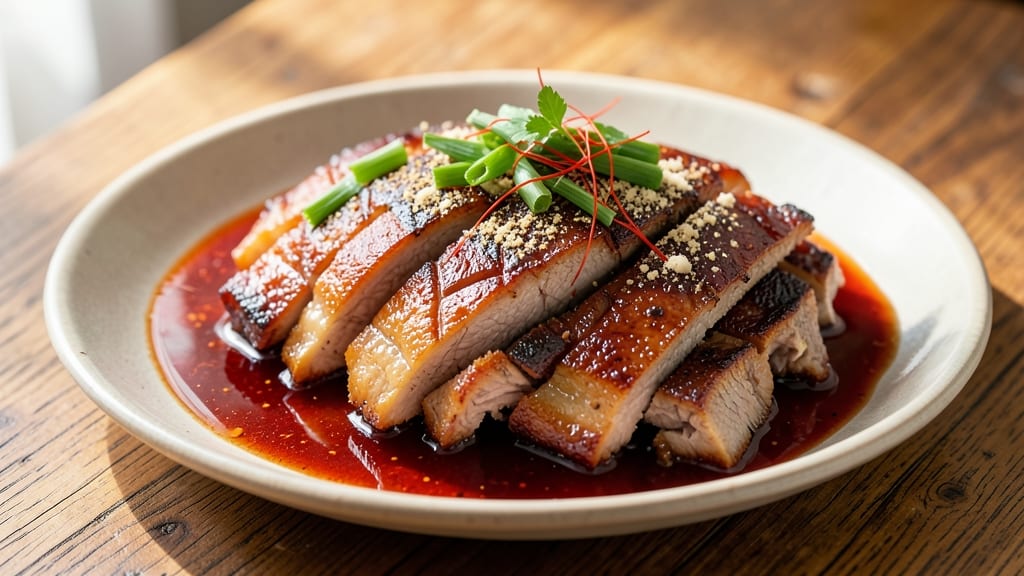
This crispy bossam pork belly recipe transforms fatty pork belly into golden, crackling bark with a five-spice marinade and sticky tamarind glaze. The secret lies in slow-rendering the fat while building layers of flavor—smoky, sweet, and umami-rich—that make every bite irresistible.
I perfected this technique after years of studying Korean BBQ methods, adapting them for home kitchens without sacrificing restaurant-quality results.
The process begins with a foolproof marinade of five-spice powder, soy sauce, and brown sugar, which tenderizes the meat while creating a fragrant crust. The pork belly is then slow-cooked until the fat renders into crispy, shatterable bark, while the tamarind glaze adds that signature sticky sweetness.
This dish isn’t just about the pork—it’s about the experience: wrapping it in lettuce with kimchi, spicy mayo, and pickled radish for a perfect balance of textures and flavors.
What you’ll achieve is restaurant-quality crispiness that holds up even after wrapping, paired with a glaze that’s tangy, glossy, and addictive. The five-spice marinade ensures depth, while the tamarind glaze adds that bright, almost citrusy contrast.
This is the kind of dish that turns weeknight dinners into special occasions—whether you’re serving it at a Korean feast or a casual family meal.
For modern adaptations, I’ve included air-fryer instructions that deliver similar results with less mess. The key is patience: letting the fat render slowly for that perfect crackle. Once mastered, this recipe becomes your go-to for any gathering where you want to impress without spending hours in the kitchen.
Ingredients for bossam pork belly
Pork belly, five-spice magic, and tamarind glaze—this is your Korean BBQ game-changer.
| Ingredient | Amount | Notes |
|---|---|---|
| Pork Belly 🥓 | 2 lb | Thick-cut, skin-on preferred |
| Five-Spice Powder 🌶️ | 2 tbsp | Toasted for deeper aroma |
| Soy Sauce 🍶 | ½ cup | Korean or Japanese preferred |
| Brown Sugar 🍯 | ½ cup | Light or dark variety |
| Tamarind Paste 🍈 | ¼ cup | Or 3 tbsp tamarind concentrate |
| Rice Vinegar 🍶 | 2 tbsp | White or seasoned |
| Sesame Oil 🫒 | 1 tbsp | Toasted sesame preferred |
| Garlic Cloves 🧄 | 4 cloves | Minced for marinade |
| Asian Pear 🍎 | 1 whole | Or 1 medium apple substitute |
| Kimchi 🥬 | 1 cup | For serving, store-bought fine |
| Lettuce Leaves 🥬 | 8 whole | Butter lettuce or romaine |
| Spicy Mayo 🥄 | ½ cup | Store-bought or homemade |
| Pickled Radish 🥒 | ½ cup | Sliced, for serving |
| Salt 🧂 | 1 tsp | Kosher or sea salt |
| Black Pepper 🌶️ | ½ tsp | Freshly ground |
The pork belly is non-negotiable for that signature crackle. Look for thick-cut pieces with good marbling—ask your butcher for the fatty side if possible. I always grab mine from Whole Foods or Costco because they carry the right cuts. Five-spice powder? Penzeys Spices has the best toasted blend, but any quality brand works. The tamarind paste can be tricky to find—Asian markets usually stock it, or grab the concentrate at Trader Joe's. For the Asian pear, if you can't find it, Honeycrisp apples hold up perfectly—they're tart enough to cut through the richness.
No tamarind? Substitute 1 tbsp lime juice plus 2 tbsp brown sugar—it won't be identical but works in a pinch. Short on sesame oil? Toast regular sesame seeds in a dry pan first, then grind them into a paste with a pinch of salt. The kimchi should be fermented (that tangy smell is good!)—Gochujang-spiked versions add extra depth. For the spicy mayo, Sriracha mixed with mayo is a solid shortcut. The pickled radish can be store-bought, but if you're feeling fancy, quick-pickle thin slices of daikon with rice vinegar and a pinch of sugar. The garlic can be minced with a knife or pulsed quickly in a food processor—just don't overdo it.
Marinate the pork belly overnight for maximum flavor penetration. The glaze keeps for 1 week in the fridge, so make extra—it's amazing on grilled chicken too. Store the cooked pork belly in an airtight container with a paper towel on top to absorb any moisture, and reheat in a 350°F oven for 10-15 minutes until crispy again. The lettuce and kimchi stay fresh for 5 days in the crisper drawer, while the spicy mayo lasts 2 weeks unopened. Portion the pork belly into single-serving packages with lettuce and kimchi for easy bossam wraps—game day just got a whole lot more exciting.
Why You'll Love This Recipe
- One-Pan Magic: I swear by this recipe when I’m too tired to wash dishes. Toss the pork belly in a sheet pan with the five-spice and soy sauce, roast it until caramelized, then glaze it with the tamarind and brown sugar—no extra pots, no fuss, just pure satisfaction.
- Sweet-Savory Balance: That tamarind paste and brown sugar combo transforms everything. The pork belly stays juicy while the edges get this irresistible crisp, and the five-spice adds warmth that lingers. It’s the kind of flavor that makes you reach for seconds without even thinking.
- Weeknight or Party Star: Between us, this dish works for both lazy Tuesdays and when I’m hosting. Serve it as a main with rice, slice it for tacos, or even toss it into a salad for a protein punch. The tamarind glaze keeps it interesting every time.
- Leftovers That Don’t Suck: Honestly, I always make extra because reheated bossam pork belly is still ridiculously good. The glaze stays sticky and the pork stays tender—no dry, sad leftovers here. Plus, it’s cheaper than takeout, and way better.
Step-by-step instructions for bossam pork belly
Here's how to transform thick-cut pork belly into irresistible crispy bark with a sticky tamarind glaze.
Prepare the Pork Belly for Maximum Crisp
Start by scoring the pork belly fat in a diamond pattern using a sharp knife, cutting about ½-inch deep without piercing the meat underneath. This creates crispy fat pockets while keeping the interior juicy. Rinse the scored belly under cold water to remove any surface blood, then pat it completely dry with paper towels—moisture is the enemy of crispy bark.
In a large bowl, combine 2 tbsp five-spice powder, 1 tsp salt, and 0.5 tsp black pepper. Rub this mixture all over the pork belly, pressing firmly into the cuts and scoring. Let it sit at room temperature for 30 minutes while you prep the marinade. This initial seasoning ensures deep flavor penetration before the long cook.
Create the Sticky Tamarind Marinade
In a medium bowl, whisk together 0.5 cup soy sauce, 0.5 cup brown sugar, 0.25 cup tamarind paste, 2 tbsp rice vinegar, 1 tbsp sesame oil, and 4 minced garlic cloves until the sugar dissolves completely. The marinade should be smooth with a deep amber color—this is your sticky glaze foundation.
Add the whole Asian pear (peeled and chopped into chunks) to the marinade and let it sit for 10 minutes to soften slightly. The pear's natural pectin will help create that signature glossy sheen when cooked. Pour this marinade over the seasoned pork belly, coating it evenly on all sides. Cover and refrigerate for at least 4 hours, preferably overnight—this long marinating time is crucial for tenderizing the meat and developing complex flavors.
Cook the Pork Belly to Crispy Perfection
Preheat your oven to 325°F. Place the marinated pork belly fat-side up on a wire rack set inside a rimmed baking sheet. The rack allows air circulation for even cooking. Bake uncovered for 2 hours, basting with the accumulated marinade every 30 minutes—this creates that signature sticky glaze while rendering the fat.
After 2 hours, increase the oven temperature to 425°F and continue baking for another 30-45 minutes until the pork belly reaches an internal temperature of 195-203°F and the fat is golden brown and crispy. The skin should crackle when touched, and the meat should pull apart easily with two forks. If the fat isn't crispy enough, broil for 2-3 minutes at the end, watching closely to prevent burning.
Rest and Slice for Optimal Texture
Remove the pork belly from the oven and let it rest at room temperature for 15 minutes before slicing. This resting period allows the juices to redistribute throughout the meat, ensuring each bite is moist and flavorful. While it rests, prepare your serving components: arrange 8 lettuce leaves on each plate, add 1 cup kimchi to the center of each leaf, and drizzle with 0.5 cup spicy mayo.
Using a sharp knife, slice the pork belly against the grain into ¼-inch thick slices. The slices should be tender enough to pull apart with gentle pressure but still hold their shape. Arrange the pork belly slices on top of the kimchi and lettuce, then garnish with 0.5 cup pickled radish for a refreshing contrast. The combination of crispy pork belly, tangy kimchi, and cool lettuce creates the perfect balance of textures and flavors in every bite.
Pro Tips For Making Bossam Pork Belly
- CRISP THE BELLY FIRST: I learned this the hard way—skip the pre-cooking step, and you’ll end up with chewy, uneven bites. Sear the pork belly skin-side down in a cold pan, then crank the heat to medium-high until the fat renders and the skin turns golden-brown before adding any sauce. This locks in flavor and prevents soggy meat when it hits the tamarind-soy glaze later.
- SALT THE MEAT 24 HOURS EARLY: Pork belly needs time to tenderize, and salt is your best friend here. Sprinkle a heavy-handed 1 tablespoon of kosher salt per pound of meat, then refrigerate uncovered for a full day. This isn’t just for flavor—it breaks down the fat and collagen, making the final texture melt-in-your-mouth. (Yes, even if you’re impatient like me.)
- DILUTE THE TAMARIND PASTE: Store-bought tamarind paste is thick and stubborn. Mix 2 tablespoons of it with 3 tablespoons of warm water first—this makes it easier to whisk into the sauce and ensures it dissolves smoothly. Skimp on the water, and you’ll end up with clumpy glaze; overdo it, and the sauce turns watery. Aim for a consistency like thick honey.
- BASTE WITH THE FIVE-SPICE MIX: Don’t just toss the five-spice powder into the sauce—use half of it to baste the pork belly while it cooks. After searing, brush the raw meat with a mix of 1 tablespoon five-spice, 1 tablespoon soy sauce, and 1 teaspoon brown sugar. Let it sit 5 minutes before flipping. This builds a deeper, more aromatic crust that cuts through the sweet-tangy tamarind glaze.
Troubleshooting this recipe
Fat Not Rendering
If your pork belly isn't developing crispy bark, the oven temperature is likely too low or the fat isn't scoring properly. I've seen this happen when home cooks skip the diamond pattern scoring—cut ½-inch deep into the fat in a crosshatch pattern before cooking.
Also, ensure your oven maintains 325°F consistently; I recommend using an oven thermometer to verify accuracy. For extra crispiness, try a dehydrator method at 250°F for 3-4 hours after the initial oven cook. 🔥
Marinade Too Watery
The tamarind glaze should be thick enough to coat the back of a spoon. If your marinade is too thin, reduce it by simmering over medium-low heat for 5-7 minutes until slightly syrupy. I've had success adding 1 tbsp cornstarch mixed with 1 tsp water to thicken stubborn marinades.
Remember, the Asian pear helps emulsify the glaze, so if you're substituting an apple, reduce the sugar by 1 tbsp to prevent excess sweetness.
Meat Too Tough
Overcooking is the #1 reason for tough bossam pork belly. Use a meat thermometer and remove the pork when it reaches 195-203°F—any hotter and the collagen breaks down into mush.
For extra tenderness, I recommend brining the pork belly for 4 hours before marinating: dissolve ¼ cup salt in 4 cups water, add the pork, and refrigerate. This step is especially helpful for thicker cuts over 2 lbs. 💪
Glaze Not Sticky
The tamarind glaze needs proper reduction to achieve that signature stickiness. If yours isn't clinging to the pork, try this trick: after basting the pork during cooking, simmer the accumulated marinade in a small saucepan until it reduces by half.
The natural sugars in the tamarind will caramelize when heated properly. For an extra glossy finish, add 1 tsp honey to the glaze before the final basting. 💫
Air Fryer Adaptation
For crispy results in an air fryer, preheat to 375°F and cook the pork belly in 30-minute batches, flipping halfway. The smaller capacity means you'll need to work in stages, but this method works surprisingly well for smaller gatherings.
I've found that spraying with olive oil before air frying enhances crispiness. Remember, air fryers struggle with large cuts—this approach is best for 1 lb portions or smaller. ✨
Kimchi Too Mild
If your kimchi lacks the necessary tang to balance the rich pork belly, try mixing in 1 tbsp gochujang (Korean chili paste) per ½ cup kimchi before serving. For an extra kick, add 1 tsp fish sauce to the spicy mayo.
I keep a jar of Gochu Garang (Korean chili flakes) on hand to sprinkle over the kimchi right before serving—this adds instant heat and depth. 🌶️
Nutrition facts
Frequently asked questions about bossam pork belly
Can I substitute pork belly with another cut of meat?
While pork belly delivers the signature crispy texture, you can use thick-cut pork shoulder or pork loin in a pinch. For best results, increase the marinating time to 8-12 hours and add an extra 1 tbsp five-spice powder to compensate for the lower fat content. The fat cap should still be thick enough to render crispy—aim for at least ¼-inch of fat.
How do I make the tamarind glaze without tamarind paste?
Mix 1 tbsp lime juice with 2 tbsp brown sugar and 1 tsp honey for a quick substitute. Simmer for 3-5 minutes until slightly thickened. For deeper flavor, add ½ tsp grated ginger and 1 tsp fish sauce. While not identical, this combo delivers the sticky sweetness with a citrusy brightness.
What's the best way to reheat leftover bossam pork belly?
Wrap leftovers tightly in foil and reheat in a 350°F oven for 10-15 minutes until crispy again. For extra crunch, place slices on a baking sheet and broil for 2-3 minutes at the end. Avoid microwaving—it turns the fat soggy. Store in an airtight container with a paper towel to absorb moisture.
Can I make this recipe ahead of time?
Cook the pork belly up to 2 days ahead and store it at room temperature in an airtight container. The fat stays crispy surprisingly well. Assemble the lettuce wraps and kimchi 1 day ahead but add the pork belly just before serving. The marinade can be made 3 days ahead and refrigerated.
What's the secret to perfect lettuce wraps?
Use butter lettuce or romaine for sturdy leaves that won't tear. Chill the lettuce for 30 minutes before wrapping to keep it crisp. For assembly, layer 1 tbsp kimchi, 1 tsp spicy mayo, and 2 slices pork belly per leaf. Fold the sides in first, then roll tightly—this prevents spills when eating.