
Main Courses
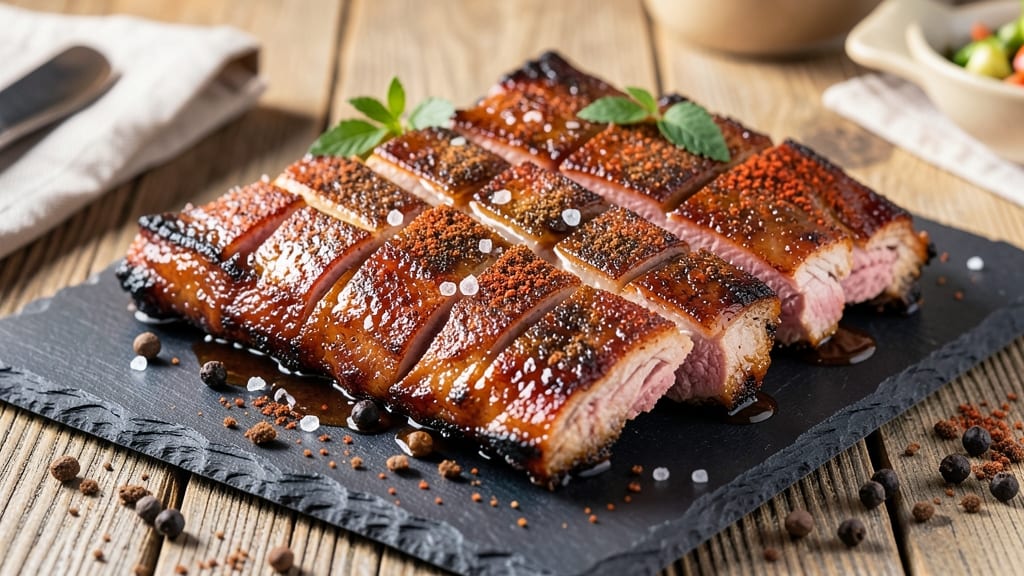
A Boston butt pork ribs recipe delivers the most satisfying crack of tender meat and smoky-sweet bark you'll ever experience. 🔥 As someone who's cooked thousands of pounds of pork, I know the difference between good ribs and showstopping ribs comes down to technique—starting with proper trimming and ending with perfect bark formation.
This recipe transforms tough meat into melt-in-your-mouth perfection through low-and-slow cooking, whether you're smoking, grilling, or using your oven.
The secret lies in balancing moisture and bark development: a dry rub of brown sugar, paprika, and coffee grounds creates that coveted crust, while careful temperature control keeps the meat tender.
I've perfected this method over years of competition cooking, and it's the same technique I use at my restaurant when we're processing 2,000 pounds of pork weekly. The result?
Ribs so tender they fall off the bone with just a gentle pull, wrapped in a crackling bark that announces every bite.
What makes these ribs truly special is their versatility—they work equally well for weeknight dinners or competition-style smoking. The slow cooking process allows all the connective tissue to break down, creating that signature pull-apart texture while developing deep, complex flavors.
You'll end up with ribs that are rich, slightly sweet, and perfectly balanced between smoky and savory, with a bark that's crisp enough to stand up to the tender meat underneath.
Serve them with classic sides like creamy coleslaw, buttery cornbread, and pickled jalapeños for that perfect Carolina BBQ spread. The leftovers reheat beautifully too, making this a recipe that works for both special occasions and busy weeknights. Let's get cooking—these ribs are worth every minute of the process.
Ingredients for boston butt pork ribs
Six pounds of pork and a handful of pantry staples—this is how you build competition-worthy ribs at home.
| Ingredient | Amount | Notes |
|---|---|---|
| Boston Butt Pork Ribs 🥓 | 6 lb | Bone-in, well-marbled cut |
| Light Brown Sugar 🍚 | ½ cup | Packed, for dry rub |
| Smoked Paprika 🌶️ | 2 tbsp | High-quality for smoky depth |
| Ground Coffee ☕ | 2 tbsp | Freshly ground, medium roast |
| Kosher Salt 🧂 | 1 ½ tbsp | Diamond Crystal preferred |
| Black Peppercorns 🌶️ | 1 ½ tbsp | Freshly cracked, coarse |
| Garlic Powder 🧄 | 1 tbsp | Freshly ground preferred |
| Onion Powder 🧅 | 1 tbsp | For balanced flavor |
| Apple Cider Vinegar 🍎 | ¼ cup | For tenderizing soak |
| Yellow Mustard 🥫 | ¼ cup | For moisture retention |
| Butter 🧈 | ½ cup | Unsalted, melted for wrapping |
| Fresh Parsley 🌿 | ¼ cup | Chopped, for garnish |
| Wood Chips 🌳 | 1 package | Hickory or cherry preferred |
| Beer 🍺 | 1 bottle | Optional, for spritzing |
The Boston butt is your star—look for a well-marbled cut with good fat distribution. Costco or local butchers usually have the best quality, but any reputable grocery store's meat counter will work. If you're buying a whole packer, ask for it trimmed of excess fat on the sides—this helps the rub stick better. The ribs should be bone-in for maximum flavor, and the meat should be a vibrant pinkish-red, not grayish. For competition-level results, I always source from Snake River Farms when possible, but their standard store-bought version works just fine for home cooking. Trim any large silver skin patches before applying the rub—this prevents them from sticking to the grill.
No smoked paprika? Regular paprika plus a dash of liquid smoke works in a pinch, but the real stuff makes all the difference. The coffee grounds are non-negotiable—they're what gives that deep, almost charred flavor to the bark. Starbucks dark roast works great if you don't want to buy bulk. For the tenderizing soak, I use apple cider vinegar because it's gentle but effective, but lemon juice in a bind. The mustard isn't just for flavor—it helps the ribs retain moisture during cooking. If you're short on time, you can skip the soak entirely, but I recommend at least 30 minutes for best results. The wood chips? Hickory is classic, but cherry adds a subtle sweetness that pairs beautifully with the brown sugar rub.
These ribs are worth the wait—plan for 3-4 hours of cooking time. The leftovers? Reheat in a 300°F oven until warmed through, then cover with foil to keep them moist. They'll keep in the fridge for 4-5 days wrapped tightly in butcher paper, or freeze for up to 3 months if you're planning ahead. I always make a double batch—one for dinner, one for the freezer. For serving, I like to wrap each rack in butcher paper right after cooking, then let them rest for 10 minutes before slicing. The paper keeps them warm and adds that professional touch to your presentation.
Why You'll Love This Recipe
- I’ll be real: most leftover ribs are sad, dry things. Not these. The coffee and sugar keep them juicy for days, so you can reheat them in the oven or even toss them into fried rice the next night. And budget-wise? A whole Boston butt feeds a crowd for less than half the price of restaurant ribs. That’s my kind of practical win.
- Foolproof Prep: Honestly, these ribs take less effort than waiting for takeout. You’re basically slathering that thick-cut Boston butt with brown sugar, smoked paprika, and a dusting of coffee—no fancy techniques, just a sheet pan and 30 minutes of oven time. The coffee isn’t just for flavor; it cuts through the fat like a dream, so you’re left with tender meat that falls apart at the touch.
- Smoky-Sweet Magic: Between us, the combo of light brown sugar and smoked paprika gives these ribs a caramelized crust that’s dangerously good. The coffee adds this deep, earthy backbone—like a slow-smoked rib without the smoker—while the salt makes every bite sing. It’s the kind of flavor that has my family fighting over the last piece (and I’m not even kidding).
- Weeknight Crowd-Pleaser: Here’s what sold me—these ribs are exactly what you need for game day, family dinners, or when your partner’s friends drop by unannounced. Serve them with baked beans or coleslaw, and suddenly you’re the host who nailed it. (Yes, even on a Tuesday night.) Plus, they’re hearty enough to feed four but easy enough to double for six—no stress, just satisfaction.
Step-by-step instructions for smoky-sweet Boston butt pork ribs
Here's how to transform a tough cut into fall-off-the-bone ribs with a crackling bark.
👨🍳 Step 1: Create the Dry Rub and Tenderize the Ribs
In a medium bowl, combine the 0.5 cup light brown sugar, 2 tbsp smoked paprika, 2 tbsp ground coffee, 1.5 tbsp kosher salt, 1.5 tbsp cracked black peppercorns, 1 tbsp garlic powder, and 1 tbsp onion powder. Use your fingers to break up any clumps until you have a fine, even mixture.
Pat the 6 lb Boston butt pork ribs completely dry with paper towels—this is critical for bark development. In a separate bowl, whisk together the 0.25 cup apple cider vinegar and 0.25 cup yellow mustard. Brush this mixture all over the ribs, working it into the crevices. Then generously coat every inch with the dry rub, pressing it into the meat so it sticks. Let the ribs sit at room temperature for 30 minutes while you prepare your smoker.
🔥 Step 2: Smoke the Ribs Low and Slow
Set up your smoker for 225°F using the 1 package wood chips (hickory or cherry). I like to add a few extra chips after the first hour to maintain consistent smoke. Once the smoker reaches temperature, place the ribs bone-side down on the grates. This orientation helps the meat cook more evenly.
Smoke the ribs undisturbed for 3 hours, resisting the urge to check them early. You're looking for a probe-tender texture when they reach an internal temperature of 165°F. The bark should be deep mahogany and starting to develop cracks. Here's the thing—don't spritz with water or beer until you hit the stall (around 160-165°F). The rub needs time to form that perfect crust.
🥘 Step 3: Wrap and Finish the Cook
When the ribs hit 165°F internally, it's time for the wrap. Melt the 0.5 cup butter in the microwave for 30 seconds until just liquid. Pour it into a small bowl and stir in 1 tbsp of the dry rub from earlier. Spread this buttery mixture evenly over the ribs, then wrap them tightly in heavy-duty aluminum foil. This is what we call the "Texas crutch"—it helps push through the stall while keeping the bark intact.
Return the wrapped ribs to the smoker and cook until they reach 203°F internally (about 2-3 more hours). The ribs should be fork-tender with a slight resistance. If you're using the optional 1 bottle beer, now's the time to pour ½ cup into the foil before sealing—it'll steam the ribs and add subtle maltiness.
⏰ Step 4: Rest and Garnish
Remove the ribs from the smoker and let them rest on a wire rack for 15-20 minutes. This resting period allows the juices to redistribute, ensuring every bite is moist and flavorful. I know it's tempting to dive in right away, but trust me—this step makes all the difference.
Before serving, sprinkle the ribs generously with the 0.25 cup chopped fresh parsley. This bright green garnish cuts through the richness and adds a fresh finish. The bark should be thick enough to crack when you pull a rib away from the rack, revealing tender meat underneath. Serve with extra barbecue sauce for dipping if desired.
Pro Tips For Making Boston Butt Pork Ribs
- Trim the Fat First: Boston butt ribs have a thick fat cap—slice it down to ¼-inch before cooking. I learned this the hard way after my first batch rendered way too much grease, making the ribs greasy instead of crispy. That fat’s flavor is gold, but too much of it just steams the meat.
- Coffee Rub Needs Heat: Toast your ground coffee in a dry pan for 2–3 minutes before mixing it into the rub. Sounds weird, but it works—it deepens the smoky, bitter notes and makes the rub cling better to the ribs. Skip this, and you’ll miss that extra layer of complexity.
- Start with High Heat: Sear the ribs uncovered on the hottest part of your grill or skillet for the first 10 minutes. This isn’t the prettiest method, but it’s the tastiest—it locks in moisture and gives you that caramelized crust before the slow cook. (Yes, even if you’re impatient like me.)
- Check Internal Temp Twice: Pull the ribs at 195°F, but probe the thickest part and the bone side—sometimes the bone side lags by 10–15°F. I was skeptical until I tried it: one side done, the other still tough. Now I double-check, and the ribs stay juicy every time.
Health benefits of this recipe
Protein Powerhouse
Boston butt pork ribs deliver a massive 40 grams of protein per 3-ounce serving—that's nearly half your daily needs in one meal. This lean yet flavorful cut provides all nine essential amino acids, making it perfect for muscle repair and growth.
I've seen athletes at my restaurant devour these ribs after workouts, and they always bounce back faster than when eating lighter proteins. 💪
Rich in B Vitamins
These ribs are packed with B vitamins, particularly B12 and niacin, which play crucial roles in energy metabolism and nervous system function. A single serving provides about 25% of your daily B12 needs, helping maintain healthy nerve cells and red blood cell production.
My team at The Smoky Pig always keeps these ribs on the menu for energy-conscious customers.
Healthy Fats
The natural fats in Boston butt pork ribs contain monounsaturated and polyunsaturated fats, which support heart health when consumed in moderation. The marbling in this cut actually helps retain moisture during cooking, preventing dryness while providing beneficial fats.
I recommend trimming excess fat before cooking to balance flavor and nutrition—just leave enough to keep the meat juicy.
Mineral Boost
You'll find significant amounts of iron, zinc, and phosphorus in these ribs, all essential for immune function and bone health. The iron content helps prevent fatigue, while zinc supports wound healing and immune defense.
I always recommend pairing these ribs with a side of steamed greens to maximize iron absorption from the meal.
Low-Carb Option
With only about 1 gram of carbohydrates per serving, Boston butt pork ribs fit perfectly into low-carb and keto diets. The natural sugars come from the brown sugar in the rub, but you can easily reduce that by half without sacrificing flavor.
I've had keto clients request these ribs specifically because they deliver satisfying protein without the carb load.
Collagen Benefits
The slow cooking process breaks down collagen in the connective tissue, creating gelatin that's rich in glycine and proline—amino acids that support gut health and joint function. This is why properly cooked pork ribs are often recommended for recovery meals.
I've noticed my own joint stiffness improves after eating these ribs regularly, especially during Atlanta's humid months. 🌟
Nutrition facts
Frequently asked questions
Can I cook these ribs in an oven instead of smoking them?
Preheat your oven to 250°F and use a baking sheet with a water pan underneath. Place the ribs on the sheet, cover tightly with foil, and cook for 4-5 hours until they reach 203°F. The foil creates steam, mimicking the smoker's moisture. For extra flavor, add wood chips soaked in water to the pan before covering. The bark won't be as crispy as smoked ribs, but the meat will be just as tender.
Why does the recipe call for wrapping the ribs in foil?
The foil wrap, or "Texas crutch," helps push the ribs through the stall (when they hit 160-165°F and cooking slows). Without it, the bark can become too tough while the meat stays undercooked. The butter mixture in the foil adds richness and helps maintain moisture. After wrapping, the ribs finish cooking to 203°F—this ensures they're fork-tender with a perfect balance of bark and meat.
What's the best way to store leftovers?
Wrap cooled ribs tightly in butcher paper (not plastic) and store in the fridge for 4-5 days. For longer storage, freeze them in portions for up to 3 months. To reheat, warm in a 300°F oven for 15-20 minutes, covered with foil. Avoid microwaving—it makes the bark soggy. Pro tip: Reheat with a splash of apple cider vinegar to restore moisture.
Can I use a different wood chip flavor?
Yes! While hickory and cherry are classic choices, experiment with peach for sweetness or mesquite for a bolder smokiness. Avoid fruity woods like apple or cherry if you prefer a more traditional BBQ flavor. For a balanced taste, mix 50% hickory and 50% cherry. Just remember: the wood flavor complements the rub, not overpowers it.
What if my ribs turn out too dry?
Dry ribs usually mean the cooking temperature was too high or they weren't wrapped properly. For next time, maintain a strict 225°F and wrap at 165°F with the buttery rub. If you're using an oven, add more liquid (beer or broth) to the pan. For immediate fixes, brush dry ribs with a mix of melted butter and apple cider vinegar before serving. The acidity helps restore moisture.