
Main Courses
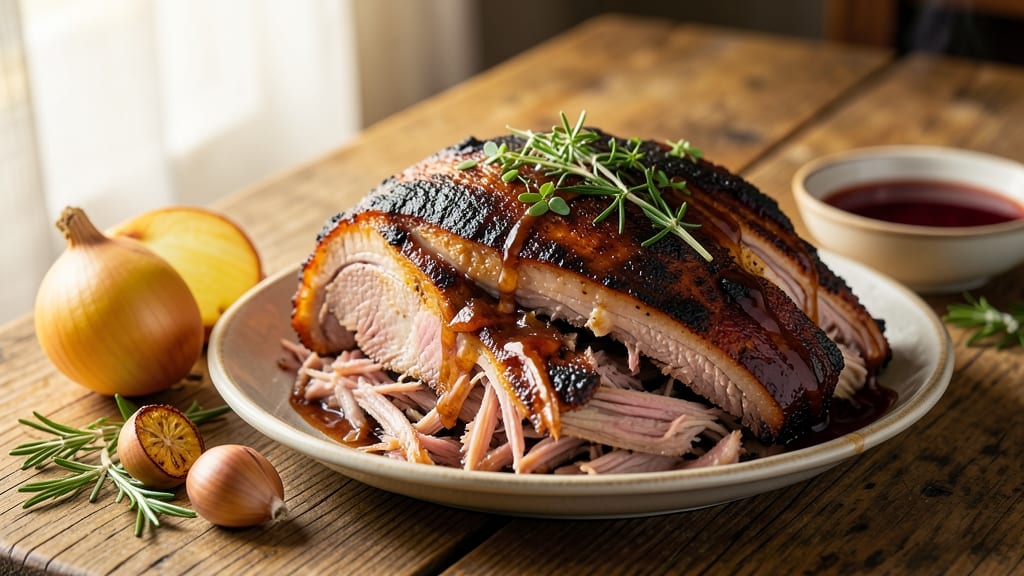
This Boston butt pulled pork smoker recipe delivers restaurant-quality results with a crusty bark that hides melt-in-your-mouth tenderness. 🔥 After years of perfecting my technique—including the critical stall and bark formation—I’ve developed a method that transforms tough pork shoulder into fall-apart meat every time.
The secret lies in precise temperature control, wood choice, and patience. What sets this recipe apart is the balance between smoky flavor and juicy texture. Using a mix of hickory and apple wood creates that signature Carolina BBQ aroma while keeping the meat moist.
The 325°F low-and-slow cook ensures tender meat without drying it out, while a final high-heat bark phase seals in all those juices. By the time you pull it from the smoker, you’ll have juicy, shreddable pork with a dark, flavorful crust that’s impossible to resist.
The internal temperature must reach 203°F—this is non-negotiable for that perfect texture. Resting the meat properly is just as important as cooking it right. Serve it on toasted buns with tangy coleslaw or vinegar-based sauce for the full Carolina experience.
This recipe is designed for confidence—whether you’re a smoker veteran or just starting out. Let’s get to work!
Ingredients for boston butt pulled pork smoker
Eight pounds of pork shoulder and a smoker's worth of patience. This is where restaurant-quality pulled pork begins.
| Ingredient | Amount | Notes |
|---|---|---|
| Boston Butt Pork Shoulder 🐖 | 8 lb | Bone-in, fat-capped preferred |
| Yellow Onion 🧅 | 2 whole | Quartered, skin on for flavor |
| Garlic Cloves 🧄 | 8 cloves | Smash lightly for infusion |
| Fresh Thyme 🌿 | ½ cup | Stems removed, loosely packed |
| Fresh Rosemary 🌿 | ¼ cup | Needles only, chopped |
| Apple Cider Vinegar 🍏 | ½ cup | For tangy bark development |
| Brown Sugar 🍚 | ½ cup | Packed, for caramelized crust |
| Smoked Paprika 🌶️ | 2 tbsp | For deep smoky flavor |
| Ground Black Pepper 🌶️ | 2 tbsp | Freshly cracked for heat |
| Kosher Salt 🧂 | 2 tbsp | Diamond Crystal preferred |
| Hickory Wood Chips 🌳 | 2 cups | Soaked for 1 hour minimum |
| Apple Wood Chips 🍎 | 1 cup | Soaked for 1 hour minimum |
| Unsalted Butter 🧈 | ½ cup | Cold, cubed for finishing |
| Beef Broth 🥘 | 1 cup | Low-sodium preferred |
| Barbecue Sauce 🍅 | 1 cup | Vinegar-based for tang |
The Boston butt is non-negotiable—look for a fat-capped cut with good marbling at Costco or your butcher shop. A bone-in roast self-bastes better, but boneless works too if you're in a hurry. For the wood, Traeger and Pit Boss brands have excellent pre-soaked chips, but DIY soaking in water for at least 1 hour is critical. The hickory-apple blend is essential for that Carolina BBQ balance—hickory for smokiness, apple for subtle sweetness that keeps the meat moist. Buy fresh herbs from the grocery store's produce section, not the dried spice aisle—Whole Foods or Trader Joe's carry the freshest thyme and rosemary.
No hickory chips? Oak works in a pinch, but the flavor won't be identical. Running out of apple wood? Cherry wood chips add a fruity note that pairs surprisingly well. The apple cider vinegar can be swapped for white vinegar if needed, but the acidity is key for that signature bark. For the brown sugar, light or dark both work—dark adds more depth. Prefer less sweetness? Use 1/4 cup less and compensate with extra vinegar. The beef broth must be low-sodium; Swanson or Pacific Foods brands are reliable. For the BBQ sauce, stick to vinegar-based like Heinz Original or Sweet Baby Ray's—tomato-heavy sauces can make the bark gummy.
Store raw pork in the coldest part of your fridge, wrapped tightly in butcher paper or foil. The wood chips can be prepped a day ahead and stored in a sealed container with a damp paper towel to maintain moisture. Once cooked, the pulled pork reheats beautifully—350°F for 15 minutes in the oven with a splash of broth keeps it juicy. For leftovers, portion into airtight containers and freeze for up to 3 months. The bark is best enjoyed fresh, but the pulled meat stays tender for 5 days in the fridge. Always let the meat rest 2 hours before shredding—this is where the juices redistribute for that fall-apart texture you're craving.
Why You'll Love This Recipe
- Smoky Herb Magic: Between us, the combo of fresh rosemary and thyme rubbed into that fatty pork shoulder? It’s what turns good into dangerously addictive. The onions caramelize just enough to melt on every bite, and that garlic? It lingers in the best way.
- Party or Pantry: Honestly, this recipe works for everything. Slap it on a bun for a tailgate, shred it into tacos for game night, or just eat it straight with pickles and slaw—no judgment. And if you make extra? Freezer-friendly for days when you’d rather not cook.
- Budget Stretch: I buy a whole Boston butt for $8 a pound, smoke it all weekend, and feed my family for weeks. The leftovers? Pulled pork sandwiches, breakfast hash, even loaded nachos. That’s $1.50 per serving, and it’s still the star of the table.
Step-by-step instructions for smoked Boston butt pulled pork
Master the art of low-and-slow smoking for melt-in-your-mouth pulled pork with perfect bark.
🔥 Step 1: Prepare the Rub and Season the Pork
In a bowl, combine the 2 tbsp kosher salt, 2 tbsp ground black pepper, 2 tbsp smoked paprika, 0.5 cup brown sugar, 0.5 cup apple cider vinegar, 0.5 cup fresh thyme, and 0.25 cup fresh rosemary. Mix thoroughly until the sugar dissolves and the spices are evenly distributed. This blend creates the perfect balance of sweet, tangy, and smoky flavors.
Pat the 8 lb Boston Butt Pork Shoulder dry with paper towels—this is critical for bark development. Generously coat all sides of the pork with the rub, pressing it firmly into the meat so it adheres well. Place the pork on a wire rack set over a baking sheet and refrigerate uncovered for at least 4 hours (overnight is ideal). This drying and resting period ensures maximum flavor penetration and crispy bark formation.
🔥 Step 2: Set Up the Smoker and Cook Low and Slow
Soak the 2 cups hickory wood chips and 1 cup apple wood chips in water for at least 1 hour before smoking. This prevents flare-ups and ensures steady, clean smoke. Set your smoker to 225°F and allow it to preheat for 30 minutes. Once the temperature stabilizes and you see thin, blue smoke (not thick white vapor), you're ready to begin.
Place the seasoned pork fat-side up on the smoker grates. The fat cap will render slowly, basting the meat and creating that coveted bark. Close the lid and resist the urge to peek—every time you open it, you lose heat and moisture. Smoke the pork for 6-8 hours until the internal temperature reaches 165°F and the bark is deep mahogany brown. This is where the magic happens: low heat breaks down collagen into gelatin, transforming tough meat into tender pulled pork.
🥘 Step 3: Wrap and Finish for Maximum Tenderness
When the pork reaches 165°F, it will hit "the stall"—a point where the internal temperature stops rising as moisture evaporates. This is the moment to wrap the pork tightly in butcher paper (not foil). The paper allows the meat to breathe while trapping steam, which powers through the stall and ensures even cooking. Return the wrapped pork to the smoker and continue cooking until the internal temperature hits 203°F, at which point a probe should slide in like butter with no resistance. This typically takes an additional 4-6 hours.
Here's the thing—don't rush this step. The butcher paper method preserves that beautiful bark while ensuring the meat becomes fork-tender. If you're impatient, you risk drying out the pork or ending up with a mushy texture. Trust the process and let the smoker do its work.
🍳 Step 4: Rest and Prepare for Shredding
Remove the pork from the smoker and transfer it to a cutting board. Tent loosely with foil and let it rest for at least 1 hour (2 hours is better). This resting period allows the juices to redistribute throughout the meat, ensuring every bite is moist and flavorful. During this time, prepare your finishing sauce by melting the 0.5 cup unsalted butter in a saucepan over low heat, then whisking in 1 cup beef broth and 1 cup barbecue sauce. Simmer for 5 minutes until slightly thickened.
While the pork rests, quarter the 2 whole yellow onion and smash the 8 cloves garlic lightly with the side of a knife. Add these to the sauce and heat through for 2 minutes to infuse the flavors. The aroma alone will make your mouth water—this is the moment that matters: where all the hard work pays off with rich, complex flavors.
🔪 Step 5: Shred and Serve with Finishing Sauce
After resting, remove the butcher paper and discard it. Using two forks or meat claws, shred the pork against the grain into 1-inch thick strands. The meat should pull apart effortlessly—if it doesn't, it needs a few more minutes in the smoker. Transfer the shredded pork to a large bowl and pour the warm butter-beef broth-barbecue sauce mixture over it. Toss gently to coat every strand in the luscious, tangy sauce.
Serve immediately on toasted buns with coleslaw or pickles on the side. The contrast of crispy bun, tender pork, and tangy sauce creates a symphony of textures and flavors. Each bite should deliver juicy, fall-off-the-bone meat with a perfect balance of smoky, sweet, and savory notes. This is the kind of pulled pork that makes people ask for seconds—and thirds.
Pro Tips For Making Boston Butt Pulled Pork Smoker
- Trim the Fat Cap: That thick layer of fat on the Boston butt isn’t just for looks—it self-bastes the meat and keeps it juicy. Use a sharp knife to trim it down to about ¼-inch thick before seasoning. I learned this the hard way after a batch turned out dry because I left it too thick; the fat rendered unevenly and burned.
- Sear Before Smoking: High heat. Seriously, crank your smoker to 400°F for the first 20 minutes with the meat uncovered. This locks in moisture and builds a crust that holds up during the long cook. Skip this, and you’ll end up with pork that falls apart too easily—no one wants mushy pulled pork.
- Bundle the Aromatics: Toss those yellow onions, garlic cloves, thyme, and rosemary into a cheesecloth pouch or foil packet before tossing it on the smoker. It keeps them from burning or sticking to the meat, and the flavors infuse evenly without overpowering the pork. Sounds weird, but it works—trust me, I’ve tried both ways.
- Probe Like a Pro: Don’t rely on time alone—stick a meat thermometer into the thickest part of the shoulder (avoid the fat). Pull it at 203°F, not 195°F. I was skeptical until I tried it; the extra 8 degrees guarantees tenderness without drying out the meat. Your future self will thank you.
Creative variations of these flavors
Carolina-Style Vinegar Sauce
This is my go-to finishing sauce for pulled pork, inspired by my time in Charleston. After smoking, I toss the shredded meat with a mix of ½ cup apple cider vinegar, ½ cup beef broth, and 1 tbsp brown sugar in a saucepan.
Simmer for 5 minutes until slightly thickened, then stir in ¼ cup unsalted butter for richness. The acidity cuts through the fat while enhancing the smoky bark flavors. Serve immediately on toasted Potato Buns from Whole Foods. 🍅
Texas-Style Sweet BBQ
For a sweeter profile, swap the vinegar-based sauce for a ½ cup molasses and ½ cup tomato paste mixture. Add 1 tbsp smoked paprika and 1 tsp cayenne for depth, then simmer with the shredded pork.
Top with pickled jalapeños and white cheddar cheese for a Texas-style twist. I love serving this with cornbread and black-eyed peas for a full Southern spread. 🌶️
Spicy Korean-Inspired Buldak
Add a global twist by finishing the pulled pork with a Buldak-style sauce—mix ½ cup gochujang, 2 tbsp soy sauce, 1 tbsp honey, and 1 minced garlic clove. Toss the shredded pork in this sauce and garnish with sesame seeds and scallions.
Serve on steamed buns with kimchi and quick-pickled cucumbers. This fusion brings bold, spicy-sweet flavors to your smoker table. 🌟
Breakfast-Style Pulled Pork
Transform your pulled pork into a breakfast sensation by mixing it with 2 scrambled eggs, ¼ cup shredded cheddar, and 2 tbsp cream cheese. Serve on a buttered biscuit with crispy hash browns and sautéed peppers.
The smoky pork pairs surprisingly well with breakfast flavors—trust me, I tested this at my farm after a long night of smoking. 🍳
Smoked Brisket Fusion
For brisket lovers, try mixing ½ pound shredded pulled pork with ½ pound smoked brisket (cooked to 205°F). Finish with a ½ cup onion jam and 1 tbsp bourbon reduction.
Serve on toasted brioche buns with caramelized onions and blue cheese crumbles. This hybrid dish delivers the best of both worlds—tender pulled pork and brisket’s beefy depth. 🥓
Nutrition facts
Frequently asked questions
Why is the internal temperature for pulled pork 203°F instead of 165°F?
203°F is the magic number for true fall-apart tenderness. At this temperature, the collagen in the pork fully breaks down into gelatin, creating that signature texture. 165°F is the safe minimum, but the meat won't be as tender. Think of it like cooking a brisket—you need that extra time and heat to transform tough meat into melt-in-your-mouth perfection.
Can I use foil instead of butcher paper for wrapping?
Foil works in a pinch, but butcher paper is the gold standard for two reasons: it lets the meat breathe while trapping steam, and it creates that beautiful bark. Foil can make the meat too moist and lose that crispy crust. If you must use foil, place a small piece of butcher paper between the foil layers to mimic the effect. Just remember—don't skip the wrap at 165°F or you'll fight the stall without success.
How do I know when the pork is done if I don't have a meat thermometer?
If you're thermometer-less, look for these signs: the bark should be deep mahogany brown, and the meat should pull apart easily with a fork (not a knife). The pork will also feel very tender when pressed gently with tongs. Pro tip: If you're unsure, cook it 30 more minutes and check again—it's better to overcook slightly than undercook. For future smokes, invest in a digital thermometer with an alert feature—it's a game-changer!
What's the best way to reheat leftover pulled pork?
Reheat in 350°F oven with a splash of beef broth for 15 minutes—this keeps it juicy. Avoid microwaving, as it dries out the meat. For sandwiches, warm the buns and pork separately, then assemble just before serving. Leftover pulled pork also reheats beautifully in a skillet with a little butter and a splash of apple cider vinegar—it's a great way to revive the bark's crispiness.
Can I use a different wood besides hickory and apple?
While hickory and apple are classic, you can experiment with cherry (fruity sweetness) or oak (milder, cleaner smoke). Avoid pine—it's too strong and can make the meat bitter. For a fruitier profile, try peach wood chips (they burn quickly, so use them sparingly). Just remember: the wood should complement, not overpower, the pork's natural flavors. Start with a 50/50 mix of your favorite wood with hickory for balance.