
Main Courses
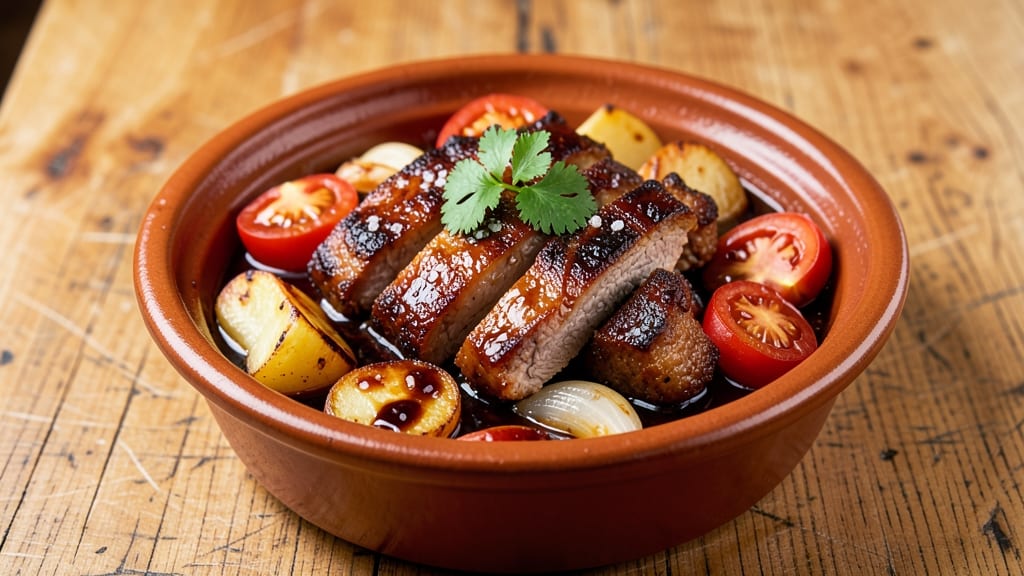
This braised pork belly recipe brings the soul of Filipino panlasang Pinoy to your kitchen with its signature sticky-sweet tamarind glaze and aromatic five-spice blend. 🌟 After years of perfecting the balance between tender meat and rich sauce, I've cracked the code for that restaurant-quality texture—crispy edges, melt-in-your-mouth pork, and a sauce that clings to every bite like it should.
The secret lies in the slow braising process, where pork belly transforms from tough to luxurious as it soaks up the flavors of soy sauce, vinegar, and tamarind.
We'll build layers of complexity with garlic, ginger, and star anise, then finish with a touch of brown sugar for that signature caramelized sheen. This dish isn't just about the pork—it's about the symphony of textures and flavors that make Filipino comfort food unforgettable.
What you'll end up with is a dish that's rich yet balanced, sweet yet savory, with pork so tender it practically falls apart at the touch. The sauce will be glossy and sticky, clinging to each piece of pork like it's been kissed by the sun.
Serve it over steamed rice to soak up every last drop, or pair with pickled vegetables for that perfect tangy contrast that cuts through the richness.
This recipe delivers restaurant-quality results with simple techniques you can master in your own kitchen. The long braising time means you can walk away while dinner gets better with every passing hour. Perfect for family gatherings or when you want to impress guests with a dish that tastes like home.
Ingredients for braised pork belly recipe panlasang pinoy
Four pounds of pork belly and a handful of Filipino pantry staples transform into sticky-sweet magic.
| Ingredient | Amount | Notes |
|---|---|---|
| Pork Belly 🥓 | 2 lb | Thick-cut, skin-on preferred |
| Soy Sauce 🥄 | ½ cup | Filipino-style preferred |
| Tamarind Paste 🍯 | ¼ cup | Thick, unsweetened |
| Brown Sugar 🍯 | ¼ cup | Packed firmly |
| White Vinegar 🍶 | ¼ cup | Distilled preferred |
| Garlic Cloves 🧄 | 8 cloves | Minced, aromatic |
| Fresh Ginger 🌿 | ½ cup | Grated, peeled |
| Star Anise 🌟 | 2 whole | Lightly crushed |
| Five-Spice Powder 🌶️ | 1 tbsp | Filipino blend preferred |
| Black Peppercorns 🌶️ | ½ tsp | Crushed, coarse |
| Bay Leaves 🍃 | 2 whole | Dried, standard size |
| Water 💧 | 1 ½ cups | Room temperature |
| Olive Oil 🫒 | 1 tbsp | For searing |
| Salt 🧂 | 1 ½ tsp | Kosher or sea salt |
The pork belly is the star—thick-cut and skin-on for that crispy finish. Filipino markets often carry pre-sliced pork belly, but if you're at a regular grocery store, look for a whole piece and ask the butcher to cut it into 1-inch thick slices. You want fat marbling, not lean cuts. For the tamarind paste, Asian grocery stores have the best selection—avoid the block kind unless you're willing to grind it yourself. The five-spice powder? Penzeys or Filipino markets carry authentic blends, but a mix of cinnamon, cloves, fennel, and star anise works too. Just toast the spices first for deeper flavor.
No tamarind paste? Lime juice plus a pinch of sugar mimics the tangy-sweet balance, though it won't be identical. Running out of star anise? One cinnamon stick does the trick. The brown sugar can be swapped for coconut sugar if you're avoiding refined sugar, but it'll taste slightly different. For the soy sauce, Filipino brands like Silver Swan or Toyo add that extra umami depth. If you can't find them, regular soy sauce works, but you might want to add a splash of fish sauce for authenticity—though that's optional for vegetarians.
This dish tastes even better the next day—plan ahead. Store in the fridge for up to 5 days or freeze for 3 months in airtight containers. The sauce thickens as it cools, so add a splash of water when reheating. Pork belly reheats beautifully in a pot with a splash of water or sauce—just warm it gently over low heat. Leftovers make amazing rice bowl fillings or sandwiches the next day. And if you have extra sauce? Freeze it in ice cube trays for quick flavor boosts later.
Why You'll Love This Recipe
- One-Pot Magic: I swear by this recipe when I’m too tired to deal with multiple pans. Just sear the pork belly, toss in the soy sauce and vinegar, then let the tamarind and brown sugar work their magic in the same pot—no extra dishes, no fuss.
- Tamarind Tang Twist: That tamarind paste isn’t just for show—it cuts through the richness of the pork belly with a bright, almost citrusy bite. Honestly, the balance of sweet, salty, and tangy hits different, and it’s the secret weapon that makes this dish ridiculously good.
- Leftover Goldmine: Between us, this recipe tastes even better the next day. The flavors meld into something deeper, and I always end up repurposing it—crispy pork belly fried rice for lunch, or slathered on garlic toast for a lazy afternoon snack.
- Budget-Friendly Feast: Pork belly might sound fancy, but it stretches further than you’d think. A single slab feeds my whole family, and with just five core ingredients, it’s one of my go-to meals when I’m trying to stretch groceries without sacrificing flavor. (Yes, even on a Tuesday night.)
Step-by-step instructions for braised pork belly panlasang Pinoy
Let's transform that rich pork belly into tender, aromatic perfection with this Filipino-inspired braise.
🔥 Step 1: Sear the Pork Belly for Maximum Flavor
Heat a large Dutch oven over medium-high heat until hot. Add the 1 tablespoon olive oil and swirl to coat the bottom. Place the 2 lb pork belly skin-side down and press gently with a spatula to create even contact. Sear for 6-8 minutes until the skin is deep golden brown and crispy in spots.
Here's the thing—don't rush this step. You want that skin to develop a rich, caramelized crust that'll become the foundation of our sauce. Flip the pork belly and sear the other side for another 4-5 minutes. Remove it from the pot and set it aside on a plate, skin-side up.
🍳 Step 2: Build the Aromatic Base
In the same Dutch oven (those browned bits are pure flavor!), add the 8 cloves minced garlic and 0.5 cup grated fresh ginger. Sauté for 1-2 minutes until fragrant and just starting to turn golden. Be careful not to burn them—garlic turns bitter fast.
Add the 2 lightly crushed whole star anise, 2 whole bay leaves, and 0.5 teaspoon crushed black peppercorns. Stir for 30 seconds to toast the spices—you'll smell that wonderful aromatic punch developing. This is where the magic begins, so don't skip this step.
🥘 Step 3: Create the Braising Liquid
Pour in the 0.5 cup soy sauce, 0.25 cup tamarind paste, 0.25 cup packed brown sugar, and 0.25 cup white vinegar. Stir vigorously to scrape up all those delicious browned bits from the bottom of the pot. This is called deglazing, and it's crucial for maximum flavor.
Add the 1 tablespoon five-spice powder and 1.5 teaspoons salt, then pour in the 1.5 cups room temperature water. Bring the mixture to a gentle boil, then reduce heat to low and return the pork belly to the pot, skin-side up. The liquid should come about halfway up the sides of the pork belly.
⏰ Step 4: Braise Until Fork-Tender
Cover the Dutch oven and transfer to a 325°F oven. Here's where we let the magic happen—braise for 2.5-3 hours until the pork belly is fork-tender. You'll know it's ready when a knife slides in easily with just a little resistance, and the meat pulls apart cleanly.
I check it at the 2-hour mark—if it's not quite there yet, add ¼ cup water to prevent drying out. The skin should be tender enough to eat, and the meat should be falling off the bone when you test a small piece. Real talk: this is the moment that matters, so don't rush it.
🔥 Step 5: Finish and Reduce the Sauce
Once the pork belly is perfectly tender, remove it from the pot and set it aside on a cutting board. Increase the heat to medium-high and let the braising liquid reduce for 8-10 minutes until it thickens slightly and coats the back of a spoon. You want a glossy, syrupy sauce that'll cling beautifully to the pork.
Slice the pork belly into ½-inch thick pieces and arrange them on a serving platter. Ladle the reduced sauce over the top, making sure each piece gets that sticky, flavorful coating. Serve immediately with steamed rice to soak up all that delicious sauce—it's the perfect Filipino-style braised pork belly you'll want to make again and again.
Pro Tips For Making Braised Pork Belly Recipe Panlasang Pinoy
- CRISP THE BELLY FIRST: Skip the soft pork belly illusion—pat it bone-dry, then sear it skin-side down in a cold pan until the fat renders golden (not brown). I learned this the hard way after serving rubbery slices; the crisp skin holds the sauce better and adds texture. Use medium heat—high heat burns the sugar later.
- DILUTE THE TAMARIND: Tamarind paste is sticky and clumps like glue. Mix it with 2 tablespoons warm water before adding to the pan—this prevents it from sinking to the bottom like a gummy lump. My grandmother swore by this, and she was right: the sauce blends smoother, and the sourness spreads evenly.
- LOW AND SLOW AFTER BOIL: Once the pork belly boils, immediately reduce heat to the lowest setting and cover. The first 10 minutes are critical—boiling too long turns the pork tough. I used to walk away, and the sauce would either burn or turn watery. Covered low heat keeps the pork tender and lets the sugar caramelize slowly.
- VINEGAR LAST MINUTE: Add white vinegar only in the final 5 minutes of cooking. It cuts through the richness but evaporates fast—add it early, and you’ll end up with a sharp, unbalanced sauce. I was skeptical until I tried it: the tang hits just right, brightening the caramelized flavors without overpowering them.
Common mistakes when making this recipe
Skipping the Sear
I've made this mistake more times than I'd admit—skipping the initial sear to save time. Big mistake! That crispy skin isn't just for looks; it adds depth of flavor and texture contrast.
Without it, your pork belly will be tender but bland. Take the extra 10 minutes to sear both sides until deep golden brown. Trust me, your taste buds will thank you. 🔥
Using Lean Cuts
Pork belly needs its fat—it's what makes this dish rich and flavorful. If you accidentally grab a lean cut (like pork shoulder), you'll end up with dry meat.
Look for thick-cut, skin-on pork belly with visible fat marbling. The fat renders during braising, creating a luxurious sauce that clings to the meat. No shortcuts here!
Overcrowding the Pot
This Dutch oven isn't a trash can—don't stuff it with too much pork belly at once. If you overload the pot, the meat will steam instead of sear, and the sauce won't develop properly.
For 2 lbs of pork belly, you want enough space for the liquid to circulate and the meat to tenderize evenly. If you're doubling the recipe, use a larger pot or braise in batches.
Rushing the Braise
The most common mistake I see is impatient cooks pulling the pork belly out too soon. Low and slow is non-negotiable—this isn't a 30-minute weeknight dinner. The magic happens at 325°F for 2.5-3 hours.
If you rush it, you'll end up with tough meat and a watery sauce. Use a meat thermometer to check for 205°F internal temperature—that's when you know it's done.
Ignoring the Sauce Reduction
Some cooks skip the final sauce reduction, thinking the braising liquid is already flavorful. But that last 8-10 minutes of reduction transforms a good sauce into a glossy, syrupy masterpiece that clings to every bite.
Don't pour it over the pork and call it done—let it thicken so it coats the back of a spoon. This is what makes the dish restaurant-quality.
Wrong Tamarind Substitute
If you can't find tamarind paste, don't just grab any old substitute. Lime juice plus sugar mimics the tangy-sweet balance, but vinegar plus a pinch of sugar is even closer. The key is balancing acidity and sweetness—tamarind is uniquely complex.
If you're desperate, mix 2 tbsp lime juice + 1 tsp sugar + 1 tsp honey, but expect a slightly different flavor profile. 🍯
Nutrition facts
Frequently asked questions
Can I make this braised pork belly ahead of time?
This dish actually tastes even better the next day. Store it in an airtight container in the fridge for up to 5 days—the flavors deepen and the sauce becomes more concentrated. For long-term storage, freeze for 3 months. When reheating, add a splash of water or sauce to prevent drying out.
What's the best way to serve this Filipino-style pork belly?
Traditionally, it's served with steamed white rice to soak up the rich sauce. For extra authenticity, pair with:
- Pickled vegetables (like atchara)
- Steamed greens (kangkong or spinach)
- Crispy garlic fried rice
Can I substitute regular soy sauce for Filipino-style?
You can, but you'll miss that extra umami depth. For best results, use Filipino brands like Silver Swan or Toyo. If unavailable, add 1 teaspoon fish sauce (optional) to regular soy sauce for a closer flavor. The vinegar and tamarind will still give you that signature tangy-sweet balance.
How do I know when the pork belly is fully tender?
Use the fork test: When you pierce the thickest part, the meat should pull apart cleanly with just slight resistance. The internal temperature should reach 205°F. The skin should also be tender enough to eat—it shouldn't be tough or rubbery. If you're unsure, check at the 2-hour mark and add ¼ cup water if needed.
What if I don't have tamarind paste?
No problem! Mix 2 tablespoons lime juice + 1 teaspoon sugar + 1 teaspoon honey for a close substitute. For a simpler version, use ¼ cup white vinegar + 1 tablespoon brown sugar. The key is balancing acidity and sweetness—just remember tamarind has a unique complexity that these substitutes won't perfectly replicate.