
Main Courses
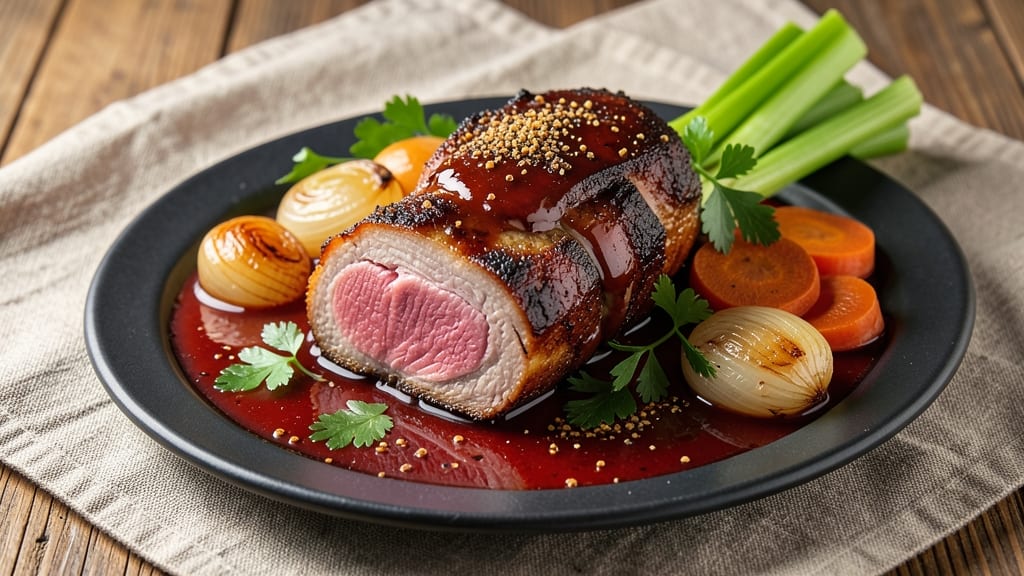
This braised smoked pork shank recipe transforms tough cuts into melt-in-your-mouth perfection through the magic of slow smoking and deep braising. 🔥 I developed it during my time in Charleston, where the humid air and oak fires create an ideal environment for pork to develop its signature smoky depth.
The key lies in the balance between the initial smoke infusion and the long, slow braise that tenderizes the meat while building complex flavors.
What sets this dish apart is the two-stage process: first, smoking the shank low and slow to develop that unmistakable bark and smoky penetration, then transferring it to a Dutch oven where it braises in aromatic liquids until fork-tender.
The result is a dish that combines restaurant-quality depth with home-cooking simplicity—no fancy equipment required beyond a smoker or even your oven. This method ensures every bite delivers that perfect harmony of smoky, caramelized flavors with tender, juicy meat.
The beauty of this recipe lies in its versatility. Serve it sliced over creamy mashed potatoes or alongside roasted root vegetables for a complete meal that feels both comforting and impressive.
The smoky aroma alone will have everyone gathered at your table, while the rich, velvety sauce ensures every forkful is worth the wait. This is the kind of dish that improves with time, as the flavors meld and deepen during the braising process.
With just a few simple ingredients—pork shank, aromatic vegetables, and quality smoking wood—you'll create a centerpiece that rivals any restaurant offering. The technique is straightforward, but the results are anything but ordinary. Let's get started on a dish that captures the soul of Southern cooking at its finest.
Ingredients for braised smoked pork shank
Pantry staples plus a few key ingredients for smoky, fall-apart pork shank perfection.
| Ingredient | Amount | Notes |
|---|---|---|
| Pork Shank 🐖 | 2 lb | Bone-in, cut into 2-inch pieces |
| Yellow Onion 🧅 | 1 whole | Cut into 8 wedges, skin on |
| Carrot 🥕 | 4 whole | Cut into 2-inch chunks |
| Celery Stalks 🌿 | 4 whole | Cut into 2-inch pieces |
| Garlic Cloves 🧄 | 6 cloves | Smashed but not minced |
| Smoked Paprika 🌶️ | 1 tbsp | For smoky depth |
| Ground Black Pepper 🌶️ | 1 tsp | Freshly cracked |
| Kosher Salt 🧂 | 1 ½ tsp | Diamond Crystal preferred |
| Dry Red Wine 🍷 | 1 cup | Bold Cabernet or Merlot |
| Chicken Stock 💧 | 2 cups | Homemade or quality store-bought |
| Tomato Paste 🍅 | 2 tbsp | San Marzano preferred |
| Fresh Thyme 🌿 | ¼ cup | Leaves only, stems removed |
| Fresh Bay Leaves 🍃 | 2 whole | Dried works if needed |
| Smoking Wood Chips 🔥 | 1 cup | Oak or hickory preferred |
| Olive Oil 🫒 | 2 tbsp | Extra-virgin for smoking |
The pork shank is the star here—look for bone-in cuts with good marbling at your butcher or grocery store meat counter. Costco or Whole Foods usually carry great quality. If you can't find bone-in, bone-out works but won't be as flavorful. The smoking wood matters too—oak or hickory chips give that classic Southern barbecue vibe. I always soak my wood chips for 30 minutes before using, but it's not strictly necessary. For the wine, any bold red works—Cab Sauv, Merlot, whatever's open in your fridge.
No dry red wine? Beef broth with a splash of balsamic gets you close. Fresh thyme is ideal but dried works at one-third the amount. The tomato paste can be that squeeze tube from Trader Joe's—no waste, keeps forever. For the vegetables, don't stress about exact sizes—just cut them into even chunks so they cook at the same rate. The chicken stock? Homemade is best, but Pacific Foods or Kitchen Basics are solid store-bought options. And if you're short on time, skip the smoking—just sear the pork in the Dutch oven and proceed with the braising.
This dish tastes even better the next day, so make extra. The sauce thickens as it cools, so add a splash of water or stock when reheating. Keeps 4-5 days in the fridge, freezes for 3 months. I always portion mine into containers so lunches are sorted for the week. The meat will be fork-tender, but if you're serving immediately, let it rest for 10-15 minutes before slicing—keeps everything juicy.
Why You'll Love This Recipe
- One-Pot Magic: I swear by this recipe because it’s literally one pan, one lid, and done. The onions caramelize right there with the pork, while the carrots and celery break down into sweet, jammy bits—no extra pots, no stress.
- Smoky Depth Bomb: That smoked pork shank? It’s like a flavor upgrade you can’t resist. The slow braise lets the smokiness seep into the meat, and the garlic? Oh, it turns into this rich, golden paste that clings to every bite—simple ingredients, but ridiculously satisfying.
- Leftovers That Win: Between us, this dish begs for seconds—and thirds. The braised pork keeps for days, so I make a big batch on Sunday. Reheat it for sandwiches, toss it into pasta, or just eat it straight with crusty bread. (Yes, even on a Tuesday night.)
- Budget-Friendly Feast: Pork shank is cheap, and this recipe stretches it into a full meal. The onion, carrot, and celery mire pool makes it feel fancy without breaking the bank. Honestly, it’s my go-to when I need to feed a crowd without spending a fortune.
Step-by-step instructions for braised smoked pork shank
Here's how to transform tough pork shank into melt-in-your-mouth perfection with smoky depth.
🔥 Step 1: Smoke the Pork Shank Until Bark Forms
Start by preheating your smoker to 225°F using the 1 cup smoking wood chips. Let it smoke for 15 minutes to establish a good base. While the smoker heats up, rub the 2 lb pork shank with 1 tbsp olive oil to help the bark form better.
Place the pork shank in the smoker fat-side up. Smoke for 1 hour until a deep bark forms and the internal temperature reaches 145°F. You'll know it's ready when the exterior looks dark and crusty, and the meat pulls away from the bone slightly when you test it.
🍳 Step 2: Sear the Smoked Shank in a Dutch Oven
Heat 1 tbsp olive oil in a heavy Dutch oven over medium-high heat. Once shimmering, add the smoked pork shank and sear for 3-4 minutes per side until deeply browned. This step adds extra flavor and helps build the sauce later.
Remove the pork shank and set it aside. In the same pot, add 1 whole yellow onion cut into wedges, 4 whole carrots in chunks, and 4 whole celery stalks cut into pieces. Cook for 5 minutes until softened and slightly caramelized.
🥘 Step 3: Build the Braising Liquid
Add the 6 smashed garlic cloves, 1 tbsp smoked paprika, 1 tsp ground black pepper, and 1.5 tsp kosher salt to the pot. Stir for 30 seconds until fragrant. Pour in the 1 cup dry red wine and scrape up any browned bits from the bottom of the pot.
Bring to a simmer, then add the 2 tbsp tomato paste, 0.25 cup fresh thyme, and 2 whole fresh bay leaves. Stir well to combine, then pour in the 2 cups chicken stock. The liquid should come about halfway up the pork shank.
⏰ Step 4: Braise Until Fork-Tender
Return the pork shank to the Dutch oven, placing it back in the braising liquid. Bring to a gentle simmer, then cover with a tight-fitting lid. Transfer to a 300°F oven and braise for 2.5-3 hours until the pork is fork-tender.
Check for doneness by inserting a fork into the thickest part of the meat—it should slide in easily with no resistance. If the liquid reduces too much before the pork is tender, add ½ cup water or stock to maintain moisture.
🍽️ Step 5: Rest and Serve with Rich Sauce
Remove the pork shank from the braising liquid and let it rest for 10 minutes before slicing. Skim any excess fat from the sauce, then adjust seasoning if needed. The sauce should be rich and slightly thickened from the braising process.
Slice the pork shank against the grain into ½-inch thick pieces and serve with the braising sauce spooned over the top. The meat should be incredibly tender, falling apart easily, with deep smoky flavor from both the smoking and braising processes.
Pro Tips For Making Braised Smoked Pork Shank
- SEAR THE SHANK FIRST: Get that pork shank screaming hot in a dry pan—no oil needed—until it’s deep brown in spots. I used to skip this, and the braise always tasted dull. The crust locks in flavor when it hits the liquid.
- CHOP VEGETABLES UNIFORM: Onions into ½-inch chunks, carrots and celery into ¼-inch dice—no random sizes. Big pieces stay tough; small ones turn to mush. Sounds tedious, but it guarantees even cooking.
- DON’T RUSH THE LOW HEAT: After the initial sear, drop the heat to a simmer and walk away. Three hours is the minimum—any faster and the collagen won’t break down into tender, melt-in-your-mouth goodness.
- USE THE SMOKE RIND: If your pork shank has a smoked crust, don’t peel it off—it’s flavor gold. Just trim any burnt edges, then braise it whole. That smoky depth is why you picked this cut in the first place.
Make-ahead tips for this dish
Prep Ahead
Start your prep the night before for maximum flavor development. I always cut my vegetables—onion, carrots, and celery—and store them in a sealed container in the fridge. This saves 15 minutes of chopping on cooking day.
For the pork shank, pat it dry and rub it with 1 tbsp olive oil and 1 tsp smoked paprika to keep it flavorful overnight. 🌿
Smoke First
If you're short on time, smoke the pork shank the day before and refrigerate it. The bark will still form perfectly, and the meat will be ready for searing and braising the next day.
Just let it come to room temperature before searing—about 30 minutes out of the fridge. Trust me, this shortcut saves hours of active cooking time.
Braise Overnight
This is my favorite trick: braise the pork shank overnight in the oven. After the initial 1-hour smoke and sear, transfer everything to the Dutch oven, cover, and pop it in the oven at 300°F for 8-10 hours on low.
The meat will be fall-apart tender, and the sauce will be rich and concentrated. Just reheat gently on the stovetop before serving. ⏰
Freezer-Friendly
Make a double batch and freeze half for later. Portion the braised pork shank and sauce into airtight containers, leaving 1 inch headspace for expansion. Thaw overnight in the fridge, then reheat in the oven at 350°F for 30 minutes covered with foil.
The flavors actually improve after freezing—just add a splash of water or stock if the sauce looks too thick.
Sauce Prep
Make the braising liquid ahead of time and store it in the fridge. Combine the red wine, chicken stock, tomato paste, thyme, and bay leaves in a jar and refrigerate for up to 3 days.
When you're ready to cook, simply heat it up and add the smoked pork shank. This is a game-changer for busy weeknights—just sear the meat and braise it in the pre-made liquid. 💡
Leftovers Magic
Use your leftovers to make pork shank tacos, sandwiches, or even a hearty soup. Shred the meat and mix it with a little of the braising sauce, then serve it on toasted buns with pickled onions.
The smoky flavor works perfectly in tacos—just add some avocado and cotija cheese for a Tex-Mex twist. Store leftovers in the fridge for up to 5 days or freeze for 3 months.
Nutrition facts
Frequently asked questions
Can I substitute bone-in pork shank for boneless?
Bone-in pork shank is ideal because the bone adds flavor and structure, but boneless works in a pinch. The cooking time may be slightly shorter (2-2.5 hours instead of 3 hours), and the meat will be slightly less tender. If using boneless, add 1 extra cup of liquid to prevent drying out.
What's the best wood for smoking pork shank?
For authentic Southern flavor, use oak or hickory chips—they create that classic smoky depth. Avoid fruit woods like cherry or apple, which can overpower the pork. If you prefer a milder smoke, try pecan or mesquite. Always soak chips for 30 minutes before using for better smoke production.
How do I fix if the sauce is too thin?
Simmer the braising liquid uncovered for 10-15 minutes to reduce it naturally. If it's still too thin, mix 1 tbsp cornstarch with 2 tbsp cold water, stir into the sauce, and simmer until thickened. For extra richness, whisk in 1 tbsp butter at the end.
Can I make this in an oven instead of a smoker?
Yes! Preheat your oven to 250°F and place the pork shank on a wire rack over a baking sheet. Add a small smoker box with wood chips (oak or hickory) and smoke for 1 hour in the oven. Then proceed with the searing and braising steps as directed. The flavor will be slightly different but still delicious.
Why did my pork shank turn out tough?
Tough pork shank usually means it wasn't cooked long enough or the temperature was too high. Aim for 300°F during braising and cook until a fork slides in easily. If using a smoker, keep it at 225°F for the initial smoke. Also, check your liquid level—it should cover about half the meat to prevent drying.