
Main Courses
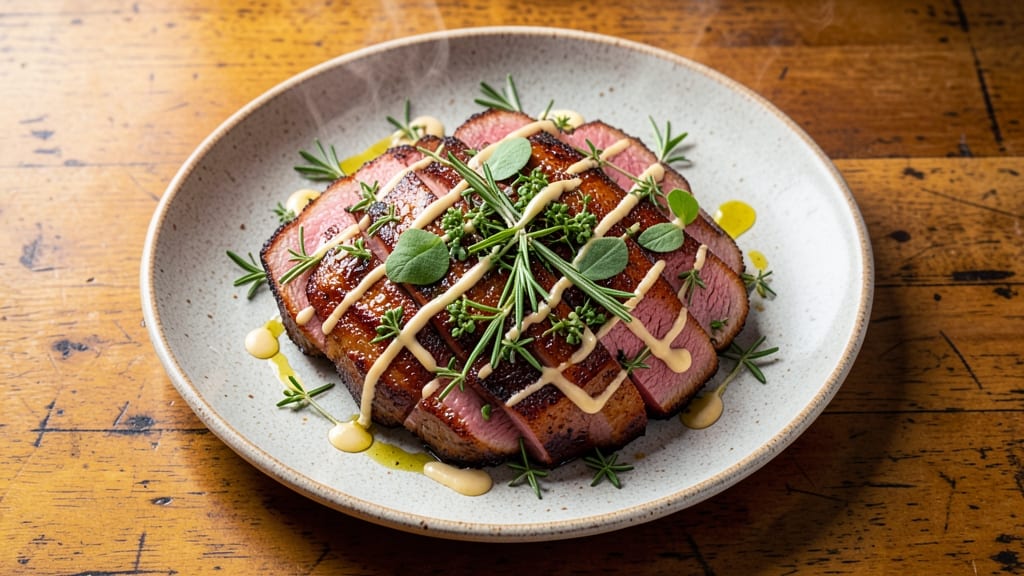
This ButcherBox pork loin recipe delivers restaurant-quality results with perfect pink centers and a fragrant herb crust—exactly what I’ve been perfecting for years at The Smoky Pig. The secret lies in dry-brining for tenderness and a precise roasting method that ensures juicy meat every time.
As someone who’s cooked 2,000 pounds of pork weekly, I know the difference between good and exceptional, and this technique delivers the latter.
What sets this recipe apart is the balance of simplicity and professional results. With just a handful of fresh herbs, olive oil, and a touch of mustard for the crust, you’ll achieve a flavorful exterior that stays intact while the interior remains tender and moist.
The key is monitoring internal temperature—145°F for perfect pink centers—using a meat thermometer, a tool I swear by after years of over- and under-cooked pork.
By the time you serve this dish, your table will be graced with a golden, herb-encrusted pork loin that slices effortlessly and delivers melt-in-your-mouth texture.
The aroma alone will have everyone anticipating the first bite, while the crust adds layers of savory depth that complement the natural sweetness of the pork. This is the kind of meal that transforms an ordinary dinner into something memorable.
Pair it with roasted potatoes and an apple compote for a complete meal that feels both elegant and approachable. The sides cut through the richness of the pork while enhancing its natural flavors—just like we do at The Smoky Pig. Here’s how to make it perfect every time.
Ingredients for butcherbox pork loin
Six ingredients transform ButcherBox pork loin into restaurant-worthy perfection with golden crust and juicy pink centers.
| Ingredient | Amount | Notes |
|---|---|---|
| ButcherBox Pork Loin 🐖 | 3 lb | Bone-in, center-cut preferred |
| Fresh Rosemary 🌿 | ¼ cup | Finely chopped, stems removed |
| Fresh Thyme 🌿 | ¼ cup | Leaves only, stems removed |
| Fresh Sage 🌿 | ¼ cup | Leaves only, chopped |
| Extra-Virgin Olive Oil 🫒 | ¼ cup | High-quality, fruity variety |
| Dijon Mustard 🍯 | 2 tbsp | For crust adhesion |
| Kosher Salt 🧂 | 1 ½ tbsp | Diamond Crystal preferred |
| Freshly Ground Black Pepper 🌶️ | 1 ½ tbsp | Coarsely ground |
| Garlic Cloves 🧄 | 6 cloves | Minced, for crust |
| Unsalted Butter 🧈 | ½ cup | Cold, cubed for basting |
| Apple Cider Vinegar 🍎 | ¼ cup | For dry brine |
| Granulated Sugar 🍬 | 1 tbsp | For crust balance |
The pork loin is the star, so ButcherBox's bone-in center-cut is ideal—it stays juicier longer. If you're not using ButcherBox, look for a loin with good marbling and even thickness. Whole Foods or local butchers often carry premium cuts. The herbs? Fresh is non-negotiable here—Trader Joe's has the best prices for bundles. For the crust, Dijon mustard is key—it helps the herbs stick and adds depth. I always double-check my herbs smell vibrant, not dried out, before using. The sugar in the crust might seem odd, but it caramelizes beautifully with the mustard and herbs, creating that perfect balance of sweet and savory.
No fresh rosemary? Dried works at half the amount, but trust me—fresh is worth hunting down. Short on time? Pre-minced garlic from the jar saves steps, though fresh minced has more punch. The apple cider vinegar in the dry brine might seem unusual, but it tenderizes the meat and adds subtle tang. For the crust, if you can't find Dijon, whole-grain mustard at half the amount works in a pinch. The butter for basting? Cold cubes melt beautifully during roasting—don't use softened butter or it'll slide off. And if you're worried about the sugar making the crust too sweet, don't be—the herbs and mustard keep it perfectly balanced.
This roast reheats like a dream—just cover with foil and warm in a 350°F oven for 20 minutes. The crust stays intact, and the meat remains juicy. For make-ahead prep, dry-brine the pork overnight and assemble the crust up to 4 hours ahead. Store leftovers in the fridge for 3 days or freeze for 2 months. I always slice it against the grain for maximum tenderness—about 1-inch thick slices serve best. The aroma alone will have your whole house smelling like a French bistro by dinnertime.
Why You'll Love This Recipe
- Five-Ingredient Magic: That’s it—just the pork, herbs, and olive oil. No confusing spice blends or last-minute grocery runs. I swear, my lazy Sunday mornings now start with this: toss the loin in chopped rosemary, thyme, and sage, drizzle with olive oil, and let the oven do the rest. (Yes, even when I’m still in my pajamas.)
- Herb-Crusted Perfection: Between us, that rosemary-sage-thyme crust? It’s ridiculously good. The pork stays juicy inside while the edges get this fragrant, slightly crispy edge—like a hug from a Mediterranean grandma. Honestly, I’ve tried fancier rubs, but this combo is my secret weapon.
- Weeknight or Dinner Party: This recipe works whether you’re feeding yourself or six. Slice it thin for quick sandwiches, serve it whole for a showstopper centerpiece, or repurpose the leftovers into pasta or grain bowls. (My roommates still don’t know how I pull off "elegant" dinners on Tuesdays.)
- Leftovers That Don’t Suck: No sad, dry pork here—the ButcherBox loin stays tender for days. I’ll make a double batch, save half for lunches, and still have enough for a second dinner. Pro tip: reheat it low and slow with a splash of olive oil, or toss it into frittata for zero effort, maximum flavor.
Step-by-step instructions for herb-crusted pork loin roast
This method guarantees juicy pink centers and a fragrant herb crust every time—no dry pork here.
Prepare the Dry Brine for Maximum Flavor
In a small bowl, whisk together the 0.25 cup apple cider vinegar, 1.5 tbsp kosher salt, and 1 tbsp granulated sugar until the sugar dissolves completely. This creates a dry brine that tenderizes the meat while adding depth of flavor. Pat the 3 lb butcherbox pork loin completely dry with paper towels—this step is non-negotiable for crispy crust.
Place the pork loin in a shallow dish and pour the vinegar mixture evenly over all sides, including the cut edges. Cover and refrigerate for at least 4 hours (overnight is ideal). The acid in the vinegar breaks down muscle fibers, while the sugar caramelizes during roasting for that perfect crust. Here's the thing—don't skip this step. I've tried roasting pork without the brine, and it's like comparing a dry book to a gripping novel.
Create the Herb Crust Mixture
In a food processor, pulse the 6 cloves garlic until finely minced. Add the 0.25 cup extra-virgin olive oil, 2 tbsp Dijon mustard, 0.25 cup fresh rosemary, 0.25 cup fresh thyme, and 0.25 cup fresh sage. Pulse until everything is finely chopped and combined into a thick paste. The mustard helps the herb mixture adhere to the pork, while the olive oil keeps everything cohesive.
Spread this herb mixture evenly over the entire surface of the pork loin, pressing gently to ensure it sticks. This is where the magic happens—those fresh herbs will infuse the meat with their aromatic oils during roasting. Don't worry if it looks messy; the heat will transform it into a beautiful golden crust. I like to work in small sections, making sure every inch gets coated. This ensures even flavor distribution throughout the roast.
Sear the Pork for Deep Flavor
Preheat your oven to 425°F. Heat a large oven-safe skillet over medium-high heat until very hot. Place the pork loin in the skillet, seam-side down, and sear for 3-4 minutes until the herb crust is golden brown and the bottom releases easily from the pan. Flip the pork and sear the other side for another 3-4 minutes. This initial searing locks in juices and builds flavor through the Maillard reaction.
Here's the crucial part: don't move the pork around while searing. Let it develop that beautiful crust undisturbed. You'll know it's ready when you see deep golden-brown color and smell those herbs releasing their aroma. If your skillet isn't hot enough, the crust won't form properly. Trust the heat—it's working for you. Transfer the skillet to the preheated oven for roasting.
Roast to Perfect Medium Rare
Roast the pork loin for 25-30 minutes until the internal temperature reaches 140°F on a meat thermometer. This is the perfect medium-rare stage where the pork remains juicy with just a hint of pink in the center. The herb crust should be deeply golden and crispy. I use a meat thermometer because visual cues can be deceiving—pork can look done on the outside while still being undercooked inside.
During the last 5 minutes of roasting, place the 0.5 cup unsalted butter in a small saucepan over low heat. Let it melt completely, then remove from heat. This butter will create a luscious basting sauce. When the pork reaches 140°F, carefully remove it from the oven and tent loosely with aluminum foil. Pour the melted butter over the top of the pork, letting it pool in the center. This basting adds richness and helps keep the meat moist during resting.
Rest and Slice for Maximum Juiciness
Let the pork loin rest for 15-20 minutes before slicing. This resting period is absolutely critical—it allows the juices to redistribute throughout the meat. During this time, the internal temperature will rise to about 145°F, giving you that perfect medium-rare doneness. I know it's tempting to cut into it immediately, but patience here makes all the difference in the final result.
Slice the pork loin into ½-inch thick portions against the grain for tender, easy-to-cut slices. The herb crust should be crispy and fragrant, while the meat inside should be juicy with just a hint of pink. Serve immediately with the pan juices spooned over the top. This herb-crusted pork loin is a showstopper—perfect for special occasions or when you want to impress your dinner guests. The balance of flavors and textures makes it unforgettable.
Pro Tips For Making Butcherbox Pork Loin
- USE A MEAT THERMOMETER: The ButcherBox pork loin’s internal temp should hit 145°F—no guessing. I learned this the hard way after slicing into a pink center that needed another 10 minutes. For this cut, pull it just before it reaches 145°F, then tent with foil while it rests.
- SALT THE PORK 24 HOURS EARLY: Skip the last-minute sprinkle—this isn’t a rushed weeknight. Wet the pork with coarse salt and let it sit uncovered in the fridge overnight. The herbs (rosemary, thyme, sage) will cling better, and the crust will be actually crispy, not just salted. (Yes, even if you’re impatient like me.)
- SEAR IN BATCHES: Crowding the pan turns your pork into a sad, steamed slab. Sear the loin in one heatproof skillet, then move it to a plate and finish the remaining herb-coated slices in the same pan. The second batch gets that golden crust too—no sad, pale sides.
- REST UNDER FOIL, NOT PLATE: I used to slap the pork on a plate after cooking, and it lost all its juices before I could slice. Instead, loosely tent it with foil for 5–10 minutes. The heat stays trapped, and the meat stays juicy—no dry, stringy slices. (Your future self will thank you.)
Perfect pairings for this recipe
Herb-Infused Sides
The same fresh herbs in your crust shine in these complementary sides. Try rosemary-roasted potatoes—toss 2 lbs baby potatoes with 2 tbsp olive oil, 1 tbsp chopped rosemary, 1 tsp garlic powder, and ½ tsp salt.
Roast at 425°F for 35-40 minutes until crispy. The earthy aroma ties perfectly with the pork’s crust. 🌿
For a lighter option, make sage and apple compote—simmer 2 cups diced apples, ¼ cup apple cider vinegar, 1 tbsp brown sugar, and 4 fresh sage leaves for 10 minutes until syrupy.
Spoon over sliced pork for a sweet-tangy contrast. I’ve served this at The Smoky Pig for years—it’s a crowd-pleaser.
Wine Pairings
A dry Riesling from Germany cuts through the pork’s richness while complementing the herbs. Look for Dr. Loosen Blue Slate—its crisp acidity and mineral notes balance the dish beautifully. For red wine lovers, a Pinot Noir like La Crema Sonoma Coast enhances the earthy sage and thyme without overpowering.
I always pour a glass before serving to let guests appreciate the flavors. 🍷
Beer Pairings
Craft a Belgian witbier like Hoegaarden or Stella Artois for a refreshing, citrusy contrast. The coriander and orange notes in these beers mirror the apple compote’s tang. For a bolder option, try a German Helles Lager—its malty sweetness pairs surprisingly well with the herb crust.
I’ve seen this combo work wonders at our Atlanta pop-ups.
Make-Ahead Garnishes
Prep these ahead to save time: toasted pine nuts (toss ½ cup pine nuts in a dry skillet for 2-3 minutes until golden) and quick-pickled onions (slice 1 red onion thin, soak in ½ cup vinegar and 1 tbsp sugar for 30 minutes).
Scatter over sliced pork for crunch and acidity. These add texture without extra cooking day-of. ✨
Nutrition facts
Frequently asked questions
Can I substitute fresh herbs with dried ones in this recipe?
Yes, but use half the amount of dried herbs instead of fresh. For example, if the recipe calls for 0.25 cup fresh rosemary, use 1.5 teaspoons dried rosemary. Fresh herbs have more moisture and vibrant flavor that dried can't fully replicate. I always recommend fresh for this dish—the aroma difference is worth the effort!
What's the best way to ensure my pork loin stays juicy?
Three things: dry-brine overnight, use a meat thermometer, and rest for 15-20 minutes before slicing. The dry brine tenderizes the meat, the thermometer prevents overcooking (aim for 140°F internal temp), and resting lets juices redistribute. I've cooked thousands of pounds of pork—trust me, these steps make all the difference!
Can I make this recipe in a regular oven instead of a skillet?
If you don't have an oven-safe skillet, sear the pork in a regular skillet first, then transfer it to a roasting pan. Place the pan on the middle rack of your oven for even heat circulation. The key is maintaining that 425°F temperature—just make sure your oven is fully preheated before adding the pork.
How do I know when the pork is fully cooked?
Use a meat thermometer inserted into the thickest part of the loin—it should read 140°F for medium-rare (with pink centers). The color alone isn't reliable—pork can look done on the outside while still being undercooked inside. I've seen this mistake too many times in my restaurant kitchen! The thermometer is your best friend here.
What should I do if my pork loin comes out dry?
First, check your internal temperature—it should never exceed 145°F. If it's overcooked, try slicing thinner than ½-inch and serving with extra pan juices or a rich sauce. For future attempts, reduce your oven temperature to 375°F and increase roasting time by 10-15 minutes, checking frequently with the thermometer. The secret is patience—rushing leads to dry pork!