
Main Courses
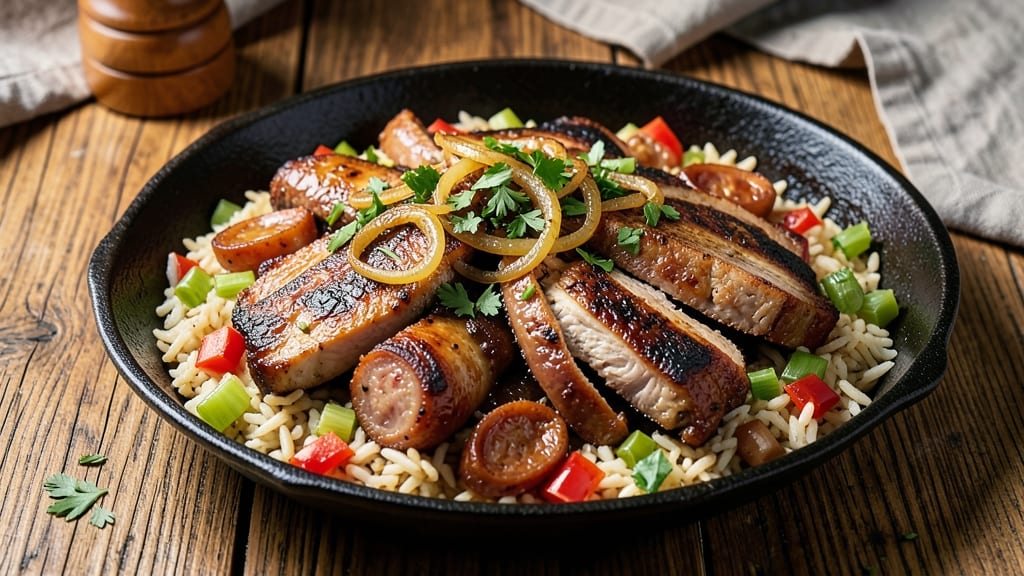
This Cajun pork and sausage jambalaya recipe delivers the bold, spice-packed flavors of Louisiana in one flavorful pot—just like my grandmother used to make back in Georgia. The secret lies in the deep, dark roux that forms the soul of this dish, where pork shoulder and andouille sausage melt into tender perfection alongside the holy trinity of onions, bell peppers, and celery. I've perfected this recipe over years of cooking for crowds at The Smoky Pig, where it's become a regular on our menu.
The magic happens in layers: first, the roux builds rich, nutty depth that carries the Cajun spices, then the pork and sausage render their flavors into the pot, and finally, the rice soaks up all that smoky, spicy goodness.
It's a one-pot feast that requires just 30 minutes of active prep followed by 45 minutes of simmering—perfect for weeknight dinners when you want restaurant-quality results without the fuss. The aromas alone will have everyone gathering around your table.
By the time it's done, you'll have a steaming pot of jambalaya with tender pork, crumbled sausage, and perfectly cooked rice—each bite packed with layers of heat, smokiness, and savory depth.
The dish stays hearty enough for a family dinner but works just as well for meal prep, reheating beautifully while maintaining its rich flavors. Garnish with fresh parsley or green onions for a pop of color that makes it look as good as it tastes.
Confession: I always double the batch because this jambalaya disappears faster than you can say "holy trinity." The leftovers are even better the next day as the flavors meld together. Here's how to make it—just like I do at the restaurant, but with your family at home.
Ingredients for cajun pork and sausage jambalaya
Pantry staples meet Louisiana boldness—just 16 ingredients for a flavor-packed one-pot feast.
| Ingredient | Amount | Notes |
|---|---|---|
| Pork Shoulder 🥩 | 2 ½ lb | Boneless, cut into 1-inch cubes |
| Andouille Sausage 🌭 | 1 ½ lb | Smoked, sliced into rounds |
| Long-Grain White Rice 🍚 | 2 cups | Uncooked, like Carolina or jasmine |
| Yellow Onion 🧅 | 1 whole | Diced, medium size preferred |
| Green Bell Pepper 🍅 | 1 whole | Diced, any color works |
| Celery Stalks 🥬 | 3 whole | Diced, strings removed |
| Garlic Cloves 🧄 | 4 cloves | Minced, fresh preferred |
| All-Purpose Flour 🌾 | ½ cup | For deep roux, all-purpose works |
| Vegetable Oil 🫒 | ½ cup | For roux cooking |
| Cajun Seasoning 🌶️ | 2 tbsp | Store-bought or homemade blend |
| Dried Thyme 🌿 | 1 tsp | Or 1 tbsp fresh thyme leaves |
| Bay Leaves 🍃 | 2 whole | Remove before serving |
| Chicken Stock 💧 | 2 cups | Low-sodium preferred |
| Salt 🧂 | 1 ½ tsp | Adjust to taste |
| Black Pepper 🌶️ | ½ tsp | Freshly ground preferred |
| Fresh Parsley 🌿 | ¼ cup | Chopped, for garnish |
The pork shoulder is the star here—look for well-marbled cuts at the butcher counter. Costco or Whole Foods often have great pre-cut options, but a whole shoulder lets you control the size. Andouille sausage is non-negotiable for that smoky depth—Johnsonville or Zatarain's are solid brands. For the holy trinity (onion, bell pepper, celery), I always grab fresh, firm vegetables—no wilted celery or mealy onions. The rice? Carolina or jasmine holds up best to the long cooking time. Pro tip: Rinse the rice first to remove excess starch.
No andouille? Spicy Italian sausage works in a pinch, but you'll lose that authentic smokiness. Short on thyme? Dried oregano at half the amount gets you close. The Cajun seasoning can be store-bought (Tony Chachere's is classic) or homemade—just mix paprika, garlic powder, onion powder, cayenne, and oregano. For the roux, don't rush it. Cook the flour and oil slowly until it's a deep chocolate brown—about 20-25 minutes. That nutty flavor is what makes jambalaya sing. No fresh parsley? Dried parsley works for garnish, but fresh is worth hunting down at the market.
This reheats like a dream—even better the next day as the flavors meld. Portion into containers for easy lunches, or freeze half for later. The rice stays firm for 4-5 days in the fridge, and the whole dish freezes beautifully for up to 3 months. Garnish with extra parsley or a sprinkle of hot sauce before serving—trust me, it makes all the difference. Leftovers? Double the batch—it disappears fast around here.
Why You'll Love This Recipe
- One-Pot Magic: I swear by this recipe—just brown the pork and sausage, toss in the veggies and rice, then let the slow cooker or Dutch oven do the work. No extra bowls, no fuss, and the smell alone makes dinner feel like a celebration.
- Smoky & Spicy Payoff: That smoky andouille and tender pork shoulder? It’s the star. The Cajun seasoning clings to everything—rice, peppers, even the crusty bits at the bottom—so every bite has layers of heat and depth. (Yes, even on a Tuesday night.)
- Meal Prep MVP: Make a big batch on Sunday and you’re set for lunches all week. The flavors actually improve as it sits, and it reheats like a dream—just add a splash of water and stir. My kids grab it straight from the fridge, no complaints.
- Budget-Friendly Feast: Pork shoulder and andouille stretch across multiple meals without breaking the bank. One recipe feeds six, and the leftovers freeze perfectly. Honestly, it’s the kind of dish that makes grocery day feel like a win.
Step-by-step instructions for bold Cajun pork and sausage jambalaya
Here's how to build this rich, spice-packed one-pot masterpiece that brings Louisiana flavors to your kitchen.
Build the Roux Foundation
Heat the 0.5 cup vegetable oil in a large, heavy-bottomed pot over medium heat. Add the 0.5 cup all-purpose flour all at once and stir constantly with a wooden spoon. This is where the magic begins—you're creating the roux that will thicken your jambalaya and carry all those deep flavors.
Cook for 8-10 minutes until the mixture turns a rich, golden brown color—this is your dark roux, and it should smell nutty and toasty. Be patient here; if it burns, start over. The roux is the backbone of your jambalaya, so don't rush this crucial step. You'll know it's ready when it looks like melted chocolate and smells like toasted flour.
Sauté the Holy Trinity
Immediately add the diced 1 whole yellow onion, 1 whole green bell pepper, and 3 whole celery stalks to the dark roux. Stir well to coat everything in that flavorful roux. Cook over medium heat for 5-6 minutes until the vegetables soften and release their juices, creating a fragrant base for your jambalaya.
Next, add the 4 cloves minced garlic, 2 tbsp Cajun seasoning, 1 tsp dried thyme, 1.5 tsp salt, and 0.5 tsp black pepper. Stir everything together and cook for another 1-2 minutes until the garlic becomes fragrant. This aromatic blend is what gives jambalaya its signature bold flavor profile. Here's where it gets good—you'll start to smell that Cajun magic developing.
Brown the Proteins
Push the vegetables to one side of the pot and add the 2.5 lb pork shoulder cubes and 1.5 lb sliced andouille sausage to the empty space. Let them sear undisturbed for 3-4 minutes until they develop a deep brown crust. This step is crucial for building layers of flavor—don't move the meat around too much or you'll steam it instead of browning it.
Once the pork and sausage are nicely browned on one side, stir everything together and cook for another 3-4 minutes until the pork begins to lose its pink color. Add the 2 whole bay leaves and pour in the 2 cups chicken stock. Bring the mixture to a gentle boil, then reduce the heat to low and let it simmer for 15 minutes to allow the flavors to meld together.
Add Rice and Simmer
Stir in the 2 cups long-grain white rice, making sure each grain is well-coated with the flavorful liquid. The rice should absorb the liquid immediately. Bring the mixture back to a gentle simmer, then reduce the heat to lowest setting and cover the pot with a tight-fitting lid. Here's the key: don't peek or stir—just let it cook undisturbed for 25-30 minutes.
After 25 minutes, check the rice. It should be tender but still have a slight bite. If it's not quite done, cover and cook for another 5-10 minutes. The rice should be fully cooked but still have a slight texture—this is what makes jambalaya perfect. If the mixture looks dry, add 2-3 tablespoons of water and stir gently to distribute it evenly.
Finish and Serve
Once the rice is perfectly cooked, remove the 2 whole bay leaves and discard them. Give the jambalaya a final taste and adjust the seasoning if needed—you might want to add a pinch more salt or Cajun seasoning to intensify the flavors. Stir in the 0.25 cup chopped fresh parsley just before serving to add a fresh, bright contrast to the rich, spicy flavors.
Let the jambalaya rest for 5 minutes before serving. This resting time allows the flavors to settle and the rice to absorb any remaining liquid. Serve it hot, straight from the pot, with crusty bread to soak up every last bit of that delicious Cajun sauce. This one-pot wonder is perfect for feeding a crowd and will have everyone asking for seconds!
Pro Tips For Making Cajun Pork And Sausage Jambalaya
- Sear the Pork First: I learned this the hard way—skipping the sear means your pork shoulder will turn out dry and flavorless. Get your Dutch oven smoking hot and brown the pork in batches (yes, it’s messy) for 3-4 minutes per side. That crust locks in moisture and builds depth—no one wants bland pork in their jambalaya.
- Slice the Andouille Thin: Thick sausage slices stay chewy and fight for space in the rice. Grab a sharp knife and cut the andouille lengthwise into ¼-inch strips before dicing—this guarantees even cooking and melty texture. (Pro move: Pat them dry first; they’ll render better.)
- Don’t Stir the Rice: After toasting the rice in the fat, pour the broth and stir once—then walk away. Stirring releases starch too early, making the rice mushy. Let it bubble undisturbed for 3 minutes before fluffing. (I know, it looks weird, but it works.)
- Toast the Bell Pepper: Skip the raw chunks—they’ll turn the jambalaya into soup. Char the bell pepper halves over an open flame (or broil) until blackened in spots, then peel and dice. The smoky depth cuts through the richness of the pork and sausage. (Yes, even if you’re impatient like me.)
Dietary considerations for this cajun pork and sausage jambalaya
Gluten-Free Adaptation
For a gluten-free jambalaya, simply swap the all-purpose flour in the roux for a 1:1 gluten-free flour blend like Bob's Red Mill or King Arthur. I've tested this with great success—just be sure to cook the roux over medium-low heat since gluten-free flours can burn faster.
The texture stays rich and flavorful, though slightly less thick. Add 1 extra tablespoon of cornstarch if you want the same creamy consistency. 🌾
Low-Carb Option
Skip the rice entirely and use cauliflower rice instead—it absorbs flavors beautifully while cutting carbs dramatically. I recommend fresh cauliflower chopped into rice-sized pieces or pre-riced from the freezer section.
Cook it with the jambalaya mixture for 15-20 minutes until tender, adding 1 extra cup of chicken stock to prevent drying. The result is still hearty but much lighter.
Dairy-Free Considerations
This recipe is naturally dairy-free, but always double-check your Cajun seasoning and andouille sausage labels for hidden milk derivatives. For extra richness, stir in 2 tablespoons of coconut milk during the final 5 minutes of cooking.
It adds a subtle creaminess without dairy. I've also used cashew cream (blended soaked cashews) for a nutty depth that works surprisingly well. 🥥
Allergen-Friendly Swaps
For nut allergies, avoid cashew cream and stick with coconut milk or extra chicken stock. Shellfish allergies aren't a concern here, but if you're avoiding pork, substitute chicken thighs or shrimp (use ½ lb shrimp cooked separately and added at the end).
For seafood lovers, shrimp jambalaya is a Southern classic—just toss in 1 lb peeled shrimp during the last 5 minutes of cooking.
Spice Sensitivity
Reduce the Cajun seasoning to 1 tablespoon and ½ teaspoon cayenne if you're sensitive to heat. I also recommend keeping the bell pepper mild (like green or yellow) instead of spicy varieties.
For extra flavor without heat, add 1 teaspoon smoked paprika or ½ teaspoon celery seed—both add depth without burning. Always taste as you go!
Vegetarian Version
Replace the pork and sausage with 1 lb extra-firm tofu (pressed and cubed) and 1 lb plant-based andouille sausage (like Field Roast or Beyond Meat). For extra umami, add 1 tablespoon soy sauce when building the roux. The tofu absorbs flavors beautifully—just
Nutrition facts
Frequently asked questions about Cajun pork and sausage jambalaya
Why does jambalaya need a dark roux?
The dark roux is the flavor foundation of jambalaya! Cooking the flour and oil until deep brown develops nutty, complex flavors that carry the Cajun spices. This rich base prevents the dish from being too thin and creates that signature Louisiana depth. Skipping this step makes your jambalaya taste more like a stew than the traditional one-pot masterpiece.
Can I make jambalaya in a slow cooker?
Brown the pork and sausage first, then transfer everything to your slow cooker. Cook on low for 6-7 hours or high for 3-4 hours. Add the rice during the last 30 minutes of cooking. The slow cooker keeps the rice tender and lets flavors meld perfectly—just check for doneness and add extra stock if needed.
What's the best way to reheat jambalaya?
Reheat gently with 1-2 tablespoons of water or stock per cup of jambalaya over low heat on the stove. Microwave reheating can make the rice mushy. For best results, cover and heat for 5-7 minutes, stirring occasionally. The flavors actually improve overnight as everything melds together!
How do I adjust the heat level?
Start with 1 tablespoon Cajun seasoning and ¼ teaspoon cayenne for mild heat. For medium heat, use the full 2 tablespoons Cajun seasoning as written. For extra spice, add ½ teaspoon red pepper flakes or serve with hot sauce on the side. Always taste as you go—you can adjust, but you can't take out the heat!
What if my jambalaya turns out too dry?
This happens when the rice absorbs too much liquid. Simply stir in 2-3 tablespoons of warm chicken stock and let it simmer covered for 5-10 more minutes. If it's still dry, the rice may have overcooked. For next time, reduce the cooking time slightly or use slightly less rice. The dish should be moist but not soupy.