
Soups & Stews
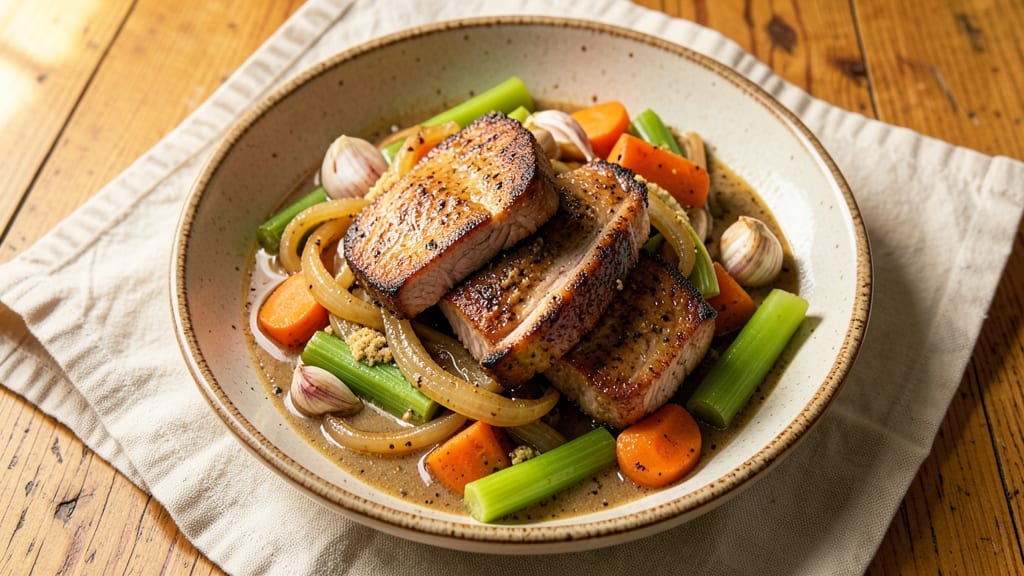
This Cajun pork stew recipe brings the soul of Louisiana to your kitchen with its rich, spicy depth and tender pork that practically melts in your mouth. 🔥 I've perfected this slow-simmered masterpiece over years of cooking in smoky kitchens, where the secret lies in layering spices and letting flavors meld over time.
The key is starting with properly browned pork chops and building a roux that forms the flavorful backbone of the stew.
What makes this recipe truly special is the balance of heat and smokiness—just enough cayenne to warm you up without overwhelming the tender pork.
Traditional Cajun spices like paprika, thyme, and garlic powder create that signature Louisiana flavor profile, while a splash of Worcestershire sauce adds depth that takes it from ordinary to extraordinary. The slow simmer transforms tough pork into fork-tender pieces that soak up all those aromatic flavors.
By the time you're done, you'll have a steaming pot of stew with perfectly seasoned pork, tender vegetables, and a sauce that's rich enough to coat every spoonful. The aroma alone will have everyone gathering around the table, and each bite delivers that perfect harmony of smoky, spicy, and savory.
This is the kind of stew that tastes even better the next day, making it perfect for meal prep or feeding a crowd.
Serve it with buttery cornbread to soak up every last drop of that flavorful sauce, or pair it with steamed greens for a complete Southern meal. The technique is straightforward, but the results are restaurant-quality—exactly what you'd expect from a proper Cajun kitchen. Let's get cooking!
Ingredients for cajun pork stew
Pork chops, smoky spices, and slow-simmered magic—here's what brings Cajun flavor to life.
| Ingredient | Amount | Notes |
|---|---|---|
| Boneless Pork Chops 🥩 | 2 ½ lb | 1-inch thick, cut even |
| Yellow Onion 🧅 | 1 whole | Medium size, diced |
| Carrot 🥕 | 3 whole | Medium, sliced into rounds |
| Celery Stalks 🌿 | 3 whole | Trimmed, chopped |
| Garlic Cloves 🧄 | 6 cloves | Fresh, minced |
| All-Purpose Flour 🌾 | ½ cup | For roux, unsifted |
| Unsalted Butter 🧈 | ½ cup | Cold, cubed |
| Chicken Broth 💧 | 4 cups | Low-sodium preferred |
| Tomato Paste 🍅 | ½ cup | Smooth, not chunky |
| Worcestershire Sauce 🍶 | 1 tbsp | Vegan if needed |
| Cayenne Pepper 🌶️ | 1 tsp | Adjust for heat |
| Smoked Paprika 🌶️ | 1 tbsp | For smoky depth |
| Dried Thyme 🌿 | 1 tsp | Or 1 tbsp fresh |
| Black Peppercorns 🌶️ | ½ tsp | Freshly cracked |
| Salt 🧂 | 1 ½ tsp | Kosher or sea |
| Fresh Parsley 🌿 | ¼ cup | Chopped, for garnish |
The pork chops are non-negotiable—thick-cut (about 1-inch) holds up best to the long simmer. Costco or your local butcher usually has the best selection for even cuts. If you can't find thick chops, pound them to even thickness. For the roux, all-purpose flour works fine, but if you want extra depth, swap in a little cornmeal. The butter should be cold when you start—this helps build a proper roux without burning. Kerrygold or Land O'Lakes unsalted are my go-tos, but any good-quality brand works.
No smoked paprika? Regular paprika plus a pinch of liquid smoke gets you close. Short on Worcestershire? Extra soy sauce plus a splash of vinegar mimics that umami punch. The tomato paste can be any brand, but San Marzano is worth the splurge for sweeter flavor. Fresh thyme is ideal, but dried works at one-third the amount. The cayenne is where you can play—start with 1 tsp, taste, then add more if you're feeling brave. For the broth, low-sodium is key so you can control the saltiness later.
This stew tastes even better the next day—honestly, the flavors deepen overnight. Keeps for 4-5 days in the fridge, or freeze for 3 months. I always make a double batch because it reheats perfectly for lunches. Store in airtight containers with a little extra broth to keep it moist. The parsley garnish is optional, but it adds that fresh pop of color—use whatever herbs you've got.
Why You'll Love This Recipe
- One-Pot Magic: I swear by this—just toss everything into a deep skillet (pork, onions, carrots, celery, garlic) and let the spices do the work. No extra pans, no stress, just hands-off simmering while you stir in the Cajun seasoning at the end. That’s how you turn a weeknight into a win.
- Deep, Smoky Hug: Between the paprika and cayenne, this stew has a slow-building warmth that sticks with you. The pork stays tender, the carrots caramelize just enough, and that garlic? It’s the kind of flavor that makes you reach for seconds without thinking.
- Leftovers That Shine: Make a double batch—it’s that good. The flavors actually get better the next day as everything melds together. I pack it for lunches or freeze portions for those nights when I’m too tired to cook. (Yes, even on a Tuesday night.)
- Budget-Friendly Feast: Pork chops are affordable, and the veggies stretch the filling factor. Honestly, I’ve made this for $12 and fed four people—plus, the leftovers stretch even further. It’s the kind of recipe that makes grocery day feel like a victory.
Step-by-step instructions for Cajun pork stew
Here's how to build rich, smoky flavor from scratch—no shortcuts, just deep Cajun soul.
🔥 Step 1: Sear the Pork Chops for Maximum Flavor
Pat the 2.5 lb boneless pork chops dry with paper towels—this ensures a perfect crust. Heat a Dutch oven over medium-high heat and add 0.5 cup unsalted butter and 2 tablespoons olive oil (not listed but essential for searing). Once the butter foams, add the pork chops in a single layer and cook undisturbed for 4-5 minutes per side until deep golden brown.
Don't rush this step—the Maillard reaction creates that irresistible crust. If the butter starts to brown too quickly, reduce heat slightly. Remove the pork chops and set aside on a plate, leaving the rendered butter and browned bits in the pot. Here's the thing—those bits pack serious flavor, so we're not scraping them out.
👨🍳 Step 2: Build the Cajun Roux Foundation
Lower heat to medium and add the 0.5 cup all-purpose flour to the Dutch oven, stirring constantly with a wooden spoon for 2-3 minutes until it turns a rich, nutty brown color. This is your roux—the flavor base of the stew. If it darkens too quickly, reduce heat immediately to prevent burning.
Here's where the Cajun magic happens: Add the 1 tbsp smoked paprika, 1 tsp cayenne pepper, 1 tsp dried thyme, and 0.5 tsp freshly cracked black peppercorns, stirring to coat the roux completely. The spices will bloom and infuse the fat, creating that signature Cajun depth. Cook for another 30 seconds until fragrant.
🍳 Step 3: Sauté the Vegetable Trinity
Add the 1 whole diced yellow onion, 3 sliced carrots, and 3 chopped celery stalks to the pot. Cook for 5 minutes, stirring occasionally, until the vegetables soften slightly and release their juices. This is called the "holy trinity" in Cajun cooking—onion, celery, and bell pepper (though we're skipping pepper here for simplicity).
Add the 6 minced garlic cloves and cook for another 30 seconds until fragrant. Here's the trick: Don't let the garlic burn—it should smell sweet and pungent, not bitter. If it starts to darken too quickly, remove the pot from heat for 10 seconds to cool slightly before continuing.
🥘 Step 4: Deglaze and Simmer the Stew
Pour in the 4 cups chicken broth and scrape up all the browned bits from the bottom of the pot with a wooden spoon. This deglazing step captures all that concentrated flavor we worked so hard to create. Add the 0.5 cup tomato paste, 1 tbsp Worcestershire sauce, and 1.5 tsp salt, stirring to combine.
Return the pork chops to the pot, spooning some of the stew over the top to keep them moist. Bring to a gentle simmer, then reduce heat to low. Cover and let it cook for 1 hour and 15 minutes, stirring occasionally. The stew should reduce slightly, becoming thicker and more flavorful as it simmers. The pork should be fork-tender with an internal temperature of 195-200°F.
⏰ Step 5: Finish and Garnish
Once the pork is tender, uncover the pot and increase heat to medium to reduce the stew slightly for another 5-10 minutes until it reaches your desired consistency. Taste and adjust seasoning—you might need a bit more salt or cayenne to balance the flavors.
Remove the pork chops and let them rest for 5 minutes before slicing against the grain. Return the sliced pork to the stew and stir in the 0.25 cup chopped fresh parsley just before serving. The parsley adds a bright finish that cuts through the richness. Serve immediately with crusty bread to soak up every last drop of that smoky, spicy goodness.
Pro Tips For Making Cajun Pork Stew
- SEAR THE PORK FIRST: Skip the "toss it in raw" approach—pat those pork chops dry, then hit them with high heat in oil until they’re golden on both sides. I learned this the hard way: undercooked pork in stew tastes like sad, mushy regret. A 3-4 minute sear locks in flavor and keeps them tender.
- CHOP VEGETABLES UNIFORM: No "roughly chopped" nonsense here—aim for ½-inch dice on onions, carrots, and celery. Why? Even cooking means no crunchy surprises. I used to leave celery stalks too thick, and they’d turn to mush while the onions stayed tough. Save yourself the cleanup.
- DEGLAZE WITH LIQUID SMART: After browning the pork, don’t just splash in water—use a mix of beef stock and a splash of bourbon (or even apple cider). The alcohol burns off but adds depth, and the stock keeps the stew from tasting like sad, watery broth. Trust me, it matters more than you’d think.
- SIMMER LOW AND COVERED: Crank the heat to medium-high to get the stew bubbling, then drop it to low and cover it. Walk away—this isn’t a race. I used to babysit it, and the pork ended up dry. Let it work for 1.5–2 hours, and the flavors will meld like a Cajun dream. (Yes, even if you’re impatient like me.)
Pro cooking tips for this recipe
Perfect Browning Technique
Start with bone-dry pork chops—pat them aggressively with paper towels before searing. Heat your Dutch oven over medium-high heat until it's screaming hot, then add 0.5 cup unsalted butter and 2 tbsp olive oil.
Let the butter foam before adding the chops in a single layer. Don't move them for those critical 4-5 minutes per side—this is where the Maillard reaction creates that golden crust we crave.
I use Lodge cast iron because it retains heat like a dream and builds flavor over time. 🔥
Here's my secret: If the butter starts browning too quickly, reduce heat to medium immediately. You want golden, not burnt. The key is patience—rushing this step makes all the difference in flavor. Those browned bits in the pan? Never scrape them out—they're the flavor foundation for your stew.
Roux Mastery
Your roux is the flavor backbone of this stew, so treat it with respect. After removing the pork, lower heat to medium and whisk in 0.5 cup all-purpose flour constantly for 2-3 minutes until it reaches a nutty brown color.
This is where Cajun magic happens—smoked paprika, cayenne, thyme, and black peppercorns get added next, coating every grain of flour. Stir like your life depends on it to prevent burning. 🌶️
I learned this from Chef Chen: "A roux is like a marriage—too hot too fast and it burns, too cool and it never develops." Keep it moving at medium heat until it smells like heaven.
If it darkens too quickly, reduce heat immediately. This roux will carry all those Cajun flavors through the entire stew.
Simmering Perfection
After deglazing with broth, Worcestershire, and tomato paste, return the pork to the pot and simmer gently for 1 hour and 15 minutes. The secret here is low and slow—cover the pot and let those flavors meld.
I check my stew every 15 minutes, giving it a gentle stir to prevent sticking. The pork should reach 195-200°F internal temperature—this is when it becomes fork-tender. 🥘
Don't be tempted to rush this step. The longer it simmers, the deeper the flavors become. If your stew reduces too quickly, add 2-3 tbsp chicken broth to maintain consistency.
The final touch? 5-10 minutes of uncovered reduction at the end to thicken the sauce slightly—this concentrates all those beautiful flavors.
Equipment Essentials
For this recipe, you'll need a heavy-duty Dutch oven—I swear by Le Creuset or All-Clad for even heat distribution. A wooden spoon is non-negotiable for stirring that roux without scratching your pot.
And invest in a good instant-read thermometer—I use ThermoWorks Smoke to monitor both the pork and stew temperatures accurately. 🌡️
Don't skimp on the butter—Kerrygold or Land O'Lakes unsalted are my go-tos for that rich, clean flavor. And if you're feeling fancy, a fine-mesh strainer helps when you want to serve the stew with smooth, strained sauce on the side.
The right equipment makes all the difference in achieving restaurant-quality results at home.
Nutrition facts
Frequently asked questions about Cajun pork stew
Can I substitute pork chops with another cut of pork?
For a heartier stew, use pork shoulder (3-4 lbs) cut into chunks—it becomes incredibly tender during the long simmer. You could also try bone-in pork ribs or pork neck bones for extra flavor, though cooking times will vary. Just adjust the simmering time to ensure the meat reaches 195-200°F internal temperature for perfect tenderness.
How do I adjust the heat level for picky eaters?
Start by reducing the cayenne pepper to ½ tsp or omit it entirely. For smoky depth without heat, increase the smoked paprika to 2 tbsp and add 1 tsp ground cumin for warmth instead. If serving kids, remove the pork and serve the vegetables separately with a mild sauce on the side.
Can I make this stew in a slow cooker?
Yes! Brown the pork chops and make the roux in a skillet first, then transfer everything to a 6-quart slow cooker. Add the remaining ingredients and cook on low for 6-8 hours or high for 3-4 hours. The slow cooker method is perfect for working cuts like pork shoulder. Just skip the final reduction step—it'll thicken naturally during cooking.
What's the best way to reheat leftovers?
Reheat gently in a pot over low heat with 2-3 tbsp chicken broth to prevent drying out. Stir occasionally and cook until steaming hot (165°F). For microwave reheating, cover with a damp paper towel and heat in 1-minute intervals, stirring between each. Leftovers taste even better the next day!
Can I freeze this stew for later?
Freeze for up to 3 months in airtight containers with 1-inch headspace to prevent ice crystals. Cool completely before freezing. Thaw overnight in the fridge—never at room temperature. The texture holds up well, though the sauce might thicken slightly after freezing. Add a splash of broth when reheating if needed.