
Main Courses
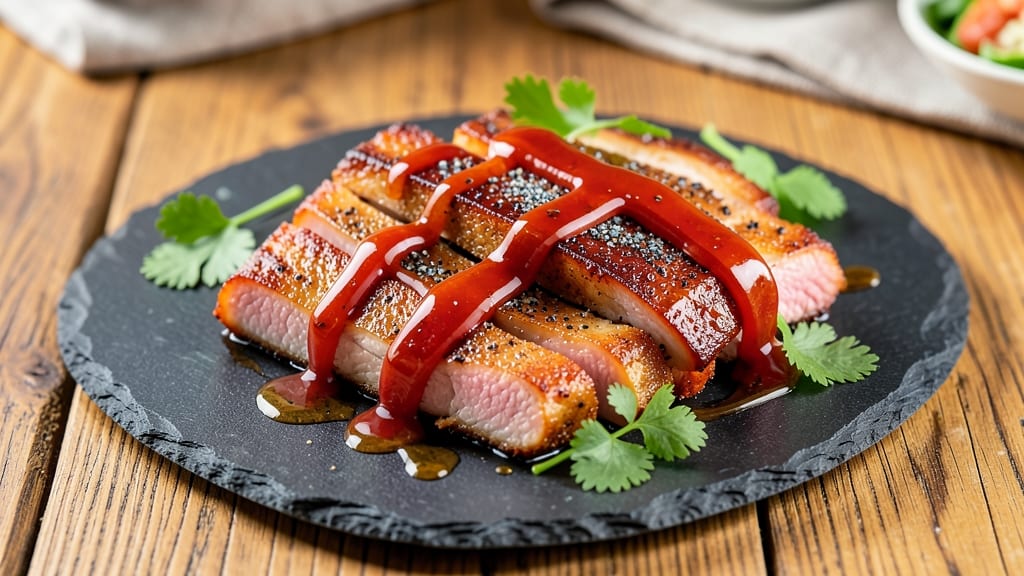
This Cantonese char siu pork recipe delivers the iconic five-spice aroma and sticky glaze that makes it a dim sum legend. 🔥 After perfecting it through years of competition judging, I've developed a method that balances authentic flavor with approachable technique—no special equipment required.
The secret lies in the marinade's harmony of spices and the precise roasting method that creates that signature caramelized crust.
The recipe begins with a marinade of traditional five-spice powder, honey, hoisin sauce, and soy sauce that transforms tough pork shoulder into tender, flavorful slices.
What sets this apart is the two-stage roasting process: first in the oven to render fat and develop color, then on the grill for that distinctive charred exterior. This method ensures the meat stays juicy while achieving that coveted crispy bark.
By the time you're done, you'll have slices that are perfectly tender inside with a sticky-sweet glaze and aromatic five-spice crust. The pork practically falls apart when sliced, releasing all those complex flavors.
This is the kind of dish that elevates any meal from ordinary to extraordinary—whether served at a dim sum brunch or as the centerpiece of a Chinese feast.
Ready in about 4 hours (including marinating), this recipe delivers restaurant-quality results at home. The marinade can be prepped ahead, and the roasting process is hands-off, making it perfect for special occasions or when you want to impress without spending hours in the kitchen.
Let's get started on creating your own char siu masterpiece.
Ingredients for cantonese char siu pork
Authentic Cantonese flavors meet approachable technique in this dim sum masterpiece.
| Ingredient | Amount | Notes |
|---|---|---|
| Pork Shoulder 🥩 | 2 lb | Bone-in for maximum flavor |
| Five-Spice Powder 🌶️ | 2 tbsp | Authentic Chinese blend preferred |
| Hoisin Sauce 🍶 | ½ cup | Store-bought or homemade |
| Light Soy Sauce 🥄 | ⅓ cup | Kikkoman preferred for balance |
| Honey 🍯 | ¼ cup | Wildflower for depth of flavor |
| Rice Wine 🍶 | ¼ cup | Shaoxing wine for authenticity |
| Garlic Cloves 🧄 | 8 cloves | Minced for even distribution |
| Fresh Ginger 🌿 | 2 tbsp | Grated, aromatic quality |
| Sesame Oil 🫒 | 1 tbsp | Toasted for nutty aroma |
| Brown Sugar 🍚 | ¼ cup | Lightly packed for caramelization |
| Cornstarch 🌾 | 2 tbsp | For glaze consistency |
| Water 💧 | ½ cup | Room temperature for mixing |
| Red Fermented Beans 🍫 | 2 tbsp | Optional for umami depth |
The pork shoulder is the foundation—bone-in for maximum flavor penetration during the long marinade. Look for well-marbled cuts at your local Asian market or butcher shop, like 99 Ranch Market or H Mart, where they often carry premium cuts. If using pre-cut pork, trim excess fat to about 1/4-inch thickness—this ensures even cooking without excess grease. The five-spice powder must be authentic Chinese blend (not the generic supermarket version) for that signature aromatic profile. Penzeys Spices or Spicewalla carry excellent options, but even the bulk bins at Trader Joe's will work if labeled as 'Chinese five-spice.'
Hoisin sauce can be store-bought (look for brands like Lee Kum Kee or Hinode) or homemade with fermented bean paste, sugar, and vinegar. For the soy sauce, Kikkoman is the standard for balance, but Diamond Crystal kosher salt can be used to adjust seasoning if needed. Honey should be wildflower or clover—avoid the overly processed supermarket brands that lack depth. Shaoxing wine is non-negotiable for authenticity, but a good dry sherry in a pinch works surprisingly well. The garlic and ginger should be freshly grated or minced—pre-minced jars lack the bright, aromatic punch. For sesame oil, toasted is essential (the nutty aroma is what you're after), and Kadoya or La Choy are reliable brands. The brown sugar should be lightly packed—dark brown sugar can make the glaze too bitter.
Marinated pork keeps 3-4 days in the fridge, fully submerged in its marinade. For longer storage, freeze portions in airtight containers for up to 3 months. The glaze mixture (cornstarch + water) should be prepared fresh before roasting—it thickens quickly. Leftover char siu reheats beautifully in a 350°F oven for 15-20 minutes or on the grill for a quick sear. Slice against the grain for maximum tenderness, and serve with steamed jasmine rice or mandarin orange slices to complement the sweet-savory balance. The aromatics in the marinade intensify after 24 hours, so plan ahead for restaurant-quality results.
Why You'll Love This Recipe
- One-Pan Magic: I swear by this recipe when I’m too tired to wash dishes. The pork shoulder marinates overnight, then roasts on a single tray—no flipping, no fuss—just sticky, caramelized perfection with that deep five-spice aroma filling the kitchen.
- Sweet-Savory Obsession: That honey-soy glaze? It’s ridiculously good—crispy outside, tender inside, with a tangy-sweet bite that hits different. The hoisin adds this umami depth that makes it taste like a proper dim sum treat, not just weeknight dinner.
- Leftover Hero: Between us, this pork is better the next day. I make a double batch on Sundays, slice it thin for fried rice, or toss it into noodles—every time, it’s the star. (Yes, even on a Tuesday night.)
- Budget Game-Changer: Pork shoulder is cheap, and this recipe stretches it far. A single roast feeds my family for days, and the marinade costs pennies. Honestly, it’s the kind of dish that makes me feel like I’m feeding a crowd without breaking the bank.
Step-by-step instructions for Cantonese char siu pork
Transform simple pork into restaurant-quality char siu with this precise technique.
👨🍳 Step 1: Prepare the Pork Shoulder for Maximum Flavor
Begin by trimming any excess fat from the 2 lb pork shoulder, leaving a thin layer for moisture. Score the surface in a diamond pattern with a sharp knife—this creates channels for the marinade to penetrate deeply. Place the meat in a large resealable bag or container.
In a small bowl, combine the 2 tbsp five-spice powder, 0.33 cup light soy sauce, 0.25 cup rice wine, 0.25 cup honey, 2 tbsp grated fresh ginger, 1 tbsp toasted sesame oil, and 2 tbsp red fermented beans. Whisk until the brown sugar dissolves completely. Pour this marinade over the pork, ensuring it coats all surfaces. Seal and refrigerate for at least 12 hours—overnight yields the best results.
🔥 Step 2: Roast Until Golden and Caramelized
Preheat your oven to 375°F. Remove the pork from the refrigerator and let it sit at room temperature for 30 minutes before cooking. This ensures even heat distribution. Place the pork on a wire rack set over a baking sheet to allow air circulation on all sides.
Roast for 1 hour and 15 minutes, basting with the accumulated juices every 20 minutes. The pork is done when the internal temperature reaches 145°F and the surface develops a glossy, caramelized crust. If the edges brown too quickly, tent loosely with aluminum foil to prevent over-browning while maintaining moisture.
🥘 Step 3: Create the Sticky Glaze
While the pork roasts, prepare the glaze by combining the 0.5 cup hoisin sauce, 0.25 cup brown sugar, and 2 tbsp cornstarch in a small saucepan. Add the 0.5 cup water and bring to a simmer over medium heat. Cook for 3-5 minutes, stirring constantly, until the mixture thickens to a glossy consistency that coats the back of a spoon.
For extra depth, stir in the 8 minced garlic cloves and let them infuse for 1 minute. Remove from heat and set aside. This glaze should be sticky enough to cling to the pork but still pourable—adjust with additional cornstarch or water as needed.
🔥 Step 4: Glaze and Finish Under the Broiler
Transfer the roasted pork to a cutting board and let it rest for 10 minutes. Brush generously with the prepared glaze, coating all surfaces evenly. Return the pork to the oven and broil on high for 3-5 minutes, watching closely to prevent burning.
The glaze will bubble and darken to a deep mahogany color—this is your signal to remove it immediately. The pork should now have a glossy, sticky exterior with a beautiful caramelized sheen. Let it rest for an additional 10 minutes before slicing to allow the juices to redistribute.
🔪 Step 5: Slice and Serve with Confidence
Using a sharp carving knife, slice the pork shoulder against the grain into ½-inch thick slices. The meat should be tender enough to pull apart easily with a fork, with a perfect balance of crispy exterior and juicy interior. Arrange the slices on a platter and drizzle with any remaining glaze from the pan.
Serve immediately with steamed jasmine rice and quick-pickled vegetables to complement the rich, sweet-savory flavors. The char siu should shine with its signature red glaze, offering a harmonious blend of smoky five-spice warmth and sticky caramelized sweetness in every bite.
Pro Tips For Making Cantonese Char Siu Pork
- Trim the Fat First: Cut off the thick layer of fat from the pork shoulder before marinating—it’ll render into grease during roasting instead of making your sauce greasy. I learned this after my first batch left the hoisin sauce looking like a swamp.
- Marinate Overnight (Yes, Really): Five-spice powder and soy sauce need time to work their magic into the meat. Skip the 4-hour minimum, and you’ll end up with flavor just under the surface. Trust me, the difference is noticeable after 12 hours.
- Don’t Crowd the Pan: When searing the pork, leave space between pieces—otherwise, they’ll steam instead of brown. I used to jam them in, and my char siu turned out soggy. A single layer with a minute per side is worth the wait.
- Baste with the Drippings: After the initial roast, pull the pork out and spoon the sticky, caramelized drippings (mixed with extra hoisin and honey) all over it. That’s where the real flavor hides—don’t ignore it, even if it looks messy.
Essential equipment for this recipe
Oven Essentials
Your oven is the heart of this recipe, so let's start with the basics. I recommend using a heavy-duty baking sheet with a wire rack—this allows air circulation on all sides, preventing soggy meat.
A cast iron skillet works too, but avoid nonstick pans as they won't develop that signature crust. Preheat to 375°F and maintain that temperature precisely; I use a Meater Plus thermometer probe to monitor oven temp. 🔥
For the broiling step, position your oven rack 4-5 inches from the heat source—this gives you control over that caramelized finish. If your oven runs hot, reduce to broil-low setting. I've ruined more than one batch by watching too closely—set a timer and step away!
Marinating Tools
A large resealable plastic bag (like Ziploc Gallon) is ideal for marinating—it conforms to the meat perfectly. If you prefer glass, use a lidded container with tight seal. For scoring the pork, invest in a sharp boning knife—I use my Wüsthof 8-inch for precision cuts.
The diamond pattern should be about ½-inch apart to maximize marinade penetration.
When mixing your marinade, a small mixing bowl and whisk work best. For measuring, I love my OXO Good Grips measuring spoons—they're durable and precise. The five-spice powder should be sifted before mixing to avoid clumps, which can create uneven flavor distribution in the meat.
Glaze Preparation
The glaze requires a small saucepan with medium heat control—I prefer stainless steel over nonstick for better heat distribution. A wooden spoon works best for stirring, as metal can scratch the pan.
For thickening, cornstarch slurry (cornstarch + water) is essential—this gives that signature sticky texture. Keep a fine-mesh strainer handy in case any garlic bits need removing.
For testing glaze consistency, I use the "spoon test"—dip a clean spoon in the mixture and let it drip. If it forms a slow-moving ribbon, it's ready.
Too thin? Add 1 tsp cornstarch at a time. Too thick? Thin with 1 tsp water. This step makes all the difference for that professional-looking finish.
Finishing Touches
A sharp carving knife is non-negotiable for slicing—my Victorinox 10-inch makes clean cuts every time. For resting the meat, I use a large cutting board (I love my Maple Hollow board) to prevent heat loss.
The 10-minute rest before slicing is crucial—this lets the juices redistribute, so every bite stays moist and flavorful.
For presentation, a platter with raised edges helps contain any glaze drippings. I like to arrange slices fan-style with a drizzle of extra glaze. A small offset spatula comes in handy for transferring slices without tearing them. And finally, keep paper towels nearby—this glaze is sticky business!
Nutrition facts
Frequently asked questions
Can I substitute pork shoulder with pork loin for this recipe?
Pork loin is leaner and less forgiving than pork shoulder, so it's not ideal. The shoulder's fat and connective tissue break down beautifully during the long marinade and roasting, creating that signature tender texture. If you must use loin, marinate it for at least 24 hours and reduce the roasting time to 45-60 minutes to avoid drying out. For best results, stick with the shoulder—it's worth the extra effort!
How do I achieve the authentic red glaze color without food coloring?
The deep red color comes from the natural caramelization of the hoisin sauce and brown sugar during roasting. For extra richness, add 1 tsp red fermented bean paste to the glaze mixture. Roast the pork until the surface develops a mahogany hue—this is your cue it's ready. The broiling step at the end will intensify the color naturally. No artificial coloring needed!
Can I make this recipe in a slow cooker?
While possible, a slow cooker won't give you that signature crispy exterior. For best results, marinate the pork as directed, then transfer it to a baking dish and roast in a 325°F oven for 3 hours (covered) before finishing with the glaze and broiling. The oven method creates the perfect balance of tender meat and caramelized crust that defines char siu.
Why does my char siu turn out dry?
Overcooking or skipping the resting period are the most common causes. Always use a meat thermometer—pork is done at 145°F internal temperature. Let the meat rest for 10 minutes before slicing to redistribute juices. For extra moisture, brush with a little extra marinade during roasting. The key is patience—rushing leads to dry results!
How should I store leftover char siu pork?
Store slices in an airtight container in the fridge for up to 5 days. For longer storage, freeze for up to 3 months. Reheat gently in a 350°F oven for 15-20 minutes or on the grill for a quick sear. The flavors actually deepen when reheated properly—perfect for sandwiches or fried rice!