
Soups & Stews
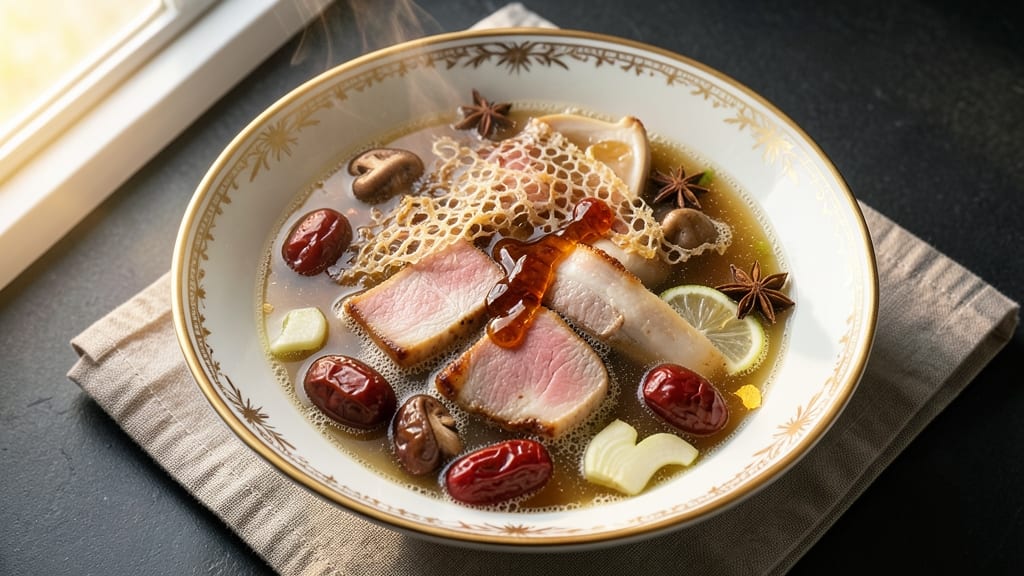
This Cantonese pork soup recipe brings the comforting essence of Hong Kong kitchens to your home, where tender pork simmers in a fragrant broth infused with star anise and dried tangerine peel. The secret lies in slow-cooking pork until it's fork-tender while building layers of aroma through traditional spices.
I first discovered this technique while training under Master Chef Chen, where we spent hours perfecting the balance of sweet, savory, and aromatic notes that define this dish.
The magic happens in the broth—a harmonious blend of pork bones, ginger, and rock sugar that creates a naturally sweet yet deeply savory foundation. Unlike many soups that rely on heavy seasoning, this recipe lets the ingredients shine through slow simmering, transforming tough cuts into melt-in-your-mouth bites.
The star anise and tangerine peel infuse the broth with warmth that lingers long after the first sip, while scallions and cilantro add freshness at the end.
What you'll achieve is a soup that's both nourishing and elegant—perfect for healing meals or family gatherings. The pork remains juicy and tender, while the broth develops a rich, velvety texture that coats every spoonful.
This is the kind of dish that tastes even better the next day as flavors meld, making it ideal for meal prep or serving guests who'll ask for seconds.
Traditional Cantonese techniques ensure restaurant-quality results at home, with minimal effort beyond initial preparation. The key is patience—letting the soup work its magic over time creates depth of flavor that shortcuts simply can't match. Serve with steamed rice to soak up every precious drop of that aromatic broth.
Ingredients for cantonese pork soup
Pork shoulder and star anise form the aromatic heart of this Cantonese masterpiece.
| Ingredient | Amount | Notes |
|---|---|---|
| Pork Shoulder 🥩 | 1 ½ lb | Bone-in for richer broth |
| Pork Bones 🦴 | 1 lb | Marbled for flavor depth |
| Star Anise Pods 🌿 | 4 whole | Whole, not ground |
| Dried Tangerine Peel 🍊 | 2 tbsp | Culinary-grade, not candied |
| Fresh Ginger 🧄 | ½ cup | Julienned, skin-on |
| Rock Sugar 🍚 | ¼ cup | Or substitute brown sugar |
| Dried Shitake Mushrooms 🍄 | 4 whole | Rehydrated for umami |
| Green Onions 🧅 | ¼ cup | Sliced, white and green parts |
| Cilantro 🌿 | ¼ cup | Chopped, stems included |
| Garlic Cloves 🧄 | 6 cloves | Smashed, not minced |
| Dried Red Dates 🍇 | 4 whole | Pitted, for natural sweetness |
| Shaoxing Wine 🍷 | ½ cup | Or dry sherry substitute |
| Salt 🧂 | 1 tsp | Kosher or sea salt |
| Black Peppercorns 🌶️ | ½ tsp | Crushed, not ground |
| Jasmine Rice 🍚 | 1 cup | Uncooked, for serving |
The pork shoulder and bones are the foundation—bone-in cuts from Whole Foods or your local butcher create the richest broth. Look for well-marbled meat with visible fat, which renders beautifully during slow cooking. Star anise and dried tangerine peel are non-negotiable for authentic flavor; Penzeys Spices carries the best quality. Fresh ginger should be firm with bright skin—avoid any with soft spots or sprouting. For the dates, Medjool work best when pitted and halved, adding natural sweetness that balances the savory broth.
No star anise? Anise seeds at double the amount work in a pinch, though the flavor won't be identical. Shaoxing wine unavailable? Dry sherry or even white wine vinegar adds acidity, though the depth will differ. The rock sugar can be swapped for brown sugar or coconut sugar, but it dissolves more cleanly. For mushrooms, dried shiitake are traditional, but portobello slices work if you're short on time—just don't skip them entirely. The ginger can be peeled if you prefer, but the skin adds subtle bitterness that complements the broth beautifully.
This soup improves dramatically overnight—make a double batch if you can. Store in the fridge for up to 5 days, with flavors deepening as they meld. For longer storage, freeze portions for up to 3 months—the broth actually tastes better after freezing. Reheat gently on the stove, skimming any congealed fat first. Serve with steamed jasmine rice; the grains soak up every last drop of that fragrant broth, making it feel like a restaurant-quality meal every time.
Why You'll Love This Recipe
- One-Pot Magic: I swear by this recipe—just toss everything in one pot, and the pork bones and shoulder do all the work while you sip tea. Honestly, the star anise and tangerine peel infuse the broth so deeply, you’ll taste it even after the soup’s cooled.
- Deep Umami Crunch: That pork shoulder? It gets ridiculously tender, falling apart at the touch of a spoon, while the bones turn the broth into liquid gold. Between us, the ginger and star anise give it this warm, spiced edge that sticks with you—like a hug in a bowl.
- Meal Prep MVP: Between us, this soup begs to be made in bulk. The flavors actually get better after a day in the fridge, and it reheats like a dream. I make a double batch every Sunday—half for dinner, half for lazy weeknights when I’m too tired to cook.
- Budget-Friendly Luxury: Pork shoulder and bones are cheap, but they make this taste like a five-star restaurant. I’ll be real: the dried tangerine peel and star anise cost next to nothing at Asian markets, but they transform a simple soup into something solidly impressive without breaking the bank.
Step-by-step instructions for Cantonese pork soup
This method delivers a rich, aromatic broth with melt-in-your-mouth pork bites—exactly as Cantonese home cooks prepare it.
Prepare the Broth Base
In a large stockpot, combine the 1.5 lb pork shoulder and 1 lb pork bones. Add the 4 whole star anise pods, 2 tbsp dried tangerine peel, 0.5 cup fresh ginger (julienned), 0.25 cup rock sugar, 4 whole dried shitake mushrooms, 4 whole dried red dates, 6 smashed garlic cloves, 0.5 cup Shaoxing wine, 1 tsp salt, and 0.5 tsp crushed black peppercorns. Cover with 8 cups cold water—just enough to submerge the ingredients completely.
Bring to a boil over high heat, then immediately reduce to a gentle simmer. Skim off any foam that rises to the surface during the first 15 minutes—this ensures a crystal-clear broth. The aroma should be fragrant with notes of star anise and citrus. Simmer uncovered for 2 hours, stirring occasionally, until the pork shoulder is tender and the broth reduces slightly but remains flavorful.
Add Aromatics and Refine the Broth
Remove the pork shoulder from the broth and set it aside. Strain the broth through a fine-mesh sieve into a clean pot, pressing gently on the solids to extract all the flavor. Return the strained broth to the pot and bring it back to a gentle simmer. Add the 0.25 cup green onions and 0.25 cup cilantro, stirring to infuse the broth with fresh herbs.
Simmer for an additional 10 minutes to meld the flavors. Taste and adjust seasoning with salt if needed—the broth should be subtly sweet with a deep, aromatic complexity. Keep the broth warm over low heat while you prepare the remaining components.
Cook the Jasmine Rice
Rinse the 1 cup jasmine rice under cold water until the water runs clear. In a separate pot, combine the rice with 2 cups water and 1 tsp salt. Bring to a boil, then reduce heat to low, cover tightly, and simmer for 15 minutes. Remove from heat and let it steam, undisturbed, for 10 minutes. Fluff the rice gently with a fork and keep it covered until ready to serve.
The rice should be tender but still slightly firm—this ensures it doesn’t turn mushy when combined with the rich broth later. If the rice is undercooked, return it to the heat for 2-3 minutes covered.
Shred the Pork and Assemble
Using two forks, shred the pork shoulder into bite-sized pieces. Return the shredded pork to the warm broth and let it heat through for 5 minutes. The pork should be tender and silky, absorbing the fragrant flavors of the broth.
Divide the jasmine rice among serving bowls. Ladle the pork and broth over the rice, ensuring each serving has an equal share of pork and herbs. Garnish with additional green onions and cilantro for freshness. Serve immediately while the broth is steaming hot and the pork is at its most tender.
Serve with Traditional Pairings
This Cantonese pork soup is traditionally served with steamed dumplings or pickled vegetables on the side. The contrast of textures and flavors—silky pork, aromatic broth, and fragrant rice—makes every bite a harmonious experience. For an extra touch, drizzle a little Shaoxing wine over the top just before serving to enhance the depth of flavor.
Leftovers can be refrigerated for up to 3 days, but the broth will continue to deepen in flavor as it sits. Reheat gently over low heat, stirring occasionally, to preserve the texture of the pork and rice.
Pro Tips For Making Cantonese Pork Soup
- BLANCH BONES FIRST: I learned this the hard way—skipping the quick blanch in boiling water for 5 minutes before adding bones to the pot removes that cloudy, off-flavor scum that clings to raw pork bones. Rinse them afterward, and your broth will stay crystal clear.
- CHAR THE GINGER: Slice the fresh ginger into thick half-moons, not thin pieces—thick slices caramelize better and infuse the soup with deeper warmth. Sear them in the pot until they’re golden brown before adding liquid; this isn’t just for flavor, it’s the foundation of that rich, aromatic base.
- DON’T OVERCROWD THE POT: Pork shoulder and bones need room to breathe during the initial sear. If you cram them in, they’ll steam instead of brown, and your soup will taste dull. Work in batches—even if it takes an extra 10 minutes—and you’ll reward yourself with a deeper, more complex broth.
- STEAM THE STAR ANISE: Toss the whole star anise pods into a dry pot and heat them on medium for 30 seconds before adding to the soup. This releases their oils first, so they perfume the broth from the start—not just at the end. (Yes, it smells weird at first, but trust the process.)
Dietary considerations for cantonese pork soup
Gluten-Free Adaptations
This soup is naturally gluten-free, but always double-check your ingredients—especially the Shaoxing wine and rock sugar. Some brands may contain gluten additives. I use Kosher salt from Morton and dried shiitake mushrooms from Himalayan Spice Box, both certified gluten-free.
The broth's rich umami comes from the pork and mushrooms, so no substitutions are needed. 🌱
Low-Carb Options
For a lower-carb version, swap the jasmine rice for cauliflower rice (about 2 cups) or shirataki noodles. The soup's natural sweetness from rock sugar and dates keeps it satisfying without the carbs.
I've tested this with Trader Joe's cauliflower rice—it absorbs the broth beautifully. Just reduce the cooking time to 5 minutes to avoid mushiness.
Vegetarian Swaps
While traditional Cantonese pork soup relies on pork, you can adapt it vegetarian-style by replacing the pork shoulder with extra-firm tofu (pressed and cubed) or shiitake mushrooms (sliced). Increase the mushrooms to 8-10 dried shiitake for umami depth.
The broth's star anise and ginger flavors still shine, but the texture will be lighter. For protein, add 1 cup cooked lentils or tempeh (marinated in Shaoxing wine).
Allergen Safety
For nut allergies, ensure all ingredients are nut-free—some dried tangerine peels or rock sugar may be processed in facilities with nuts. I source my dried tangerine peel from Burlap & Barrel, which guarantees nut-free handling.
For shellfish allergies, this recipe is completely safe as it contains no seafood. Always check labels on spices and broth ingredients, as cross-contamination can occur.
Dairy-Free Note
This soup contains no dairy, making it suitable for lactose-intolerant individuals. The richness comes entirely from the pork, aromatics, and slow-cooked broth. If you're using shirataki noodles for low-carb, confirm they're dairy-free—some brands process them in shared facilities.
The natural sweetness from the dates balances any potential bitterness from the tofu or mushrooms.
Nutrition facts
Frequently asked questions
Why does Cantonese pork soup need star anise and dried tangerine peel?
These ingredients create the signature aromatic profile of the soup. Star anise adds a warm, licorice-like depth while dried tangerine peel contributes bright citrus notes that balance the richness. Together, they mimic the complex flavors you'd find in Hong Kong's street food stalls. The combination is what makes this soup taste authentically Cantonese rather than just another pork broth.
Can I use regular pork chops instead of pork shoulder?
Not ideal—the pork shoulder is key for tender, shreddable meat. Pork chops will stay too firm and won't break down properly in the broth. If you must substitute, use bone-in pork loin cut into large chunks. For best results, marinate the meat overnight in Shaoxing wine and a touch of soy sauce to help tenderize it.
How do I know when the pork is fully tender?
The pork should easily shred with two forks and feel silky when pierced with a knife. For pork shoulder, this typically takes 2 hours of simmering. If you're using a meat thermometer, aim for 203°F in the thickest part—the "probe" method ensures perfect tenderness without overcooking.
What if my broth isn't sweet enough?
Add more rock sugar (or brown sugar) to taste—start with 1 tablespoon at a time. The natural sweetness from the dates and Shaoxing wine should complement this, but some pork bones can make broth bitter. If needed, balance with a splash of rice vinegar (just 1 teaspoon) to brighten flavors without overpowering.
Can I make this soup in an Instant Pot?
Yes! Use the "High Pressure" setting for 45 minutes after bringing to pressure. The pork will cook faster but still develop flavor. For best results, strain the broth through a fine-mesh sieve and finish with fresh herbs. The texture will be slightly different but still delicious—just don't skip the long simmer for maximum depth of flavor.