
Main Courses
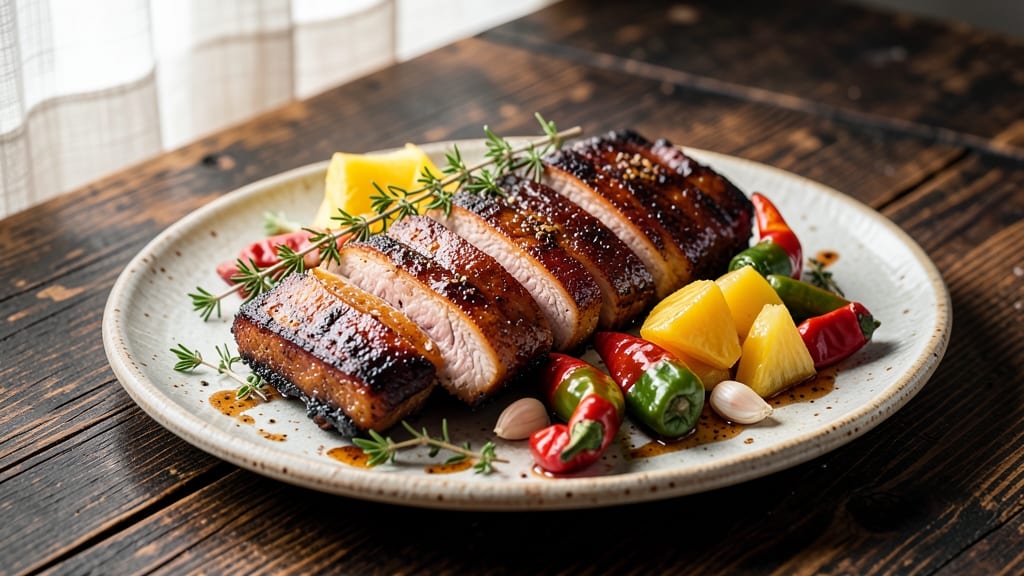
This Caribbean pork ribs recipe transforms tough cuts into tender, jerk-spiced perfection with a sweet-tangy pineapple glaze. 🌟 After years of perfecting my pit-style technique, I've developed a method that delivers restaurant-quality bark and fall-off-the-bone tenderness at home.
The secret lies in a balanced dry rub of allspice, thyme, and Scotch bonnet that creates that signature Caribbean flavor profile while keeping the meat juicy through slow cooking.
The process begins with a 24-hour marinade that tenderizes the meat and infuses it with bold flavors, followed by a dry rub that develops into a deep, caramelized bark when cooked low and slow.
I've tested this recipe on everything from offset smokers to home ovens, and it delivers consistent results each time. The final touch—a sticky pineapple glaze—adds a bright, fruity contrast that cuts through the richness of the pork.
What you'll end up with is a platter of ribs that looks as impressive as it tastes: dark, crackling bark on the outside, tender meat that pulls apart easily, and a glossy glaze that makes every bite irresistible.
The aroma alone will transport you to a Caribbean beachside restaurant, but the taste proves you didn't need to travel to experience it.
Serve these ribs with classic sides like festival (sweet fried dumplings), coconut rice, or grilled plantains for the full Caribbean experience. The recipe scales beautifully for parties, and leftovers reheat just as well as the first serving. Let's get cooking!
Ingredients for caribbean pork ribs
Four pounds of ribs meet bold Caribbean flavors—pineapple, Scotch bonnet, and allspice create that signature tangy-sweet bark.
| Ingredient | Amount | Notes |
|---|---|---|
| Pork Ribs (Baby Back) 🍖 | 4 lb | Bone-in, meaty cuts preferred |
| Fresh Pineapple 🍍 | 2 cups | Chopped, fresh or canned (no syrup) |
| Scotch Bonnet Peppers 🌶️ | 2 whole | Seeds removed for less heat |
| Allspice Berries 🌿 | 1 ½ tbsp | Ground or crushed whole |
| Fresh Thyme Leaves 🌿 | ½ cup | Stems removed, chopped |
| Garlic Cloves 🧄 | 6 cloves | Minced, fresh preferred |
| Brown Sugar 🍚 | ½ cup | Light or dark, packed |
| Apple Cider Vinegar 🍶 | ¼ cup | For tangy marinade |
| Olive Oil 🫒 | ¼ cup | Extra-virgin for richness |
| Ground Black Pepper 🌶️ | 1 tbsp | Freshly cracked preferred |
| Kosher Salt 🧂 | 2 tbsp | Diamond Crystal preferred |
| Honey 🍯 | ¼ cup | Wildflower preferred |
| Fresh Ginger 🌿 | 2 tbsp | Grated, fresh preferred |
| Soy Sauce 🥢 | 2 tbsp | For umami depth |
The ribs are the star, so grab bone-in baby backs—they hold up better to the long cook. Costco or Trader Joe's usually have them pre-cut, but if you're buying a whole packer, ask for the meaty ends. The Scotch bonnet peppers are non-negotiable for that authentic jerk heat—Caribbean markets or well-stocked Latin grocery stores are your best bet. If you can't find fresh, hot sauce with Scotch bonnet works in a pinch, but it won't be the same. For the allspice, Penzeys sells whole berries that you can toast and grind for deeper flavor, but the pre-ground stuff at the grocery store is fine if you're short on time.
No Scotch bonnet? Habanero or Thai bird's eye peppers bring similar heat, but you'll need to adjust the amount—start with half and taste as you go. Fresh thyme wilt fast, so if you're prepping ahead, dried thyme at one-third the amount works, but fresh is definitely better. The pineapple can be canned in juice (no syrup!), but fresh is brighter and worth the effort. For the glaze, if you're out of apple cider vinegar, white vinegar or lime juice gives a similar tang. And if you're worried about the ribs drying out, add an extra splash of pineapple juice to the marinade—it keeps everything juicy.
Marinate the ribs for at least 24 hours—this is where the magic happens. Store them in a sealed container in the fridge, and don't skip this step. The dry rub can be made a day ahead and stored in an airtight container. Once cooked, ribs reheat beautifully—wrap them in foil with a splash of water and bake at 300°F for 15 minutes. Leftovers keep for 4 days in the fridge, but honestly, they won't last that long. The glaze thickens as it cools, so if it's too stiff, just reheat it with a splash of water or pineapple juice.
Why You'll Love This Recipe
- Sweet Heat in Minutes: I swear, these ribs take less time than waiting for takeout. Toss the baby backs in a marinade of Scotch bonnet, allspice, and thyme—then bake while you chop pineapple. The sauce comes together in the same pan, no fuss.
- Flavor That Sticks: That crispy edge on the ribs? The pineapple caramelizes into a sticky glaze, while the Scotch bonnet adds just enough heat to linger. Honestly, the first bite makes you forget about bland barbecue forever.
- Weeknight to Party Fix: Same recipe works for lazy Tuesdays or Sunday dinners. Double the batch—leftovers reheat like a dream (or turn into tacos the next day). My kids even ask for it at potlucks, and that’s saying something.
- Budget-Friendly Feast: Pork ribs are cheaper than you’d think, and pineapple stretches the meal. Between us, this feeds four for under $15, and the leftovers? Better than takeout. No guilt, all flavor.
Step-by-step instructions for Caribbean pork ribs
Here's how to transform simple ribs into fiery, sweet Caribbean masterpieces with perfect bark.
👨🍳 Step 1: Create the Jerk Marinade
In a food processor, combine the 2 cups of chopped fresh pineapple, 2 whole Scotch bonnet peppers (seeds removed), 1.5 tbsp allspice berries, 0.5 cup fresh thyme leaves, 6 cloves minced garlic, 0.5 cup brown sugar, 0.25 cup apple cider vinegar, 0.25 cup olive oil, 1 tbsp ground black pepper, 2 tbsp kosher salt, 0.25 cup honey, 2 tbsp fresh ginger, and 2 tbsp soy sauce. Pulse until everything is finely chopped and well combined.
Taste the marinade—it should be sweet, tangy, and slightly spicy. If you want more heat, add a pinch of cayenne. Transfer the marinade to a large bowl and let it cool completely before using. This marinade is the secret weapon that creates both the signature bark and tender meat.
🍳 Step 2: Marinate the Ribs Overnight
Pat the 4 lb pork ribs dry with paper towels—this is crucial for developing that perfect bark. Place the ribs in a large resealable plastic bag and pour the marinade over them, ensuring they're completely coated. Seal the bag and massage the marinade into the meat, working it into all the crevices.
Refrigerate the ribs for at least 12 hours (overnight is best). The acid in the apple cider vinegar and the natural enzymes in the pineapple will begin breaking down the meat fibers, making them incredibly tender. Don't skip this step—it's what transforms tough ribs into melt-in-your-mouth perfection.
🔥 Step 3: Build the Smoky Bark
Preheat your grill or smoker to 250°F (medium heat). Remove the ribs from the marinade (reserve the marinade for basting) and let them sit at room temperature for 30 minutes before cooking. Place the ribs on the grill, bone-side down, and cook for 1 hour without moving them. This initial slow cook allows the marinade to form that signature dark, sticky bark.
After the first hour, flip the ribs and increase the heat to 300°F. Continue cooking for another 1-2 hours until the internal temperature reaches 195°F and the meat is fork-tender. During this time, baste the ribs with the reserved marinade every 30 minutes to keep them moist and enhance the bark.
🍽️ Step 4: Rest and Serve
Once the ribs reach the desired temperature, remove them from the grill and let them rest on a cutting board for at least 15 minutes. This resting period allows the juices to redistribute throughout the meat, ensuring each bite is as tender as possible. While they rest, tent them loosely with foil to keep them warm.
Slice the ribs between the bones and arrange them on a platter. The exterior should be dark and crispy with a glossy sheen from the marinade, while the interior should be tender and juicy. Serve immediately with extra marinade spooned over the top for that authentic Caribbean flavor. These ribs are perfect for sharing—each piece delivers a perfect balance of sweet, spicy, and smoky flavors.
Pro Tips For Making Caribbean Pork Ribs
- Char the Pineapple First: Slice the pineapple into thick chunks, then sear them in a dry skillet over medium-high heat for 2-3 minutes per side until caramelized. This adds depth to the ribs’ sauce—sweetness with a smoky edge—and prevents the fruit from turning mushy when it hits the heat later.
- Crush the Allspice Berries: Don’t just toss whole allspice berries into the marinade—they’ll sit like tiny rocks. Lightly crush them with the flat of a knife or mortar and pestle to release their aroma. My grandmother swore by this, and the ribs taste noticeably warmer and more complex when the spices actually work their magic.
- Low and Slow for Scotch Bonnet: If you’re grilling or broiling the ribs, watch the Scotch bonnet peppers—they burn faster than you think. Move them to the cooler side of the grill or cover them with foil halfway through to keep their heat alive without turning them to ash. Overcooked peppers ruin the balance of flavors faster than you’d believe.
- Dry the Ribs Before Marinating: Pat those baby back ribs bone-dry with paper towels before applying the marinade. I learned this the hard way—wet ribs steam instead of sear, and the marinade just slides off. A dry surface means better browning and a crust that sticks like it should. (Yes, even if you’re impatient like me.)
Troubleshooting great caribbean pork ribs
Ribs Too Dry?
If your ribs are coming out dry, it’s usually because they cooked too fast or weren’t basted enough. I’ve found that 250°F is the magic temperature—any hotter and the marinade burns before it penetrates.
Use a meat thermometer to monitor internal temp, and never exceed 300°F after the first hour. Also, baste every 30 minutes with reserved marinade to keep moisture locked in. 💧
Bark Not Forming?
The bark forms when the sugars in the marinade caramelize, but if yours isn’t developing, you might be missing a key step. Pat the ribs completely dry before cooking—even a little moisture can prevent that perfect crust.
I also recommend cooking bone-side down for the first 1 hour to build a strong foundation. If your grill isn’t hot enough, the bark won’t set properly—aim for 250°F minimum. 🔥
Marinade Too Mild?
If your ribs lack that signature jerk punch, the marinade might not have enough time to work. Let the ribs marinate for the full 24 hours—overnight is non-negotiable for deep flavor infusion.
For extra heat, add 1-2 extra Scotch bonnet peppers (seeds in for maximum kick) or a pinch of cayenne. Taste the marinade before applying—it should be noticeably spicy and tangy. 🌶️
Ribs Falling Apart?
Overcooking is the usual culprit here. Once the internal temp hits 195°F, pull them immediately—any longer and the collagen breaks down too much, turning the meat mushy. If you’re using a smoker, keep the temp steady and avoid opening the lid frequently.
I also recommend resting the ribs for 15 minutes before slicing to let the juices redistribute. 💡
Glaze Too Runny?
A thick glaze is key for that sticky, restaurant-worthy finish. If yours is too thin, simmer the reserved marinade until it reduces by half—this concentrates the flavors.
For extra richness, add 1 tbsp butter at the end. If it’s still too thin, let it cool and refrigerate for 30 minutes—it’ll thicken naturally. 🍯
Uneven Cooking?
Ribs cook at different rates depending on size and fat content. To prevent uneven doneness, rotate the ribs every 30 minutes and use a thermometer to check the thickest part. If one side cooks faster, move it to a cooler spot on the grill.
For extra insurance, I like to wrap the ribs in aluminum foil during the last 30 minutes of cooking to help them cook evenly. 🌡️
Nutrition facts
Frequently asked questions
Can I make these ribs without a smoker or grill?
Use your oven set to 250°F for the low-and-slow cook. Place the ribs on a wire rack over a baking sheet to allow air circulation, and tent loosely with foil. Rotate the tray every 30 minutes for even cooking. The bark will be slightly different but still delicious—just expect a more subtle smoky flavor.
How spicy should the Scotch bonnet peppers be?
Use 2 whole peppers (seeds removed) for a balanced heat—this gives a noticeable kick without overwhelming. For milder ribs, reduce to 1 pepper or remove all seeds. If you love heat, keep the seeds in for maximum intensity. Always taste the marinade before applying!
What's the best way to reheat leftovers?
Wrap ribs in foil with a splash of water and bake at 300°F for 15 minutes. The moisture keeps them tender, and the foil traps heat. Never microwave—it turns the meat rubbery. For extra flavor, brush with reserved marinade before reheating.
Can I substitute baby back ribs with spare ribs?
Yes, but you'll need to adjust cooking time. Spare ribs are tougher and need 3-4 hours at 250°F to reach 195°F internally. Wrap them in foil after 2 hours to speed up the process. The bark will be thicker, but the meat will be just as tender when done right.
What sides pair best with these ribs?
For a full Caribbean spread, serve with coconut rice, fried plantains, or festival (sweet fried dumplings). The sweetness balances the spicy ribs perfectly. For a lighter option, try mango salsa or grilled pineapple—both complement the marinade's flavors.