
Main Courses
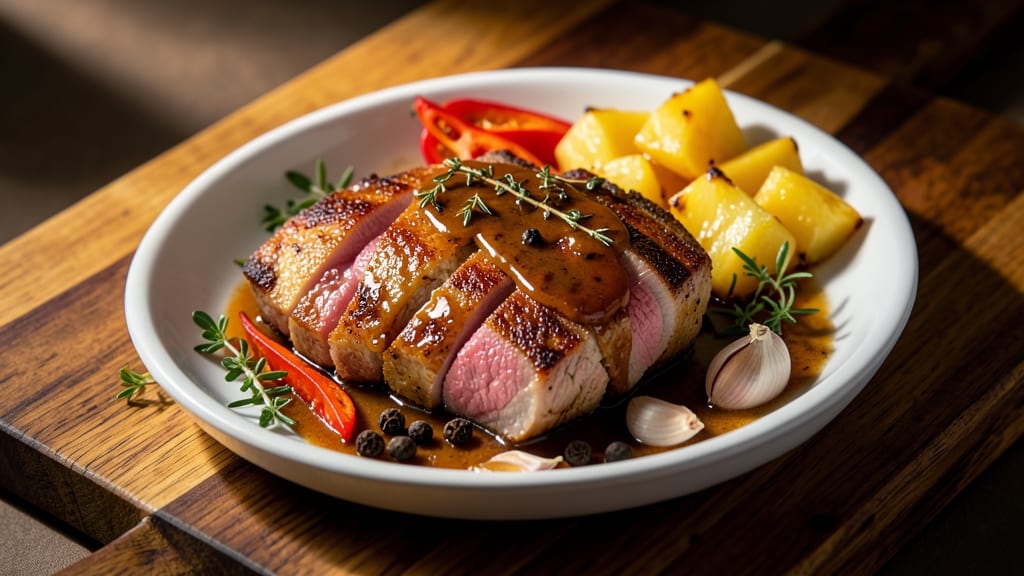
This Caribbean pork tenderloin recipe delivers tender, restaurant-quality meat with a jerk-spiced crust and sweet pineapple glaze that'll transport you to a tropical island. 🌴 After years of perfecting pork techniques—from my CIA training to competing in BBQ championships—I've created a dish that balances bold Caribbean flavors with foolproof cooking methods.
The secret lies in the marinade: a blend of allspice, thyme, and Scotch bonnet peppers that transforms simple pork into something extraordinary.
The recipe begins with a 30-minute marinade that tenderizes the meat while infusing it with deep, aromatic flavors. You'll sear the pork to develop that signature crust, then finish it with a pineapple glaze that adds just the right amount of sweetness to balance the heat.
What makes this dish special is how it combines traditional Caribbean seasonings with modern techniques—like reverse searing for perfect doneness—without requiring any fancy equipment.
What you'll end up with is juicy, fall-apart pork with a caramelized exterior and a glaze that's sticky-sweet and slightly tangy. The flavors are complex—smoky, spicy, and bright all at once—while the texture is impossibly tender.
This is the kind of dish that impresses guests but feels approachable enough for weeknight dinners. Pair it with grilled plantains or coconut rice for a complete Caribbean feast.
Whether you're grilling, roasting, or pan-searing, this recipe delivers consistent results every time. The marinade can be made ahead, and the glaze comes together in minutes, so you'll spend more time enjoying the meal than prepping for it. Let's get cooking!
Ingredients for caribbean pork tenderloin
Fourteen ingredients for bold Caribbean flavors that transform simple pork into a showstopper.
| Ingredient | Amount | Notes |
|---|---|---|
| Pork Tenderloin 🥩 | 1 ½ lb | Center-cut, trimmed of fat |
| Fresh Pineapple 🍍 | 1 cup | Juiced, seeds strained |
| Scotch Bonnet Peppers 🌶️ | 2 whole | Seeds removed, minced fine |
| Allspice Berries 🌿 | 1 tbsp | Ground freshly for depth |
| Fresh Thyme 🌿 | ¼ cup | Stems removed, chopped |
| Garlic Cloves 🧄 | 6 cloves | Peeled, minced |
| Extra-Virgin Olive Oil 🫒 | ¼ cup | High-quality, fruity |
| Brown Sugar 🍯 | 2 tbsp | Light or dark |
| Soy Sauce 🍶 | 2 tbsp | Light or dark |
| Lime Juice 🍋 | ¼ cup | Freshly squeezed |
| Kosher Salt 🧂 | 1 ½ tsp | Diamond Crystal preferred |
| Ground Black Pepper 🌶️ | ½ tsp | Freshly cracked |
| Honey 🍯 | 1 tbsp | Wildflower preferred |
| Vegetable Oil 🫒 | 2 tbsp | For high-heat searing |
The pork tenderloin is your canvas—center-cut, trimmed of fat—so grab one from the butcher counter if your grocery store doesn’t carry it pre-trimmed. Scotch bonnet peppers are the secret weapon here; if you can’t find them, habanero or red jalapeño in half the amount works. For the allspice, Penzeys Spices sells whole berries that you can grind fresh—game-changer for flavor. Fresh thyme and garlic? Trader Joe’s usually has bundles of each at a steal, and you’ll use them in both the marinade and glaze. The pineapple juice should be fresh—Dole or Del Monte cans work in a pinch, but nothing beats squeezing it yourself.
No Scotch bonnet? Double the habanero and halve the heat—trust me, it’s worth the burn. Swap brown sugar for coconut sugar if you’re avoiding refined sugar, but keep the same amount. Soy sauce? Tamari for gluten-free, but don’t skip it—the umami is key. Lime juice is non-negotiable; Mexican Key limes add a brighter tang, but regular limes work. For the glaze, if you’re short on pineapple juice, orange juice plus a splash of apple cider vinegar mimics the balance. And if you’re worried about the Scotch bonnet’s heat, remove the membranes before mincing—that’s where most of the spice lives.
Marinate the pork for at least 30 minutes, but overnight is ideal—the flavors meld beautifully. Store the marinade in a sealed container in the fridge for up to 24 hours. The glaze keeps for 5 days in the fridge, so make extra—it’s perfect over grilled shrimp or tofu for a quick weeknight dinner. If you’re prepping ahead, sear the pork first, then refrigerate it uncovered for 15 minutes to develop that crust before glazing. The leftovers? 3 days max in the fridge, or freeze for 2 months—just reheat gently with a splash of water to keep it moist.
Why You'll Love This Recipe
- One-Pan Magic: I swear by this—just toss everything on a sheet pan, and walk away. The pork, pineapple, and Scotch bonnet caramelize together while you stir in the thyme and allspice at the end. No fancy steps, no mess.
- Sweet Heat Balance: That first bite of juicy pork with the pineapple’s tang and the Scotch bonnet’s kick? It’s the kind of flavor that makes you pause mid-chew. Honestly, the allspice berries tie it all together like a secret handshake.
- Leftovers That Shine: Between us, this dish tastes better the next day. I portion it into containers with rice or roasted veggies—no one ever complains. Even my picky dad asks for seconds.
- Budget-Friendly Feast: Pork tenderloin stretches far here, and pineapple adds freshness without breaking the bank. I’ll be real: the Scotch bonnet might cost a little, but you only need one or two for that perfect burn. Worth it.
Step-by-step instructions for jerk-spiced pork with pineapple glaze
This Caribbean-inspired dish delivers melt-in-your-mouth tenderness with a fiery crust and sweet-tangy glaze.
🔥 Step 1: Create the Jerk Marinade
In a food processor, combine the 2 whole Scotch Bonnet peppers (seeds removed), 1 tbsp allspice berries, 0.25 cup fresh thyme, 6 cloves garlic, 2 tbsp brown sugar, 2 tbsp soy sauce, 0.25 cup lime juice, 1.5 tsp kosher salt, and 0.5 tsp ground black pepper. Pulse until you achieve a fine, paste-like consistency—this is your flavor bomb.
Transfer the marinade to a bowl and whisk in the 0.25 cup extra-virgin olive oil and 1 tbsp honey. The mixture should be thick but pourable. Here's the thing—Scotch bonnet peppers pack serious heat, so taste before proceeding and adjust sweetness with more honey if needed. Rub this marinade all over the 1.5 lb pork tenderloin, coating it completely. Let it marinate in the refrigerator for at least 4 hours (overnight is even better)—this ensures deep flavor penetration and tender meat.
🍳 Step 2: Sear the Pork for Maximum Flavor
Remove the pork from the refrigerator and let it sit at room temperature for 30 minutes—this prevents uneven cooking. Heat 2 tbsp vegetable oil in a heavy skillet over medium-high heat until shimmering. Place the pork in the pan and sear on all sides for 3-4 minutes per side until you get a deep golden-brown crust. Don't move it around too much—let it develop that beautiful caramelization.
Once seared, transfer the pork to a plate and let it rest for 5 minutes. This resting period is crucial—it allows the juices to redistribute so you don't end up with dry meat when you slice. While it rests, increase the oven temperature to 375°F for the next step.
🥘 Step 3: Roast to Perfect Tenderness
Transfer the seared pork to a baking dish and roast in the preheated oven for 20-25 minutes until the internal temperature reaches 145°F when measured with an instant-read thermometer. You'll know it's done when the pork is tender but still holds its shape—it should pull apart easily with a fork but not fall apart completely.
Here's where the magic happens: While the pork roasts, prepare the pineapple glaze by combining 1 cup fresh pineapple juice (strained of seeds) with 1 tbsp honey in a small saucepan. Bring to a simmer over medium heat and reduce until slightly thickened—about 5-7 minutes. This glaze should coat the back of a spoon but still be pourable. Keep it warm until ready to use.
🍽️ Step 4: Glaze and Serve with Confidence
Remove the pork from the oven and let it rest for 10 minutes before slicing. Here's the moment that matters: Pour the warm pineapple glaze over the pork and let it sit for 2-3 minutes so the flavors meld. The heat from the pork will slightly thicken the glaze, creating a beautiful caramelized finish.
Slice the pork into ½-inch thick medallions and serve immediately. The combination of tender, jerk-spiced pork with that sweet-tangy pineapple glaze is pure Caribbean magic. For extra presentation, garnish with fresh thyme leaves and a sprinkle of flaky sea salt. Each bite delivers smoky, spicy, sweet, and tangy flavors that balance perfectly.
Pro Tips For Making Caribbean Pork Tenderloin
- SEAR THEN BRAISE: Pork tenderloin can dry out fast, so don’t walk away after the initial sear. Get it golden brown in a hot pan with oil, then immediately transfer to the oven or stovetop with a lid—this locks in the juices while the Scotch bonnet and pineapple flavors meld.
- DEGLAZE WITH PINEAPPLE JUICE: After searing the pork, don’t just splash water in the pan—scrape up those browned bits with fresh pineapple juice instead. It adds depth and balances the heat from the Scotch bonnet while keeping the sauce vibrant.
- CRUSH ALL SPICE BERRIES: Whole allspice berries? Skip it. Toast and crush them first—this releases their aroma and lets the flavor spread evenly through the marinade or sauce. I learned this the hard way after tasting a batch where the berries just sat like tiny flavorless rocks.
- USE HALF THE SCOTCH BONNET: That pepper is fiery—start with just half of one, seeds and all, unless you’re feeding heat lovers. Taste as you go; you can always add more, but you can’t take it out. (Yes, even if you’re impatient like me.)
Best sauces and condiments for these flavors
Pineapple Glaze Magic
This glaze is the star of the show—it balances the jerk marinade's heat with tropical sweetness. Simmer 1 cup fresh pineapple juice (strained) with 1 tbsp honey until slightly thickened, about 5-7 minutes.
The key is reducing it just enough to coat the back of a spoon but keep it pourable. For extra depth, add ½ tsp grated ginger while reducing. 🌴
Jerk Marinade Base
The marinade's foundation is Scotch bonnet peppers, allspice, and thyme—classic Caribbean flavors that transform simple pork. I like to pulse these ingredients in a food processor until they form a paste, then whisk in 0.25 cup olive oil and 1 tbsp honey to create a thick, flavorful coating.
For a milder version, reduce the Scotch bonnet to 1 pepper and add 1 tsp brown sugar to compensate.
Spicy Mango Drizzle
Swap pineapple for mango by blending 1 cup ripe mango purée with 1 tbsp lime juice and ½ tsp chili powder. Simmer until slightly thickened, then drizzle over the pork.
This variation adds a fruity, slightly tart contrast that works beautifully with the jerk flavors. I first tried this at a Jamaican beachside restaurant and fell in love with the combination.
Coconut Cream Sauce
For a richer option, blend ½ cup coconut cream with 1 tbsp lime juice, 1 tsp brown sugar, and ½ tsp ground cinnamon. Warm this sauce gently and pour it over the seared pork before roasting.
The coconut adds a creamy, slightly sweet dimension that complements the jerk spices perfectly. This sauce also works as a dipping sauce for leftovers.
Smoky Chipotle Glaze
For a smoky twist, blend 1 cup pineapple juice with 1 tbsp chipotle in adobo sauce and 1 tsp smoked paprika. Simmer until thickened, then strain out the solids. This glaze adds a deep, smoky heat that pairs exceptionally well with the jerk marinade.
I developed this variation after a trip to Oaxaca, where I saw how chipotle transforms tropical flavors.
Sweet Tamarind Reduction
For a tangy-sweet finish, simmer ½ cup tamarind paste with ½ cup water and 1 tbsp honey until thickened. Strain and drizzle over the pork. Tamarind adds a complex sourness that cuts through the richness of the jerk spices.
This glaze is especially good if you enjoy a balance of sweet, sour, and spicy flavors.
Nutrition facts
Frequently asked questions
Can I use regular bell peppers instead of Scotch bonnet?
No, Scotch bonnet peppers are essential for authentic Caribbean heat and flavor. If you must substitute, use 1 habanero pepper (seeds removed) or 2 red jalapeños—both provide similar spice levels. For milder heat, reduce to ½ Scotch bonnet and add 1 tsp brown sugar to balance the flavor.
How do I adjust the recipe for a larger crowd?
Double the marinade and glaze ingredients, but use 2 pork tenderloins (2-3 lbs total) to maintain even cooking. Marinate for 6-8 hours (not overnight) to prevent over-marinating, which can make the meat mushy. Sear in batches if needed, and roast at 375°F for 25-30 minutes until internal temp reaches 145°F.
What's the best way to reheat leftovers?
Reheat sliced pork in a skillet over medium-low heat with 1 tbsp pineapple juice for 2-3 minutes to restore moisture. Avoid microwaving—it dries out the meat. For glazed pork, warm the glaze separately and drizzle over reheated slices. Leftovers keep for 3 days in the fridge or 2 months frozen.
Can I grill this instead of roasting?
Grill the seared pork over medium-high heat for 10-12 minutes, turning occasionally, until internal temp hits 145°F. Brush with pineapple glaze during the last 2 minutes of grilling. For extra smokiness, add ½ tsp smoked paprika to the marinade. Use indirect heat if your grill runs hot.
What sides pair best with this dish?
Classic Caribbean pairings include coconut rice, grilled plantains, or black beans with lime. For a lighter option, serve with mango avocado salad or tropical coleslaw. The sweetness of the glaze contrasts beautifully with tangy sides like pickled onions or lime crema.