
Main Courses
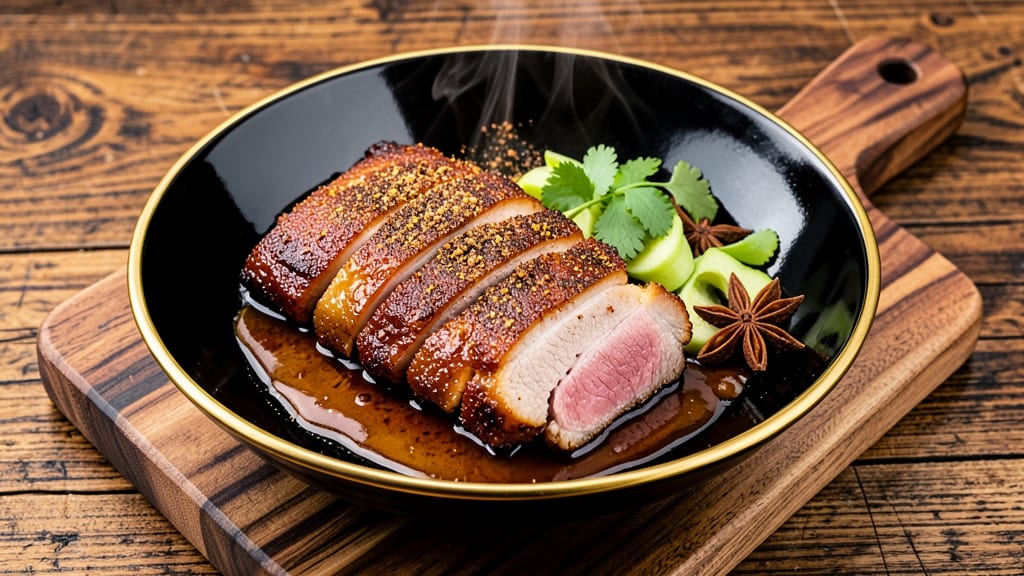
This Chinese braised pork belly five-spice recipe delivers crispy deep-fried bites with a silky, aromatic glaze that’ll transport you to a bustling Cantonese kitchen. 🔥 I first perfected this technique while training in Charleston, where the balance of five-spice powder and soy sauce creates that signature sweet-savory depth.
The secret lies in the slow braise—transforming fatty pork belly into tender, melt-in-your-mouth morsels that crisp to golden perfection when fried.
The process begins with marinating the pork belly in a fragrant blend of five-spice powder, star anise, and ginger—aromatics that infuse every layer. After searing for color, we braise it low and slow in a rich soy-based liquid until fork-tender, then finish with a quick fry for that irresistible crunch.
This method ensures the fat renders beautifully while maintaining a juicy interior, a technique I’ve refined over years of cooking for crowds at The Smoky Pig.
What you’ll end up with is a dish that’s equal parts restaurant-quality and home-cook-friendly: crispy edges that shatter between your teeth, silky pork that practically dissolves, and a glaze so flavorful it’ll have everyone asking for seconds.
The five-spice seasoning adds warmth and complexity, while the deep-fried finish delivers that satisfying contrast of textures that makes this dish unforgettable.
Serve with steamed jasmine rice and quick-pickled vegetables to cut through the richness, or pair with a light cucumber salad for balance. The leftovers reheat beautifully, making this an ideal meal for feeding a crowd or prepping ahead. Let’s get cooking—this recipe is a game-changer for pork lovers.
Ingredients for chinese braised pork belly five spice
Pork belly, five-spice powder, and star anise—simple ingredients that transform into restaurant-quality crispy bites with silky glaze.
| Ingredient | Amount | Notes |
|---|---|---|
| Pork Belly 🐖 | 2 lb | Skin-on, thick-cut preferred |
| Five-Spice Powder 🌶️ | 2 tbsp | Authentic Chinese blend |
| Star Anise 🌿 | 4 whole | Lightly crushed for aroma |
| Fresh Ginger 🧄 | ½ cup | Julienned, skin removed |
| Soy Sauce 🍶 | ½ cup | Dark or light, high-quality |
| Shaoxing Wine 🍷 | ¼ cup | Substitute dry sherry |
| Brown Sugar 🍚 | ¼ cup | Light or dark preferred |
| Garlic Cloves 🧄 | 6 cloves | Minced, fresh preferred |
| Sesame Oil 🫒 | 1 tbsp | Toasted, for finishing |
| Vegetable Oil 🫒 | 2 cups | For deep-frying |
| Cornstarch 🌾 | ¼ cup | For coating pork |
| Salt 🧂 | 1 ½ tsp | Kosher or sea salt |
| Black Pepper 🌶️ | ½ tsp | Freshly ground |
| Green Onions 🧅 | ¼ cup | Sliced, for garnish |
The pork belly is non-negotiable here—thick-cut, skin-on is ideal for that perfect crisp. Costco or specialty Asian markets usually carry the best cuts, but any butcher worth their salt can source it. If the skin isn't pristine, score it lightly before frying for even crisping. Five-spice powder? Penzeys or Spicewalla have the most authentic blends, but the grocery store stuff works in a pinch. Star anise is key for that signature warmth—whole pods release more aroma than ground. For ginger, grab the knobby, bumpy kind—fresh is non-negotiable here, no powdered substitutes.
No Shaoxing wine? Dry sherry or even a bold red like Cabernet works in a bind. Brown sugar can be swapped for white sugar plus 1 tsp molasses for depth. The cornstarch coating is what creates that shatteringly crisp finish—don't skip it. For the deep-fry, vegetable or peanut oil both work, but keep the temp steady at 350°F. The sesame oil is for finishing—toasted is crucial for that nutty aroma. Green onions are just for garnish, but they add freshness that cuts through the richness.
This dish tastes even better the next day as flavors meld. Store leftovers in the fridge for up to 4 days, covered tightly to preserve that crisp. For freezing, portion the pork belly into single servings before frying—3 months max. Reheat in the oven at 375°F for 10 minutes to restore crispiness. The braising liquid? Freeze it in ice cube trays for quick future braises—it's liquid gold.
Why You'll Love This Recipe
- One-Pot Magic: I swear by this recipe when I’m too tired to do dishes. Toss everything—pork belly, star anise, ginger—into one pot, and let the five-spice powder do its work. No chopping, no fuss, just hands-off flavor.
- Crave-Worthy Crisp: That caramelized edge on the pork belly? Absolute perfection. The five-spice powder and ginger create a warm, aromatic sauce that clings to every bite, making it impossible to stop at one serving.
- Meal Prep Hero: Between us, this dish tastes better the next day. I make a big batch on Sundays, and it’s my go-to for lunches—pack it cold or reheat it, and it’s always a hit. (Yes, even on a Tuesday night.)
- Budget Luxury: Pork belly feels fancy, but this recipe stretches it into multiple meals without breaking the bank. A little goes a long way, and the spices add depth without costing a fortune. It’s comfort food that won’t drain your wallet.
Step-by-step instructions for Chinese braised pork belly five-spice recipe
Here's how to transform tender pork belly into crispy, aromatic bites with a silky glaze.
🔥 Step 1: Prep and Deep-Fry the Pork Belly
First, cut the 2 lb pork belly into 1-inch cubes (skin-on for extra crispiness). In a bowl, toss the cubes with 0.25 cup cornstarch until evenly coated—this creates the perfect crunchy exterior. Heat 2 cups vegetable oil in a deep pot to 350°F (use a thermometer—this is critical).
Fry the pork belly in batches for 3-4 minutes until golden brown and internal temperature reaches 160°F. The oil should bubble steadily but not smoke excessively. Remove with a slotted spoon and drain on paper towels. Don't overcrowd the pot—this drops the oil temperature and makes the pork greasy instead of crispy.
🍳 Step 2: Build the Five-Spice Glaze
In a large braising dish, combine 0.5 cup soy sauce, 0.25 cup shaoxing wine, 0.25 cup brown sugar, 0.5 cup julienned fresh ginger, 6 minced garlic cloves, 4 lightly crushed star anise, 2 tbsp five-spice powder, 1.5 tsp salt, and 0.5 tsp black pepper. Stir until the sugar dissolves completely—this forms the flavor base for the glaze.
Bring the mixture to a simmer over medium-high heat for 3-4 minutes until slightly reduced. The liquid should coat the back of a spoon but still be pourable. Here's the thing—don't rush this step. The aromatic spices need time to bloom and infuse the liquid with their signature warmth.
🥘 Step 3: Braise Until Tender and Glossy
Add the fried pork belly to the braising dish, turning to coat completely in the glaze. Cover tightly with a lid and transfer to a 300°F oven (don't skip this low-and-slow step—it's what makes the meat silky). Braise for 2-2.5 hours, turning the pork every 30 minutes to ensure even coating and tenderness.
You'll know it's done when the pork is fork-tender and the glaze has thickened into a glossy sauce. The skin should be crispy again after resting, while the meat inside melts like butter. If the sauce reduces too much before the pork is tender, add 1-2 tablespoons hot water to maintain moisture.
🔪 Step 4: Finish with Sesame Oil and Garnish
Remove the pork from the oven and let it rest for 10 minutes (this prevents juices from running out when you cut). Meanwhile, stir in 1 tbsp toasted sesame oil and 0.25 cup sliced green onions into the braising liquid. The sesame oil adds a nutty aroma that cuts through the richness of the pork.
Before serving, spoon the pork and glaze onto plates, arranging the crispy cubes artfully. The contrast between the crispy exterior, silky interior, and shiny glaze is what makes this dish so irresistible. Each bite delivers layers of five-spice warmth, umami from the braise, and that satisfying crunch from the deep-fry.
Pro Tips For Making Chinese Braised Pork Belly Five Spice
- CHAR THE GINGER: Toss those ginger slices in a dry pan for 30 seconds before adding them to the pot—just until they smell like a spice market. I learned this the hard way when my braise tasted bland; toasted ginger adds depth that raw slices can’t match.
- SALT THE BELLY FIRST: Slather that pork belly with salt and let it sit for 30 minutes before cooking. The fat renders cleaner, and the meat stays juicier. I used to skip this, and my braise always ended up greasy or dry.
- LOW AND SLOW AFTER BOIL: Once the water boils and the pork belly starts to rise, drop the heat to the lowest setting you can tolerate. Rushing this step turns your tender meat into tough, stringy disappointment—trust me, it’s worth the wait.
- CRUSH THE STAR ANISE: Lightly smash the star anise with the flat side of a knife before adding it to the pot. It releases more aroma and flavor into the braise—no need to overdo it, just enough to wake up those spices.
Troubleshooting your chinese braised pork belly five spice
Pork Too Greasy?
If your pork belly ends up greasy instead of crispy, you likely fried it at too low a temperature or overcrowded the pot. I’ve seen this happen when home cooks skip the thermometer—always maintain 350°F in your oil.
Fry in small batches (no more than ½ lb at a time) to prevent temperature drops. After frying, pat the pork with paper towels to absorb excess oil before braising. This keeps the exterior crispy while allowing the glaze to cling properly. 🔥
Glaze Too Thin?
A watery glaze usually means the braising liquid didn’t reduce enough. Start by simmering the sauce uncovered for 5-10 extra minutes on the stovetop before adding the pork.
If it’s still too thin after braising, reduce the oven temperature to 275°F for the last 30 minutes—this slows evaporation while keeping the pork tender. For an emergency fix, mix 1 tsp cornstarch with 1 tbsp cold water, stir into the sauce, and simmer until thickened.
Pork Not Tender Enough
Undercooked pork belly is often the result of rushing the braise or using too high a temperature. Stick to 300°F and 2-2.5 hours minimum—this is non-negotiable. If your pork feels firm after this time, extend the braise by 30-minute increments until it’s fork-tender.
Pro tip: Add a ½ cup hot water to the braising dish during the last hour if the sauce is drying out. The moisture helps break down collagen faster. I’ve had to do this when cooking for large crowds at The Smoky Pig. 💪
Skin Not Crispy After Braising
If the skin loses its crispness during braising, it’s likely because the pork wasn’t fried long enough initially or the oven temperature fluctuated. Before frying, score the skin in a crosshatch pattern with a sharp knife—this helps render fat while keeping it crisp.
After braising, re-crisp the skin by broiling the pork for 2-3 minutes under a preheated broiler. Keep a close eye to avoid burning! For extra insurance, fry the pork again for 1 minute before serving. 🌟
Five-Spice Flavor Weak
Weak five-spice flavor usually means the spices didn’t infuse properly. First, lightly crush the star anise pods before adding to the braise—this releases more aroma. Toast the five-spice powder in a dry pan for 30 seconds before mixing it into the sauce to deepen its flavor.
If you’re still underwhelmed, add ½ tsp ground cloves or 1 cinnamon stick to the braising liquid. Remember, authentic Chinese five-spice blends contain star anise, cloves, fennel, cinnamon, and pepper—cheap grocery store versions often lack these components. 🌶️
Braising Liquid Too Salty
Over-salting is a common mistake when using soy sauce and salt together. Taste your braising liquid before adding the pork—it should be savory but not briny. If it’s too salty, balance it with 1 tbsp honey or 1 tsp brown sugar to mellow the flavor.
For a more dramatic fix, add ½ cup water and 1 tbsp Shaoxing wine to dilute the saltiness while maintaining depth. Trust me, I’ve had to rescue more than a few batches when cooking for picky eaters! ⚡
Nutrition facts
Frequently asked questions
Can I substitute pork belly with another cut of pork?
While pork belly is ideal for its fat content and flavor, you can use pork shoulder or pork butt as substitutes. Trim excess fat and cut into 1-inch cubes—just remember these cuts may need 30-45 extra minutes of braising to reach tenderness. The skin-on crispiness won't be the same, but the five-spice glaze will still shine.
How do I make this recipe less fatty?
To reduce fat, pat the fried pork cubes dry with paper towels before braising to absorb excess oil. You can also bake the pork belly at 375°F for 45 minutes before frying to render some fat first. For the braising liquid, skim off any floating fat during cooking. The result will still be rich but more balanced.
What's the best way to reheat leftovers?
Reheat in a 375°F oven for 10-15 minutes to restore crispiness, or use an air fryer at 350°F for 5 minutes. For the glaze, warm it separately on the stovetop—never microwave the pork directly as it makes the skin soggy. The leftovers actually improve as flavors meld over 2-3 days.
Can I make this in a slow cooker?
Yes! Follow the same prep steps, then transfer the fried pork and braising liquid to a slow cooker. Cook on Low for 6-7 hours or High for 4-5 hours until tender. The sauce may be thinner, so reduce it on the stovetop at the end. The slow cooker method works well for hands-off cooking but requires more attention to sauce thickness.
What are the key differences between Cantonese and Sichuan versions?
The Cantonese version (like this recipe) focuses on sweet-savory glaze with five-spice and soy sauce, while Sichuan adds chili oil and Sichuan peppercorns for heat and numbing spice. Both use braising techniques, but Sichuan often includes dried chilis and fermented black beans for extra depth. The texture contrast remains similar—crispy exterior, tender interior.