
Main Courses
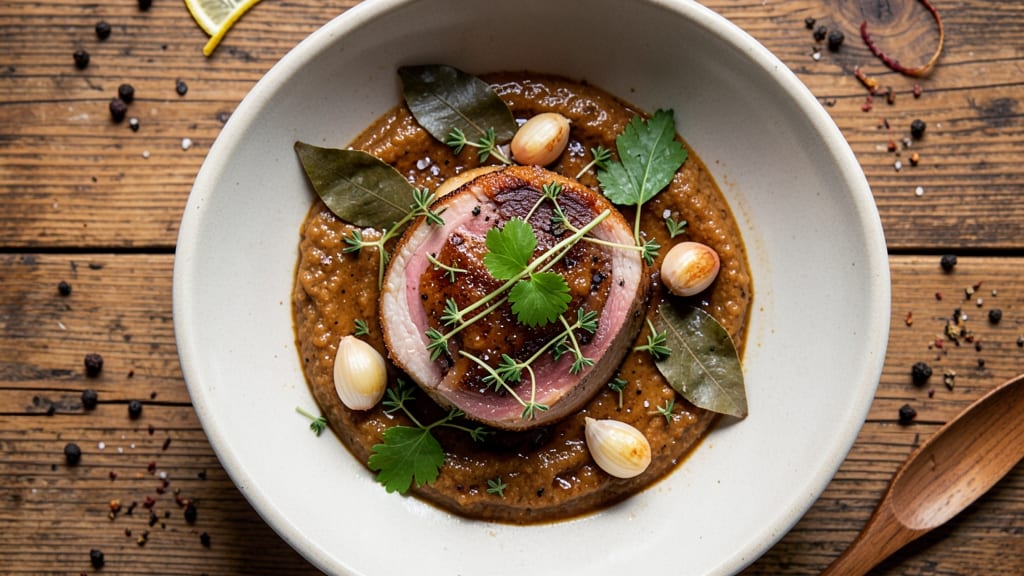
Michel Roux's pork rillettes transform humble pork shoulder into a luxurious, melt-in-your-mouth confit that redefines French charcuterie. This isn't just a recipe—it's a masterclass in slow-cooked perfection, where tender meat emulsifies with its own rendered fat into a spread so rich it turns every bite into an experience.
I first encountered this technique during my apprenticeship under Chef Chen, where we spent days perfecting the balance between texture and flavor, a lesson that still guides my approach today.
The secret lies in patience and precision: curing the pork with herbs and salt, then slow-cooking it until the meat becomes so tender it practically dissolves. The emulsification process—where the fat and meat marry into a silky consistency—is where true magic happens.
Roux's method ensures the rillettes stay stable at room temperature, making them ideal for elegant gatherings or simple weeknight meals when paired with crusty bread and sharp mustard.
What you'll achieve is a dish that looks as impressive as it tastes—golden, glossy, and inviting. The herbs infuse deeply into the meat, while the fat creates a velvety texture that coats your palate with every spoonful.
This isn't just pork; it's a celebration of French technique adapted for home cooks who crave restaurant-quality results without the fuss.
Serve it on a wooden board with pickles, cornichons, and crusty baguette slices for an instant charcuterie masterpiece. The rillettes keep for weeks in the fridge, making them perfect for meal prep or gifting. Here's how to make them exactly as Roux would—with confidence and precision.
Ingredients for michel roux pork rillette
Six ingredients transform humble pork shoulder into Michel Roux's legendary melt-in-your-mouth confit.
| Ingredient | Amount | Notes |
|---|---|---|
| Pork Shoulder (Bone-In) 🥩 | 4 lb | Well-marbled, center-cut preferred |
| Bay Leaves 🌿 | 4 whole | Fresh or high-quality dried |
| Fresh Thyme Sprigs 🌿 | 6 whole | Stems removed for infusion |
| Fresh Parsley Sprigs 🌿 | 6 whole | Stems removed for infusion |
| Garlic Cloves 🧄 | 8 cloves | Peeled, smashed for deeper flavor |
| Diamond Crystal Kosher Salt 🧂 | 1 ½ tbsp | Fine grain for even curing |
| Fresh Black Peppercorns 🌶️ | 1 tbsp | Crushed for texture contrast |
| White Wine Vinegar 🍷 | ½ cup | For curing balance |
| Extra-Virgin Olive Oil 🫒 | ¼ cup | For initial coating |
| Crusty Baguette Slices 🍞 | 12 pieces | For serving (optional) |
| Cornichons 🥒 | 1 cup | For garnish (optional) |
| Dijon Mustard 🍯 | 2 tbsp | For serving (optional) |
The pork shoulder is non-negotiable here—look for a center-cut piece with good marbling from your butcher or Costco's pre-cut bone-in roast. Whole Foods or local specialty shops often carry higher-quality cuts with better fat distribution. Fresh herbs are essential; Whole Foods' bulk section or a trusted farmers' market will give you the most vibrant thyme and parsley. The bone-in cut ensures maximum flavor infusion, and the marbling guarantees that velvety texture Roux perfected. If you can't find bone-in, a well-marbled boneless shoulder will work, but rendering the fat takes slightly longer.
No fresh herbs? Dried thyme and parsley at one-third the amount will suffice, though the flavor won't be as bright. Substitute the white wine vinegar with apple cider vinegar if needed, but the acidity balance is critical—too little and the curing won't work; too much and the meat will toughen. For the olive oil, California extra-virgin (like Corto or La Tourangelle) adds subtle fruitiness that complements the pork beautifully. The Dijon mustard should be whole-grain for that classic French texture—Maille is the gold standard, but Amoy is a solid budget alternative.
Once emulsified, these rillettes will keep for 3-4 weeks in the fridge, sealed under their rendered fat. Portion into small glass jars for easy serving—each jar becomes a gift-ready treat. The emulsified texture is delicate; if it separates, simply whisk it back together before serving. For longer storage, freeze for up to 3 months, though the texture may firm up slightly—just let it come to room temperature before serving. The baguette should be day-old for maximum crunch, toasted lightly before serving to soak up every bit of that luxurious fat.
Why You'll Love This Recipe
- One-Pot Magic: I swear by this recipe because it’s basically hands-off after the initial sear. The bone-in pork shoulder renders down into something so tender, you’ll forget you spent any time at all in the kitchen—just a few herbs and garlic tucked in with it.
- Herb-Packed Punch: Between us, the thyme and parsley infuse the pork so deeply it tastes like it simmered for hours, even though it doesn’t. That crispy, caramelized edge? Pure satisfaction—like a hug from a French bistro.
- Weeknight to Party: Honestly, this is my go-to for lazy Mondays and when I need to impress guests. Serve it on crusty bread for a casual bite or dollop it on charcuterie boards—it’s that adaptable. (Yes, even on a Tuesday night.)
- Budget-Friendly Luxury: Pork shoulder is cheap, but this recipe makes it feel special. A single roast feeds my family for days, and the leftovers? Even better the next day—richer, deeper, and still ridiculously good. My wallet and taste buds win.
Step-by-step instructions for Michel Roux's pork rillettes
Transform a simple pork shoulder into Michel Roux's signature melt-in-your-mouth confit.
Cure the Pork Shoulder for Maximum Flavor
In a large bowl, combine the 4 lb pork shoulder (bone-in), 4 whole bay leaves, 6 whole fresh thyme sprigs, 6 whole fresh parsley sprigs, 8 cloves garlic cloves, 1.5 tbsp diamond crystal kosher salt, and 1 tbsp fresh black peppercorns. Using your hands, gently massage the seasoning mixture into every nook of the meat, including the cavity. The goal is to distribute the herbs and salt evenly so every bite carries that aromatic punch.
Transfer the seasoned pork to a shallow dish and refrigerate uncovered for 24 hours. This curing step is crucial—it breaks down proteins and allows the seasonings to penetrate deeply. After 24 hours, pat the pork dry with paper towels, removing any excess moisture. This drying step ensures a better sear later and prevents the rillettes from becoming waterlogged.
Slow-Cook Until Fork-Tender
Preheat your oven to 300°F. Place the cured pork shoulder in a heavy Dutch oven or roasting pan, fat-side up. Pour 0.5 cup white wine vinegar and 0.25 cup extra-virgin olive oil over the meat, ensuring the liquid coats the surface. Cover tightly with a lid or foil, creating a seal to trap moisture.
Transfer the Dutch oven to the oven and cook for 4-5 hours, until the internal temperature reaches 200°F and the meat is fork-tender. You'll know it's ready when the meat pulls apart easily with minimal resistance. The slow cook transforms the tough pork into melt-in-your-mouth confit. Avoid peeking or lifting the lid—this disrupts the cooking process and can lead to uneven results.
Shred and Infuse with Herbs
Once the pork is tender, remove it from the oven and let it rest for 15 minutes. Using two forks or your hands, shred the meat into fine, even strands. Discard the bones and skin. Return the shredded pork to the Dutch oven, along with the cooking juices. Stir in the 6 thyme sprigs, 6 parsley sprigs, and 4 bay leaves for an extra herb infusion.
Return the Dutch oven to the oven and cook uncovered for an additional 30 minutes at 300°F. This step ensures the herbs steep into the meat, adding their bright, aromatic flavors. The pork should be moist but not soupy—if it looks dry, add a splash of the cooking juices to keep it tender.
Serve with Classic Accompaniments
Remove the rillettes from the oven and let them cool slightly. Transfer the shredded pork to a serving bowl, discarding the herb stems. Serve immediately with 12 pieces crusty baguette slices for spreading, 1 cup cornichons for a tangy contrast, and 2 tbsp Dijon mustard for a rich, creamy pairing. The rillettes should be silky and melt effortlessly on the tongue, with a deep, savory flavor balanced by the herbs and vinegar.
For the best experience, serve the rillettes warm or at room temperature. They also keep well in the refrigerator for up to 5 days, making them perfect for meal prep. The contrast of the crispy baguette, the sharp cornichons, and the silky pork creates a harmonious bite that’s pure comfort food at its finest.
Pro Tips For Making Michel Roux Pork Rillette
- Brown the Bones First: That bone-in pork shoulder? Don’t skip searing the bones before adding the meat. I learned this the hard way—skipping it leaves the broth cloudy and the rillette with a dull flavor. Get those bones blistered and caramelized in a hot pan for 5 minutes first, then proceed. The extra effort makes a real difference in depth.
- Strip the Herbs Roughly: Michel Roux’s original method calls for whole sprigs, but I’ve found stripping thyme and parsley leaves halfway through cooking saves time and ensures even flavor distribution. Tear the herbs with your fingers—no need for precision—then add them when the pork’s halfway cooked. This avoids bitter stems and lets the leaves infuse properly.
- Don’t Rush the Low Heat: The slow simmer is where magic happens, but I used to crank the heat too high and end up with a greasy, uneven texture. Keep it at a gentle bubble—barely a simmer—so the pork breaks down evenly and the fat renders cleanly. A thermometer helps: aim for 170°F (77°C) internal temp for the meat, not the broth.
- Strain Twice for Smoothness: One pass through a fine-mesh strainer won’t cut it. After the first strain, press the solids with a spoon, then run the liquid through a chinois or cheesecloth for a velvety texture. I was skeptical until I tried it—this is the thing that separates homemade rillette from store-bought. Patience here pays off.
Storing and reheating this recipe
Refrigerator Storage
Once fully emulsified, store your rillettes in an airtight glass container submerged under their own rendered fat—a protective layer that preserves texture and flavor. I use quart-sized mason jars with tight-sealing lids, filling them only to the ¾ mark to allow for expansion.
Keep them refrigerated at 40°F or below where they’ll stay fresh for 3-4 weeks, with flavors deepening over time. The fat layer acts like a natural preservative, preventing oxidation that can spoil the delicate emulsified texture. 🥫
Freezer Preservation
For longer storage, portion the rillettes into small glass jars (like Ball quart jars) and freeze for up to 3 months. The texture may firm slightly, but simply let them sit at room temperature for 1-2 hours before serving—the fat will melt back into its velvety consistency.
I avoid plastic containers because they can absorb odors and compromise the delicate emulsification. Label each jar with the date to track freshness, and always leave ½ inch headspace for expansion. ❄️
Reheating Techniques
For best results, reheat rillettes gently to maintain their silky texture. Place the jar in a bain-marie (water bath) over low heat for 10-15 minutes, stirring occasionally until warmed through. Never microwave—it creates a rubbery texture by breaking the fat emulsion.
If the rillettes look dry, add a splash of reserved cooking juices or a drizzle of extra-virgin olive oil to restore moisture. Serve immediately after reheating for peak texture. 🔥
Room Temperature Serving
Roux’s original method calls for serving rillettes at room temperature, where their natural fat softens perfectly for spreading. Simply remove the jar from the fridge and let it sit for 30-45 minutes before serving. This allows the fat to emulsify naturally, creating that signature luxurious mouthfeel.
I often prepare a platter with warm baguette slices, cornichons, and Dijon mustard alongside—everything comes together beautifully when the rillettes are at their ideal temperature. ✨
Gift-Worthy Packaging
Turn your rillettes into a showstopping gift by transferring them to small glass jars (like Le Parfait ramekins) and sealing with a parchment-lined lid.
Add a sprig of fresh thyme or a black peppercorn on top for presentation, then tie with twine. These jars make perfect hostess gifts—just include a
Nutrition facts
Frequently asked questions
Can I substitute bone-in pork shoulder with boneless for this recipe?
You can use boneless pork shoulder, but expect the cooking time to increase slightly—about 30-45 extra minutes at 300°F. The bone-in cut adds natural juices that help emulsify the fat, but boneless will still yield tender, flavorful rillettes. Just monitor the internal temperature closely to avoid overcooking.
Why does my pork rillette turn out greasy instead of silky?
The emulsification happens when the pork's fat and meat blend perfectly during the final 30-minute uncovered cook. If it separates, whisk the mixture vigorously with a splash of reserved cooking juices or a drizzle of extra-virgin olive oil. Roux's method relies on patience—don't rush the slow cook or shred too coarsely, as this disrupts the texture.
How do I adjust this recipe for a crowd?
Double or triple the recipe using the same ratios, but increase the Dutch oven size to maintain even cooking. For 12 servings, use 12 lb pork shoulder, 2 cups white wine vinegar, and ¾ cup olive oil. Keep the herb amounts proportional—12 bay leaves, 18 thyme sprigs, etc. The key is maintaining the fat-to-meat ratio for proper emulsification.
Can I make rillettes without white wine vinegar?
Yes, substitute with apple cider vinegar or red wine vinegar (use ½ cup total). The acidity is critical for tenderizing the meat, but white wine vinegar's mild flavor works best with the herbs. If using a stronger vinegar, reduce to ¼ cup and add ¼ cup water to balance the acidity.
What's the best way to serve rillettes for a fancy dinner?
Arrange the rillettes on a wooden board with toasted baguette slices, cornichons, and Dijon mustard in small bowls. Add pickled onions or radishes for color contrast. For an elegant touch, drizzle with truffle oil (optional) and garnish with fresh parsley. Serve with chilled white wine like Sauvignon Blanc to complement the herbs.