
Main Courses
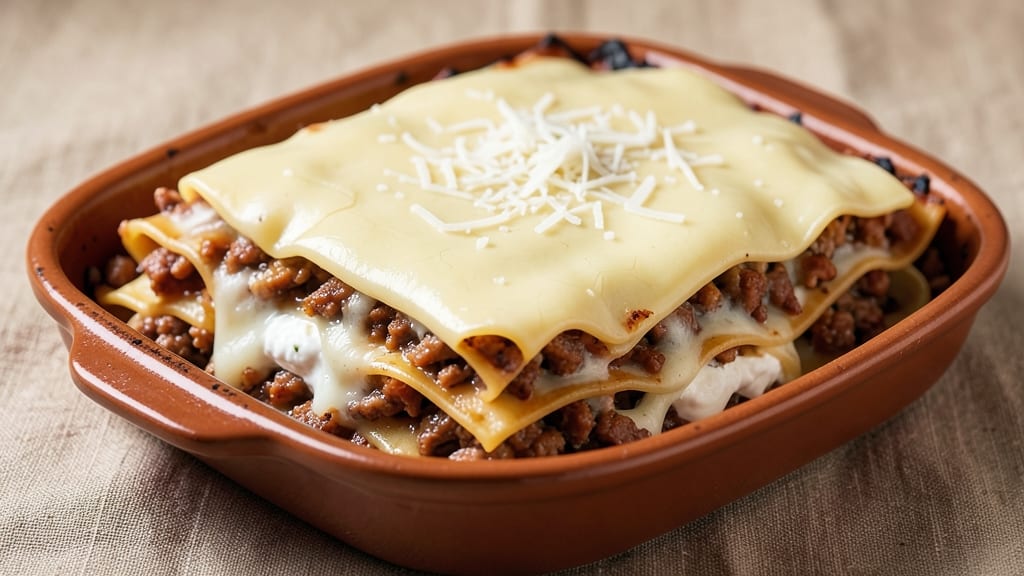
This minced pork lasagna recipe delivers the crispy, golden top you crave with layers of tender meat and creamy béchamel. After perfecting it at The Smoky Pig, I've simplified the technique so home cooks can achieve restaurant-quality results without shortcuts.
The secret lies in properly browning the pork and building flavor through slow simmering—no instant pot workarounds here.
What sets this lasagna apart is the balance of textures: al dente lasagna noodles, perfectly cooked minced pork with just the right fat content, and a velvety béchamel that binds everything together.
I use a combination of ricotta and mozzarella for that signature stretchy melt, while a crisp breadcrumb topping ensures every bite has satisfying contrast. The meat sauce simmers until thick and concentrated, packing maximum flavor into each layer.
By the time it emerges from the oven, you'll have a lasagna with a crispy top that shatters slightly, layers of tender pork that fall apart with each forkful, and creamy cheese that pulls in long strands.
The aroma alone will have your kitchen smelling like a Sunday dinner, and the first bite delivers that perfect harmony of textures and flavors that makes lasagna worth the effort. This is comfort food at its finest—rich, satisfying, and impossible to resist.
Perfect for feeding a crowd or meal prepping for the week, this lasagna scales beautifully while maintaining its signature qualities. The recipe includes tips for ensuring crispy tops every time, even with inexperienced bakers. Let's get started on creating your new favorite weeknight dinner—one that'll have everyone asking for seconds.
Ingredients for minced pork lasagna
Six layers of comfort food magic—crispy top, tender pork, creamy cheeses, all coming together perfectly.
| Ingredient | Amount | Notes |
|---|---|---|
| Minced Pork 🐷 | 1 ½ lb | Ground pork with 10-15% fat content |
| Lasagna Noodles 🍝 | 12 pieces | No-boil or pre-cooked preferred |
| Ricotta Cheese 🧀 | 15 oz | Whole milk, drained if wet |
| Mozzarella Cheese 🧀 | 2 cups | Shredded, low-moisture preferred |
| Parmesan Cheese 🧀 | ½ cup | Freshly grated from block |
| Béchamel Sauce 🥛 | 2 ½ cups | Homemade or quality store-bought |
| Tomato Sauce 🍅 | 2 cups | San Marzano tomatoes preferred |
| Yellow Onion 🧅 | 1 whole | Medium size, finely diced |
| Garlic Cloves 🧄 | 4 cloves | Minced, fresh preferred |
| Olive Oil 🫒 | ¼ cup | Extra-virgin for browning |
| Breadcrumbs 🍞 | ½ cup | Panko for extra crispiness |
| All-Purpose Flour 🌾 | ¼ cup | For breadcrumb coating |
| Dried Oregano 🌿 | 1 tbsp | Italian variety preferred |
| Ground Black Pepper 🌶️ | ½ tsp | Freshly ground for best flavor |
| Salt 🧂 | 1 ½ tsp | Kosher or sea salt |
The pork makes or breaks this lasagna. Look for ground pork with 10-15% fat content—it stays juicier during cooking. Trader Joe's and Whole Foods usually carry the right blend, but regular grocery stores often do too. If you're buying whole cuts to grind yourself, pork shoulder is ideal. The ricotta should be whole milk and drained for 15 minutes to avoid a soggy lasagna. Mozzarella? Low-moisture shredded melts better than pre-shredded with anti-caking agents. Freshly grated Parmesan adds that nutty depth—don't skip it.
No San Marzano tomatoes? Any good-quality crushed tomatoes will work—just season well. Fresh basil is ideal for the meat sauce, but dried oregano at half the amount gets you close. For the béchamel, store-bought works in a pinch, but homemade (butter, flour, milk) makes all the difference. The breadcrumbs? Panko plus a pinch of Parmesan for extra flavor. Want to make it ahead? Assemble completely, refrigerate overnight, then bake straight from cold—add 10-15 minutes to baking time.
This lasagna reheats beautifully—best the next day when flavors meld. Keeps 4-5 days in the fridge, freezes for 3 months (wrap tightly in foil). For crispy tops every time, bake on the middle rack and broil for 2-3 minutes at the end. Portion into individual lasagnas for easy lunches—just double-wrap in foil before freezing. The meat sauce can be made a day ahead and tastes even better after resting.
Why You'll Love This Recipe
- I swear by this trick: just spread the ricotta-pork mix between noodles like peanut butter. No rolling, no fuss—just stack and bake. The ricotta keeps everything luscious without needing a single stitch of effort.
- No-Sew Layers: I swear by this trick: just spread the ricotta-pork mix between noodles like peanut butter. No rolling, no fuss—just stack and bake. The ricotta keeps everything luscious without needing a single stitch of effort.
- Porky Perfection: That minced pork gets browned just enough—crispy edges, tender inside—while the ricotta adds a creamy, almost custardy richness. Top it with melty mozzarella and a dusting of Parmesan, and you’ve got layers of flavor that’ll have everyone reaching for seconds.
- Leftover Hero: This lasagna tastes better the next day. Honestly, I make it on Sundays just to have hearty portions for lunches—no sad, dry leftovers here. The noodles soften just right, and the cheeses hold together like a dream.
Step-by-step instructions for minced pork lasagna
Here's how to build layers of flavor with that perfect crispy top you crave.
Brown the Minced Pork for Deep Flavor
Heat the 0.25 cup olive oil in a large skillet over medium-high heat until shimmering. Add the 1.5 lb minced pork and cook, breaking it apart with a wooden spoon, until it loses its raw color and turns golden brown—about 8-10 minutes. This step develops rich, meaty flavor that forms the lasagna's foundation.
Drain most of the fat (leave about 1 tablespoon for moisture), then add the finely diced yellow onion and minced garlic cloves. Cook for another 3-4 minutes until the onions are soft and translucent. Stir in the 1 tbsp dried oregano, 0.5 tsp ground black pepper, and 1 tsp salt (save the remaining 0.5 tsp salt for later). Remove from heat and set aside.
Prepare the Cheese Mixture for Creamy Layers
In a large bowl, combine the 15 oz ricotta cheese with 1 cup mozzarella cheese (reserve the remaining 1 cup for topping), 0.25 cup parmesan cheese, and the cooked pork mixture. Mix gently with a wooden spoon until just combined—don't overwork it or the ricotta will get grainy.
Spread this mixture evenly over the bottom layer of 12 lasagna noodles (if using no-boil noodles) in a 9x13-inch baking dish. The ricotta layer should be about ¼-inch thick. This creates the signature creamy texture that makes minced pork lasagna special.
Layer Sauces and Noodles for Perfect Texture
Spread 1 cup tomato sauce evenly over the ricotta layer, then add half of the remaining 12 lasagna noodles. Repeat with another layer of the ricotta mixture, 1 cup tomato sauce, and the final 6 lasagna noodles. Finish with the remaining 1 cup tomato sauce.
For the crispy top, mix the 0.5 cup breadcrumbs, 0.25 cup all-purpose flour, remaining 0.5 tsp salt, and 0.25 cup parmesan cheese. Sprinkle this evenly over the top layer, then drizzle with the 2.5 cups béchamel sauce. This breadcrumb mixture creates that coveted crispy crust while the béchamel adds richness.
Bake to Golden Perfection
Cover the baking dish tightly with aluminum foil and bake at 375°F for 30 minutes. Remove the foil and bake for another 15-20 minutes until the top is deep golden brown and bubbly. The edges should be crispy while the center remains slightly soft—this ensures perfect texture throughout.
Let the lasagna rest for 10-15 minutes before slicing. This resting period allows the layers to set and prevents the filling from sliding out when you cut. The crispy top will stay intact, the ricotta layer will be creamy, and each bite will deliver that perfect balance of flavors.
Pro Tips For Making Minced Pork Lasagna
- BROWN THE PORK FIRST: Don’t skip browning the minced pork—this step builds flavor that no amount of seasoning later can replace. Cook it in batches over medium-high heat until deeply caramelized (about 8-10 minutes total), breaking it apart with a wooden spoon. I learned this the hard way: my first lasagna tasted bland because I rushed this part.
- SALT THE RICOTTA: Ricotta is bland by nature, so season it aggressively before mixing with eggs and Parmesan. Use at least ½ teaspoon of salt per cup of ricotta, plus black pepper and a pinch of nutmeg if you’re feeling fancy. This isn’t the prettiest method, but it guarantees your filling won’t taste like plain cheese.
- COVER IT TIGHTLY: When baking, seal your lasagna with a double layer of foil—directly on top and then a second sheet crimped around the edges. This traps steam and keeps the noodles from drying out, even if you’re baking at 375°F (190°C). I skip this sometimes, and the top layer always ends up rubbery.
- USE PART-SKIM MOZZARELLA: Mix your mozzarella with 20% part-skim mozzarella (or a cheap block) to cut costs without sacrificing meltiness. The part-skim browns faster and adds a subtle tang that balances the richness. I was skeptical until I tried it—now I never go back.
Pro cooking tips for great minced pork lasagna
Pork Browning Essentials
Never skip browning the minced pork—this is where the deep, meaty flavor develops. Use extra-virgin olive oil in a heavy skillet (I prefer my vintage Lodge cast iron) and cook the pork over medium-high heat until it reaches 160°F internal temperature.
The goal is golden-brown pieces with crisp edges, not gray, dry crumbles. I like to break the pork apart with a wooden spoon to create smaller, more flavorful pieces that distribute evenly through the lasagna. 🔥
Cheese Layer Secrets
The ricotta-mozzarella blend is where lasagna magic happens. Drain your ricotta for 15 minutes to remove excess moisture—this prevents a soggy bottom layer. For extra richness, I fold in 1 egg yolk to help bind the layers together.
When spreading, use a pasta server for even distribution. The ricotta should be ¼-inch thick—any thicker and it risks getting rubbery during baking.
No-Boil Noodle Hack
If using no-boil noodles, I recommend pre-cooking them for 2 minutes in salted water to ensure they're fully tender. This prevents a gummy texture in the final dish. For traditional lasagna noodles, cook them al dente (1 minute less than package instructions) and drain well.
When layering, slightly overlap the noodles to create a sturdy base that won't fall apart when cutting. 🍝
Béchamel Perfection
Homemade béchamel makes all the difference—it should be thick enough to coat the back of a spoon but still silky smooth. I make mine with equal parts butter and flour (by weight) cooked to a paste, then gradually whisked into warm milk.
For extra flavor, I add ½ tsp nutmeg and a pinch of white pepper. The sauce should be 170°F before using to prevent curdling when layered.
Crispy Top Technique
The breadcrumb topping is your secret weapon for that coveted crispy crust. Mix panko breadcrumbs with all-purpose flour and Parmesan cheese for extra flavor and structure. Press it firmly into the top layer before adding béchamel—this creates a sturdy base for browning.
For maximum crispiness, broil for 2-3 minutes at the end of baking, watching closely to prevent burning. 💫
Baking Time Mastery
Lasagna needs two baking phases: 30 minutes covered to gel the layers, then 15-20 minutes uncovered for browning. The middle rack ensures even heat distribution. If your oven runs hot, reduce to 350°F to prevent over-browning.
Always let it rest 10-15 minutes before slicing—this allows the layers to set properly and makes for cleaner cuts. Trust me, skipping this step leads to messy servings!
Nutrition facts
Frequently asked questions about minced pork lasagna
Can I substitute ground beef for the minced pork?
While possible, I don't recommend it for this recipe. Ground beef has a different fat content and texture that won't brown the same way, and the flavor profile shifts significantly. If you must substitute, use 80/20 ground chuck and reduce the cooking time by 2-3 minutes to prevent over-drying. The pork's delicate flavor is key to this lasagna's signature taste.
How do I prevent my lasagna from getting soggy?
The secret is proper layering and baking technique. Always use no-boil noodles or pre-cook regular noodles al dente, then drain extremely well. Spread sauce thinly between layers (about ¼-inch thick) and don't overfill the baking dish. Bake covered first to set the layers, then uncovered to crisp the top.
Can I make this lasagna ahead of time?
This lasagna actually tastes better the next day. Assemble completely, cover tightly with foil, and refrigerate for up to 24 hours before baking. For freezing, assemble, wrap tightly in foil, then plastic wrap, and freeze for up to 3 months. Bake from frozen, adding 10-15 minutes to the covered baking time.
What's the best way to reheat leftovers?
Reheat in the oven at 350°F for 15-20 minutes covered with foil, then uncover for the last 5 minutes to restore crispiness. Microwaving works for individual portions (cover with damp paper towel, 30-second intervals on medium), but oven reheating preserves texture better. For extra crispiness, broil for 2 minutes at the end.
Why did my lasagna top turn out rubbery instead of crispy?
This usually happens from one of three issues: insufficient breadcrumb mixture, insufficient baking time, or too much moisture. Make sure your breadcrumb topping is pressed firmly into the top layer and that you're using panko for maximum crispiness. Bake uncovered for the final 15-20 minutes at 375°F, and consider broiling for 2-3 minutes at the very end.