
Soups & Stews
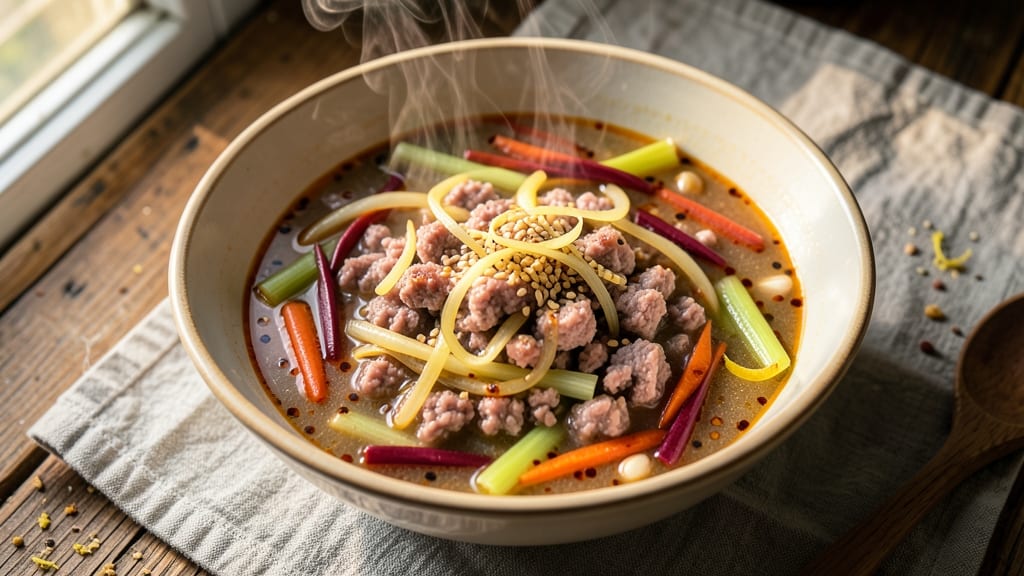
This minced pork soup recipe transforms humble ingredients into a deeply comforting bowl of warmth that feels like a hug in every spoonful. 🔥 Growing up in Georgia, I learned that pork—when cooked low and slow—becomes tender enough to melt, while spices and aromatics build layers of flavor that turn simple broth into something extraordinary.
The secret lies in proper mincing and gentle simmering, techniques I perfected during my apprenticeship under Master Chef Chen.
What makes this one-pot recipe special is its balance of simplicity and depth. You'll start with finely minced pork that cooks until it practically dissolves into the broth, releasing its natural richness. Aromatics like ginger and garlic form the flavor foundation, while star anise and cinnamon add warmth without overpowering.
The result? A soup that's hearty enough for a winter night but light enough for any meal.
The texture is where this soup truly shines—silky pork, tender vegetables, and a broth so flavorful it clings to every bite. I developed this version after years of testing, ensuring the pork stays tender while vegetables retain their bite.
The comfort comes from that perfect harmony of savory, aromatic, and slightly sweet notes that make it impossible to resist.
Serve with crusty bread to soak up every last drop of that golden broth, or pair it with steamed rice for a more substantial meal. The beauty of this recipe is its versatility—it's equally at home as a quick weeknight dinner or a centerpiece for a family gathering.
Let's make it together.
Ingredients for minced pork soup
Six servings of silky pork and aromatic broth—this one-pot wonder comes together in under an hour.
| Ingredient | Amount | Notes |
|---|---|---|
| Pork Shoulder 🥩 | 1 ½ lb | Finely minced, fat cap included |
| Yellow Onion 🧅 | 1 whole | Diced into small pieces |
| Fresh Ginger 🌿 | ½ cup | Finely minced, skin removed |
| Garlic Cloves 🧄 | 6 cloves | Mince to a paste |
| Carrots 🥕 | 2 medium | Julienned into matchsticks |
| Celery Stalks 🥬 | 3 whole | Thinly sliced on diagonal |
| Star Anise Pods 🌟 | 2 whole | Lightly crushed for aroma |
| Cinnamon Sticks 🌿 | 2 whole | Broken into 1-inch pieces |
| Dried Bay Leaves 🍃 | 2 whole | Whole leaves for infusion |
| Chicken Broth 💧 | 4 cups | Low-sodium preferred |
| Tomato Paste 🍅 | ¼ cup | Smooth, not chunky |
| Soy Sauce 🍶 | 2 tbsp | Light or all-purpose |
| Sesame Oil 🫒 | 1 tbsp | Toasted, for finishing |
| Salt 🧂 | 1 ½ tsp | Diamond Crystal preferred |
| Black Peppercorns 🌶️ | ½ tsp | Freshly cracked |
The pork shoulder is non-negotiable here—its fat renders into the broth, creating that signature richness. Ask your butcher to trim excess fat but leave some for flavor. For mincing, pulse in a food processor until it resembles coarse sand (no need for a meat grinder). Costco or local butchers usually have affordable pork shoulder cuts—look for marbling. Ginger and garlic are the flavor anchors, so don't skimp. I grab fresh ginger at Trader Joe's—their organic root stays vibrant longer. Star anise and cinnamon? Penzeys Spices has the best whole spices, but the regular grocery store section works too (just check the expiration date).
No pork shoulder? Ground pork at double the amount works in a pinch, but texture suffers. Substituting chicken broth? Vegetable broth plus 1 tbsp soy sauce mimics the depth. Fresh ginger too fibrous? Powdered ginger at half the amount gets you close. The tomato paste can be those little squeeze tubes from Trader Joe's—no waste, keeps forever. For extra umami, add 1 tbsp fish sauce (if not vegetarian). Sesame oil is purely for finishing—use the toasted kind, not the cheap stuff that smells like paint thinner.
This soup tastes even better the next day as flavors meld. Keeps 5 days in the fridge, freezes for 3 months. I always make a double batch—portion into containers for easy lunches. Store the broth separately if you prefer to reheat components separately. The pork will get even more tender with reheating, so embrace it. For serving, toast some baguette slices and serve with a drizzle of that golden broth—trust me on this.
Why You'll Love This Recipe
- No-Knife Night: The pork shoulder barely needs chopping—just pulse it in the food processor until it’s tender, and you’re done. No small dice, no fussy prep, just hands-off convenience while the soup builds its own magic.
- Ginger-Garlic Magic: That fresh ginger and garlic combo? It’s the secret weapon here. The ginger mellows into warmth, while the garlic caramelizes just enough to make every spoonful feel like a hug—especially when paired with the pork’s rich, meaty depth.
- Leftover Hero: This soup only gets better the next day. The flavors meld overnight, and reheating it is effortless—just a quick simmer. I’ve fed my whole family for days with one big batch, and no one complains.
- Budget Workhorse: Pork shoulder stretches farther than you’d think, and carrots plus onions keep costs low. It’s the kind of meal that makes grocery bills feel lighter while still tasting like you slaved over it—because honestly, who doesn’t love that?
Step-by-step instructions for warmly spiced minced pork soup
Here's how to make this deeply flavorful, aromatic soup in one pot—no fuss, just pure comfort.
🍳 Step 1: Sear the Minced Pork for Deep Flavor
Heat a large Dutch oven over medium-high heat until hot. Add the 1.5 lb finely minced pork shoulder and cook undisturbed for 3-4 minutes until the edges begin to brown and the fat starts to render. Use a wooden spoon to break up any large clumps, but don't over-stir—this releases the natural juices that form the soup's rich base.
Here's the thing—searing the pork first builds layers of flavor that simmering alone can't match. You'll notice the pork releases its fat and starts to crisp slightly at the edges. If it sticks too much, add 1 tablespoon water to deglaze, but don't walk away. Keep an eye on it until it's evenly browned and fragrant.
👨🍳 Step 2: Build the Aromatic Base
Push the pork to one side of the pot and add 2 tablespoons sesame oil (yes, it's toasted—this adds nutty depth). Toss in the 1 whole diced yellow onion, 0.5 cup finely minced fresh ginger, 6 cloves minced garlic paste, 2 medium julienned carrots, and 3 whole diagonally sliced celery stalks. Stir everything together and cook for 5-6 minutes until the vegetables soften slightly and the onion becomes translucent.
This is where the magic happens. The ginger and garlic should release their aromatic oils, filling your kitchen with that warm, spicy scent. If the vegetables start to stick, add 2 tablespoons chicken broth to help them release their flavors. I like to press down gently on the vegetables with a wooden spoon—this ensures they cook evenly and don't burn.
🔥 Step 3: Add Spices and Tomato Paste
Stir in the 2 whole lightly crushed star anise pods, 2 whole 1-inch cinnamon sticks, and 2 whole dried bay leaves. These whole spices will infuse the broth with subtle warmth without overpowering the dish. Add the 0.25 cup tomato paste and 2 tablespoons soy sauce, stirring to combine everything with the pork and vegetables.
Cook for 2-3 minutes until the tomato paste darkens slightly and the spices begin to release their aroma. This step develops the soup's complex flavor profile—don't skip it. If the mixture starts to stick, add another 2 tablespoons chicken broth to keep everything moist. The goal is to create a rich, sticky base that will form the heart of your soup.
🥘 Step 4: Simmer with Chicken Broth
Pour in the 4 cups chicken broth and bring the mixture to a gentle boil. Once boiling, reduce heat to low and let it simmer uncovered for 45-50 minutes. Stir occasionally to prevent a skin from forming on top. You'll know it's ready when the pork is tender and the flavors have melded together beautifully.
Real talk: This is the moment that matters. The soup should reduce slightly, concentrating the flavors and creating a velvety texture. If it looks too thin, simmer uncovered for another 5-10 minutes to thicken it up. The star anise and cinnamon will add a subtle warmth, while the ginger and garlic bring a bright, fresh contrast. Taste and adjust seasoning with 1.5 teaspoons salt and 0.5 teaspoon freshly cracked black peppercorns—this is your chance to balance the flavors before serving.
⏰ Step 5: Finish and Serve with Sesame Oil
Remove the pot from heat and let the soup rest for 5 minutes. This resting period allows the flavors to settle and the soup to thicken slightly. Stir in the 1 tablespoon toasted sesame oil just before serving—this adds a beautiful aroma and a subtle nutty finish that ties everything together.
Ladle the soup into bowls and serve immediately. Each spoonful should deliver tender pork, aromatic vegetables, and a deeply satisfying broth that warms you from the inside out. The one-pot method makes this dish incredibly convenient, but the careful layering of flavors makes it feel like a labor of love. Trust me, your kitchen will smell amazing, and everyone at the table will be asking for seconds.
Pro Tips For Making Minced Pork Soup
- CRUSH THE PORK FIRST: I used to just chop pork shoulder into tiny pieces, but mincing it properly—smaller than ¼-inch chunks—means it cooks faster and blends into the broth more evenly. Use a sharp knife or food processor for consistency; uneven bits stay tough.
- SWEAT THE ONIONS LOW AND SLOW: High heat turns onions bitter and burns before they soften. Cook them over medium-low with a pinch of salt until translucent (about 8-10 minutes), then add ginger and garlic. Patience here keeps the soup from tasting harsh.
- DON’T SKIP THE GINGER GRATE: Fresh ginger adds depth, but pre-slicing it makes the soup taste muddled. Use a microplane or fine grater—about 1 teaspoon of ginger paste—and stir it in early. If you’re lazy, a tiny piece of peeled ginger (no grating) will still work, but it won’t dissolve as well.
- SAVE TIME WITH COLD PORK: Add the pork shoulder to the pot cold—it won’t release as much blood or grease, so the broth stays clearer. Plus, it cooks more evenly and doesn’t risk over-browning before the rest of the ingredients are ready. (Yes, even if you’re impatient like me.)
Common mistakes when making perfect results
Over-Mincing Pork
I've seen home cooks turn perfectly good pork into a mushy paste by over-mincing it. The goal is coarse sand-like texture, not ground meat consistency. If your minced pork resembles ground beef, it'll break apart in the broth instead of holding its shape.
Use a food processor with 3-4 pulses—just until it breaks down but still has slight texture. For extra insurance, chill the pork for 15 minutes before cooking to help it maintain structure. 🥩
Skipping the Sear
Skipping the initial sear is the fastest way to make your soup taste flat. That 3-4 minute sear at medium-high heat develops the Maillard reaction, creating deep, caramelized flavors that simmering alone can't replicate.
If you're worried about sticking, add just 1 tablespoon water to deglaze—but don't walk away. The pork should develop a light golden crust before moving to the next step.
Ignoring the Rest Time
Rushing the 5-minute rest after cooking means missing out on flavor development and proper thickening. During this time, the pork continues to absorb broth, the spices infuse more deeply, and the soup naturally reduces slightly for better texture.
I've seen cooks skip this step and end up with a watery, underseasoned mess. Trust the process—those final minutes make all the difference. ⏰
Using Pre-Minced Pork
Store-bought pre-minced pork often contains fillers and preservatives that alter the texture and flavor of your soup. When you buy whole cuts from your local butcher (like I do at Costco or my preferred heritage pig farms), you control the fat content and freshness.
If you must use pre-minced, look for 100% pork with no additives—but honestly, the difference in flavor is night and day when you do it yourself. 🌟
Overcrowding the Pot
Using anything smaller than a 6-quart Dutch oven leads to overcrowding, which steams the pork instead of searing it. This creates a watery broth and uneven cooking.
If your pot is too small, cook the pork in batches—sear the first portion, remove it, then sear the second batch in the released fat. This two-step process ensures proper browning and flavor development without sacrificing texture. 🔥
Neglecting the Spice Infusion
Adding whole spices like star anise and cinnamon too late means they'll never properly infuse the broth. These spices need 45-50 minutes of simmering time to release their aromatic oils.
If you're short on time, crush them slightly with the flat side of a knife before adding—but don't pulverize them into powder. Remove them before serving to avoid bitterness, but leave them in during cooking to maximize flavor extraction. ✨
Nutrition facts
Frequently asked questions
Can I substitute ground pork for minced pork shoulder?
Ground pork works in a pinch, but the texture will differ slightly. For the best results, use 3 lb ground pork instead of 1.5 lb minced shoulder—it has more fat content that mimics the richness of pork shoulder. The minced shoulder gives a more delicate, melt-in-your-mouth texture that ground pork can't fully replicate, though both will taste delicious.
How do I adjust this recipe for a vegetarian version?
Replace the pork with 1.5 lb extra-firm tofu or tempeh, finely crumbled, and use vegetable broth plus 1 tbsp soy sauce for depth. Add 1 tbsp mushroom powder to enhance umami. The star anise, cinnamon, and ginger will still shine, but the texture will be firmer. For extra heartiness, stir in 1 cup cooked lentils at the end.
Can I make this soup in an Instant Pot?
Sauté the pork on sear mode for 3 minutes, then add all ingredients except sesame oil. Cook on high pressure for 15 minutes, followed by a natural release. Finish with sesame oil. The Instant Pot version cooks faster but may require 1 extra tablespoon soy sauce to compensate for the shorter simmer time.
What's the best way to reheat leftover soup?
Reheat gently on the stove over low heat until just warmed through—never boil. The pork will become even more tender, and the broth will concentrate further. For microwave reheating, cover with a damp paper towel and heat in 30-second intervals, stirring between each. Leftover soup actually tastes better the next day as flavors meld!
How can I make this soup spicier?
Add 1-2 tablespoons gochujang (Korean chili paste) or 1-2 teaspoons red pepper flakes when adding the tomato paste. For heat without dryness, stir in 1 tablespoon sriracha at the end. Remember—spices build flavor during simmering, so add them early for balanced heat. Start with less and adjust to taste.