
Main Courses
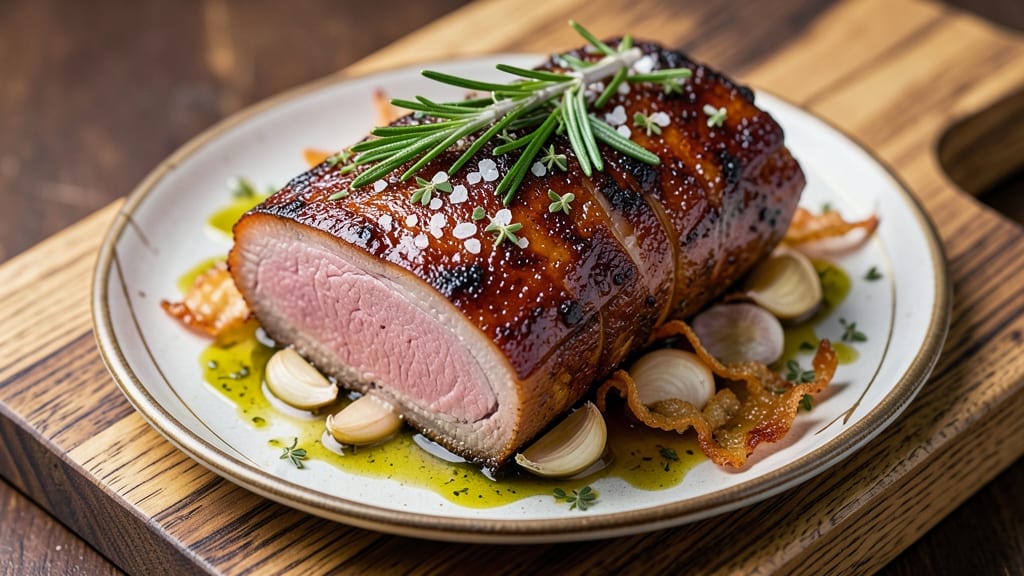
This 4-lb pork loin recipe delivers a crisp herb-roasted crust with a guaranteed juicy core—the kind of showstopper that transforms any dinner into a celebration. 🌟 As someone who’s cooked thousands of pounds of pork, I know the secret lies in precise seasoning and controlled heat, ensuring the outside gets beautifully caramelized while the inside stays tender.
The technique I’m sharing today comes from years of perfecting whole-hog roasts, adapted for this versatile cut that works for holidays or weeknight dinners alike.
What sets this recipe apart is the herb crust—a blend of rosemary, thyme, and garlic that creates an aromatic bark while keeping the meat impossibly moist. Unlike other methods that risk drying out the center, this approach uses a gentle roasting technique with periodic basting to lock in juices.
The result? A perfectly cooked pork loin with a golden, flavorful exterior and a tender, pink center that melts in your mouth.
By the time you slice into this roast, you’ll have a restaurant-quality centerpiece that pairs beautifully with roasted vegetables, mashed potatoes, or a crisp apple compote. The crust stays intact when sliced, ensuring every bite delivers that perfect balance of herbaceous, caramelized flavor.
This is the kind of dish that makes guests ask for seconds—and leaves you wondering why you didn’t make it more often.
The best part? This recipe scales effortlessly for gatherings or leftovers that reheat beautifully. Whether you’re hosting Thanksgiving or just craving a special weeknight meal, this foolproof method ensures success every time. Let’s get started—your taste buds (and dinner guests) will thank you.
Ingredients for 4 lb pork loin
Six ingredients create the crust; five more lock in juicy perfection for your pork loin feast.
| Ingredient | Amount | Notes |
|---|---|---|
| Bone-In Pork Loin 🐖 | 4 lb | Center-cut, 1.5-inch thick |
| Fresh Rosemary 🌿 | ½ cup | Finely chopped sprigs |
| Fresh Thyme 🌿 | ¼ cup | Leaves only, stems removed |
| Garlic Cloves 🧄 | 8 cloves | Minced, peeled |
| Extra-Virgin Olive Oil 🫒 | ¼ cup | High-quality, fruity |
| Kosher Salt 🧂 | 2 tbsp | Diamond Crystal preferred |
| Freshly Ground Black Pepper 🌶️ | 1 tbsp | Coarse grind |
| Unsalted Butter 🧈 | ½ cup | Cold, cubed |
| Honey 🍯 | 1 tbsp | Wildflower preferred |
| Apple Cider Vinegar 🍎 | 1 tbsp | For basting |
| Fresh Parsley 🌿 | ¼ cup | Chopped, for garnish |
| Garlic Powder 🧄 | 1 tsp | For crust |
| Onion Powder 🧅 | 1 tsp | For crust |
The pork loin is the star, so look for bone-in center-cut—it stays juicier and the bone adds flavor. Whole Foods or local butchers often carry the best quality, but any reputable grocery store’s meat counter will have a good cut. Thickness matters: aim for 1.5 inches—thinner slices risk drying out. Pat it dry before seasoning, and let it sit at room temperature for 30 minutes before roasting. The herbs? Fresh is non-negotiable—dried just won’t give that aromatic crust. I always buy extra rosemary because it keeps for months in the freezer.
No fresh rosemary? Dried at half the amount works, but the texture won’t be as crisp. Short on thyme? Fresh oregano is a decent swap, though the flavor profile shifts slightly. The olive oil is where you shouldn’t scrimp—Trader Joe’s or Whole Foods carry excellent options. For the butter, European-style (like Plugrá) melts better than American. The honey and vinegar combo in the basting liquid? That’s what makes the crust caramelize like a pro’s. Store-bought pre-minced garlic? Skip it—fresh minced garlic makes all the difference.
This roast reheats like a dream—350°F for 15 minutes with a splash of broth revives it perfectly. Leftovers keep 4 days in the fridge, wrapped tightly in foil. For gatherings, double the recipe—8 lbs is ideal for a crowd. The crust stays intact if you slice it against the grain (parallel to the bone). Portion leftovers into individual servings for easy reheating, and save the trimmings for pork chops or sandwiches.
Why You'll Love This Recipe
- One-Pan Miracle: I swear by this—just rub the pork with garlic, rosemary, and thyme, drizzle it with olive oil, and let the oven do the work. No chopping, no flipping, no mess. (Yes, even on a Tuesday night.)
- Crispy-Creamy Magic: That bone-in cut? It renders into pure, buttery goodness while the outside gets golden and crackly. The herbs infuse the meat so deeply, every bite tastes like a hug from a French bistro.
- Leftovers That Don’t Suck: Roast a big pork loin once, and you’ve got sandwiches, salads, or stir-fry protein for days. Honestly, I make this on Sundays just so I can throw it into wraps all week without stress.
- Budget Flexibility: A 4 lb pork loin feeds a crowd but won’t break the bank—especially when you stretch it across meals. Plus, the fresh herbs make it feel fancy without the restaurant price tag. (My wallet thanks me.)
Step-by-step instructions for herb-roasted pork loin
Here's how to transform a simple pork loin into a showstopping centerpiece with crispy crust and melt-in-your-mouth tenderness.
👨🍳 Step 1: Prep the Pork for Maximum Flavor and Crisp
Start by removing the pork loin from the refrigerator and patting it completely dry with paper towels. This step is non-negotiable—moisture prevents that perfect crispy crust. I like to use two layers of paper towels for thorough drying, especially in the thickest parts where juices tend to pool.
In a small bowl, combine the 1 tsp garlic powder, 1 tsp onion powder, 2 tbsp kosher salt, and 1 tbsp freshly ground black pepper. Rub this mixture all over the pork loin, pressing it into the meat so it adheres well. The bone-in cut helps distribute heat evenly, but we still want that seasoning to penetrate deeply.
Next, create a flavorful crust by mixing the 0.5 cup finely chopped fresh rosemary, 0.25 cup fresh thyme leaves, and 8 cloves minced garlic in a small bowl. Spread this herb mixture evenly over the seasoned pork, pressing gently so it sticks. The herbs will infuse the meat with aromatic depth while the garlic adds a subtle sweetness that complements the pork beautifully.
🔥 Step 2: Sear for Color and Build the Crust
Heat a large oven-safe skillet over medium-high heat until it's very hot—you should see a slight shimmer when you hold your hand about 2 inches above it. Add the 0.25 cup extra-virgin olive oil and swirl to coat the bottom evenly. Place the pork loin in the skillet, fat-side down, and let it sear undisturbed for 4-5 minutes until the bottom develops a deep golden-brown crust.
Here's the thing—don't rush this step. You'll know it's ready when the pork releases easily from the pan (no need to wiggle it). Flip the pork and repeat on the other side for another 4-5 minutes. The high heat helps create that beautiful Maillard reaction that gives your pork its rich, caramelized flavor. If you notice the herbs sticking, gently press them back down with a spatula.
While the pork sears, prepare your oven rack. Preheat the oven to 375°F with the rack positioned in the middle position. This moderate temperature will allow the pork to cook through gently while maintaining that crispy exterior.
🥘 Step 3: Roast Until Perfectly Juicy
Transfer the seared pork loin to the preheated oven and roast for 40-45 minutes, or until the internal temperature reaches 145°F when measured at the thickest part of the meat (avoid touching bone). The bone-in nature of this cut helps regulate the cooking temperature, but you'll still want to use a meat thermometer for accuracy.
About halfway through cooking (20-25 minutes in), remove the pork from the oven and brush it generously with a mixture of 0.5 cup melted unsalted butter, 1 tbsp honey, and 1 tbsp apple cider vinegar. This basting step adds moisture and creates a glossy finish while balancing the richness of the pork with a touch of sweet-tart brightness. Return the pork to the oven to complete cooking.
Real talk: Your oven might run hot or cold, so start checking the temperature at the 35-minute mark. The pork is done when it reaches 145°F internally, but it will continue to rise to 150°F as it rests—this is normal and ensures perfect doneness.
⏰ Step 4: Rest and Slice for Maximum Juiciness
Remove the pork loin from the oven and transfer it to a cutting board. Let it rest for at least 15 minutes (I prefer 20 minutes for maximum juiciness). This resting period allows the juices to redistribute throughout the meat, preventing them from pooling on the cutting board when you slice.
While the pork rests, prepare your serving platter by arranging the 0.25 cup chopped fresh parsley around the edges. The parsley adds a fresh, vibrant contrast to the rich pork. When ready to serve, slice the pork loin into ½-inch thick slices against the grain for tender, easy-to-cut pieces. The bone-in nature of this cut means you'll have beautiful, flavorful bone marrow to enjoy as well.
Serve immediately with any pan juices strained through a fine-mesh sieve to remove any herb bits. The result should be pork with a crispy, herb-encrusted exterior, a juicy pink interior, and a perfect balance of savory, herby, and slightly sweet flavors. Each slice should practically melt in your mouth—this is what we're aiming for with the rest time.
Pro Tips For Making 4 Lb Pork Loin
- CRANK THE HEAT FIRST: That pork loin won’t brown worth a damn if you start medium-low. Get your pan screaming hot—we’re talking smoke-just-starting-to-dance heat—before adding the meat. I used to rush this, and my rosemary crust would turn sad and pale. Also, don’t crowd the pan; give those chops room to sizzle.
- CHOP GARLIC SLIGHTLY LARGER: Tiny minced garlic burns before the pork’s done. Rough-chop yours into ¼-inch pieces—they’ll soften and infuse without turning bitter. I learned this after one disaster where the whole pan smelled like charred regret.
- SALT THE MEAT 24 HOURS EARLY: Dry-brine that pork loin with kosher salt (about 1.5 tsp per pound) the night before. It’ll stay juicy, develop a better crust, and the rosemary/thyme will cling like they’re glued. I was skeptical until I tried it—now I never skip it.
- REST IT UNDER FOIL: After roasting, tent that pork with foil and let it sweat for 10 minutes. Without this, the juices pool inside and make your first slice greasy. Sounds weird, but it works—your knife will thank you.
Pro cooking tips for great 4 lb pork loin
Temperature Precision
Your oven’s internal temperature matters more than you might think. I’ve seen pork go from perfect to dry just because the oven ran 25°F hotter than set. Use an oven thermometer (like the Thermoworks Oven Thermometer) to verify accuracy—many home ovens fluctuate by 50°F or more.
For this recipe, 375°F is ideal, but if your oven runs hot, reduce to 350°F and add 10-15 minutes to the cook time. 🌡️
Herb Adhesion Hack
The secret to that aromatic crust isn’t just pressing herbs on—it’s making them stick. After seasoning the pork with salt and pepper, mix the herbs with 1 tbsp olive oil before spreading them on. This creates a light "glue" that keeps everything in place during searing.
I also lightly pat the herbs with a paper towel to remove excess moisture, which prevents them from burning before the crust forms. Trust me, this makes all the difference when slicing.
Basting Like a Pro
Don’t just drizzle that butter-honey-vinegar mixture—brush it on in thin, even strokes to maximize surface area. I use a pastry brush (like the OXO Good Grips) because it holds more liquid than a regular brush.
Time your basting perfectly: remove the pork from the oven at 20-25 minutes, brush generously, then return it immediately. The residual heat will help the mixture caramelize into a glossy finish while keeping the interior juicy. 💫
Resting Rules
Skipping the rest is the fastest way to ruin your pork. Even if it hits 145°F internally, those juices need time to redistribute. For a 4-lb loin, I recommend 20 minutes of resting—any less and you’ll end up with dry slices.
Pro tip: Tent the pork loosely with foil during resting to keep it warm without steaming. If you’re short on time, slice against the grain and serve immediately, but expect slightly less juicy results. Patience here is everything.
Equipment Must-Haves
You don’t need a fancy setup, but a few key tools make this recipe foolproof. First, a meat thermometer (I swear by Thermoworks Smoke)—it’s the only way to guarantee perfect doneness. Second, an oven-safe skillet (like a Lodge cast iron) for searing.
And third, a sharp carving knife (I use a Dexter-Russell 12-inch) to slice cleanly against the grain. These tools alone will elevate your pork from good to showstopping. 🔪
Leftovers Revival
Pork loin reheats beautifully, but the method matters. For the best results, slice leftovers into ½-inch portions and reheat in a skillet over medium-low heat with 1 tbsp chicken broth per slice. Cover the pan to trap steam and prevent drying.
Alternatively, reheat in the oven at 350°F for 15 minutes with a splash of broth. Avoid microwaving—it turns pork rubbery. Store leftovers in an airtight container for up to 4 days, or freeze for 3 months. 💡
Nutrition facts
Frequently asked questions
Can I substitute bone-in pork loin for boneless?
The bone-in version stays juicier and adds flavor, but boneless works too! If using boneless, reduce oven temperature to 350°F and cook 10-15 minutes longer to prevent drying. The crust will still form, but expect slightly less moisture retention. For a 4-lb boneless loin, aim for 140°F internal temp instead of 145°F.
How do I adjust this recipe for a smaller or larger pork loin?
For every 1 lb difference, adjust cooking time by 10-12 minutes. A 3-lb loin cooks about 30 minutes, while an 8-lb roast needs 1 hour 15 minutes. Keep the 375°F temperature consistent—just extend time proportionally. The herb crust ratio stays the same (use 1 tbsp herbs per pound of meat).
What if my pork loin looks dry after cooking?
Dryness usually means it overcooked or didn't rest long enough. First, check the internal temp—145°F is perfect. If it reached 160°F+, try reheating thin slices in a skillet with 2 tbsp broth over low heat for 3-4 minutes. For future attempts, reduce oven temp by 25°F and rest 20 minutes before slicing.
Can I make this ahead of time for a holiday meal?
Cook the pork loin 1 day ahead and refrigerate in an airtight container. Reheat slices in a skillet with 1 tbsp chicken broth per serving over medium-low heat for 3-4 minutes. The flavors actually deepen overnight. For a 2-day head start, freeze cooked slices (unthaw in fridge for 24 hours before reheating).
What's the best way to serve leftover pork loin?
Leftover pork shines in sandwiches, salads, or fried rice! For sandwiches, slice thinly and pile on ciabatta rolls with apple compote and arugula. For salads, shred into couscous with cherry tomatoes, feta, and lemon vinaigrette. Reheat leftovers in the oven at 350°F for 10 minutes with a splash of broth to revive moisture.