
Main Courses
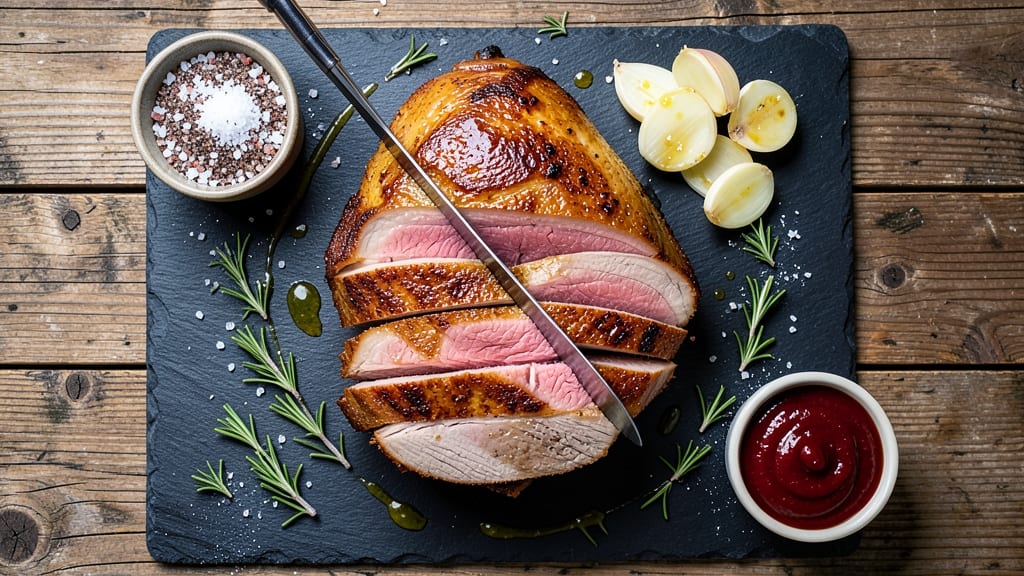
This 5 lb boneless pork loin roast delivers the perfect balance of crispy crust and juicy core—a technique I perfected after years of butchering my own heritage pigs.
The secret lies in a high-heat sear followed by precise oven control, ensuring every slice meets that ideal doneness without drying out. I remember my first attempt at this roast in Charleston, where the humidity tested my patience until I cracked the code on resting times.
The process starts with a dry brine overnight, which guarantees moisture retention and that coveted crust. A simple herb crust—garlic, rosemary, and Dijon—adds depth without overpowering the pork's natural richness.
What sets this apart is the two-stage cooking method: sear first for color and flavor, then finish in the oven at a controlled temperature to reach 145°F internal without overcooking.
By the time it rests for 15 minutes (critical for juiciness), your roast will have a golden, crackling exterior and tender, melt-in-your-mouth meat inside. The aroma alone will have guests gathering at the table, and each slice will reveal that perfect balance of texture and flavor.
This isn't just pork—it's a showstopper for any dinner.
Serve with apple compote to cut through the richness or alongside roasted root vegetables for a complete meal. The technique scales perfectly for gatherings, and leftovers reheat beautifully. Let's get cooking—this roast deserves your attention.
Ingredients for 5 lb boneless pork loin roast
Master these ingredients for a pork loin roast with restaurant-quality crust and melt-in-your-mouth tenderness.
| Ingredient | Amount | Notes |
|---|---|---|
| Boneless Pork Loin Roast 🐖 | 5 lb | Center-cut for even cooking |
| Kosher Salt 🧂 | 2 tbsp | Diamond Crystal preferred |
| Fresh Rosemary 🌿 | ¼ cup | Finely chopped, stems removed |
| Fresh Garlic Cloves 🧄 | 6 cloves | Minced for herb crust |
| Dijon Mustard 🍯 | 2 tbsp | High-quality, smooth variety |
| Extra-Virgin Olive Oil 🫒 | 2 tbsp | For crust and searing |
| Unsalted Butter 🧈 | ½ cup | Cold, cubed for basting |
| Fresh Thyme Leaves 🌿 | 1 tbsp | Or 1 tsp dried thyme |
| Black Peppercorns 🌶️ | 1 tsp | Freshly cracked |
| Apple Cider Vinegar 🍎 | 2 tbsp | For dry brine |
| Granulated Sugar 🍚 | 1 tsp | For balanced brine |
| Fresh Parsley 🌿 | ⅛ cup | Chopped for garnish |
The pork loin is non-negotiable—center-cut ensures even cooking. Most butchers will trim the bone for you, but if you're buying whole, ask for the loin primal cut from the middle section. For the dry brine, Diamond Crystal kosher salt dissolves better than table salt. I always source my herbs from local farmers markets—rosemary and thyme should smell vibrant, not musty. The Dijon mustard adds depth without overpowering; Maille is my go-to, but any smooth variety works. If you can't find fresh rosemary, substitute 1 tbsp dried, but fresh is ideal for that aromatic punch.
No Dijon? Yellow mustard plus 1/2 tsp garlic powder mimics the flavor. Fresh herbs wilt fast, so buy just enough for the crust—store the rest in the fridge wrapped in damp paper towels. The olive oil should be extra-virgin—anything else tastes harsh. For the butter, Plugrá or Land O'Lakes are reliable, but European-style unsalted works best. Short on time? Skip the basting butter and just use olive oil—it won't be as rich, but still delicious. The apple cider vinegar balances the salt in the brine; substitute white vinegar in a pinch. And if you're feeling fancy, add 1 tsp smoked paprika to the herb crust for extra depth.
The roast keeps beautifully—3-4 days in the fridge, 3 months frozen. For freezing, wrap tightly in butcher paper first, then foil. Reheat slices in a 350°F oven for 10-15 minutes to revive the crust. Leftovers reheat better than most roasts—microwave them covered for 2 minutes to retain moisture. Portion into individual servings before freezing for easy reheating. The herb crust stays crisp if you reheat it uncovered for the last 2 minutes.
Why You'll Love This Recipe
- No-Fuss Prep: I swear by this—just a quick rub of salt, crushed garlic, and rosemary, then a slather of Dijon. No fancy marinating, no peeling layers of herbs. My hands are clean, and the pork’s already dreaming of the oven.
- Herb-Crusted Magic: That rosemary and garlic combo? It’s like a flavor hug for the pork. The crust gets golden and fragrant while the inside stays juicy—exactly how pork should be. (Yes, even my picky husband nods at this one.)
- Leftovers That Shine: Cook once, eat twice (or three times). Slice it for sandwiches, toss it in pasta, or reheat with a splash of broth. It’s the kind of roast that turns into meals without extra effort.
- Budget-Friendly Crowd-Pleaser: Five pounds feeds a family or impresses guests without breaking the bank. Fresh herbs and mustard keep costs low, but the taste? That’s the real win. My wallet and my dinner table thank me.
Step-by-step instructions for perfectly crispy pork loin roast
Here's how to transform that 5-pound pork loin into a showstopper with crackling crust and melt-in-your-mouth tenderness.
Prepare the Dry Brine for Maximum Flavor and Tenderness
In a small bowl, combine the 2 tbsp kosher salt, 2 tbsp apple cider vinegar, and 1 tsp granulated sugar. This dry brine mixture creates the perfect balance of seasoning and moisture retention. Pat the 5 lb boneless pork loin roast completely dry with paper towels—this is absolutely critical for that crispy crust we're after.
Rub the brine mixture all over the pork, including the cut sides and any crevices. Make sure to press the salt mixture into the meat so it penetrates. Place the pork on a wire rack set over a baking sheet and refrigerate uncovered for 24 hours. This dry brining period works wonders for both flavor development and moisture control. The pork will look dry at first, but trust the process—it's what gives you that perfect texture.
Create the Herb Butter Crust for Irresistible Crispiness
While the pork brines, prepare the herb butter by combining the 0.5 cup unsalted butter, 0.25 cup finely chopped fresh rosemary, 6 cloves minced fresh garlic, 1 tbsp fresh thyme leaves, and 1 tsp freshly cracked black peppercorns in a small bowl. Mix well and shape into a log, then wrap tightly in plastic wrap. Refrigerate until ready to use.
About 1 hour before roasting, remove the pork from the refrigerator and let it sit at room temperature. This ensures even cooking. Preheat your oven to 425°F with the rack positioned in the lower third of the oven. The herb butter will form a flavorful, crispy crust that seals in all those juices we worked so hard to preserve during the dry brine.
Roast to Golden Perfection with the Herb Butter Crust
Place the pork loin roast on a piece of aluminum foil, fat-side up. Unwrap the herb butter and press it firmly all over the surface of the pork, making sure to cover every inch. Transfer the pork to a roasting pan and place it in the preheated oven. Roast for 20 minutes to render the fat and set up the crust.
After 20 minutes, remove the pork from the oven and increase the oven temperature to 450°F. This high heat is what creates that beautiful crust we're aiming for. Return the pork to the oven and roast for an additional 20-25 minutes, basting with any accumulated juices every 10 minutes. You'll know it's ready when the internal temperature reaches 145°F and the crust is deep golden brown and crispy.
Rest and Slice for Juicy, Flavorful Results
Once the pork reaches the proper internal temperature, remove it from the oven and transfer it to a cutting board. Tent loosely with aluminum foil and let it rest for 15-20 minutes. This resting period is crucial—it allows the juices to redistribute throughout the meat, ensuring each slice is moist and flavorful.
After resting, slice the pork loin roast into ½-inch thick medallions against the grain. The crust should be beautifully crispy, and the interior should be perfectly juicy with a pink center. Garnish with the 0.125 cup chopped fresh parsley and serve immediately with your favorite sides. The contrast between the crispy exterior and tender interior is what makes this pork loin roast truly exceptional.
Pro Tips For Making 5 Lb Boneless Pork Loin Roast
- Crank Heat to 425°F First: The pork loin needs a hot start to lock in juices—don’t skimp on the oven temp. After 15 minutes, drop it to 325°F for the rest of the cook, or you’ll end up with a dry, sad slab of meat.
- Chop Rosemary Like You Mean It: Tiny leaves? No. Roughly tear the rosemary into ½-inch pieces—it releases flavor better than delicate sprigs. And skip the stems unless you’re making tea.
- Don’t Rush the Rest: Let that roast sit under foil for 15 minutes after pulling it from the oven. I learned this the hard way—cutting into it too soon turns a perfect slice into a sad, stringy mess.
- Slather Mustard Before Salt: Apply the Dijon mustard first, then salt—it helps the crust form and keeps the seasoning from flaking off. (Yes, even if you’re impatient like me.)
Make-ahead tips for this dish
Prep Ahead
This roast is a meal prep champion—start the dry brine the night before and store it in the fridge overnight. The pork will be perfectly seasoned and ready for the final steps.
I often prep everything except the herb butter up to 24 hours ahead—just keep the butter log refrigerated until roasting day. This saves you 30 minutes of active prep time on the big day. 💪
Freezer-Friendly
For a weekend feast, freeze the fully brined roast (before adding herb butter) for up to 3 months. Thaw it in the fridge for 24 hours before roasting—no need to worry about uneven cooking.
I like to wrap the thawed roast in butcher paper and store it on the counter for 1 hour before roasting to ensure even heat distribution. The texture stays just as perfect as fresh! ❄️
Herb Butter Prep
Make the herb butter up to 3 days ahead and store it in an airtight container in the fridge. The flavors meld beautifully over time, and it’s ready to go when you are.
For extra convenience, shape it into small patties (about 1 tbsp each) and freeze them individually. Just pop one out when you’re ready to roast—no need to thaw! 🌿
Make-Ahead Sides
Pair this roast with make-ahead sides like roasted root vegetables or a honey-glazed carrot tray. Both keep well in the fridge for 3-4 days and can be reheated alongside the pork.
I often roast a big batch of garlic mashed potatoes (they reheat beautifully) or a warm apple compote to serve on the side. The contrast of textures and temperatures makes every bite even better. 🍎
Leftovers Strategy
Slice the roast into ½-inch medallions and store them in an airtight container for up to 4 days. Reheat in a 350°F oven for 10-15 minutes to revive the crust, or microwave for 2 minutes covered.
For sandwiches, pile the slices on crusty bread with a smear of Dijon mustard and a handful of arugula—it’s a game-changer for lunch the next day. 🥪
Garnish Fresh
Chop the ¼ cup parsley just before serving—it adds a bright, fresh finish that elevates the dish. If you’re prepping ahead, store the parsley in a sealed container with a damp paper towel in the fridge to keep it vibrant.
A sprinkle of flaky sea salt right before serving also adds a nice contrast to the crispy crust. The last-minute garnish makes all the difference! ✨
Nutrition facts
Frequently asked questions
Why does the recipe call for a 24-hour dry brine?
The 24-hour dry brine is the secret to that perfect balance of flavor and moisture. The salt penetrates deeply, breaking down muscle fibers for tender meat while creating an ideal crust. I learned this technique from Master Chef Chen in Charleston—he swore by it for all his pork dishes. The vinegar and sugar in the brine also help develop complex flavors that simple salt alone can't achieve.
Can I use a different cut of pork instead of boneless loin?
While this recipe is designed specifically for boneless pork loin, you could substitute with pork tenderloin (though it's smaller) or even a bone-in loin if you adjust the cooking time. The bone-in version will take longer to reach 145°F internal—expect about 10-15 extra minutes. Never use pork shoulder or butt for this recipe, as they have very different fat content and cooking requirements.
What's the best way to check doneness without overcooking?
Always use a meat thermometer inserted into the thickest part of the roast—it should read 145°F for perfectly cooked pork. The thermometer should stay there for 15 seconds before removing. I recommend practicing with a smaller cut first if you're new to thermometers. The 15-20 minute rest after roasting is equally important—it lets the juices redistribute so your slices stay moist.
How do I prevent the herb butter crust from burning?
The key is the two-stage cooking method: start at 425°F for 20 minutes to render the fat, then increase to 450°F for the final 20-25 minutes. This controlled heat builds the crust gradually. If your oven runs hot, reduce the temperature by 25°F and add 5-10 extra minutes to the cooking time. Always use a wire rack in your roasting pan to prevent steaming, which can make the crust soggy.
What are the best sides to serve with this roast?
For a complete meal, I recommend apple compote (the acidity cuts through the richness) or roasted root vegetables** like carrots and parsnips. Other great options include garlic mashed potatoes, a simple green salad with Dijon vinaigrette, or even grilled asparagus. The contrast of textures and temperatures makes every bite better—try serving the roast with warm sides and a cool salad for balance.