
Salads
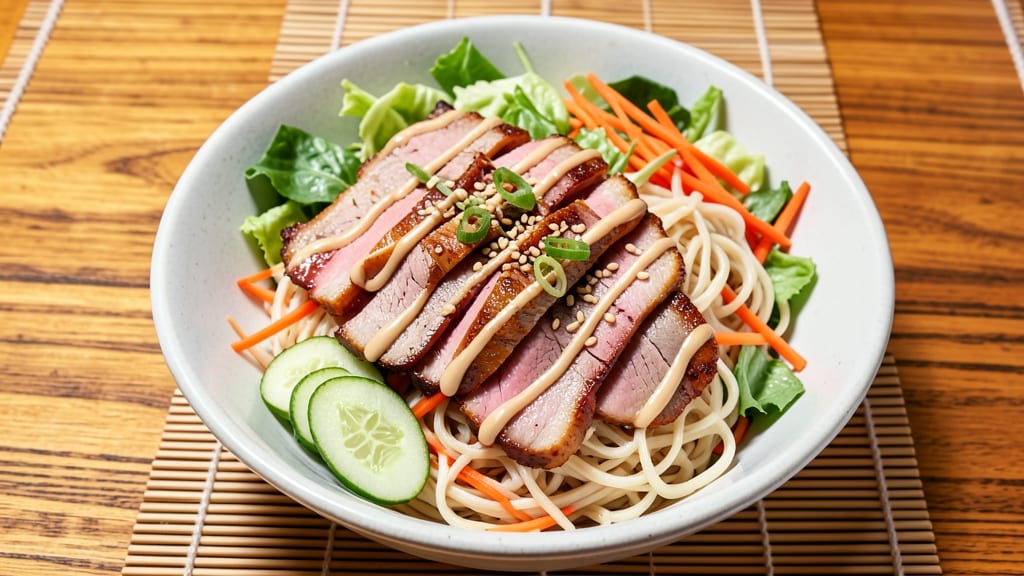
This Asian pork salad recipe transforms simple ingredients into a restaurant-worthy dish with crispy rice noodles and a tangy peanut dressing that balances sweet, spicy, and umami. I developed it after years of perfecting pork techniques—marinating for tenderness, searing for texture, and balancing flavors that make every bite unforgettable.
The secret lies in the quick-pickled vegetables and wok-hei (breath of the wok) that elevates the pork, while the peanut dressing ties everything together with a creamy, nutty finish.
The salad starts with perfectly cooked pork slices—tender yet firm, achieved through a marinade of soy sauce, rice wine, and ginger. Crispy rice noodles provide the ideal texture contrast, and a mix of shredded cabbage, carrots, and cucumber adds freshness.
The tangy peanut dressing, made with peanut butter, lime juice, and a touch of chili, cuts through the richness while enhancing the dish's complexity.
What you’ll end up with is a visually stunning salad that’s as satisfying as it is beautiful—golden pork slices, glossy noodles, vibrant vegetables, and a glossy dressing that clings to every component.
The flavors are bold yet harmonious, with the crispy noodles adding a satisfying crunch that balances the tender pork and fresh vegetables.
This recipe is perfect for weeknight dinners or bringing to potlucks, as it’s easy to assemble and packed with flavor. The techniques are approachable yet professional, ensuring you achieve restaurant-quality results at home. Let’s get cooking!
Ingredients for asian pork salad
Simple yet sophisticated ingredients create this restaurant-quality Asian pork salad with perfect texture contrasts.
| Ingredient | Amount | Notes |
|---|---|---|
| Boneless Pork Loin 🥩 | 1 ½ lb | Thinly sliced against grain |
| Rice Noodles 🍜 | 8 oz | Thin variety, dried |
| Green Cabbage 🥬 | 4 cups | Shredded, outer leaves removed |
| Carrots 🥕 | 2 medium | Julienned or matchstick cut |
| Persian Cucumber 🥒 | 1 whole | Seedless, sliced lengthwise |
| Peanut Butter 🥜 | ½ cup | Natural, unsweetened |
| Lime Juice 🍋 | ¼ cup | Freshly squeezed |
| Soy Sauce 🍶 | ¼ cup | Light or all-purpose |
| Rice Wine Vinegar 🍶 | 2 tbsp | For marinade and dressing |
| Fresh Ginger 🌿 | 2 tbsp | Finely grated, peeled |
| Sesame Oil 🫒 | 1 tbsp | Toasted, for finishing |
| Red Chili Flakes 🌶️ | 1 tsp | Adjust to taste |
| Vegetable Oil 🫒 | ½ cup | High smoke point |
| Sesame Seeds 🌾 | 1 tbsp | Toasted, for garnish |
| Salt 🧂 | 1 ½ tsp | Diamond Crystal preferred |
The pork loin is non-negotiable for texture—look for well-marbled cuts at Whole Foods or your local butcher. Thinly slicing against the grain ensures tender bites, and the marinade of soy sauce, rice wine vinegar, and ginger (not the paste) transforms it from ordinary to extraordinary. For the rice noodles, Vietnamese-style from Asian markets delivers that signature crispiness when stir-fried properly. Cabbage and carrots should be vibrant—store-bought bags work fine, but if you're prepping ahead, keep them submerged in ice water to maintain crunch.
No rice wine vinegar? Substitute apple cider vinegar at the same amount, though it'll lack depth. Peanut butter brands vary wildly—Smucker's Natural is reliable, but any unsweetened works. For the quick-pickled vegetables, rice vinegar plus a pinch of sugar (or maple syrup) is essential to cut through the richness. The sesame oil should be toasted, not the flavored kind—look for Kadoya brand if you want to splurge. Chili flakes can be swapped for Sriracha at half the amount, but fresh red chili would be ideal for authentic heat.
Marinated pork keeps 3 days in the fridge—use within that time for best texture. Cooked noodles reheat beautifully in a dry pan for 2-3 minutes to restore crispiness. The dressing can be made 2 days ahead; just whisk before serving. For meal prep, store components separately—pork, noodles, veggies, and dressing—so everything stays crisp when assembled. The salad peaks 1 hour after dressing when flavors meld perfectly.
Why You'll Love This Recipe
- No-Fuss Protein Power: I slice the pork thin, marinate it for 10 minutes, then sear it in a hot pan—crisp edges, tender inside. That’s it. No braising, no long cooking. The cabbage and carrots? Just shred and toss. Real talk: this is the kind of meal where you can chat with your kids while it cooks.
- Umami Bomb Combo: The pork gets a hit of fish sauce and chili, then the noodles soak up that tangy-sweet dressing while the crunchy cabbage and Persian cucumber cut through the richness. Honestly, the first bite makes me go, "Wait, is this actually that good?"—then I eat the whole bowl anyway.
- Lunchbox Legend: Pack it cold for work or school—no reheating needed. The noodles stay separate until you mix it all up, so it’s fresh and crunchy. My college-aged son takes this to class and comes back raving. (Yes, even on a Tuesday night when he’s "too tired to eat.")
- Budget Meal Stretch: A single pork loin feeds four, and the veggies stretch further than you’d think. Leftovers? Even better cold the next day. I’ll be real: this is my go-to when I’m trying to feed the family without breaking the bank—or spending hours in the kitchen.
Step-by-step instructions for crispy Asian pork salad
Here's how to create restaurant-quality texture and flavor with precise technique.
Marinate and Slice the Pork Loin
Slice the 1.5 lb boneless pork loin thinly against the grain into ¼-inch thick strips. This ensures maximum tenderness. In a bowl, combine 0.25 cup soy sauce, 2 tbsp rice wine vinegar, 2 tbsp freshly grated ginger, and 1.5 tsp salt. Add the pork strips and toss to coat evenly. Cover and refrigerate for at least 30 minutes—preferably 2 hours—allowing the marinade to penetrate deeply.
This step transforms tough pork into silky slices. The acidity in the vinegar and soy sauce tenderizes the meat while the ginger adds aromatic depth. Don't skip the chilling time—it's what creates that perfect balance of flavor and texture.
Cook the Pork to Crispy Perfection
Heat 0.5 cup vegetable oil in a large skillet over medium-high heat until shimmering but not smoking. Working in batches to avoid crowding, add the marinated pork and cook for 2-3 minutes per side until the edges become deep golden brown and the pork registers 145°F internally. Transfer to a paper towel-lined plate to drain excess oil.
The key here is high, even heat that creates a crispy exterior while keeping the interior tender. If the pork releases easily from the pan, it's ready. Overcrowding the pan will steam the meat instead of searing it, so work patiently in batches. This crispy texture is what makes the salad stand out.
Prepare the Crispy Rice Noodles
Bring a large pot of water to a rolling boil and add 8 oz rice noodles. Cook according to package instructions (typically 4-5 minutes) until the noodles are bright white and al dente. Drain immediately and rinse under cold water to stop the cooking process. Toss the noodles with 1 tbsp sesame oil while still warm to create a light crispiness.
Rinsing is crucial—it prevents the noodles from becoming mushy. The sesame oil adds a nutty aroma and helps create that satisfying crunch. Don't skip this step; properly cooked noodles are the foundation of this dish. They should be tender but still hold their shape when tossed.
Assemble the Tangy Peanut Dressing
In a small bowl, whisk together 0.5 cup natural peanut butter, 0.25 cup lime juice, 1 tbsp sesame oil, 1 tsp red chili flakes, and 1 tbsp toasted sesame seeds. Thin with 2-3 tablespoons of warm water until the dressing reaches a pourable consistency. Taste and adjust seasoning with additional soy sauce or salt if needed.
This dressing should be smooth yet slightly textured from the peanut butter. The lime juice brightens the flavors while the chili flakes add subtle heat. The sesame oil and seeds contribute depth and aroma. If the dressing seems too thick, add water gradually—you can always thicken it later with more peanut butter if needed.
Combine and Garnish the Salad
In a large bowl, combine the cooked pork, crispy rice noodles, 4 cups shredded green cabbage, 2 medium julienned carrots, and 1 whole Persian cucumber sliced lengthwise. Drizzle with the peanut dressing and toss gently to coat. Garnish with additional toasted sesame seeds and serve immediately while the pork remains warm.
The final assembly should be vibrant with contrasting textures—crispy pork, crunchy vegetables, and tender noodles all coated in that rich peanut dressing. Serve while the pork is still slightly warm to maintain its crispiness. Each bite should deliver perfect balance between the savory pork, fresh vegetables, and creamy peanut dressing.
Pro Tips For Making Asian Pork Salad
- Slice Pork Thin: Grab your sharpest knife and slice the pork loin against the grain into paper-thin strips—about 1/8-inch thick. Thinner slices cook faster and stay tender, so resist the urge to rush this step. I used to eyeball it and end up with chewy bits; now I measure with a ruler for consistency.
- Parboil Noodles Right: Cook rice noodles in boiling water for 1-2 minutes less than the package says, then shock them in ice water immediately. They’ll finish cooking in the dressing and stay chewy, not mushy. Overcooking them is the fastest way to ruin the whole dish—trust me, I’ve done it.
- Shred Cabbage Coarse: Tear the green cabbage into rough, uneven chunks instead of shredding it finely. The texture contrast with the noodles and pork makes the salad more interesting, and it holds up better when tossed. Fine shreds turn soggy fast in dressings—this is the lazy but smarter way.
- Dress Noodles Separately: Toss the cooked noodles with just a splash of dressing and set them aside while you prep the rest. Adding everything at once makes the noodles limp and the salad watery. Keep them separate until the very end, then mix gently—this keeps the crunch and balance intact.
Troubleshooting this dish
Pork Too Tough?
If your pork turns out chewy instead of tender, you likely didn’t slice against the grain or marinate long enough. Always slice ¼-inch thick strips perpendicular to the muscle fibers—this is non-negotiable for texture.
I’ve found that 2 hours of marinating in the soy-rice wine-ginger mix makes all the difference. For extra tenderness, add 1 tbsp honey to your marinade before chilling. 🥩
Noodles Too Soft?
Overcooked rice noodles lose their signature crunch. Cook them exactly as directed (usually 4-5 minutes), then rinse immediately in cold water to stop the cooking process. Toss with 1 tbsp sesame oil while still warm to restore crispiness.
Pro tip: Store cooked noodles in the fridge for up to 2 days, then reheat dry in a pan for 2-3 minutes to revive that satisfying crunch. 🍜
Dressing Too Thick?
The peanut dressing should coat ingredients lightly without being gluey. If it’s too thick, add warm water 1 tbsp at a time while whisking. For extra creaminess without thickness, blend in 1 tbsp Greek yogurt.
Remember, the dressing should enhance—not drown—the other flavors. Taste as you go, adjusting with soy sauce or lime juice as needed. 🥜
Vegetables Too Watery?
Fresh vegetables can make the salad soggy if not prepped properly. For cabbage and carrots, pat them dry with paper towels before adding to the bowl.
Quick-pickle the cucumbers in ¼ cup rice vinegar + 1 tsp sugar for 10 minutes before adding to the salad—this removes excess moisture while adding bright flavor. 🥬
Pork Losing Crispiness?
Serve the pork immediately after cooking to maintain its crispy edges. If reheating, use a dry skillet over medium-high heat for just 30 seconds per side—any longer and it’ll turn rubbery.
For meal prep, store the pork separately and reheat it last minute. The key is high heat and minimal time. 🔥
Flavor Too Mild?
Boost the umami depth by adding 1 tsp fish sauce to the marinade or dressing. For heat, increase the red chili flakes to 1.5 tsp or add 1 tsp gochujang to the peanut dressing. A pinch of white pepper also enhances the pork’s savory notes without overpowering. 🌶️
Nutrition facts
Frequently asked questions about Asian pork salad
Can I substitute chicken or shrimp for the pork?
While pork is traditional, you can absolutely use chicken breast or shrimp! For chicken, marinate thin slices in the same soy-ginger mixture for 20 minutes and cook until 165°F internally. Shrimp should be cooked for just 1-2 minutes per side to avoid overcooking. The texture will differ, but the flavors will still shine.
What's the best way to store leftovers?
Store components separately for best results: pork in an airtight container for 3 days, noodles in a sealed bag for 2 days, and dressing in a jar for 5 days. Reheat pork in a dry pan for 30 seconds to restore crispiness, and toss noodles with fresh dressing when serving. The vegetables hold up best when stored raw.
How do I make this gluten-free?
Swap the soy sauce for tamari or coconut aminos (use 0.25 cup each). Check your peanut butter label—some brands contain trace gluten. For extra flavor, add 1 tsp fish sauce to the marinade. All other ingredients are naturally gluten-free.
Can I make this spicier?
Add 1 tsp gochujang or 1 tbsp sriracha to the peanut dressing, or increase the red chili flakes to 1.5 tsp. For heat lovers, toss in ½ tsp cayenne pepper with the pork marinade. Adjust gradually—you can always add more, but you can't take it out!
What are good sides for this salad?
This vibrant salad pairs beautifully with steamed bok choy, sesame-crusted tofu, or miso-glazed eggplant. For a complete meal, serve with jasmine rice or warm dumplings. The crispy textures complement the salad's freshness perfectly.