
Main Courses
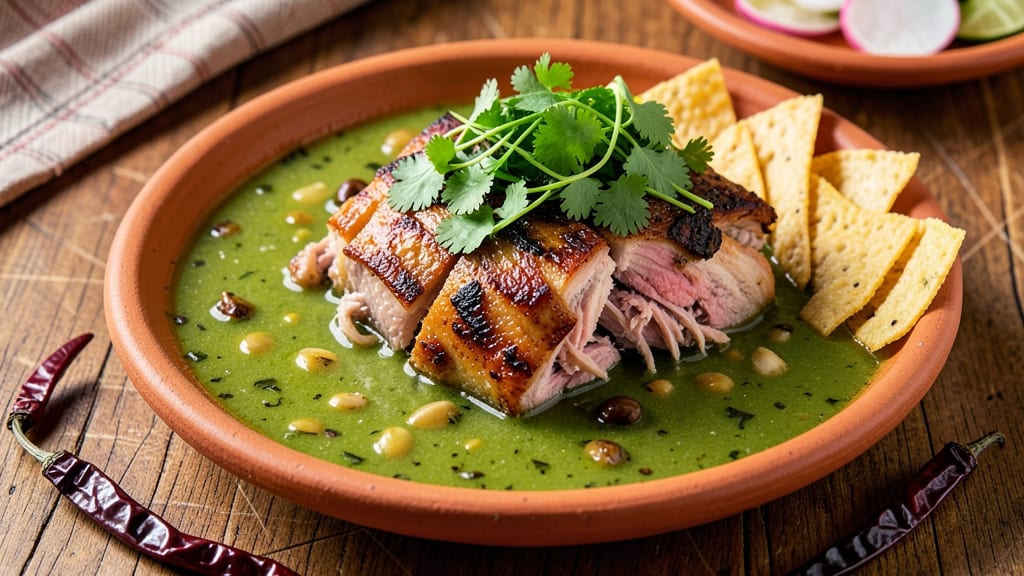
This authentic pork pozole verde brings the soul of Mexican home cooking to your table with its vibrant green broth and tender pork. 🌟 I developed this recipe after years of perfecting the balance between smoky dried chilies and fresh herbs, creating a dish that's both comforting and deeply flavorful.
The key lies in slow-cooking the pork until it's fall-apart tender while building layers of flavor in the broth.
The magic begins with the broth, where dried pasilla chilies and poblano peppers infuse the liquid with earthy depth. Fresh cilantro, epazote, and a splash of lime brighten the green hue and cut through the richness.
Meanwhile, the pork shoulder transforms into succulent, shreddable pieces perfect for serving with hominy and traditional toppings. This isn't just a recipe—it's a celebration of Mexican heritage in every bite.
What makes this dish truly special is the harmony of textures and flavors: the crisp crunch of radishes and lettuce, the tangy zip of lime, and the creamy bite of hominy. The slow-cooked pork absorbs the aromatic broth, creating a meal that's hearty yet balanced.
Whether you're gathering for a festive occasion or simply craving something comforting, this pozole verde delivers restaurant-quality results at home.
Serve it with all the traditional toppings—sliced radishes, shredded lettuce, avocado, and a squeeze of lime—and watch as everyone reaches for seconds. The leftovers taste even better the next day, making this a recipe worth making ahead. Let's get cooking!
Ingredients for authentic pork pozole verde
Six pounds of pork shoulder and vibrant green chilies create this restaurant-quality pozole verde.
| Ingredient | Amount | Notes |
|---|---|---|
| Pork Shoulder 🥩 | 3 lb | Bone-in for maximum flavor |
| Dried Pasilla Chilies 🌶️ | 4 whole | Stems and seeds removed |
| Poblano Peppers 🌶️ | 2 whole | Roasted and peeled |
| Fresh Cilantro 🌿 | 1 cup | Stems included, chopped |
| Epazote 🌿 | ¼ cup | Fresh leaves, chopped |
| Fresh Tomatillos 🍅 | 1 ½ lb | Husked and rinsed |
| White Onion 🧅 | 1 whole | Quartered, skin on |
| Garlic Cloves 🧄 | 6 cloves | Peeled, smashed |
| Fresh Lime Juice 🍋 | ½ cup | Freshly squeezed |
| Dried Oregano 🌿 | 1 tbsp | Mexican oregano preferred |
| Cumin Seeds 🌿 | 1 tbsp | Toasted lightly |
| Salt 🧂 | 2 tsp | Kosher or sea salt |
| Dried Hominy 🌽 | 2 cups | Soaked overnight |
| Vegetable Oil 🫒 | 2 tbsp | For roasting peppers |
| Fresh Avocado 🥑 | 1 whole | For serving, sliced |
| Radishes 🥕 | 1 cup | For serving, sliced |
| Iceberg Lettuce 🥬 | 1 head | For serving, shredded |
The pork shoulder is non-negotiable—bone-in gives the most flavor, and Costco or your butcher will have the best cuts. For the dried pasilla chilies, seek out the La Costeña brand at Mexican markets or online—they're the gold standard. If you can't find epazote, Mexican tarragon is a close substitute, though the flavor won't be identical. The tomatillos should be firm and bright green—no yellowing! Soak them in cold water to remove any lingering husk bits before using. For the poblano peppers, char them over an open flame or under a broiler until blackened all over, then peel off the skin under running water.
No epazote? Fresh basil or Mexican tarragon at half the amount works in a pinch. Substitute dried oregano for the fresh if needed, but reduce to 1 teaspoon. The hominy must be soaked overnight—never skip this step or it'll stay rock-hard. For the poblano peppers, if you can't find them, jalapeños will work but remove seeds to reduce heat. The lime juice should be freshly squeezed—bottled just doesn't cut it. For extra depth, toast the cumin seeds in a dry skillet for 30 seconds before adding to the broth. The avocado should be ripe but firm—Hass variety is traditional.
The pork shoulder keeps raw in the fridge for 3 days or frozen for 3 months. Once cooked, the pozole broth stays fresh for 5 days in the fridge or 3 months frozen. For serving, store radishes, lettuce, and avocado separately—they'll wilt if added to the hot pozole. The hominy can be pre-cooked and stored in its soaking water for 3 days. To reheat, add a splash of water or broth and simmer gently—never boil or the broth will break.
Why You'll Love This Recipe
- One-Pot Magic: I swear by this recipe—just toss everything into a single pot, let it simmer, and walk away. No fancy techniques, no last-minute scrambling. The pork shoulder falls apart on its own, and those dried pasilla chilies soften into a velvety sauce while you chop poblanos (which, honestly, could be roasted ahead if you’re feeling extra).
- Earthy & Smoky Depth: Between us, the combination of charred poblanos and earthy epazote is chef’s kiss—it’s the kind of flavor that lingers. The pasilla chilies add a smoky sweetness that balances the heat, and fresh cilantro ties it all together like a hug. It’s not just a soup; it’s a full meal in a bowl.
- Weeknight Crowd-Pleaser: This feeds six without breaking a sweat, and everyone—your picky teen, your meat-loving partner, your veggie-curious friend—will find something to love. Serve it with warm tortillas, and suddenly you’re hosting a fiesta. (Yes, even on a Tuesday night.)
- Leftovers That Taste Better: Between us, pozole verde only gets richer the next day. The flavors meld into something even more incredible, and reheating it is a breeze—just a splash of water, a quick stir, and boom. Budget-friendly? Absolutely. Time-saving? Even more so.
Step-by-step instructions for authentic pork pozole verde
Transform simple ingredients into restaurant-quality pozole verde with this traditional method.
🔥 Step 1: Prepare the Hominy and Roast the Peppers
Soak the 2 cups dried hominy in plenty of cold water for at least 8 hours or overnight. This step is crucial—it softens the hominy so it absorbs the broth beautifully. Drain and set aside, reserving the soaking liquid for later if needed.
While the hominy soaks, roast the 2 whole poblano peppers and 4 whole dried pasilla chilies over an open flame or under a broiler until the peppers blister and blacken in spots (about 10-12 minutes). Place them in a bowl, cover with plastic wrap, and let steam for 15 minutes. This process softens the skins so they peel easily.
👨🍳 Step 2: Build the Green Salsa Base
Peel the roasted peppers and chilies, then remove stems and seeds. In a food processor, combine the peppers, chilies, 1.5 lb fresh tomatillos, 1 whole white onion (quartered), and 6 cloves garlic. Pulse until you achieve a coarse, chunky consistency—you want texture, not a smooth puree.
Transfer the mixture to a large pot and add 2 tbsp vegetable oil. Cook over medium heat for 5-7 minutes, stirring occasionally, until the mixture softens and the raw onion smell disappears. This step develops the salsa's depth of flavor—don't rush it.
🍳 Step 3: Toast Spices and Simmer the Broth
In a dry skillet, toast the 1 tbsp cumin seeds over medium heat for 1-2 minutes until fragrant and slightly darkened. Immediately transfer them to the pot with the salsa mixture. Add 8 cups water (or enough to cover the ingredients by about 2 inches) and bring to a boil.
Reduce heat to low and simmer uncovered for 20-25 minutes, stirring occasionally. The broth should reduce slightly and develop a vibrant green color. Taste and adjust seasoning with 2 tsp salt—pozole verde should be bright, tangy, and well-balanced. Here's the thing—this broth is the soul of your pozole, so take your time getting it right.
🥘 Step 4: Cook the Pork Shoulder
While the broth simmers, add the 3 lb pork shoulder to the pot. Increase heat to medium-high and bring to a boil, then immediately reduce to low again. Cover and simmer for 2-2.5 hours, turning the pork occasionally to ensure even cooking.
The pork is done when it's fork-tender and easily pulls apart. You'll know it's ready when the meat separates cleanly from the bone and the broth has deepened in color and flavor. Skim off any excess fat that rises to the surface during cooking—this keeps your pozole lighter.
⏰ Step 5: Finish and Assemble
Remove the pork from the broth and let it rest for 10 minutes before shredding it with two forks. Return the shredded pork to the pot and stir in the 2 cups soaked hominy. Keep the pozole warm over low heat—this is where the flavors meld together beautifully.
For serving, prepare the toppings: slice the 1 whole fresh avocado, thinly slice the 1 cup radishes, and shred the 1 head iceberg lettuce. Chop the 1 cup fresh cilantro and 0.25 cup epazote separately. Ladle the pozole into bowls and let everyone customize their portions with toppings, a squeeze of 0.5 cup fresh lime juice, and a sprinkle of 1 tbsp dried oregano.
Pro Tips For Making Authentic Pork Pozole Verde
- Char the Chilies Properly: Tostadas pasillas and poblano peppers directly over a gas flame (or under a broiler) until they’re blackened in spots—this deepens their smoky depth. I used to just soak them raw, and the broth tasted flat until I learned this step. Don’t rinse off the char completely; just pick off the worst bits.
- Render Fat, Then Simmer Slow: Brown the pork shoulder in batches over medium-high heat until the fat renders and the meat develops a crust—this builds flavor. Then lower the heat to a bare simmer (tiny bubbles) for 3-4 hours, covered. I’ve rushed this, and the broth ends up greasy or the meat dry. Patience here makes the difference.
- Toast the Epazote: Lightly toast the epazote leaves in a dry skillet for 30 seconds until fragrant—this mutes its bitterness and intensifies its anise-like aroma. Skip this, and the dish will taste medicinal. Add it at the very end with the cilantro, not during cooking.
- Use Hominy from Cans: Drain and rinse canned hominy (not dried) to remove excess salt, then add it directly to the pot during the last 30 minutes of cooking. Fresh hominy is ideal, but canned works fine—just don’t skip the rinse. The texture softens perfectly this way.
Wine and beer pairings for these flavors
Mexican Lager Perfection
For pozole verde, a crisp Mexican lager like Modelo Especial or Pacífico Clara is my go-to. The clean, slightly malty profile cuts through the richness of the pork and hominy without overpowering the vibrant green broth.
I like to serve it ice-cold—around 40-45°F—to contrast the warm, spicy pozole. The carbonation also helps cleanse your palate between bites, making it perfect for communal eating. 🍺
White Wine Contrast
If you prefer wine, a dry Spanish Albariño or Verdejo offers bright acidity that mirrors the lime and tomatillo flavors in the broth. These whites have citrus notes that complement the herbaceous cilantro and epazote.
Avoid oaky Chardonnays—they’ll clash with the dish’s fresh, green character. I’ve found Pazo de Señorans Albariño from Rías Baixas to be a crowd-pleaser. 🍷
Regional Beer Twist
For a regional twist, try a Mexican-style wheat beer like Negra Modelo. The caramel and toasted malt notes pair beautifully with the slow-cooked pork, while the slight effervescence balances the dish’s heartiness.
If you’re feeling adventurous, a Mexican IPA (like Cerveza Cien) can add a hoppy contrast to the smoky chilies—just serve it on the side for those who prefer a lighter sip. 🌶️
Non-Alcoholic Options
For non-drinkers, a sparkling hibiscus tea (like Jamaica) adds a tart, floral note that echoes the lime and epazote. Alternatively, a Mexican soda like Jarritos Tamarind or Lime provides a refreshing, sweet-tart balance.
I always keep a pitcher of agave-sweetened limeade on hand—it’s a crowd favorite at my table. ✨
Serving Temperature Tips
Let your beer or wine breathe slightly before serving—about 10-15 minutes in the fridge for beer or at room temperature for white wine. For pozole verde, I like to serve the broth at 180-190°F—hot enough to steam the toppings but not scalding.
The contrast of warm pozole and chilled beer or wine makes every bite feel like a celebration. 💫
Nutrition facts
Frequently asked questions
Can I substitute dried pasilla chilies with other peppers?
Yes, but the flavor will change. For a milder version, use 2 dried guajillo chilies plus 1 poblano pepper. For more heat, add 1 ancho chili or 1 chipotle pepper in adobo. Remember, pasilla gives pozole verde its signature earthy depth—no substitute is identical.
Why does my pozole verde taste too bitter?
Bitterness usually comes from over-roasted peppers or too many dried chilies. Reduce cooking time by 5 minutes when toasting peppers, and use 3 pasilla chilies max. Balance with 0.25 cup fresh lime juice or a pinch of sugar. Taste as you go—pozole verde should be bright, not bitter.
How do I make this recipe vegetarian?
Replace pork with 3 cups extra-firm tofu or 1.5 lb mushrooms (shiitake or oyster). Simmer tofu in broth for 30 minutes after it's fully cooked. Boost umami with 1 tbsp soy sauce or 1 tsp mushroom powder. The dish will be lighter but still delicious.
Can I make pozole verde in a slow cooker?
Brown the pork first in a skillet, then transfer everything to the slow cooker. Cook on low for 7-8 hours or high for 4-5 hours. Add hominy in the last 30 minutes. The slow cooker method actually enhances tenderness—just stir occasionally to prevent sticking.
What's the best way to store leftovers?
Store in an airtight container in the fridge for 4-5 days. For longer storage, freeze for up to 3 months. Reheat gently on low heat—never microwave directly from frozen. The broth may thicken slightly; add a splash of water or broth when reheating. Leftovers taste even better the next day!