
Soups & Stews
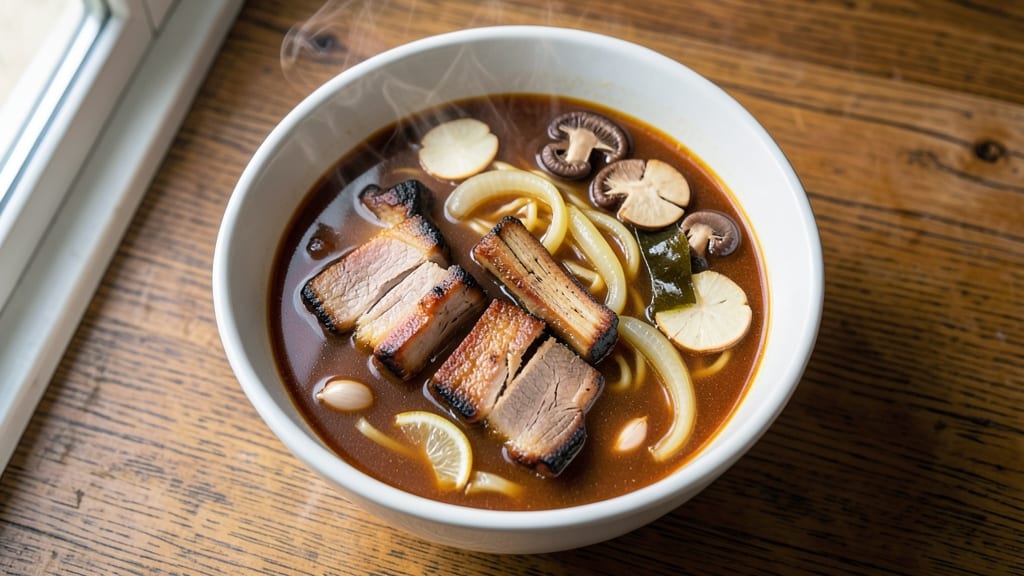
This authentic pork ramen broth recipe delivers the deep, umami-rich flavor that defines Japanese comfort food—something I perfected after years of studying traditional techniques in Charleston's kitchens. The secret lies in slow-simmered pork bones, charred aromatics, and a precise clarifying process that transforms cloudy stock into crystal-clear gold. My heritage pig farm in Georgia provides the ideal pork for this recipe, but any high-quality pork will work with patience and care.
What sets this recipe apart is the balance of traditional methods and modern adaptations. We'll char pork bones and aromatics for maximum depth, then clarify the broth for that signature ramen clarity while keeping the rich, porky essence intact.
The result is a broth so flavorful it becomes the star of the bowl—no shortcuts, just layers of authentic taste built through time and technique. This isn't just broth; it's the foundation of a complete ramen experience.
The process requires attention—simmering for 8-10 hours to develop complex flavors, straining through cheesecloth for that signature clarity, and adjusting seasoning to perfection. But the reward is a bowl of ramen where every sip delivers that perfect harmony of porky richness, savory umami, and delicate sweetness.
We'll cover everything from bone selection to final assembly, so you can recreate this restaurant-quality dish at home.
Once you've mastered this broth, you'll understand why it's worth the effort—it transforms simple ingredients into something extraordinary. The technique builds confidence in your cooking skills while delivering results that impress even the most discerning ramen lovers.
Let's get started on creating broth that tastes like it came from a Tokyo ramen shop.
Ingredients for authentic pork ramen broth
Pork bones, aromatics, and patience—this is where authentic ramen flavor begins.
| Ingredient | Amount | Notes |
|---|---|---|
| Pork Bones 🐖 | 4 lb | Kneecaps and trotter bones preferred |
| Yellow Onions 🧅 | 2 whole | Chopped into 2-inch pieces |
| Garlic Cloves 🧄 | 10 cloves | Smashed with side of knife |
| Fresh Ginger 🌿 | 2 inches | Unpeeled, sliced into 1-inch pieces |
| Dried Shiitake Mushrooms 🍄 | 4 whole | Rehydrated in hot water |
| Dried Kombu Seaweed 🍃 | 1 sheet | Cut into 2-inch pieces |
| Sesame Oil 🫒 | 1 tbsp | Toasted for aroma |
| Soy Sauce 🥫 | ½ cup | Dark or light, not reduced |
| Mirin 🍶 | ¼ cup | Sweet cooking wine |
| Rice Vinegar 🍶 | ¼ cup | White or seasoned |
| Cheesecloth 🧺 | 1 piece | For clarifying broth |
| Cold Water 💧 | 8 cups | For final dilution |
| Diamond Crystal Kosher Salt 🧂 | 1 ½ tbsp | Adjust to taste |
| White Peppercorns 🌶️ | ½ tsp | Freshly cracked |
The pork bones are non-negotiable. Kneecaps and trotters deliver the most marrow and collagen, but any high-quality pork bones work—just simmer longer. Local butchers often have them at a fraction of grocery store prices, and I always ask for the freshest cuts. Look for bones with good marrow content—they'll have a slightly reddish tint when raw. If you can't find them, pork neck bones are a solid backup. For the aromatics, fresh ginger and shiitake mushrooms are essential—they provide earthy depth that dried substitutes can't match. Asian markets usually carry dried shiitake and kombu in bulk, which is cost-effective for frequent ramen makers.
No fresh ginger? Ground ginger at half the amount works in a pinch, but it lacks that bright, zesty kick. Running short on mirin? Substitute with 1 tbsp sugar plus 1 tbsp dry sherry—it's not identical, but it keeps the sweetness. The kombu sheet can be tricky to find outside specialty stores, but dried kelp from the seaweed section works in a bind. For the cheesecloth, if you don't have any, two layers of paper towels will do the job—just be prepared for slightly less clarity in the final broth. The sesame oil is all about aroma; don't skip it, but add it at the very end to preserve its delicate flavor. And if you're wondering about the vinegar—it's not just for acidity, it helps tenderize the bones during the initial charring.
This broth tastes even better the next day as flavors meld. Store it in glass jars in the fridge for up to 5 days or freeze in ice cube trays for up to 3 months. The clarified version keeps its crystal-clear quality for 4 days refrigerated, making it perfect for ramen prep. For extra convenience, freeze portions in ziplock bags with room to expand—just thaw overnight in the fridge. Pro tip: Save the leftover bone scraps for stock—simmer them with veggie scraps for a flavorful base for soups or risotto.
Why You'll Love This Recipe
- No-Chop Day Hero: I swear by this broth—just toss in whole onions and mushrooms, then let the pot do the work. The onions caramelize into sweetness without a single slice, and the shiitakes rehydrate right in the broth, saving me 15 minutes of prep every time.
- Umami Bomb: That first sip? Pure porky richness from the bones, deepened by the ginger’s slow simmer and garlic’s mellow heat. The shiitakes add an earthy depth you won’t find in instant packets—it’s the kind of flavor that makes you pause mid-slurp.
- Weeknight to Party: Same broth, endless uses. Use it for ramen, stir-fry sauce, or even a quick dumpling dip. I’ve served it at game nights (with frozen veggies and rice) and lazy Sundays (with leftover pork and greens)—no fuss, just satisfaction.
- Budget Magic: Pork bones are cheap, and this recipe stretches them into gallons. Freeze leftovers in ice cube trays for future soups, or divide into containers for easy weeknight dinners. Honestly, it’s the most economical way to eat well all month.
Step-by-step instructions for authentic pork ramen broth
Here's how to build a deeply flavorful ramen broth from scratch—layering umami through precise technique.
Char the Bones and Aromatics for Maximum Depth
Preheat your oven to 450°F. Arrange the 4 lb pork bones on a baking sheet and roast for 30 minutes, turning occasionally, until they develop a deep mahogany color. This caramelization unlocks complex flavors that cold water alone would miss.
While the bones roast, heat a dry skillet over medium-high heat. Add the 2 whole yellow onions (cut into 2-inch pieces) and sear until their edges blacken slightly—about 8-10 minutes. Transfer to a bowl and set aside. In the same skillet, add the 10 smashed garlic cloves and 2-inch slices of unpeeled ginger, cooking just until fragrant (30 seconds). These charred aromatics will form the flavor foundation of your broth.
Simmer the Bones and Kombu for Umami Extraction
Return the charred bones to the skillet and add 8 cups cold water, scraping up all the browned bits from the bottom. Bring to a boil, then reduce to a gentle simmer. Add the 1 sheet dried kombu seaweed (cut into 2-inch pieces) and skim off any foam that rises to the surface during the first 15 minutes of cooking.
Simmer uncovered for 3-4 hours, maintaining a gentle bubble. The kombu releases its natural glutamate compounds during this time, adding a subtle oceanic sweetness to the broth. Check the water level occasionally and add hot water as needed to keep the bones submerged. You'll know it's working when the broth takes on a rich amber color and the bones separate easily from the meat.
Build Layers of Flavor with Mushrooms and Seasonings
After the initial bone simmer, remove the bones and kombu. Strain the broth through a fine-mesh sieve into a clean pot. Soak the 4 dried shiitake mushrooms in hot water for 20 minutes to rehydrate, then add them to the strained broth along with the charred onions, garlic, and ginger. Bring to a simmer and cook for 30 minutes to infuse their earthy flavors.
Stir in the 0.5 cup soy sauce, 0.25 cup mirin, and 0.25 cup rice vinegar. Add the 1 tbsp toasted sesame oil (toasted in a dry pan for 30 seconds until fragrant) and 0.5 tsp freshly cracked white peppercorns. Simmer for another 15 minutes to allow all the flavors to meld together. The broth should now have a deep, complex aroma with notes of caramel, umami, and subtle sweetness.
Clarify and Season to Perfection
Line a fine-mesh strainer with the 1 piece cheesecloth and pour the broth through it into a clean pot. This step removes any remaining impurities, resulting in a crystal-clear broth. Return the clarified broth to the stove and bring to a simmer. Add the 1.5 tbsp Diamond Crystal kosher salt and adjust to taste—ramen broth should be seasoned like the sea.
For the final touch, let the broth sit off the heat for 10 minutes to allow the flavors to settle. The result should be a rich, golden liquid with incredible depth—ready to serve over fresh ramen noodles with your choice of toppings. This broth captures the essence of traditional Japanese technique while delivering restaurant-quality umami in your own kitchen.
Pro Tips For Making Authentic Pork Ramen Broth
- BLISTER THE BONES FIRST: I used to skip this step, thinking it was optional, but it’s the thing that matters most for flavor. Char the pork bones in a screaming-hot pot for 5-7 minutes until they’re blackened in spots—this caramelizes the collagen and deepens the broth’s richness. Just don’t walk away; watch them like a hawk or they’ll burn before they brown.
- SOAK SHIITAKES LONG: Sounds weird, but it works: soak your dried shiitakes in hot (not boiling) water for at least 30 minutes before adding them to the broth. This rehydrates them fully and prevents them from stealing all the liquid later—plus, the mushrooms will hold their shape better when you strain them out. (Yes, even if you’re impatient like me.)
- STIR THE ONIONS: After browning the bones, toss in the sliced onions and let them sizzle for 5 minutes without stirring. Then, stir aggressively for 2 minutes to deglaze the pot—this pulls all those stuck-on bits off the bottom, which are packed with flavor. I learned this the hard way when I skipped it and ended up with a broth that tasted flat.
- LOW AND SLOW WINS: Once everything’s in the pot, simmer low and slow—think 3-4 hours, not 2. The broth needs time to break down the bones and develop depth. If you rush it, you’ll end up with a thin, watery mess. I know, I know, but trust the process—your future self will thank you when that first sip hits.
Flavor customization for this dish
Smoky BBQ Fusion
Transform your pork ramen into a Southern-inspired bowl by adding ½ cup BBQ sauce (I love Sweet Baby Ray's original) to the broth during the final 15 minutes of simmering. Top with ½ lb pulled pork (slow-cooked with apple cider vinegar and brown sugar) and pickled jalapeños for heat.
Garnish with crumbled bacon and shredded cheddar—this fusion was inspired by my time on the Southeast BBQ circuit. 🔥
Spicy Miso-Ginger
Boost umami and heat by adding 2 tbsp red miso paste and 1 tbsp gochujang to the broth during the final 10 minutes of simmering. Stir in 1 tbsp fresh grated ginger and 1 tsp sesame seeds
Serve with soft-boiled eggs and quick-pickled cucumbers for a Korean-Japanese fusion bowl. This variation became a menu staple at The Smoky Pig. For a lighter, briny broth, replace the soy sauce with ½ cup white miso paste and 1 tbsp shio kombu flakes (toasted in a dry pan for 1 minute). Simmer the broth with 1 cup coconut milk added during the last 20 minutes for a velvety texture. Top with crispy fried shallots and soft-boiled quail eggs—this version feels like a cross between ramen and miso soup. 💫 Brighten the broth with 1 bunch fresh shiso leaves (added during the final 10 minutes) and 2 tbsp chopped cilantro. Swap the sesame oil for 1 tbsp toasted perilla oil and finish with 1 tsp fish sauce. Serve with thinly sliced scallions and steamed bok choy—perfect for spring when you want lighter flavors. This adaptation came from my time studying at CIA, where we emphasized seasonal ingredients. For a dramatic presentation, deep-fry ½ lb pork belly slices until crispy, then place them directly in the broth for 5 minutes to infuse flavor. Top with crispy garlic chips and pickled radishes. This technique was inspired by my heritage pig farm—using every part of the animal for maximum flavor. The contrast of crispy pork belly and silky broth is unbeatable. 💪 Replace pork bones with 4 lb king oyster mushrooms (charred first) and add 1 cup shiitake mushroom stems to the broth. Use ½ cup vegetarian Worcestershire sauce instead of soy sauce and finish with 1 tbsp nutritional yeast for umami. Garnish with toasted nori strips and avocado slices—this version still delivers that signature ramen richness without meat. I developed this after a vegetarian customer at The Smoky Pig requested a version they could enjoy too.Creamy Miso-Shio
Herb-Infused Spring Version
Deep Fried Pork Ramen
Vegetarian Adaptation
Nutrition facts
Frequently asked questions
Why does charring the pork bones matter for authentic ramen?
Charring creates Maillard reaction flavors that build depth—think caramelized richness and nutty undertones. The deep brown color signals complex flavor development that cold-water simmers alone can't achieve. This step transforms simple pork bones into the umami powerhouse that defines traditional ramen.
Can I use regular pork chops instead of bones?
Not ideal for authentic flavor, but you can try! For best results, sear 2 lb pork chops until deeply browned, then simmer with the aromatics for 1.5 hours instead of the usual 8-10 hours. The collagen-rich bones provide that signature silky texture—meat won't replicate it perfectly, but it works in a pinch.
How do I know when the broth is ready?
Look for three key signs:
- Golden amber color,
- Bones separate easily from meat when tested, and
- Intense pork aroma. The broth should coat a spoon thickly but still be liquid enough to pour. If it's too cloudy, it needs 10 more minutes of simmering.
What's the best way to store leftover broth?
For maximum freshness, store in glass jars in the fridge for 5 days or freeze in ice cube trays for 3 months. The clarified version keeps its crystal-clear quality for 4 days refrigerated. When reheating, warm gently on low heat—never microwave—to preserve the delicate flavors.
Can I make this broth in a slow cooker?
After charring the bones and aromatics, transfer everything to your slow cooker with 12 cups water. Cook on low for 10-12 hours instead of 8-10. The low-and-slow approach works perfectly, though you'll need to skim more foam during the first 2 hours of cooking.